
Looking to maximize your small garden space? Vertical gardening is the answer! In this video, we’ll showcase the top 7 perennial edible climbing vines that thrive in smaller areas. From sweet fruits to fresh greens, these climbing plants are perfect for growing on trellises, fences, and walls. Learn how to grow your own vertical garden and enjoy delicious, homegrown food with minimal space!
#verticalgarden #climbingvines #perennialplants
perennial vines, edible climbing plants, vertical gardening, small garden ideas, edible vines, vertical gardens, homegrown food, growing on trellises, small garden tips, urban gardening, space-saving gardening, climbing vegetables, perennial edible plants, gardening for small spaces
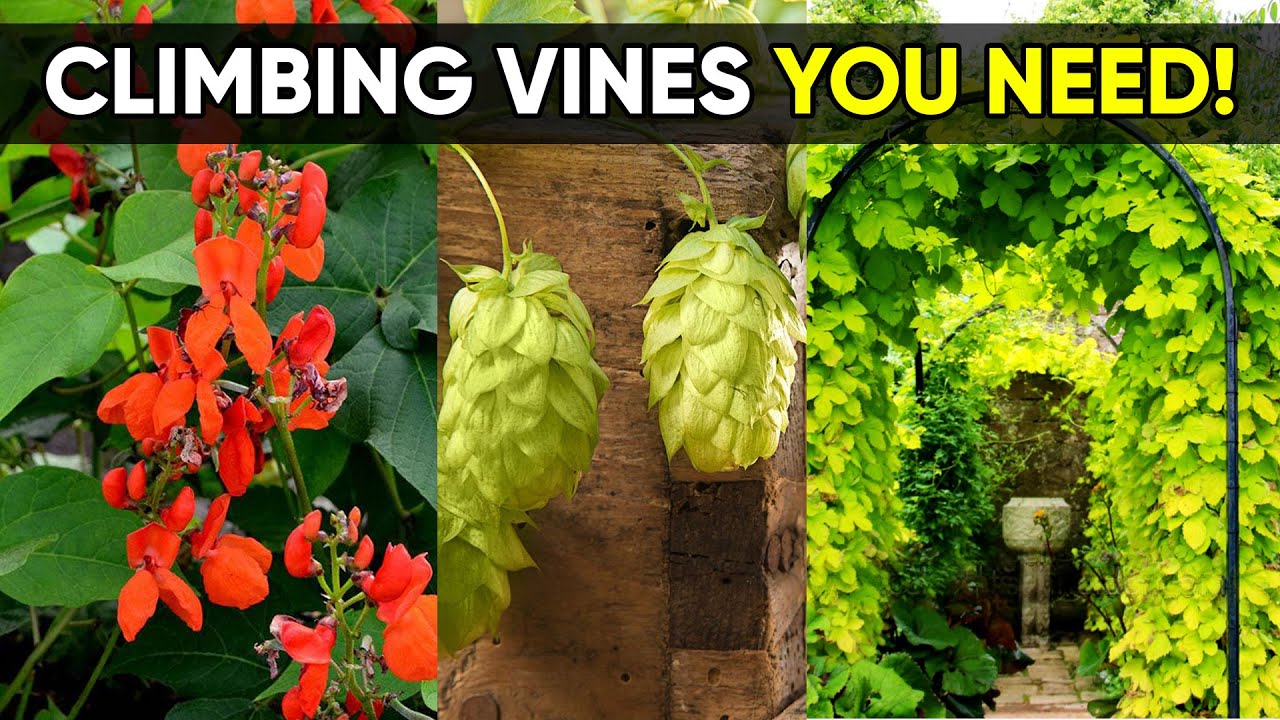
Imagine stepping out into your small backyard, balcony, or sideyard, and looking up, not out, to see a wall of living food rising above you, leaves you can eat, fruits dangling within reach, tendrils climbing higher every week, and a vertical jungle that never feels cramped, even in the tiniest garden. Most gardeners think edible crops require space. But what if the most productive plants were the ones that climb? And what if the best ones weren’t just annuals, but perennials that return year after year, giving you more harvest with less work? Today, we’re unlocking a secret most gardeners completely overlook. The world of perennial edible climbing vines. Plants that produce food forever, save space, and turn fences, trelluses, pergolas, and even old walls into thriving vertical gardens. In this video, we’ll explore seven of the best perennial edible vines that grow in small spaces, provide reliable harvests, and turn your garden into a vertical paradise. These are species that thrive across different climates, tolerate imperfect conditions, and reward you with food for many seasons. Let’s dive in. One, hearty kiwi. Hardy kiwi is one of those plants that completely changes the way people think about fruit growing. When most gardeners picture kiwi, they imagine fuzzy fruits from warm tropical climates. Something exotic, fragile, and impossible to grow in cooler regions. But Hardy Kiwi flips that idea on its head. This vine is a cold climate survivor capable of enduring winter temperatures that would kill many traditional fruing plants. And not only does it survive, it thrives. Instead of producing one large, fuzzy fruit per stem, the hearty kiwi delivers clusters of smooth grapesized kiwi berries. These little fruits have thin, edible skin, meaning you don’t peel them. You simply pick them and eat them like candy. Their flavor is unbelievably sweet and aromatic. Often richer than store-bought kiwis with a pleasant acidity that makes them refreshing. Hardy kiwi is fast. Once planted and established, it grows so vigorously that gardeners are sometimes shocked by how quickly it climbs. Give it a strong trellis, an arbor, or even a tall fence, and it will cover it in no time. If you’re working with a small garden footprint, this vine can easily be trained vertically, making it perfect for limited spaces where every square foot matters. The key is planning. Since the plant becomes heavy as the vines mature, the support structure must be sturdy enough to handle the weight. Another advantage of hardy kiwi is its lifespan. Once rooted, this vine can produce fruit for several decades, offering long-term harvests year after year. It doesn’t tire easily and often becomes more productive with age. Some gardeners even grow it as a living shade structure. A canopy of edible fruit hanging overhead. The fruits are incredibly versatile. You can eat them fresh, toss them into fruit salads, blend them into smoothies, bake them into desserts, or dry them for chewy, tangy snacks. Their high vitamin C content makes them a nutritious addition to the diet, especially during late summer and early fall when they ripen. One important note, most hearty kiwi cultivars require both a male and a female plant for pollination. The male does not produce fruit, but pollinates the females, so they can set berries. However, some modern varieties are self-fertile, meaning one plant can do all the work. If you’re short on space, choosing a self-fertile type like EI can save you room while still giving a solid harvest. When mature, a single female hearty kiwi can produce hundreds of fruits in one season. For such a small space footprint, the productivity is outstanding. Pruning helps keep growth manageable, especially in smaller gardens. But even after heavy trimming, the vine rebounds strongly the following year. Hardy kiwi is one of the best perennial vines for small vertical gardens because it brings beauty, abundance, resilience, and delicious fruit, all while requiring surprisingly little space on the ground. Two, Malibar spinach. Malibar spinach is one of the most underrated edible climbers, and once you grow it, you’ll wonder why it isn’t more popular. Although it’s not a true spinach, it fills the same role, providing lush, nutritious greens while outperforming regular spinach in almost every warm climate condition. Traditional spinach wilts, bolts, and becomes bitter as soon as temperatures rise. Malibar spinach does the opposite. It thrives in the heat, growing even faster in humid summer conditions. In regions with long hot summers, this plant becomes a vertical fountain of fresh greens, producing continuously when other leafy plants are struggling to survive. The leaves are thick, glossy, and slightly succulent with a beautiful sheen that reflects sunlight. Their texture is juicy, almost crisp, with a mild citrus finish that makes them excellent in salads. They hold up well in cooking, too. Tossed into stir fries, added into soups, mixed into curries, or sauteed with garlic. The stems are edible as well, providing even more harvest from the same vine. Malibar spinach climbs naturally using its twisting growth habit. Give it a simple string, net, pole, or trellis, and it will reach 6 to 10 ft high or more during the growing season. The more vertical space it has, the larger and more productive it becomes. Even in a tiny container on a balcony, this vine can climb upward and produce a surprising amount of food. Basella rubra, the red stemmed variety, adds a stunning ornamental element. Its vines and veins glow with vibrant red and purple shades, making the plant both edible and decorative. The flowers and berries are also visually striking with deep purple pigments historically used as natural dyes. In tropical and subtropical climates, Malibar spinach behaves as a true perennial, growing year round as long as temperatures stay warm. In cooler climates, it acts as an annual. But even then, gardeners often find that it selfseeds. Its berries drop seeds that sprout the following spring, meaning you get a fresh crop every year without replanting. Water is important. Malibar spinach loves moist soil and regular hydration, especially during peak summer heat. If the soil dries out too often, the leaves become smaller and tougher. But keep the soil rich, moist, and wellfed, and this vine will explode with growth, producing non-stop greenery all season. For people with limited space, balconies, patios, or small courtyards, Malibar spinach is a perfect vertical crop because it grows upward instead of outward. One pot and one trellis can produce baskets of greens with minimal effort. It’s also pest resistant, disease resistant, and heat proof. A dream plant for beginner gardeners or anyone wanting a low stress, high yield crop. Malibar spinach is not just an edible vine. It’s a living wall of food, turning small spaces into productive jungles of fresh greens. Three, scarlet runner bean. Scarlet runner bean is one of the most dramatic and multi-purpose edible vines you can grow in a vertical garden. In cooler regions, it’s treated as an annual, but in warmer or frostfree climates, this gorgeous vine is a true perennial, returning every year from its thick tuber-like root system. That means once you plant it, you can enjoy years of beauty and harvest without needing to replant. One of the very first things that captures your attention is the flowers. Scarlet runner beans burst into brilliant red blooms that look like tiny flames scattered across the vines. These blossoms aren’t just visually impressive, they’re magnets for wildlife. Hummingbirds swarm the flowers in early morning, bees dive into them during the heat of the day, and butterflies drift in and out, sipping nectar. If you enjoy gardening with nature in mind, this plant feels like a living pollinator festival. But the vine isn’t only about beauty. It’s incredibly productive. After the flowers fade, long, tender pods begin forming quickly. When harvested young, these pods are crisp, sweet, and perfect for steaming, sautéing, or tossing into soups and stir fries. As the season progresses, you can let some of the pods mature fully. Inside, you’ll find the runner beans signature oversized seeds, often speckled with purple and pink, which are fantastic for drying and storing. These mature beans have a creamy, almost buttery texture when cooked. Scarlet runner bean vines grow with serious enthusiasm. They can easily reach 10 to 12 ft and in ideal conditions even more. Because of this, they are perfect for archways, pergolas, fences, trelluses, balcony railings, vertical towers. If you’re working with a tiny garden footprint, this plant gives you enormous vertical growth without hogging ground space. One of the biggest advantages of the scarlet runner bean is its perennial root system. In warm climates, the vine dies back during winter, but the underground tuber remains alive. When spring arrives, new shoots emerge and quickly climb up your vertical supports again. Over time, the tuber grows larger and the vine becomes even more vigorous, producing more flowers and more food each passing year. Another delightful surprise is how versatile the plant is. Some gardeners grow it purely as an ornamental vine because of its beauty, while others grow it purely for food, but most enjoy the best of both worlds, a gorgeous flowering plant that also feeds the family. Scarlet runner bean also improves soil health. Like other legumes, it fixes nitrogen in the soil, enriching the ground around it and helping nearby plants grow stronger and greener. This makes it a fantastic companion plant in mixed gardens. If you want a vertical vine that gives color, uh, wildlife activity, shade, privacy, and generous harvest, all while looking incredible from a distance, scarlet runner bean is one of the top choices for any small vertical garden. Four, passion fruit. Passion fruit is one of the most enchanting perennial vines you can grow. The kind of plant that transforms a simple vertical garden into a mini tropical oasis. Its appearance, fragrance, fruit, and growth habit make it unforgettable. Even people who don’t know plants stop and stare when they see passion fruit flowers for the first time. The flowers are absolutely extraordinary. Each one looks like a piece of alien jewelry with intricate purple, white, and blue filaments arranged in a starburst pattern. These blooms are not just beautiful. They’re designed to attract pollinators with precision engineering. Bees crawl inside completely dusted with pollen ensuring excellent fruit set. Passion fruit vines come in two main types depending on climate. Passifllora edilus best for warmer frostfree regions. Passifla incarnatada may pop surprisingly cold hearty capable of surviving deep winters. In frostfree areas, passion fruit is truly perennial and can live for many years. In colder climates, the hearty may pop dies back to the ground in winter, but comes roaring back each spring from its underground ryome, quickly climbing and covering any structure you give it. Once pollinated, the vine produces round or oval fruits that begin green and gradually color as they ripen. Inside, the fruit contains golden jelly-like pulp with tiny edible seeds. The taste is unforgettable. Sweet, tangy, fragrant, almost tropical perfumelike. Many people describe passion fruit as one of the most aromatic fruits in the world. Passion fruit vines are perfect for vertical gardening because they naturally climb using tendrils that grip onto wires, fences, trelluses, pergolas, railings, or balcony netting. As they grow, the dense foliage provides shade during summer, privacy screening, wind protection, natural cooling of spaces like patios or balconies. In small gardens, they transform plain structures into living walls of green and purple. Growing passion fruit successfully comes down to three main elements. One, full sun. The more sunlight the vine receives, the better it grows and the more fruit it produces. Two, well- drained soil. Passion fruit hates standing water, raised beds, mounds, or well- draining planters are ideal. Three, consistent watering. While it doesn’t like soggy soil, it does need regular moisture during flowering and fruiting. Dry spells reduce the number of fruits. Once established, passion fruit becomes surprisingly lowmaintenance. with yearly pruning to keep it tidy and to encourage fresh growth. A single vine can produce dozens or even hundreds of fruits annually depending on the climate and variety. Passion fruit is extremely versatile in the kitchen. Juices, syrups, desserts, tropical cocktails, jams, yogurt toppings, salad dressings, baking smoothies. Even simply slicing and eating the pulp fresh is a treat. The fragrance alone feels like a vacation. The hearty mapop variety deserves special mention. Not only does it survive in colder regions, it spreads underground and creates lush, fast growing vines each season. Its fruits have a more wild, tangy flavor, but they are absolutely delicious and perfect for home gardeners wanting a perennial vine that laughs at frost. Passion fruit is more than an edible plant. It’s an experience. It brings exotic beauty, heavy productivity, and a sense of magic to any space. For gardeners with limited ground area, passion fruit turns vertical space into a stunning wall of flowers and fruit. Five, hops. Hops are one of the most underrated edible perennial vines you can grow. Most people only recognize them as the key ingredient that gives beer its flavor and aroma, but hops are far more versatile, useful, and fascinating than their brewing reputation suggests. In the garden, they become towering vertical giants capable of climbing 15 to 20 ft. sometimes even more in a single season. If you need dramatic height, fast coverage, or a living green curtain that grows almost before your eyes, hops are one of the best solutions. Hops are herbaceious perennials, meaning the above ground vines die completely back to the soil each winter. But beneath the surface, the crown and root system remain alive and powerful. When spring arrives, young shoots called hopshoots emerge rapidly. And these early shoots are actually edible. In many parts of Europe, hopshoots are considered a spring delicacy, sometimes called the world’s most expensive vegetable. They have a mild fresh asparagus-like taste and can be steamed, sauteed, or used in omelets and pastas. As the environment warms, the hop plant begins its explosive vertical climb. Unlike tendrils or climbers that cling, hops twist their way upward in a clockwise spiral, wrapping securely around ropes, wires, poles, or strings. Because their growth is vigorous and heavy, hops require a strong support system, ideally a tall trellis, pergola, or even a dedicated hop pole system like those used in traditional hopyards. By midsummer, the vines are lush, dense, and vibrant green with deeply loed leaves and a graceful cascading growth habit. This makes hops exceptional for creating cool shaded sitting areas covering unsightly buildings, garages, or fences, forming living privacy screens, reducing heat on sunexposed patios or windows. In addition to their edible shoots, hops also produce cones. The papery aromatic flower clusters that give beer its bitterness, floral notes, and preservation qualities. But cones aren’t just for brewing. They have welldocumented medicinal uses especially in herbal teas and natural remedies. Hop tea is known for its calming sleepinducing properties thanks to compounds like humalone and lupalin. Growing hops is surprisingly simple. They thrive in full sun, rich well- drained soil, consistent moisture during establishment. Once mature, hops become quite drought tolerant. Their maintenance is straightforward. Cut back the old vines in winter. Train the new shoots in spring and harvest the cones when they become fragrant and slightly papery. Because hops grow upward rather than outward, they take almost no horizontal space. For small vertical gardens, this is a huge advantage. One tiny planting area can produce an enormous green canopy. Whether you grow them for food, shade, herbal medicine, or beauty, hops are one of the most dynamic perennial vines available. Six. Chyote. Chyote is a legendary climbing vine in Central and South America. Valued for its productivity, versatility, and astonishing growth. In warm climates, it behaves like a botanical powerhouse. A vigorous perennial vine that can easily reach 2030 ft in a season. It climbs over fences, roofs, arbors, pergolas, and trees, creating lush green walls loaded with edible gifts. The fruit of the coyote is pear-shaped, pale green, and mildly flavored, a bit like a firm zucchini crossed with a cucumber. It’s wonderfully adaptable in the kitchen. You can steam it, sauté it, boil it, roast it, grill it, or use it raw in salads and sllo. Its neutral flavor allows it to blend seamlessly into countless recipes. What many people don’t realize is that every part of the coyote plant is edible. Fruits, tender when young, storeable when mature, shoots and vine tips, a prized ingredient in many Asian and Latin American dishes. Leaves cooked like spinach, roots. In older plants, the underground tuber can grow large and be eaten like a starchy vegetable. This makes chyote one of the most food efficient vines you can grow, especially in limited spaces. One single vine, just one plant, can produce dozens of fruits in a season. and in ideal climates even hundreds. It thrives in full sun but can tolerate light shade. Chyote prefers well- drained soil, generous watering and warm temperatures. If frost threatens, it dies back above ground, but in mild winters, it quickly regrows from its root. Because of its vigorous nature, Chyote is perfect for covering large trelluses, shading patios, creating green tunnels or archways, transforming old sheds or fences, producing food vertically with almost no footprint. Even though it grows aggressively, Chyote is surprisingly easy to manage with regular pruning. You can keep it neat, controlled, and shaped to the space you want it to fill. Its tendrils grip onto supports naturally, making training effortless. The fruits are typically harvested when young and tender, but letting a few mature allows you to store them for months. Each mature fruit can also be used to grow a new plant. No need to buy seeds. You simply plant the whole fruit in the soil and new vines emerge. For households with limited space, chyote is a dream crop. One vertical vine, minimal ground area, maximum food production. Seven. Grapes. Grapes are one of the oldest cultivated plants on Earth, and for good reason. They are exceptionally productive, beautiful, and perfectly suited to vertical spaces. Grapevines have climbed human-made structures for thousands of years, trelluses, pergolas, arbors, stone walls, fences, bringing shade, fruit, and fragrance to gardens across civilizations. A single grape vine even in a small garden can produce huge harvests of sweet juicy clusters. Whether you grow European grapes, Vitus Vinefera or North American varieties like Concord or Niagara Vitus Labusa, the vine rewards you year after year with increasing abundance. Grapes can be eaten fresh, juiced, fermented, dried into raisins or turned into jams, syrups, and jellies. But the vine gives more than fruit. The leaves are a culinary treasure, especially in Mediterranean cuisine for stuffed grape leaves. Grape vines are longived perennials. Many live for decades, and some in old vineyards have been thriving for over a century. In a home garden, this means one plant can provide food and shade for generations. Their vertical nature makes them ideal for small spaces. Grapes naturally climb using tendrils that wrap around supports, allowing the vine to weave across structures effortlessly. When grown over pergolas or arbors, they create cool living shade, natural outdoor rooms, dappled sunlight for patios, seasonal color changes, reduced heat on building walls. The spring flush of leaves is bright and fresh. Summer growth becomes dense and vibrant. And in autumn, many varieties turn brilliant yellow, red, or gold. Grape vines prefer full sun and well- drained soil. They grow best with annual pruning. A simple practice that encourages stronger fruit production and keeps the vine manageable. Once you learn the seasonal rhythm of pruning, caring for grapes becomes intuitive and lowmaintenance. In vertical gardens, grapes offer a rare combination. High yields, long lifespan, beauty and shade, minimal required ground space, delicious fruit, and edible leaves. For small gardens, balconies, or narrow sideyards, a grape vine is one of the smartest and most rewarding perennial climbers you can grow.
2 Comments
Kiwi
Malabar spinach
Scarlet runner bean
Passionfruit
Hops
Chayote
Grapes
I love kiwi ❤