
GARDENING: Love your tender bulbs
Published 5:30 am Wednesday, November 26, 2025
We love our summer flowers, but once their glory days are over, we often give them little thought until spring arrives and another frenzy of planting ensues. However, spending time now to preserve your more tender plants will reward you with larger, earlier blooms – and save you money too.
Many of our favourite summer blooms grow from some form of bulb. Dahlias and begonias grow from elongated tubers. Gladiolus and caladium emerge from smaller bulb-type corms. Canna lilies grow from thickened roots called rhizomes, while pelargonia and brugmansia both grow on roots.
Bulbs (I will use this as a collective term) that need to be lifted must be handled with care. Any bruises or cuts may open the door to diseases which can cause damage over the winter. Wait until spring to divide tubers to avoid leaving any wounds. After the first heavy frost, cut off any remaining foliage to about 5 cm.
Use a digging fork to gently pry out the bulbs. Remove as much dirt as possible with your fingers or chopsticks. (Exceptions: remove canna lilies and gladiolus earlier, after tops die off. Break off old shrivelled corms from gladiolus.) Most bulbs need a curing time of about one to three days. Tuberous begonias and caladium need 1-2 weeks, and gladiolus needs a curing time of about three weeks.
Leave bulbs out to dry in a warm place away from sunlight. Dry dahlia tubers upside down. When dry, store bulbs in labelled paper bags. Arrange in a cardboard box, spaced out so no bulbs touch one another to prevent the spread of rot or disease. Store in a well-ventilated place that is protected from frost, such as a garage or basement. The ideal temperature range is two to seven degrees Celsius with a humidity of about 50 per cent. Bulbs can also be stored in layers in peat moss, sand, vermiculite, sawdust, wood shavings or coconut coir.
Tender plants such as dahlias, gladioli, and calla lilies can be left in place if they are situated in a spot that is protected from the wind and that maintains elevated temperatures throughout the winter. Locations next to the house as well as solid fences or walls, are always several degrees warmer than exposed areas. Cut stems down to about 5 cm and cover with about 5 – 10 cm of mulch such as leaves, compost, wood chips, or a mixture. Mulch helps maintain steady moisture levels and regulates the temperature, keeping the ground warmer during cold snaps. Mulch also keeps soil cooler during unseasonable warm spells, so bulbs don’t sprout too early.
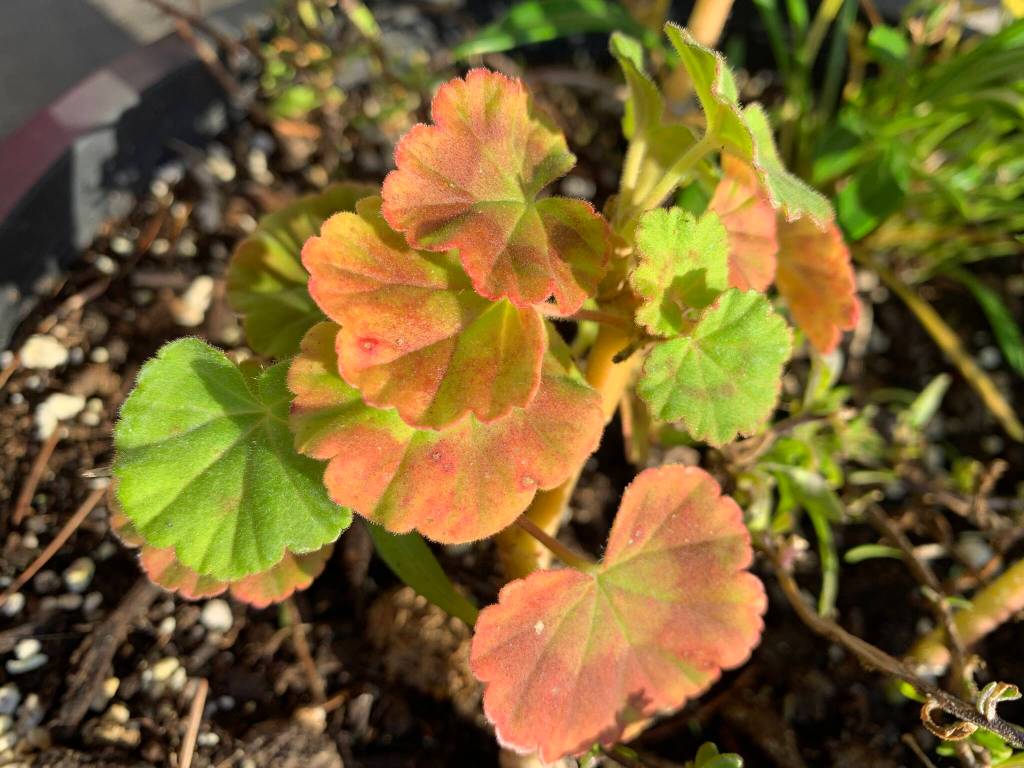
Tender plants grown in pots can simply be moved inside to dry out and go into semi-dormancy. Use a spray bottle to moisten the soil a little when needed. Pelargonium can be propagated before winter storage by preparing and planting cuttings. Hardier plants in pots can be moved to protected areas against the house under the eaves, into the garage, or into a heated greenhouse. Water periodically if needed, but don’t allow water to build up and potentially rot the plant.
Don’t forget to give some love to your clay and ceramic pots. If pots are left full of dirt and out in the open, the build-up of water in the soil may repeatedly freeze and thaw, exerting pressure on your pot, causing it to eventually crack or break. A good preventive practice is to plant in plastic pots and rest those inside the more decorative, breakable pots. The potted plant can easily be removed in the fall. If you are really on top of things, the pots can be cleverly swapped throughout the year with seasonal displays.
Sounds like a lot of work? It can be, or you can pare it down to three basic steps: dig up bulbs, place them in labelled paper bags, and store them somewhere that doesn’t freeze. Love doesn’t have to be complicated.
Comments are closed.