
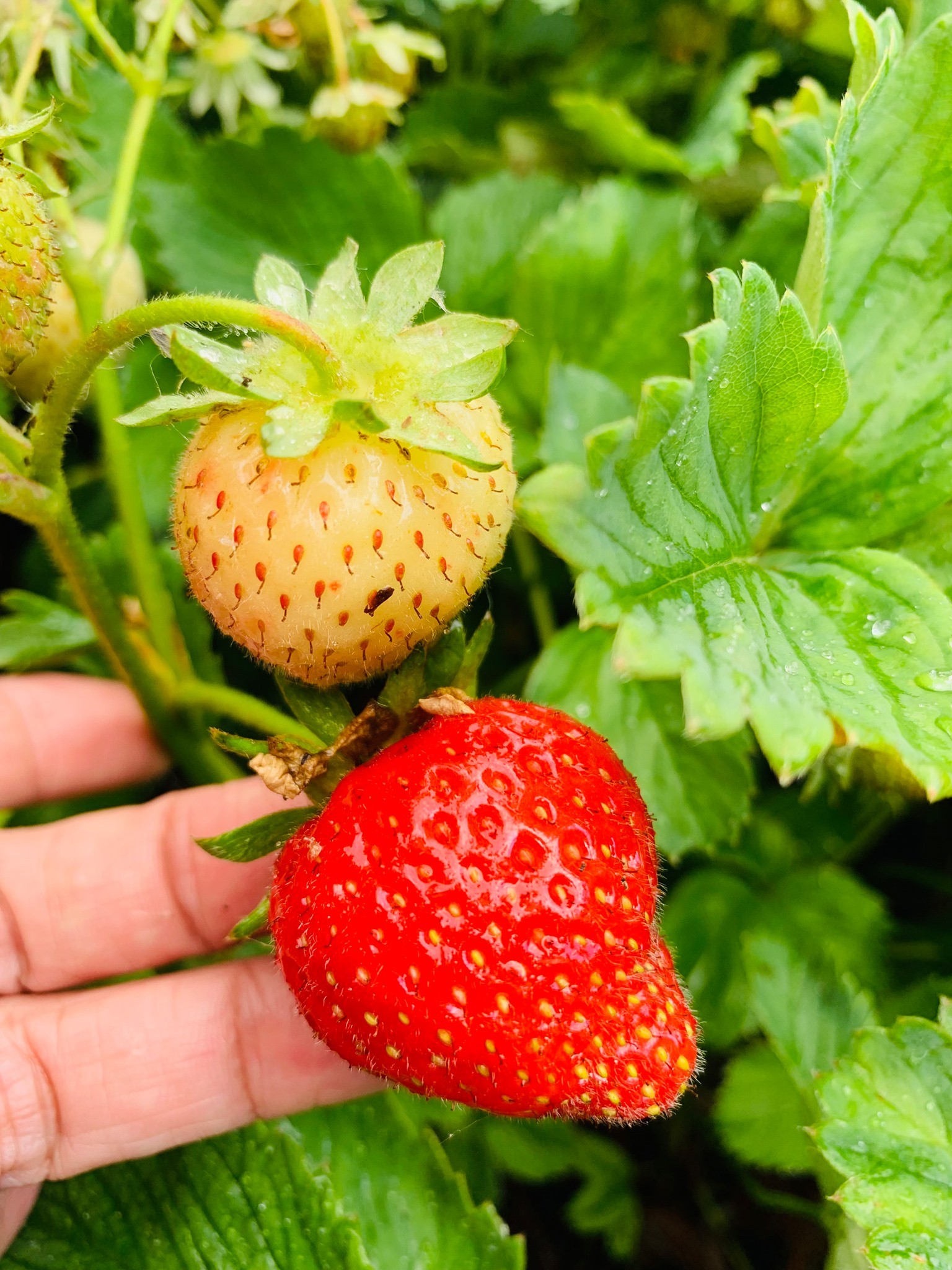
A reader recently asked whether there was anything special she needed to do during the winter months for her new strawberries to do well.
There is in fact some special care that you need to take before the full brunt of winter claims its position.
We are a little late this year, but we need to remember that strawberries are perennials and will come back each year. Next year, make sure you winterize your strawberries after the first few killing frosts.
In October, November, and early December, depending on the year, you can still winterize your strawberries before they freeze entirely.
Strawberries do require a winter vernalization. You cannot grow strawberries all year long without a cold treatment of 200 to 400 hours at 35 to 42 degrees F.
Vernalization means that new plantings need to be outside for your little red friends to grow.
My grandson Owen loves these strawberries, and this is one reason I would raise them.
You will have either selected a June-bearing or ever-bearing strawberry. An important question is how you are growing your strawberries in a garden, raised beds, or a container?
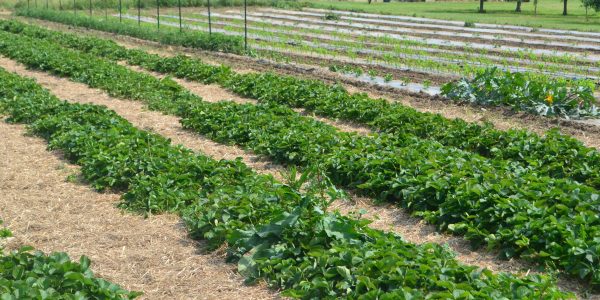 Strawberries are shown here at an Amish farm in rows that have been mulched with straw, irrigated and maintained. Credit: By Eric Larson
Where you are growing, the strawberries will help you decide how to protect your plants.
Each year, you need to cover the crown with straw for extra protection. I recommend three to five inches of straw over the crown to protect the plant, reduce weeds, conserve water usage, and improve the soil.
As you mulch, remember not to bury your plants, or you could smother them.
As a rule of thumb, I don’t prune anything the first year of growing a young plant. As your patch matures and grows stronger, remove the original plantings after three to five years and replace them.
Several diseases can plague our strawberries, and the older they get, the more susceptible they become. Replace them with the new runners as the strawberries age, and prune them back to two to three inches tall.
In the fall, gently remove leaves that turn brown.
During your fall cleanup, remove any remaining weeds, old mulch, and fallen leaves. A good maintenance program prevents diseases.
Before the first frost, apply a balanced fertilizer or an organic fertilizer. As the season progresses before the ground freezes, use a fresh layer of straw or pine needles, loosely spread to a depth of three to five inches over the row of strawberries, to cover the plants.
Remember to water thoroughly after mulching so the plants can get a good drink. I also remember some of my first chores in the spring, March or April, removing this previous layer of old mulch from the top of the crowns each spring to prevent diseases.
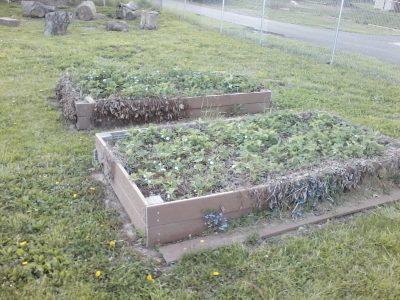 Strawberry plants are shown here in raised beds after the first frost. Credit: Eric Larson.
June-bearing strawberries were the workhorse of the strawberry patch that I kept for five years. The June-bearing strawberries were bigger than the ever-bearing and produced massive amounts of strawberries in a short period of time.
The June-bearing had a limitation: it was in production around June, and that was it. The June-bearing plants are bigger, so putting them in raised beds or containers never crossed my mind, but it could be done.
Ever-bearing strawberries are smaller plants that can be grown easily in raised beds or containers.
June-bearing strawberries I would trim back by mid-summer,and allow the stolons or runners to remain, encouraging the growth. I would also pinch off the first strawberries on our June-bearing and ever-bearing strawberry blooms to promote plant growth.
The runners would take off, and some of the plants would begin to grow for the winter.
If you have a pot of ever-bearing strawberries, you have to keep in mind that the roots of this plant will freeze. Remove the strawberry from the pot, plant it in an open bed for the winter, and mulch.
A frost-free garage that gets cool will be a good alternative if you can’t grow it in the ground. I have also left my pot planted ever-bearing strawberries in the pots, as I have placed them in other pots that were already in the ground.
This will improve the speed of getting them in pots.
I have enjoyed strawberries from the grocery store each week. However, we know that the best-tasting strawberries are grown in our own gardens with tender loving care – and a close watchful eye.
Have a great stroll through your garden this week. If you encounter a challenge in your garden while you’re out for a stroll, drop me an email at ericlarson546@yahoo.com.
Comments are closed.