
Key Points
Most houseplants can handle relatively high temperatures as long as they’re well-watered and humid.Rapidly fluctuating temperatures and hot drafts place more stress on indoor plants.Keep houseplants several feet away from fireplaces and other heating units to avoid heat stress.
Although many houseplants are native to warm, tropical or desert regions, hot temperatures and blazing heat from fireplaces and radiators can still cause your favorite indoor plants to dry out. But what is too hot for houseplants and how do you know if your plants are overheated?
In the tips below, plant pros share their best advice on how to judge if houseplants are too hot and easy ways to protect your plants from heat stress.
Meet the Expert
Justin Hancock works as a horticulturist at Costa Farms.
How Hot Is Too Hot for Houseplants?
Credit:
The Spruce / Krystal Slagle
While extreme heat can spell trouble for houseplants, horticulturist Justin Hancock explains that it’s not really hot temperatures, but rather temperature fluctuations, that cause the most issues for indoor plants.
“Because most houseplants are from tropical or subtropical regions, they’re built to hold up to the heat,” says Hancock. “Temperatures in the 90s may set them back, but not to the point where they’re likely to show any symptoms of being hotter than they’d like.”
While indoor plants are relatively resilient when it comes to hot temperatures, they’re more likely to struggle if they’re exposed to heat in an unnatural way. Temperature changes of around 20 degrees in a short period of time can stress a plant and overwhelm it, Hancock says.
But it’s not just temperature fluctuations that you need to worry about: Drafts from fireplaces or other heating units can also be problematic if the draft is at least 10°F warmer than the ambient air or if the draft causes indoor air to get too dry.
“A lot of houseplants tolerate average humidity levels—around 40 to 60 percent,” says Hancock. “But the air coming from your fireplace or fresh out of a heating duct can be desert dry and make plant leaves lose moisture faster than the roots can pump.”
Want more gardening tips? Sign up for our free gardening newsletter for our best growing tips, troubleshooting hacks, and more!
How to Know If Your Houseplant Is Too Hot
Credit:
The Spruce / Krystal Slagle
Heat stressed plants can be hard to recognize at first as the symptoms of overheating look a lot like other common plant problems. However, if you have your fireplace burning or your thermostat is turned up high and your plants are displaying the following symptoms, they may need a temperature adjustment.
Dry or Crispy Leaves
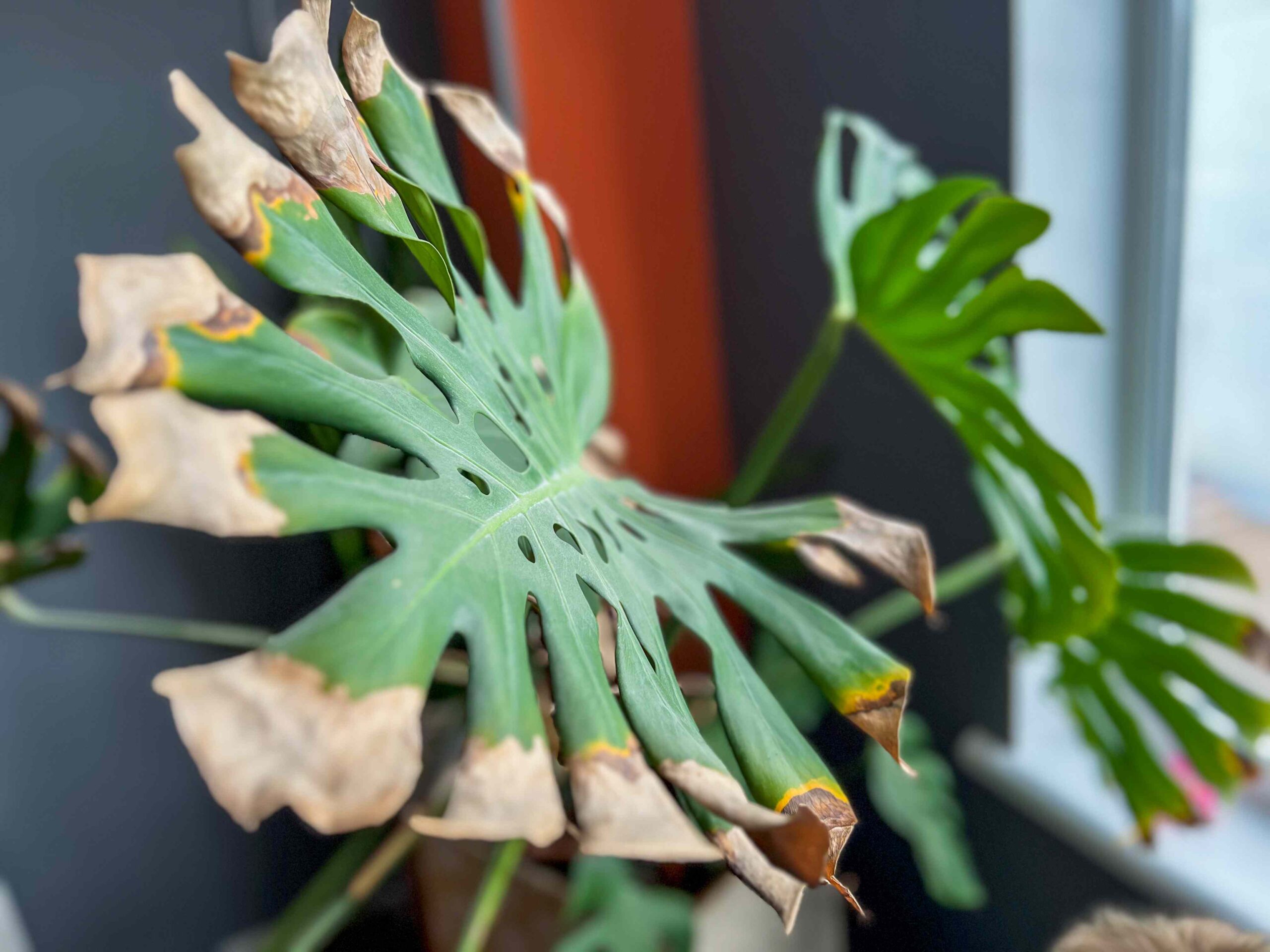
Plant leaves can dry out when plants are underwatered or plagued by pests like spider mites. But overheating and low humidity levels can also cause plant leaves to turn dry and crispy.
This usually occurs on the leaf tips and leaf edges first, but can eventually affect the entire plant and lead to leaf drop if you don’t intervene.
Yellowing or Browning Foliage
Credit:
Irina Tiumentseva / Getty Images
Yellow or brown plant leaves can also indicate that plants are too hot or that humidity levels are too low. If the brown or yellow leaves are mostly occurring on the side of the plant that’s facing a fireplace or radiator, heat stress is most likely to blame.
However, these symptoms can also occur as a result of plant pests, underwatering, and certain fungal problems.
Wilting
Credit:
Ian Dyball / Getty Images
Plants can also wilt and die back if they get too hot and dry. This typically occurs as evaporation rates speed up with a rise in temperatures, and can happen even when plants are well-watered.
How to Care for Plants If You Want It Really Hot Inside
Houseplants are more likely to struggle with hot air during winter when homes are heated artificially, or during extreme summer heat. No matter the season, here are some simple ways to make sure your plants never get too hot.
Locate plants in the right spot. Houseplants should be located at least a few feet away from fireplaces and other heating units during the winter months. In summer, move delicate plants a few extra feet away from sunny windows, or shield them with sheer curtains or blinds to prevent leaf burn.
Water as needed. Underwatered plants are more likely to suffer from heat stress, but it’s important to not overdo it. Most tropical plants should only be watered when the top 1 to 2-inches of soil feels dry, while cacti and succulents should be watered when their soil fully dries.
Withhold fertilizer. Plants generally don’t need fertilizer in winter, but they also can’t process fertilizer effectively if they get too hot in summer.
Add humidity. Low humidity levels can make heat stress worst and lead to crispy plant leaves. You can prevent this with the addition of humidifier, or by locating sensitive plants—like palms, ferns, and calatheas—on top of a pebble tray or in a grow cabinet or terrarium.
Comments are closed.