
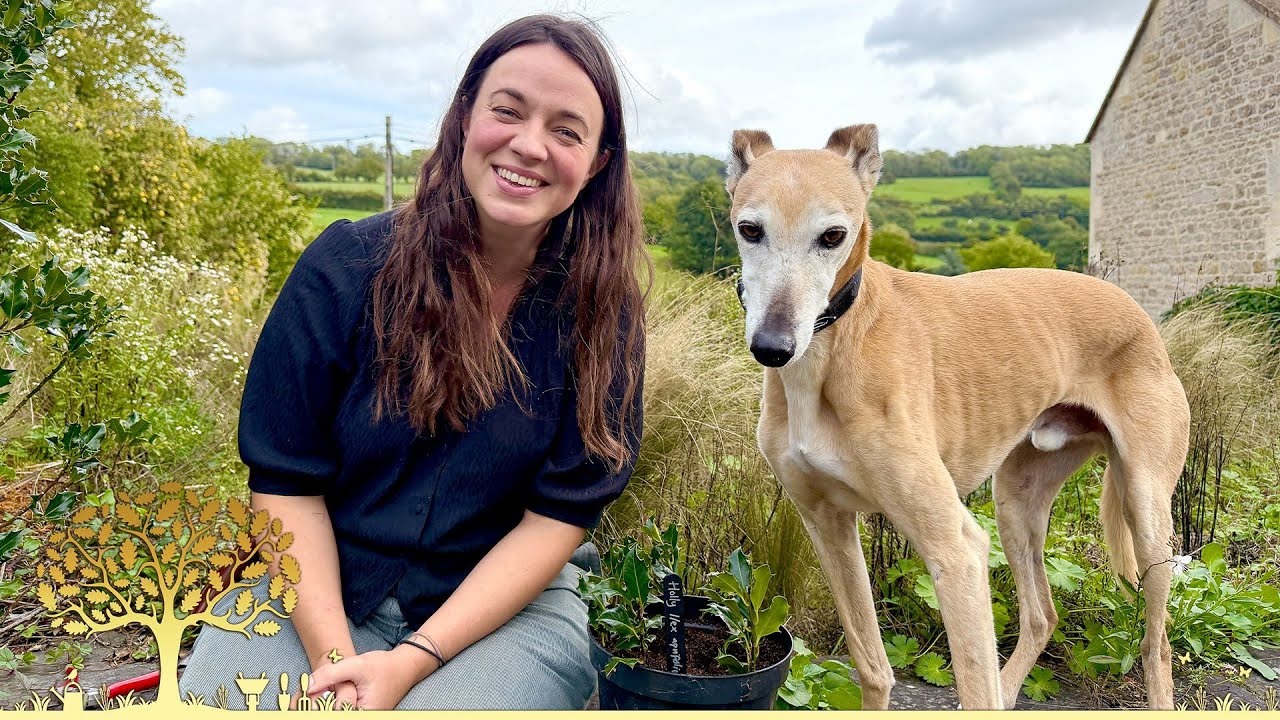
Frances Tophill returns to Damson Farm near Bath for the first of four inspiring Gardeners’ World Winter Specials 2025/26 episodes. In this winter-themed instalment, she tackles a variety of seasonal garden jobs — from mulching veg beds and taming a Japanese wineberry to taking holly cuttings and even making homemade damson gin.
Advolly Richmond uncovers the fascinating story behind an English country garden crafted by an American designer with a dramatic past. Nick Bailey explores a contemporary garden seamlessly integrated with medieval ruins, discovering more than he expected. In Derby, Sue Kent shares her deep love of hydrangeas and offers expert tips for getting the very best from them.
Also featured: an Australian gardener who relocated across the world to grow the plants she adores, and a Cornish grower who has found passion in the evergreen beauty of houseplants.
#GardenersWorld #WinterGardening #FrancesTophill #Hydrangeas #DamsonFarm
I am back at Dams and Farm near Bath for the first of four brand new special programs that we hope will inspire you to get out in the garden this winter. The days may be getting shorter and colder, but you don’t need to completely down tools. For me, this is a quiet and reflective time and the perfect opportunity to plan ahead, stay outside, and most importantly, to stay connected with the garden. Coming up on today’s program, we’ll be looking forward to warmer days ahead and celebrating gardening, gardeners, and gardens in all their shapes and forms. Adv explores a quintessentially English country garden designed by an American whose exquisite romantic planting was tinged with high society scandal. It was said that NY’s favorite things were houses, gardens, and husbands in that order. We head to Cornwall to meet a grower captivated by the evergreen hues of house plants. Oh gosh, I could talk about house plants for a very long time. For me to add greenery into my house is so special. Nick gets more than he bargained for in a contemporary garden in Yorkshire that’s been cleverly designed to blend seamlessly with historical ruins. This garden really is a magical place. I love the way the contemporary planting just embraces and meshes in with this ancient architecture. We meet an Australian gardener who 30 years ago moved to the other side of the world so she could grow plants she had fallen in love with. What brought me to England was definitely because I wanted to grow a garden with the plants I liked and the plants I liked liked the English climate. I had never seen an anemy till I came here. I’d never seen cow pastley. And Sue shares her passion for one of her favorite shrubs and learns more about how to distinguish and successfully grow the different varieties. Let’s talk piniculata. These are perfect. Yes, in Derby we’ve got the largest collection of piculata anywhere in the world. [Music] I always love watching how the seasons change, the shape and texture of a garden. Come on. All the jobs I’m tackling today can be done anytime over winter, especially on cold, bright days. This is the time of year when you want to start planning next year’s beds. So there are a few overwintering crops like kale, chory, a few leaks that might still be in the ground, but generally speaking, you will have emptied a lot of the vegetables and it’s time to prep the ground for next year. And that includes compost or mulch. So this is homemade compost. This is full of things like grass clippings, herbaceous perennials that have been cut down. So everything goes into it. For a good mix, you want some green, some brown, so woody material as well. Turn it regularly and then after about anything between 6 months and a year, you should have a really good compost. Now, the thing about this is unlike compost you buy which has been heated up uh to sterilize it. This has got all of the goodness in it. Look, there’ll be worms in here. There’ll be microisal fungus in here. There’ll be all sorts of microbes and bacteria which are essential for healthy plant growth. So, by putting this on the ground now, that will soak into the soil over the winter and be a beautiful food surface to plant next year’s vegetables in. Here we go. So you can see how much fibrous material there is in here. What I’ll do with this is I’ll pull out any really thick bits of wood like this that won’t rot down over the winter. And mulching generally does many things. You can do it in the spring if you want to add nutrients and help the soil to retain moisture, but to do it in the winter is a really good way of protecting your soil really from erosion. If you have something that doesn’t have any worm or microbial life in it, which can happen with a really depleted soil, then I usually start with forking the compost in. But from then on, I just lay it on top of the surface and all the worms and microbes within the soil will slowly incorporate it. What you can find when you get into your compost heap is that there’s a lot of heat in the middle because where it’s breaking down, that generates energy. And if you have a lurcher that likes to lie down, you’ll probably enjoy laying on your freshly mulched bed. This is a layer that’s about 2 in thick. That should be more than enough. Give it a good covering. And you don’t have to use your own compost. You can get green waste compost that your local tip will provide. You can buy bags of compost, but obviously you will use a lot of plastic if you do that. Or you could find some well-rotted manure if you know any farmers or people who keep horses nearby. They often want to be getting rid of some manure and all of it is full of microbes and nutrients that will handle the bed. All right, ruer. The thing I love about dams and farm is it feels so rooted in its landscape. Now, back in the summer, Advil went to visit a house and garden that does exactly that. [Music] Just outside Northampton is Carol Marsh Hall and it has the quintessential English countryhouse garden [Music] with romantic flower borders filled to overflowing, a sunken garden designed for private entertaining and walled gardens packed with rows of fruit and vegetables for the mana house. It feels like the garden is English through and through. [Music] But interestingly, it was created by an American who fell in love with that style. K Marsh was the vision of Nancy Lancaster from Virginia, USA. Born in 1898, it was said that NY’s favorite things were houses, gardens, and husbands in that order. She was a woman who knew what she wanted, and she usually got it. She moved to the UK in 1920 to marry her second husband, Ronald Tree, and in 1928 they rented Cal Marsh from Claude Lancaster. Nancy’s aesthetic came from her nostalgia of the faded elegance of the American South she grew up in and she saw what she wanted to recreate reflected in the often crumbling country houses of interwar Britain. She tried to create a kind of studied carelessness both inside and out. In this garden, she combined a formal layout with informal planting. In her own words, first get the structure right like the bones in a face and then plant it like a crowded shoe. Simple. Nancy and Ronnie only stayed at K Marsh for 5 years and eventually divorced in 1947. But she was unable to let go of the garden. And Nancy returned just a year later, having married the owner, Claude Lancaster, who she’d been having an affair with. You guessed it, this marriage also ended in divorce. But in this time, Nancy was able to fulfill her ambitions for the garden. She later admitted that she was actually more in love with the house and garden than the man. And she certainly had a close relationship with the garden, saying that the only way to garden properly was to get down flat down on your stomach and weed with your teeth. But Nancy didn’t work alone. She worked with the British designer Nora Lindsay. Once a wealthy socialite who dined with Church Hill, Norah was forced into garden design when her marriage fell apart and she needed to make a living. Nancy was a close friend and paid Nora £100 a year to be on constant call to help design and build the garden. Initially dismissed as a mere social butterfly, Norah went on to become a major player in garden design between the walls. [Music] Here in the sunken garden, Norah focused on simple greens and whites to show off the dresses worn at the cocktail parties Nancy held here. [Music] While this border is a riot of color, Norah’s instinctive style blended perfectly with NY’s who said she used common plants, no rare or precious hybrids, allowing them to grow luxurantly in a formal layout, overflowing with the old-fashioned plants and flowers I loved. Another Norah feature were the fabulous topiary structures that litter the garden. And pieces like this U archway, whilst formal, has a lumpy charm about it, just like the oversted sofas that Nancy filled her rooms with. And finally, in the walled garden, Nancy and Nora grew rows of vegetables alongside thousands of cut flowers, which filled the vasees inside every room of Nancy’s home. She said that no room was complete without an open fire, candle light, and fresh cut flowers. And with this collection, she was never likely to run out. And although this garden has more straight lines than anywhere else, you can still feel the abundance the two women loved. Between the sweet corn and the Swiss chard, their selfseeders everywhere. Borage, chendulas, poppies, meaning that even the vegetables have a shabby chic luxury. [Music] Nora and Nancy’s relationship lasted a lifetime as both friends and design partners, but NY’s 12 years at Cal Marsh ended rather ignoraminiously. After she divorced Claude, she wanted to stay on, but he turned the electricity off to get her out. She was berefted but went on to buy and build more homes and gardens and her influence spread across the aristocracy. [Music] But she always said that K Marsh was her favorite home even in the dark because it reminded her of her childhood in America. And here deep in the Northampton Share countryside, she created the English countryhouse garden of her dreams. [Music] How great to see a woman trailblazing in horiculture and so ahead of her time with structured beds filled with wild and woolly planting. Right, I am going to put up this pelgonium. This is pelgonium sidoides. It’s one of the most beautiful peloniums, but they are not hardy. So any proper house plants or greenhouse plants, non hardy plants, this is a great time to pot them up into something slightly bigger. So in the spring when they start growing, they’ll have plenty of nutrients around them. For this, I am going to use a very gritty compost. So about 50/50 grit and a petree compost. And I’m just going to put it into a pot that’s a little bit bigger than the one it’s in. It doesn’t need to be huge. And actually with something like a pelgonium, which is an arid plant, if I was to completely swamp that in fresh compost, it runs the risk of getting too moist and then the roots rotting. So a little step up is all that’s needed. Now, when you’re potting up, it’s a really good time to weed the pot. So you can see there’s some tiny little weeds growing at the surface here. So I’m going to just remove those. And also for house plants, this is quite a good time to remove just the top little layer of compost where those little scared flies can lurk. So you’re getting rid of that annoying pest that’s not much fun to have in the house. There we go. Putting that in. And then again, a gritty mix to top that up. Try not to bury the stems at all because these can be prone to suffering with the damp in the winter, especially if it’s in a greenhouse. If it’s in the house, probably won’t be such a problem. And then finally, I’m just going to dress the top with a little bit of grit just to finish it off. Now, there are different schools of thought with how you should treat your peloniums during the winter. You can see there are dead heads on here. So you could very well dead head if you wanted, but then the dead heads here are followed by flowers about to come out at the top there. So I would be inclined to leave them all and just hope that they’ll keep flowering through the winter, which is very possible. Some people like to chop them right back and then leave them completely dry for the whole winter and start watering them again in the spring. But I’ve tried that and I found that they often didn’t make it through. So, what I now do with mine, and I found it works quite well, is leave the foliage on, keep them frost free, keep them in a sunny place, and then give them a cut back at the end of the winter when you’ll be able to see which areas have rotted off and cut it back to nice healthy growth, and then they will reshoot. But it really is up to you, trial and error, see what works. These ones, though, should be very happy to stay as they are in here. There it’s warm. a lovely shelf with some other house plants and that should be grand. There we go. That’ll be happy there until next spring. I remember I had an aunt that had so many house plants. Being in her house was like being in a jungle. But for one woman in Cornwall, her adoration of house plants has really gone to the next level. [Music] Oh gosh, I could talk about house pants for a very long time. I’m an outdoor lover. I’m also an indoor lover. So for me to add greenery into my house is so special. A house without house plants would be very bland. It gives you some kind of purpose. A lovely Sunday ritual is to go around, have a look at the plants, water, feed. I just think all of that for me is super duper nurturing. I just love them so much. I’m Harriet Thompson and this is my sustainable house plant nursery. I came out of school not really knowing what I wanted to do. So I went traveling and when I went traveling I actually met some wonderful growers that grew peies in Tasmania, Australia and I just was hooked and then I haven’t looked back. I studied a horicultural degree and literally grow for a living now and I love it. That’s it. [Music] I grow with the environment in mind and that includes no import. So everything is seed grown or in-house propagated. I grow using Pete free medium. I grow without the use of pesticides, without the use of chemicals. I actually have a lot of natural predators in the greenhouse. So frogs, mes, spiders, their job is to control the pests within my nursery completely. So here we have the Chinese money plant. This is a wonderful plant, a really architectural plant, a plant that will grow into quite a nicesized tree given the opportunity. And what we’re going to do today is propagate. So, I’m going to tease away that one. So, what we’ve got here is a lovely fibrous roots off of a nice white stem. That suggests it’s a really healthy plant. It’s ready to go into its new pot. So, we’re just going to be knocking off any of the old soil as much as you can. And then what we’re going to do is into a nice woodpulp paper pot, we’re just going to pop in a handful of soil. And what you want it to do is just be at base level here. What you don’t want to be doing is really forcing that plant into the pot. When you tap down, it kind of just makes the soil get in between the roots so that it gives the plant the best opportunity to really root properly into that medium. And then there you have it. a new a new Chinese money plant. [Music] Adapting your house plant care during the year is super important. So, as we move into autumn and winter, the climate in our house changes. The minute the heating goes on, all house plants should be removed from the vicinity of radiators because obviously the radiators dry out the air and therefore can mean that you end up with crispy leaves on your house plants. We also need to manage the watering. My top tip is to collect rain water. If you can bring it inside so that it’s room temperature, that’s the perfect temperature. I highly recommend watering in the shower because in the wild obviously the plants get rain water. They have water all over their leaves. They don’t sit dusty and you don’t want that dust to settle because it will stop photosynthesis from happening with your house plants and therefore you will have problems. This is also a really great pest management point as well. You want to be removing pests off of the leaves. The dog hates the water. No, loves the water but hates the water. She’s a water lover until she gets too close. If your plant is a plant that likes bright indirect light, as the darker months come, you want to be moving them slightly closer to the window so that they are still having access to all of that light as well. For example, a lavender plant would need a lot of light during the winter months. So, we would need to be popping that in some kind of south facing window sill or in a conservatory if we have one, but we do not want our house plants to be touching the windows because that will create frost damage onto the plant’s leaves. Also, a great tip for house plants on the window sills is that you need to be moving the plants around because plants tend to grow towards the light. So to have even growth around the bottom, you just want to be moving your plant around on a regular basis so that you get that nice even growth. I have real vivid memories of me and my dad growing veg when we were little. We’d sew from seed. I think horiculture is really important for children and I can’t wait to teach my little one about growing plants. [Music] It’s so lovely to hear a person who’s traveled the world and then come back to grow those plants. And that is the beauty of house plants is that you have the opportunity to grow things that you never imagined you could grow in this country. And speaking of slightly unusual plants, this is a fruit that you may or may not have heard of. It’s called a Japanese wine berry. Not so common as something like a raspberry or a blackberry or even a tay berry, but incredibly beautiful. And this one has gone over and needs a little bit of taming in order to train it back in for next year. What wineberries do is they fruit on the previous season’s growth. So these stems that don’t have old fruits on them will bear fruit next year, whereas these ones that have already fruited won’t do so again. So they can all be removed. Something like this often feels a little bit overwhelming when you see it on mass like this. The best way to approach it is just one step at a time. The first thing I’m doing is removing all these spent stems. And that will reveal the framework. Just like your roses, if you put the effort in now to create that lovely framework, it will really pay off a for the rest of the winter cuz you’ll see the beautiful shapes on the wall and b next spring and summer when you have flowers and in this case fruit as well. Japanese wineberries are a really interesting fruit. They make very good jam. Um, but the main thing about them is that they’re so utterly beautiful. They look a little bit like a raspberry or a Loganberry and are in the same family. They’re in the rose family, but they are bright iridescent red. Really, really stunning. Now that I’ve taken the spent flowers off, you can see much more what you’re dealing with. And I can now see the framework of what I want to keep and what I want to remove. So these lovely new stems have got pink spines on them. They look soft and fluffy, but do not be deceived. They are very spiky. And the old stems have got this much richer color and can be removed right to the base. And suddenly everything feels a little bit more simplified and you can begin to see how it’s going to look in the end. This is a little bit of a mission. What I’m trying to do is untangle every stem so that this base has branches in the right order so that they’re not crossing. It’s just like a rose really, a climbing rose. So, I want to get these stems going in the right direction, including all their long rippy spiky tendrils. And then it’s a case of tying it in. It’s fiddly. It is fiddly, but worth every ounce of effort. There we go. This is something I learned when I worked in France for a summer and basically had to stake plants all day every day. Rather than keep getting the scissors out, which can be a pain, there is a technique. It takes a little bit of muscle memory where you create a sort of loop in the string, hold it down with your fingertips, and cut it with your hands. It saves an awful lot of time, especially if you can tie the string to your belt. So, if you’re doing a lot of staking or tying, that’s something to practice. maybe in gloves because when you’re getting the technique, it can end up hurting your hand a little bit. That looks really good. And it’s now really flat against the wall. Every single stem here is going to fruit at the height of next summer. So July, August, there will be hopefully loads of fruit on this. It would be exactly the same method if you were tying in Loganberries, tberries or blackberries and want to keep them productive and also slightly neater. And using this wall is such a beautiful feature, but walls and boundaries also can create secret gardens. And Nick went to Yorkshire to discover a real hidden gem. One of the things I love when I’m walking along a street is imagining what lies behind all of these facads. What are the bricks and mortar hiding? Welcome to a secret garden where design has blended beautifully with this building’s historic past. With the help of designer Alistister Baldwin, owners Nigel and Chris have created a truly breathtaking space. Chaps, your garden is absolutely enchanting, but I have to say not too many people have an ancient ruin in the middle of their garden. How did this happen? Well, we’re on what’s called a burggage plot, which was owned by a craftsman in medieval times. We think there may have been some leather working on the site at one time and we have seen maps with about 70% of the garden covered in workshops and stables. Quite recently as well as northern survey map from the late 19th century that shows it was all built over. Yeah, clearly the garden is absolutely beautiful today, but I’m imagining it didn’t quite look like this when you arrived. Uh, no. I mean, it was in three sections, but it come very overgrown. The rune was just covered with um ivy and and clemetus. And so once we’d done the house, we’d have people coming around saying how nice the house was and then they’d sort of look at the garden and go, “Oh.” So we thought we needed to do something, right? Did you have a particular vision for the space? How did you brief the designer? Well, we didn’t want to be too prescriptive, but there were certain things we wanted like a change of level, some running water, and mundanely somewhere to hang the washing. Okay. Okay. How long has the garden been planted now? Uh 2019. December 2019. So it’s really really matured. Yes. Yes. I can sense there’s a real passion from both of you about the garden. How do you feel about it now? It’s established. We love it. [Music] One of the things that makes this garden really special for me is the use of repetition and rhythm all the way through. There are certain plant species that just get repeated again and again. This gorgeous stipper tenuisma. And then in contrast, a bit taller is this fennel. It’s selfseeded around, but you have to be very careful if you introduce this to your garden. It will selfseed a lot. So you need to be diligent with your editing. And then coming further back here, you can see how the garden and the planting have kind of meshed together. And it’s lovely to see the daisy up here is in fact the daisy growing down here. It’s selfseed. It’s the garden’s kind of wonderfully pulling together, kind of bringing all these elements to each other. And then there’s just lovely little detail tucked away around here. Of course, ancient building. And then in the corner there, that cute little fireplace. And I think it’s just perfectly framed by those lamb’s ears or stashes growing at the bottom. [Music] You know, I love the fact that this rose is in absolutely full bloom and it’s late summer, yet it’s still looking incredibly healthy. Loads of buds to come. It’s got kind of a light old rose note to it. It’s bath Sheba. I think the special thing for me is this gorgeous kind of multi-tononal peachy notes to it. What a lovely rose. This central section of the garden is known as the stage. And the design has kind of really played into the linear or long quality of the garden here. What I particularly like is the kind of interplay of materials and plants and textures. So you’ve got these stepping stones under foot which give you a visual guide through the garden but then also tie into the planting. Just here it’s almost a sort of checkerboard pattern that plays between them. You’ve got the U with that really really dark foliage and then contrasted beautifully with the paler tone and texture of the sesy grass here. And the U of course been repeated on the other side of the garden. And it’s worth noting here that it’s been used quite low really demonstrating that it’s a great alternative to box hedge which is really struggling in lots of people’s gardens. And the Calamagust is here picking up the kind of vertical linearity. Uh, but what better place to stop, relax, and take in the stage. [Music] This last section of the garden’s got a really lovely feel to it. It’s absolutely a full stop, but is also a destination that really kind of pulls you in. Now, it’s nicely enclosed with the pleaches either side just here. And quite unusually, they are created from crab apples. don’t see that very often. So, it gives you a really long season of interest. I think the hard landscape here as well really sets up a slightly different feel or theme for the garden. So, these beautifully laid and combined cobbles create a wonderful mix of kind of beige picking up the stonework all around and then a whole series of blues which ties into all of the planting. Talking of which, the planting is absolutely a buzz with insects. It’s unbelievable. So, the calamintha at the front here, it’s got masses of honeybees. Of course, it’s an absolute flower factory. So, it goes on for months providing nectar and pollen. Supporting that is the sea holly or the aringium. Loads of bees on here as well. And then the third component really supporting pollinators and looking gorgeous over many months is this, which is margarm. But this planting isn’t just great for pollinators. The designer has employed some really clever tricks. I love the idea just here. If you look at Japanese gardens, they have a very particular approach to arranging stones. And it’s kind of a design principle that can work anywhere. They always have a vertical stone, a round stone, and a big flat stone. They make a lovely kind of balanced, perfect composition. And that’s exactly what the designer has done here. The flat stone is this daisy in the foreground. The box just here is the round stone. And then the grass at the back is doing the vertical. And it creates that kind of perfectly balanced composition. And it’s something you can do with any range of different plants in the garden and it just works. Another clever trick the designer has used at the far end of the garden here is a whole series of staggered evergreens. So it’s a mix of box and tax. So that’s you and box basically mixed together. But by layering them without having a solid boundary, it basically blurs the boundary. You kind of can’t tell where the back of the garden is. It’s brilliant. [Music] This garden really is a magical place. I love the way the contemporary planting just embraces and meshes in with this ancient architecture, which of course was home to crafts people and artisans for generations. Wonder what they’d make of this place now. If only walls could talk. [Music] It is an amazing interaction when architecture meets horiculture and that garden was a real gift for that. It’s a bit windy out there. It’s one of the nice things about winter is coming indoors when it’s rainy and windy and doing a lovely indoor job just like this. This is honesty seed. So honesty lunaria. is a lovely biionial plant in the brassica family that produces little white or little purple flowers that then go on to form these absolutely breathtaking seed heads. If you pick them when they’re fresh, hang them and dry them. Then you can either display them like this or better still release the seeds which you can save and create these beautiful little translucent seed heads. So, with a careful rub, little bit of bending. Oh, there we go. Because these have been dried, ready to get them into a state where you can remove the casings from the seeds. The seeds themselves won’t need to be dried anymore. They’re already going to be perfect for storing. So I put them into an envelope, keep them somewhere cool and dark for the winter and then I would sew them in the spring and because these are bianial they should germinate fairly uniformly in the spring and then grow for the whole year next year and then flower the following year. So if you want flowers and then seed heads like this each year, you’re going to have to do another sewing next year to get that succession so that every single winter you have this beautiful display. So you’re bringing the garden into the house, which is always a lovely thing to do. And as well as saving some seeds, the added bonus is you have this absolutely beautiful seasonal display that will make your house look stunning for the whole winter. there. Now, bringing the outside inside is obviously magical, but imagine how it would feel to chop back an overgrown wilderness and discover a hidden garden. [Music] I walked through the back gate there and it was this total and utter wilderness. I thought, “Oh, this has got possibilities.” I sound like capability brown, don’t I? They walked me through the path of the wall garden and I saw that west front with all the busts of the gods and the emperors and backas smiling or learing down at me and I thought, “Wow, I’ve got to have this. I don’t think I realized what I had bought. I saw what I could see and I was just horrified of what was ahead of me. But I bought it so I was stuck. That was in 1993. But I saw this top of an obelisk, just the tip of it, a stone one. And then I looked another direction. I saw a kind of a pediment up in the air and I thought, “Oh, there’s something pretty interesting here.” I’m Australian. I’ve come from New South Wales and I worked for the Sydney Opera House. I was their first marketing manager, but I used to come quite regularly to England and I used to go to the Chelsea Flower Show and I used to be absolutely furious. I couldn’t take home all the beautiful plants I saw in Chelsea. And I think that’s what started my whole adventure. [Music] Dominic came as a young man and I couldn’t have done it without he and his father. I’ve got to mention his father because the two of them worked right here until just before Mike died at a good ripe old age. Um and they have been the backbone of the place. I’m Dominic Randall. I’m the head gardener at West Greenhouse Garden. It all started for me 30 years ago. Uh it was completely overgrown. dead trees, damaged trees, fallen trees, you name it. Roses are all grown into the trees. So, it was yeah, really work intensive. Just been here for so long. I love it. It’s part of me. Yeah, it’s like home. Home from home sort of thing. What brought me to England was definitely because I wanted to grow a garden with the plants I liked and the plants I liked liked the English climate. I had never seen an anemy till I came here. I’d never seen cow parsley. [Music] We called this the topist garden which was all wonderful collections of clip top done in different foliage. The structure in the center is a pergola. I think if you have everything just nice and flat and neat. It looks like a table that’s set without glasses. There’s no height. There’s no drama. So I felt I need a major structure in the center. The tree on the pergola is a prunis prunis yukon. It’s got such a lovely lime colored flower. I’m rather happy with it. [Music] Everywhere I’ve ever gone, I’ve always planted a paradise garden. I think the whole concept of the paradise garden is the most perfect concept of gardening. that Jenny has walls around it and water and fruit trees and flowers. And I thought I’d like to make a a modern interpretation. I have to like topy. There’s a lot of it. I do get a kick out of it. There’s nothing special to it at all really. It’s just um don’t be scared of it and just get in there and cut it. I like to think that I’ve contributed to making it beautiful. Yeah. I just just enjoy being here. It’s a nice place to be. It’s taken a long time, but yeah, the early days it was a nightmare between you and me. Yeah. Me and my dad planted so many trees and hedges and shrubs and sometimes when she wasn’t looking, we moved stuff um to where we thought it’d do best. And it and it has. I don’t know if she knows that. [Music] Yeah. [Music] I’ve always loved potterches. A potteret is a mixture of fruit, flowers, vegetables, and herbs. I took my queue from the fruit cages in the center and made them geometric to fan out from there. And the one on the corner is all squares of apples. And as you see, we’ve pruned them just to step over height, which looks great because when the apples come out, you just look down onto tight rows of apples. Also, if you’re on a budget, herbs are a wonderful way of creating form and pattern in a garden. The lavenders, rosemary, santelas, all grow much better if you get the little ones and bring them on. And then you can clip them into lovely shapes and it gives your garden a pattern as well as a beautiful perfume. [Music] This is the lake field. And when I first came here 30 years ago, it was one of my jobs to clear this area. It was completely overgrown. I had no idea there was a lake there. As I cleared through, an old bridge appeared and a bird cage on the island there, which is quite amazing. Over the years, it’s become what you see today, and it’s one of my favorite parts of the garden. It’s been a labor of love. And I just hope that my team here, most of them have been with me a long time, will just keep the garden at the standard we do now. I’m very proud of this garden and what we’ve achieved over the last 30 years. I I must admit it’s a dream I never thought we’d ever get there. And you should be very proud of it. And I’m very proud of it. I’ve loved every moment of it. And I’d never do it again. [Music] It must have been amazing to hack that space back and find all the natural features of the garden and then obviously add your own touch to it over the years. What an incredible place. Now, in that vein of adding something new, me and my faithful assistant are going to take some cutting of this holly. Now, this type of cutting is called a hardwood cutting, and you can take it basically any time during the cold months of the year. So, from autumn right through until just before the leaves and buds break. Obviously, this is an evergreen, so it’ll have leaves all the way through the year. As with any cutting, you want to choose typical healthy growth. So, no pests, no disease, and looking how it’s supposed to look because it will grow up to be a bigger version of what it already is. And on just this one branch, there’s going to be five decent cutings. What you can do with some, so elder, hazel are really good for hardwood cutings, is take a whole stem and then just chop it into sections and stick those into your compost. Leave them outside for the winter and they will all grow. Whereas with this, I am going to just take the tips. There we go. So, one, two. Holly is a really useful plant in the garden. And here it’s used to great effect in formal hedging along with you because it can be clipped. It’s also very very good native plant in woodland settings. So a really lovely thing. I’m going to cut it to just below a node. So snip the bottom off. I’ll take some of the lower leaves off, but I’m not going to completely defoliate it. Holl have a very very shiny leaf which is a waxy cuticle that actually stops too much moisture loss through the leaf. So it shouldn’t suffer too much. And with um a hardwood cutting you want to put quite a lot of that stem into the compost. So a nice deep pot. And then I will just dib with my pen. Put that Yes. Is that okay? Put that into the pot. Firm it in. And that’s that. I’ll put these all around the edge. And you could, if you wanted, just dig a little trench and put them straight into the garden. They’ll be absolutely fine like that. Um, and in fact, sometimes that can be helpful because then they’re growing already in the soil where they will eventually be planted. So, they will have built all of those natural microisal interactions. If you’re taking them in a pot, you’ll need to regularly water them to make sure the compost is moist. If they’re in the ground, hopefully that won’t be an issue. But if we have a drought, you will need to occasionally water them, too. And after a good year, they should be happy and ready to be dug up or depotted and planted where you want them. Now, the value of most shrubs like this is in providing structure and the bones of the garden, but there are some that are prized for their blooms. I love hydrangeas. I love their color. I love their form. I love the way they flower for absolutely ages and the beauty as they fade. And I think they’ve got a real presence in the border. It was the first plant my mom taught me to take cutings from and I’ve been doing that ever since. So consequently, I’ve got a lot of the same variety. [Music] At Darly Abbey Park on the outskirts of Derby is an incredible collection of 750 varieties of hydrangeas grown and cared for by volunteers. This is the lace cap hydranger. It’s got large seepil around the edge which will attract the pollinators to go inside to the fertile flowers in the middle of the plant and it’s rather delicate. This hydrangeanger which is my favorite if I’m honest is the mophead hydranger and it’s got many many clusters of seepil. This is called Blue Prince. And I’d imagine it was named by someone who had acidic soil because these two hydrangeas will be pink in alkaline soil, but will turn blue if they’re grown in acid soil. Really rather magic. I’ve got lace caps and mop heads in my garden. But here they’ve got a national collection of a different type of flower head that I’m really keen to learn about. Peter is the head curator of the collection and has been working here for over 40 years. Hello Peter. Hi Sue. Let’s talk picular. These are perfect. Yes. In Derby, we’ve got the largest collection of paniculata anywhere in the world. They certainly are impressive. What’s the difference between these and the mop heads and lace caps? The shape of the flower. It’s a branching of the flower. It’s called a panacle. And it makes these cone shapes. So all the picking are cone- shaped flowers. And like the mop heads and the lace claps, are they affected by the soil they’re grown in? They’re not. It doesn’t matter whether the soil’s alkaline or acid, they’ll stay the same color. So you definitely know what you’re getting. What does change the color on some of them that go pink? It’s the sunshine. So they start to go pink on the on the top, but under side they stay green because it’s the sun that’s turning them pink. So plant them in the sunshine. Don’t plant them in the shade. Ah. So is this the same plant all around here? Yes. Well, this one is limelight which is a very popular one in Britain. You can get this in most nurturers. We have two plants here. We have the bottom plant here has been pruned. When you prune a paniculata, it produce fewer flowers but larger panicles. If you leave them unpruned, this one above, they tend to have smaller panacles but more of them. Some of these paniculatas will grow quite tall. This grand floral will grow to 7 m, but there are now a lot of the breeders are breeding very dwarf ones for small gardens. So, a lot of the new ones are very dwarf. Also, this is brand new. It’s called bonfire. Now, these are medium size. I call this medium. Yes. Beautiful. And it’s amazing thing about this. It starts off green. It turns this beautiful nice cream color and then turns pink and red. And you can see underneath where the sun hasn’t shone, green. Oh, so beautiful colors. So, if someone was growing these for the first time, what would be the key care points? Paniculatas are very easy to grow. They’re not fussy about the soil. They’re reasonably drought resistant. Smaller plants need to water. We cover ours with a deep mulch that helps keep the water and retain the water in, helps suppress the weeds. Other than that, they’re very, very simple. Is there anything I can do to give them the best start? You’ll notice looking at these hydrangeas here with these paniculottas, every shoot has a flower at the top. Once the flowers formed, they get no more growth in the chute, no new leaves. So for the first two years, what we do, cut all the flowers off. You cut all the flowers off. That gets the stems growing. More leaves growing. The more leaves, the more food, the more food, the more roots. And you’ll have a plant three times the size. Oh, so I got to be radical. Yes. Cut the flowers off. First couple of years. Okay, we’ll do difference. I’m going to go back the snip. Yeah. Gainer is one of the volunteers who keeps the collection looking at its best and yearly pruning is vital to keep the 900 plants in top condition. Hello Gainer. This hydranger looks in need of a bit of TLC. How are you going to tackle that? I’m going to start by taking out any dead wood that’s got nothing growing at the end of it. And then I’ll take out some of the older leggy wood with poor growth. And that way I’ll create space for nice new growth to come next year. Does this technique apply to all hydrangeas? No, this is specifically for the macrofiller, the mop heads and lace caps because they flower on the previous year’s growth. The paniculata flower on current year’s growth. So you can prune those down quite hard in the winter. So you need to be really aware what and when to cut. We get so many visitors to the garden asking us why is my hydrangeanger at home got no flowers on it. The chances are it’s because in the autumn they’ve pruned it back to a nice shape. They’ve now got a really healthy green plant, lots of leaves and no flowers because they’ve cut off the buds that are going to flower next year. And how much are you taking out in one go? I’m taking out about onethird of the old growth and then next year we’ll do another third. So over the process of 3 years we’ll completely regenerate a new plant. I better let you get on. Thank you. Regular propagation lies at the heart of safeguarding the collection. And the bonus is that new plants are created for free. In the collection, we’ve been doing softwood cutings for many years, but we found that layering is easier and quicker and less trouble really. So, you’re looking for a low chute, take the chute off because we don’t want the flower at the top, right? Decide where we’re going to put the cutting into the ground. We scrape some of the bark off, put a bit of compost in the ground, mix the compost in, bed it in that nice soft compost, peg it down with a tent peg to hold it in place, mulch back on the top, and then a marker cane so we know where it is. How long does it take? Just leave it a few months. Usually it starts putting more shoots up. You know it’s rooted. What we do, we sever the stem from the main plant just there. And then we can dig it up, put it in a pot, and pot it on and grow it. I’m definitely going to try that at home. [Music] If you’re interested in a particular plant, then coming to a national collection is a real education. This collection is run solely by volunteers and is open to the general public for free. So, if you’re into hydrangeas, it’s an absolute must. [Music] I do think there is a hydranger for everybody and my favorite is the climbing hydranger hydranger petilaris because it’s perfect on a north facing wall where many will not grow. This year though hydrangeers may have struggled in the heat because it’s been very very dry. Having said that, one thing that hasn’t struggled in this hot dry weather is fruit. There’s been such a glut of fruit. And I picked these damsens, washed them, and froze them earlier in the year, and now I’ve defrosted them ready to make some dams gin because it’s delicious. You can crush these or slice them if you want to, but actually it makes perfectly good gin just as they are, and it’s a really easy thing to do. You’ll need a sterilized jar or a realable bottle for these and just fill it up. There we go. So now I add the sugar. There’s about a kilo of damson in here and 300 g of sugar. But you can vary that depending how sweet you like it to be because the alcohol itself here is doing the preserving. You can do it with slows. You could add things like rose hips or even hawthorns, blackberries, and some herbs if you wanted to experiment with different flavors. So, it really is up to you, but I’m keeping this one nice and simple. Now, it’s just time to add the gin. So just pour it on and cover the whole thing with liquid. The gin is acting as the preservative for the fruit, so it really has to be covered. If it’s in the air, then it could get moldy. There we go. So just seed it up. We go and just give it a bit of a shake to get that sugar dissolving. You won’t dissolve all of it, but what you need to do is come back every day for a week and give it a little bit of a shake until the sugar has fully dissolved and then just leave it for two or three months. But honestly, the longer you leave it, the more this will infuse. You could even come back in a year’s time, strain it off, and then bottle it up for next year’s Christmas presents if you wanted to. And a go. And if gin’s not your thing, Nature’s Bounty offers a wealth of fruits and berries, perfect for making into juices and cordials. And that’s everything for this week. We will see you next time. [Music] Heat. [Music] Heat. [Music] Heat. Heat. [Music] Heat. Heat. [Music] [Applause] [Music] Yeah. [Music]
15 Comments
Gracias, saludos desde Chile 🙏
Thank you from Italy ❤
Advolly Richmond I could listen to her all day, tells such a beautiful story every time.
Приятно было вспомнить летний сезон, спасибо!
Thank you from Bosna i Hercegovina ❤❤❤❤❤❤❤
Could anyone explain to me, please, why Brits are incapable of pronouncing TOPIARY? There are four syllables, each distinct. Yet they say, “topery”, as if talking about topping or drinking habits. Monty also does this. What has happened to diction in Britain?
And while we’re at it…another word Brits slur and slop through is FOLIAGE. It has three distinct syllables. Yet this woman ( from Oz) and Monty nd many others, say “folage”. Why? So lazy.
How nice it seems that if you get a gardening job at a lovely venue you really can have a rewarding “job for life” and be there 30, 40 plus years!!🎉💫
More young people need to get into horticulture…
Thank you from NZ.
Can't stand this host. Shame they chose her.
Woke gardening 😂
I want to say that I do like Frances as a host. I wasn't going to comment but, having read them, I thought it needed saying.
Please more WINTER gardening! 🙂
Thanks for the upload looking forward to seeing the next one x
Thank you so much for posting this and I look forward to the next of the 4 episodes!