
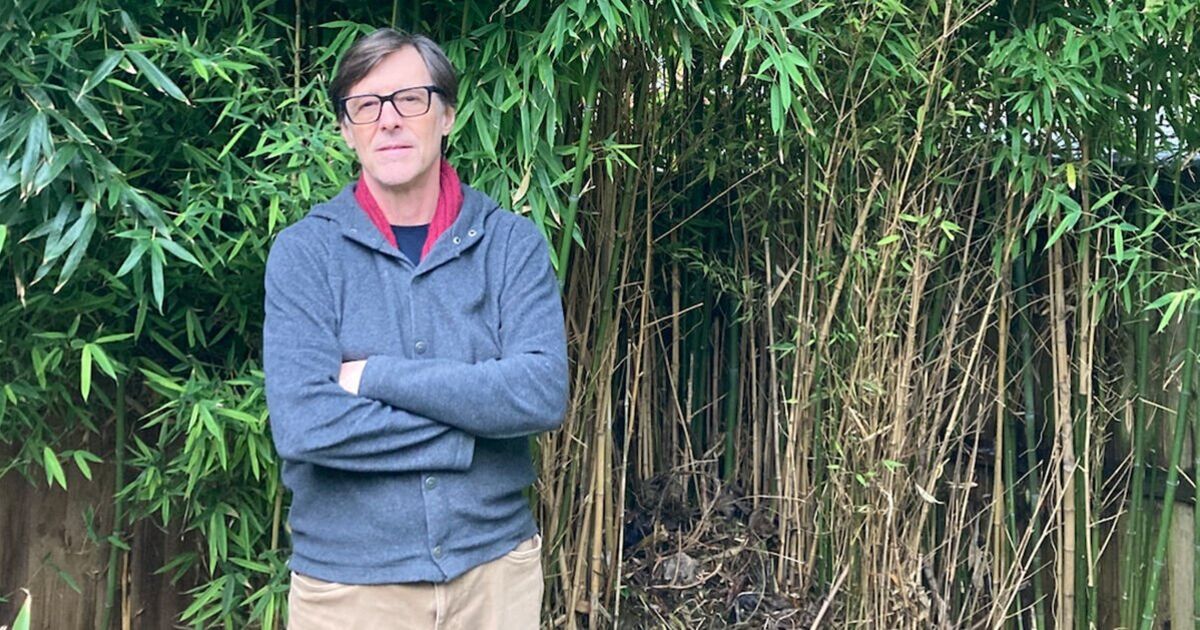
A man is urging homebuyers to check gardens during property viewings after he inherited a problem that ended up costing a fortune to fix. Michael McEvoy, 64, bought a semi-detached home in Ramsgate with his wife 10 years ago. He loved the garden, which featured a boundary of bamboo that helped to stop neighbours looking in. But over the course of this summer everything changed, when the hot weather saw the bamboo explode in growth, leaving Michael stunned.
His neighbours reported that the plant dubbed “the next Japanese knotweed” had appeared in their garden – and was emerging through their concrete path. Hidden behind the couple’s shed, the plant’s spread had gone unnoticed, but further investigation revealed shoots growing inside the shed where the floor adjoined the wall.
When the structure and its concrete base were demolished, a dense mass of bamboo rhizomes was discovered beneath, which had also spread laterally into two neighbouring gardens at the rear and side.
Speaking about the plant that originated in tropical Asia and was imported here more than 100 years ago to be used for ornamental novelties, Michael told the Daily Express: “It acted as a screen at the end of our garden. It hadn’t encroached very far.
“It had pretty much been the same way for the ten years but what was happening was it was high, it was tall, which we liked because people in the other garden across from us couldn’t see or look into our garden.
“That’s why I think it was planted in the first place. But in the hot summer, that quite humid period, we suddenly saw it grow quickly, it was almost like suddenly a bit of tropical weather, and it liked that.
“So climate change and colonisation. These plants have been brought from the far east. They are not meant to be here.”
This week, Michael, a music educator, had experts from Environet remove the plant, and the company reported that demand for its bamboo excavation services has doubled in the last five years.
Many people only realise they have running bamboo until after buying a home, and when asked about how much it cost to remedy, Michael, who now has a five-year insurance guarantee on it in case it grows back, said: “To be honest, I would rather not say the actual cost. If anyone wants to get a quote for the work, they can see, but it was in the thousands.”
And in a warning to homebuyers who are conducting property viewings, he urged them to be vigilant about bamboo.
He said: “I definitely think people should be aware that it could be problematic. We are lucky that it was nowhere near our house, it was at the very end of the garden, and it also was at the very end of the other people’s house. But if it was near the foundations of our actual building, it could have been serious.”
Michael added that he was lucky that his neighbours were understanding, and that the matter was dealt with in a calm way.
As opposed to Japanese knotwood, property sellers do not have to declare the presence of bamboo, meaning there are no legal issues.
A YouGov survey conducted in March meanwhile involving over 2,000 people found 54% of responders were unaware that bamboo, which is popular for its beauty and is sold in garden centres, can cause problems like property damage.
People should therefore carry out their own checks by a surveyor to inspect for running bamboos which can travel 10 metres or more.
Emily Grant, Director at invasive plant specialist Environet a specialist in removing invasive plants, said: “When people think of invasive plants it’s usually Japanese knotweed that springs to mind, but we deal with significantly more cases of bamboo and the damage to properties and gardens can be just as severe – if not greater.
“We often see it planted on boundaries for privacy, which means it can easily encroach and lead to neighbour disputes.
“In the McEvoys’ case, the bamboo was planted before they moved in and took several years to become established and start spreading. By the time they realised there was an issue, the damage was already done – a situation we see frequently.
“A good surveyor should flag bamboo on a property survey if there are signs it could be spreading, but they aren’t obliged to do so. To be on the safe side, homebuyers should always check for bamboo themselves and determine whether it’s a running variety, as opposed to the less problematic clumping varieties.
“If they have any concerns, the best course of action is to commission a specialist survey to find out if it would cost to remove it and consider renegotiating the purchase price to reflect that.”
Comments are closed.