
#JapaneseGarden #BackyardDesign #curbappeal
A Japanese garden is an exercise in restraint, balance, and poetic detail that transforms outdoor space into a place for contemplation.
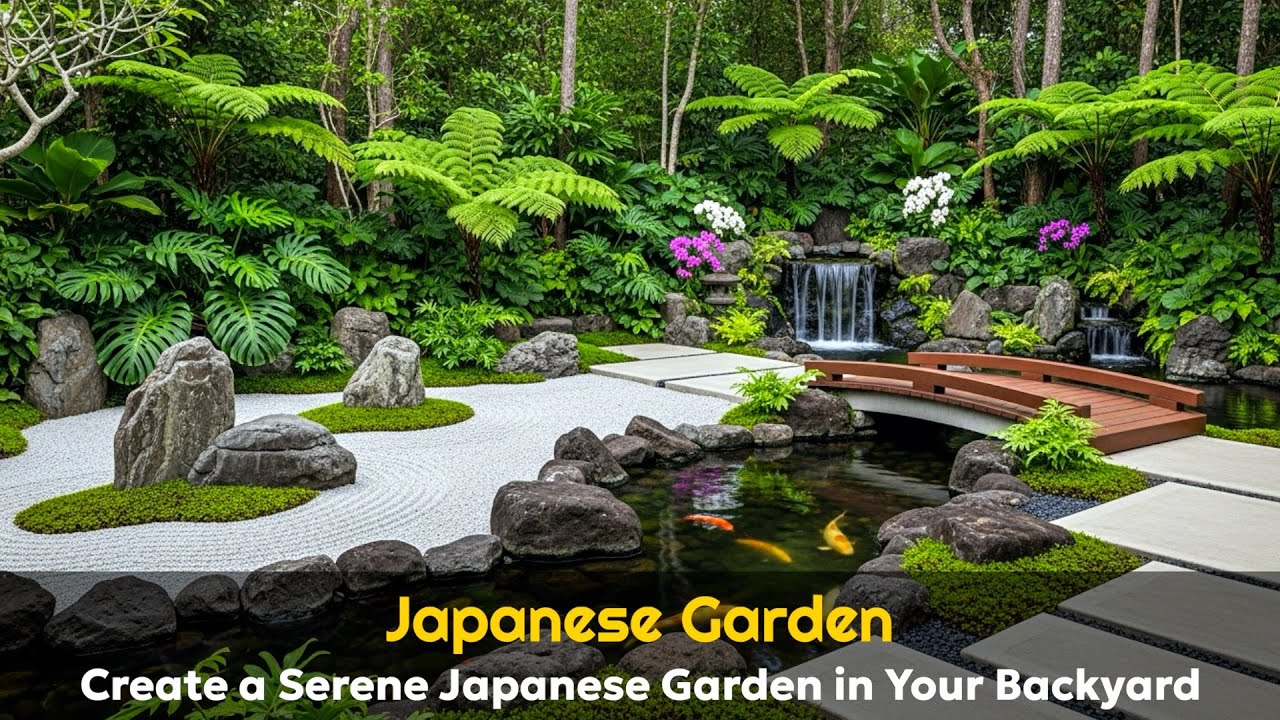
In the next few minutes, we will journey together into a world where every line, every texture, and every living element is meticulously chosen to cultivate tranquility. We will explore how the timeless principles of Japanese design can transform your space and [Music] Now let’s turn our attention to the ground beneath our feet. The sand is not merely sand. It is a representation of water. Its flowing lines meticulously drawn to evoke the feeling of ripples on a pond. Within this serene ocean, large unadorned stones rise like ancient islands. These are not just rocks. They are anchors of stability, symbols of permanence in a transient world. [Music] [Music] [Music] [Music] [Music] [Music] [Music] Their [Music] arrangement is never random. Each stone is placed with immense care, creating a dynamic balance of form, size, and texture. This dry landscape garden doesn’t shout for attention. It whispers. It invites you to pause, to look closer, and to find a universe of meaning in its simplicity. This is the art of ma, the Japanese concept of negative space. The beauty is not just in the stones, but in the space between them. It teaches us that what we leave out is as important as what we put in. When designing your space, consider the power of emptiness. Don’t feel the need to fill every corner. Allow for open areas that let the mind breathe. A single beautiful object placed in an uncluttered space has more impact than a 100 items crowded together. [Music] [Music] [Music] [Music] [Music] [Music] [Music] [Music] Adjacent to this landscape of stone and sand lies a polished wooden deck, the Endoa. This is a quintessential element of Japanese architecture, a transitional space that is neither fully indoors nor fully outdoors. It’s a veranda, a corridor, a viewing platform, and a place of connection. Look at how its warm smooth surface invites you to sit, to dangle your feet just above the world of the garden. The envoa is a bridge between our structured human world and the organic untamed beauty of nature. It dissolves the hard boundary of a wall, creating a seamless flow. [Music] [Music] Imagine [Music] starting your day here with a warm cup of tea, the cool morning air on your skin, and the silent poetry of the garden before you. You can create your own version of an angua even without a large garden. A small balcony with wooden flooring, a window seat with a wide sill looking out onto a tree, or even just a simple bench placed by a large window can serve the same purpose, to create a dedicated space for observing and connecting with the natural world. [Music] [Music] [Music] [Music] [Music] [Applause] [Music] [Music] [Music] [Music] [Applause] Notice the careful curation of plant life. This is not a wild overgrown jungle. It is a sculpted intentional landscape. A magnificent bonsai pine perched at top a stone pedestal stands as a testament to patience and artistry. For decades, perhaps even centuries, it has been carefully pruned and shaped. A living sculpture that embodies the harmony between human guidance and natural growth. Bamboo with its tall, slender stocks forms a living screen, offering privacy while creating a beautiful play of vertical lines. Its leaves rustle in the slightest breeze, adding another layer to the garden symphony. [Music] [Music] [Music] [Music] Moss blankets the rocks, a carpet of vibrant green that speaks of age, moisture, and tranquility. Every plant is chosen for its form, its texture, and its symbolic meaning. The principle here is to choose quality over quantity. Instead of a riot of different colors and species, the palette is restrained, focusing on varying shades of green and the textures of leaves and bark. This creates a feeling of unity and calm. In your own space, select a few beautiful plants that you can care for and give them room to shine. Learn their stories. Understand their needs. This act of nurturing a living thing is a powerful way to connect with the cycles of nature. [Music] [Music] [Music] [Music] [Music] [Music] Let us now shift our perspective to this second vista, a more immersive and atmospheric scene. We are looking out from within a room. The tatami matte floor and shoji screen frames grounding us in a space of human comfort. The garden unfolds before us like a masterfully painted scroll. A gentle mist hangs in the air, softening the edges of the trees and rocks, adding an element of mystery and dreaminess. This is not just weather. It is an aesthetic choice. In Japanese art, mist is often used to create depth and to suggest that which is unseen. [Music] [Music] [Music] [Music] [Music] [Music] It reminds us that we don’t need to see everything at once, that there is beauty in mystery and suggestion. This garden feels ancient, lived in. The moss on the stone lanterns, the weathered wood of the building, the gnarled branches of the pine, they all speak the language of wabishabi, the Japanese aesthetic of finding beauty in imperfection, impermanence, and the natural cycle of growth and decay. It’s a profound acceptance of the world as it is, not as we think it should be. This is a powerful antidote to our modern obsession with perfection. Embrace the crack in a ceramic pot, the patina on an old wooden table, the fading of a textile. These are not flaws. They are the marks of time. The story of a life lived. [Music] [Music] [Music] [Music] [Music] [Music] [Music] [Music] [Music] [Music] [Music] The architecture here is in complete service to the garden. The building does not dominate the landscape. It sits humbly within it. Lows slung roofs with elegant curves mirror the shapes of the hills and trees. Wide openings and sliding panels erase the barrier between inside and out. The house is designed to be a frame for the art of nature. Every window, every doorway is a carefully composed picture. This teaches us a fundamental principle. Our homes should not be fortresses against nature, but portals to it. When designing or arranging a room, always consider the view. What do you see from your favorite chair? What is the first thing you see when you wake up? Position your furniture to celebrate these views. If you don’t have a garden, a view of the sky, a single tree, or even a collection of potted plants on a balcony can become your connection to the natural world. Orient your life towards this connection, and you will find a new source of daily joy and peace. [Music] [Music] [Music] [Music] [Music] [Music]
Comments are closed.