
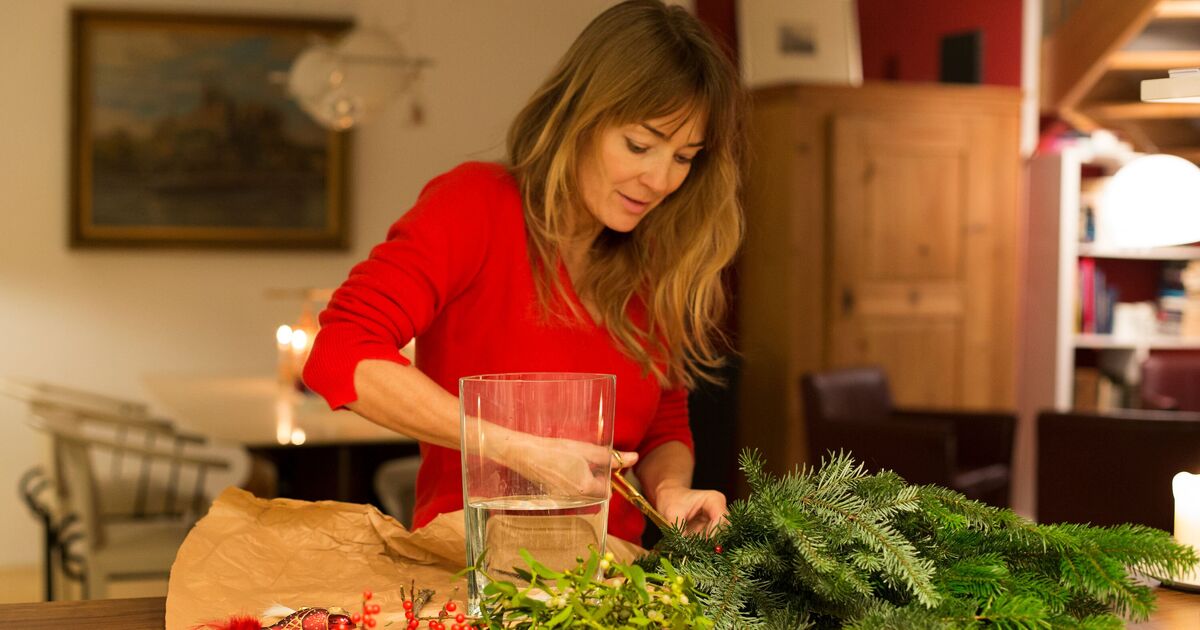
I find Christmas really begins once the house fills with fragrance, from spiced drinks on the hob and something delicious in the oven to greenery gathered from the garden. When borders feel bare, evergreens step into the spotlight. With a few hard-working plants, you can snip natural decorations in early December for outdoors, and from mid-December for inside.
HOLLY FOR COLOUR
Holly’s glossy leaves and berries instantly say Christmas. Variegated forms such as Ilex aquifolium ‘Argentea Marginata’ bring cream-edged foliage, brightening the dullest day. Plant holly in moist but well-drained soil, in sun or partial shade. It works well as a hedge, specimen shrub or mixed border plant. Many need a male for berrying, so check labels. In early winter, take light prunings back to a bud and use the stems for wreaths, garlands and table pieces. Wear gloves and keep berries away from children and pets.
IVY FOR GARLANDS AND GIFTS
Evergreen ivy is a brilliant all-rounder. It trails from containers, cloaks walls and fences, and makes instant garlands for bannisters and mantelpieces. Common ivy, Hedera helix, will cope with sun or shade and many soil types, with reasonable drainage. Because it can spread quite well, especially in rich soil, plan a regular winter trim. Cut stems just above a leaf or bud and weave clippings into wreaths, or tuck into gift wrapping for a simple, natural touch. Keep away from children and pets, as ivy can cause stomach upsets if ingested.
A LIVING CHRISTMAS TREE
If you love real trees, try a container-grown conifer that lives outdoors all year. A Norway spruce gives that classic Christmas scent, while Nordmann or Fraser firs are famed for softer needles and better needle retention. Set the pot in full sun, in a sheltered spot, using peat-free, free-draining compost. In early December, add outdoor lights, then from mid-December snip a few short shoots for indoor decorations. Small sprigs look charming in pots as miniature trees, or wired into garlands, wreaths and table centres. Take only light prunings so young trees keep a neat, natural shape.
MISTLETOE KISSES
Mistletoe naturally grows on host trees such as apple, hawthorn and lime, and is most common in milder parts of the country. Use ripe berries in late winter or early spring rather than unripe bunches. Press the sticky seed on to the underside of a healthy, pencil-thick branch in good light and be patient. It can take years before you have sizeable clumps to cut. Trim established plants in winter for decorations. Mistletoe is toxic, so keep it away from pets and children. Bay, rosemary and other evergreen herbs also add fragrance to decorations. Learn more on my YouTube channel, @daviddomoney
Focus Plant: Holly
Holly’s glossy leaves light up the garden on the short, grey days of December while the dense branches give birds valuable shelter and a late-season food source once the berries ripen. In mild spells, you can still plant container-grown hollies, provided the soil is not frozen or waterlogged.
The plant likes moist but well-drained ground, in sun or partial shade, and it will cope with a range of soil types. Before planting, work in garden compost to improve the soil’s structure. For containers, use a peat-free, loam-based compost and check drainage holes are clear so winter rain can drain freely. Water new plants during dry or windy weather because foliage can still lose moisture now. A mulch of leaf mould or bark around the base helps protect the roots.
Save major reshaping for late winter or early spring, the ideal time for tidying hedges and establishing shrubs. In early December, take a few carefully chosen sprigs for wreaths and garlands, snipping from different parts of the plant so it keeps its shape. Find out more at @daviddomoney on YouTube.
Fun fact: When naming the festive “Silver Queen” and “Golden King”, breeders muddled the sexes. “Silver Queen” is actually a male holly, while “Golden King” is female.
5 Jobs for the Week:
1. Check brassicas such as cabbage, kale and brussels sprouts for yellowing, slug-damaged or diseased lower leaves, then remove carefully. This improves airflow, reduces hiding places for pests and helps prevent fungal problems around the base of the plants, keeping crops cleaner and easier to harvest through winter.
2. Although it’s a little late in the season, you can still force chicory in early December if you have well-grown roots from autumn. Pot them into tall containers of compost or sandy soil, then stand them in a cool but frost-free, dark place, covering with an upturned bucket or box. In a few weeks, you should still get pale, tightly packed chicons for crisp, slightly bittersweet winter salads.
3. Clean and sharpen lawnmower blades before putting it away. Brush off dried grass, clear caked debris from under the deck and wipe metal parts with a lightly oiled cloth. Check cables, nuts and fixings so everything is secure and ready for the first cut in spring.
4. Save any straight, sturdy prunings from plants like hazel, dogwood or buddleja to use as home-grown plant supports next year. Cut them to useful lengths, bundle and tie them together, then store them in a shed or garage. They will be ideal for peas, beans, sweet peas and tall perennials.
5. Insulate outdoor taps and exposed pipes to protect them from freezing. Fit tap covers or wrap them in bubble wrap or old towels, securing with string or tape. Where you can reach bare pipework, cover it with foam sleeves or extra layers of cloth. If you have an isolation valve for outdoor supplies, turn it off and drain the line to reduce the risk of cracks in a sudden frost.
Facebook – https://www.facebook.com/DavidDomoneyTV
Instagram – https://www.instagram.com/daviddomoney/
Pinterest – https://www.pinterest.co.uk/daviddomoney/overview/
TikTok – https://www.tiktok.com/@daviddomoney
Comments are closed.