
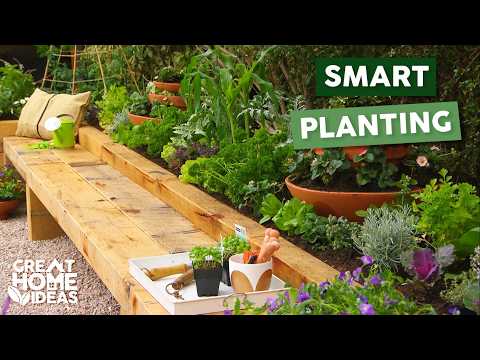
The Great Home Ideas team share their best advice for starting and maintaining a thriving vegetable garden. From preparing your soil to choosing the right plants for your space, these beginner-friendly tips will help you grow fresh produce with confidence. Discover how to make the most of raised beds, learn clever watering techniques, and get practical guidance on planting everything from leafy greens to hearty root vegetables. Whether you’re working with a backyard patch or a few pots on the balcony, these tips will set you up for success all season long.
00:00 Growing Veggies In Bags
4:33 Vertical Vegetable Rack
8:45 Prepping Garden For Winter
12:26 Create More Space In Garden
17:34 Veggie Patch For Kids
22:16 Growing Salad Crops
21:56 Veggie Patch Maintenance
31:57 Building Dream Veggie Patch
Welcome to Great Home Ideas, your destination for DIY fixes, home makeovers and amazing ways to bring your garden to life. Each week, we’ll be sharing fascinating stories, fresh projects and expert advice to help you transform your space and make your dream home a reality. Whether you’re up for a full on reno or just like to watch other people bring their visions to life, subscribe for inspiration, tips, and easy-to-follow DIY projects.
▶ Subscribe: https://bit.ly/3hxN7d5
So, you want to grow some veggies, but maybe your garden isn’t suitable. Or perhaps you’ve never done it before. You’re concerned about getting the right nutrition, the sunlight, all the stuff that goes with it. Well, never fear. I’m here to help. And if you think I’m going to tell you to put them in the pot, well, you’re wrong. And this makes it as easy as to grow veggies. It’s the Rich Grow Grow Bag. Now, this one’s for winter vegetables like I’m about to plant. All you need is the bag and some seedlings. Now, the first step is to free up the potting mix in the bag. Then we’re going to pop some holes in the bottom for drainage. The next step is to flip it back over, even it out, and then we’re just going to cut the holes to allow for planting. Now, if you’ve got larger plants, any of the brascas, like your Brussels sprouts, your broccoli, cauliflower, you might just want to do two. But if you’re doing smaller things like silverbe and spinach, you’re probably going to cut all three holes. And that’s it. With three holes cut, it’s time to get on to planting. Now, I’m just going to stick one silverbe per hole here. It’s tempting to put more in, but you got to remember these are going to grow, so you don’t want to give too much plant to soil ratio. Simply create a hole like you would plant in the ground. You will make a mess, don’t worry. In it goes. And just lightly firm around it. And it really is as simple as that. [Music] This bag is round full of nutrients that are going to last about 8 weeks. After that, you want to start giving it some liquid feed. You could do that every 10 to 14 days. I put this silverbe in direct sunlight. But if you don’t have that much sun, you might want to build something so you can move it around and make it a little bit more mobile. I’ll show you how to do that. But first up, you’ve got to water them in. [Music] So, I’m making a really simple tray with handles so we can move our grow bag around and chase that sunlight. I’ve pre-cut some timbers, really simple rectangle shape. I’m just going to pre-drill and then screw it all together. Now, I used H3 treated timber for this frame, which means it can be left outdoors. And I’m using marine ply for this base. I’m going to line this up, screw it down. [Music] [Applause] [Music] And then, much like the grow bag, I’ll punch some holes in it for drainage. [Music] Now, I think we can agree this tray doesn’t look very nice as it is. So, I’m going to put some cladding on it. Now, I’ve just cut some old fence palings to give it that rustic look. [Music] To finish off the box and to dress up the frame, I’ve used some more fence palings with some simple brackets on the bottom. Oh, very nice. And to finish it off even further, I’m going to use these handles which will sit inside and we can lift it up. And there you have it, one movable box. But I have actually built another one exactly the same as that. No bottom on it, but I have put feet on it. Now, this is going to raise this up. It’s going to aid in the drainage. You could screw this together, but it’s going to get a little bit heavy, so I’m going to keep it separate so I can move it around. I think the only thing we’re missing is a grow bag. For this grow bag, I’m just planting herbs. We’ve got some basil, some sage, and some sweet margarm. [Music] Right now, all I need to do is go and find the sun. [Music] One final option for your boxes is to stack them up like this one. I’ve even put wheels on it to make it even easier to move around and find the sun. I put a frame at the back as well so the beans I’ve planted can climb up and take the garden vertical. If you don’t have a garden, no worries. You can still grow veggies. Unless you’re a squillionaire, living in the inner city usually means you end up with a pokey little backyard. So, you can’t have all the elements. the big green lawn or the veggie patch. Well, I reckon you can have the veggie patch. You just can’t think about filling up the ground. You need to think about filling up the wall. So, I’m going to make a vertical garden out of these timber drawers, which I’ve just found lying in the lane. [Music] It’s really quite a simple build. You just need to think that you’re making a ladder, but instead of having risers, you’ve got your planters. I’m going for three levels. That’s six drawers so I can get plenty of sunlight onto my veggies and herbs. After all, this is going to be a productive garden. Now, there’s a couple of unusual angles you’ve got to get right because you want the timber to have full contact with the wall and the floor so it can’t slide anywhere and it looks as good as possible. The one down the bottom, well, I’ve just put the level up, ruled it, cut it, and it’s sitting nice and plum. Now to get this one right so when it is cut it touches the top of the brick work here. The first thing I need to do is run a level across here. Mark that point there and then come down here parallel to the brick work which should mean that the level is level and mark that line there. Now just got to cut it and slide the whole thing into position. [Music] If the angles are right and you’re happy with it, providing your floor and your wall are level, you can use this one as a template for your other two. A quick coat of paint just to dress things up a bit. Now, your positioning, well, it’s up to you, but there’s a couple of things to think about. If you have the drawers facing forward, they’re going to look like a set of drawers that you used as veggie boxes. If you turn them around and put the backside forward, it looks more like a fruit box, which is kind of a rustic charm. When it comes to fixing the beds, the first one you do is the top. You need to work down far enough from the very top of the wall so that you’re hitting the center of the drawer. Then I’m moving on to the bottom and I’m coming just far enough off the ground that it’s still low to the ground, but free draining so the timber won’t rot. Now I can run through there and my gaps here are nice and even. Black’s the new black these days, even in the garden. You’re probably thinking, why is he paint the inside? It’s going to be full of soil and you never see it. Well, it’s going to take me 2 seconds, but the extra coat of paint is going to protect that pine for a little bit longer. [Music] Drainage holes are important, too. About six of each drawer should be fine. Make sure you use the biggest drill bit you’ve got. Otherwise, they’re just going to clog up. Now, it’s time for some good quality potty mix along with my favorite herbs and veggies. Now, because you’re planting in such a shallow trough, you might have to do a little bit of root pruning when you’re going in, but all your herbs will bounce back. No worries, as long as you keep the water up to them straight away. Now, when it comes to plant selection, pick what you’re going to use. That’s the most important thing obviously, but think about where you’re going to place them. I’ve got rosemary and mint up the top here. Now, the rosemary is going to be the tallest herb out of the lot. So, it means you can get up here above the height of the fence. Little bit of privacy against the neighbors. They can pinch a bit if they want, but also when the wind picks up and they start brushing against things, all these aromomas are going to flow through to the house, just making me even more hungry. Perks of the job. Well, there you go. A great solution to a small space and plenty of produce will come out of that. Now, you could use this if you had a balcony of veranda. It works well in a tiny courtyard like this, but there’s no reason you couldn’t do it in your stock standard suburban backyard as well. In fact, I reckon if you started duplicating it, you’d have a real talking point. It’s practical and it’s good-looking. Well, winter is just weeks away, so let’s take advantage of all these cooler conditions and to get all those flavorsome vegetables that’ll add wonderful nutrition to our winter soups and stews. Okay. Well, first up, of course, it’s a harvest and the branching broccoli is just brilliant. And the good thing is if you cut them carefully and get these great heads, you can see there’s a couple more coming behind. And these will keep coming for you at least for about another 2 months. I’ll also take out the rest of the carrots. Finally, of course, I can get the last of the spring onions before they turn into leaks. Couple of capsicums. Looking good there. The cold weather’s going to knock those for a sick, so I’ll harvest a couple of those. had a bit of a crop failure with the kale, the tusk and kale. All the rain, the snails came from interstate to eat my kale, but I planted some more. And the old one, well, I’ll get a few leaves from it as well. Now, I’ve already planted a couple of garlic cloves, about a dozen or two. And look, they’re really coming up well. Why the viola? Well, it cuts down on the weeds, but it also enables the garlic to stand up so it doesn’t flop over onto the ground and get dirty. So, a nice clean garlic. Don’t forget if you’re growing garlic, select the Australian ones because they’ve got this little stubble of roots on the bottom and they haven’t been treated with methyl bromide gas and they haven’t been bleached. So, you know they’re nice fresh Aussie garlic. And you just literally poke them into the ground just so that the top is sticking out just above the ground. That way, they won’t rot. I love my beautiful wire and bamboo arbor. Now, you might remember last year we had a great crop of peas, two varieties, green feast and also telephone. And I got more from the green feast, the shorter ones, than I did from the taller ones. So, I’m going to be planting some more of those. It’s also time to be planting out, of course, all the snow peas as well, the little flat ones that go into stir fries. Now, I sewed these in the pots around about 3 weeks ago, so they’re ready to go straight in. [Music] Now, it’s great to be able to show you something new. We’ve been able to buy these for a while, but not grow them. This is Wongbok cabbage. Chinese purple cabbage. Lovely and crisp and this fabulous purple color. They are a little bit longer to actually heart up like a lettuce or a cabbage. So, you need to be a little bit more patient. Unlike these little fellas at the front here, they’ll be ready in a few weeks. [Music] And you can’t beat the flavor of beetroot. Now, don’t forget the leaves of beetroot are edible like spinach. Same sort of family. So, pick these off and you can pop them straight into a salad or any dish at all during winter. Feeding plants at this time of the year can be really quite tricky. So, to give them a bit of an extra boost, I’m just giving them some go-go juice. Now look, it’s a probiotic, so it’s really got a lot of goodness in it. The great thing is it’s not only feeding the plants, but it’s also helping the beneficial bacteria and all the organisms in the soil. And being winter, you don’t want fertilizer sitting around waiting for the plants to pick it up. Being a liquid, it’s absorbed straight away. Well, there you go. We’ve set you up for the winter season. If you follow these couple of planting tips and tricks this weekend, you’ll have a very productive harvest right through the cooler months. [Applause] [Music] I really enjoyed visiting the kids at 7 Hills High. I was inspired by their hydroponic vertical garden. It was built around a shipping container. It’s a big garden for a big school and it inspired me to do a little one in my little garden. Only problem is this is my herb and veggie garden. I’ve really enjoyed it over the years, but because some things are permanent and they’ve got established, I’ve run out of space. So, what have I got to do? Well, just like the kids, I’m going to have to work up. But what goes around comes around goes around comes back around. The only spare bit of earth I’ve got is this little area here. If I was to plant something like lettucees, I might get six to eight. But if I go up, the sky’s is the limit. Well, as far as I could reach anyway. So, my idea is to use some old recycled roof gutter, cut it into lengths, and then zigzag it down some timber post that can be fixed into the ground. The water can trickle from one to the other. When it gets to the bottom, it goes into a pot and gets pumped back up to the top so I can do it all again. Now, gutters come in all different types of profiles. And you need to get your hands on some of these end caps. So, make sure you get the one that matches your gutter. I’m going to rivet that in there and then just seal the edges with glue because I want them to be watertight and I want the water to only trickle where I let it trickle. The secret to digging a nice tight deep hole for these two-handed shovels. You just can’t do it with a spade. As the post, I’m just using some recycled hardwood. They cost the princely sum of $2 each at the tip. And I’m not worrying about rapid set or concrete either. I’m just going to ram the earth. Go old school. It’s a better way to do it for something like this, especially when it’s in a garden bed, cuz you’re not going to end up with big blobs of concrete in the ground. [Music] The little gutter brackets cost you $2 each. So, I’ve spent $16 on them. And you can just bend them over with your hand. The only thing you need to concentrate on is to make sure you’ve got that four happening. So, hydroponics always sounds so confusing, but it’s really quite simple. I’ve just got an old pot here, which is going to be the reservoir. Fill that with water. I’m going to run it up, trickle it down through here, and what’s not drawn up by the plants goes back into that little trough, and the cycle keeps going. Best thing about it, the plants aren’t relying on you for their water or nutrients. And for a touch of class, I’ve gone with copper to get the water from the pond to the top of this planter. You could use PVC or even irrigation pipe, but the copper, it looks a million bucks. [Music] And if this fails, I could always use it to pull people off stage. It’s important when you’re picking a pump that you read how high it can lift water. It might move a million lers a minute, but only horizontally. This little one can move water 2 m in the air. And the reason why I’m using a soft piece of tube and I’ve cut a nice long length is because it’s easy to pull out when this is full of water and wash it out here away from disturbing anything in there. It’s a simple thing when you’re installing it, but it makes it a lot easier to maintain. Now I’m drilling holes at the lower end just using a 6 mill bit. I’m going to run the whole thing without any plants or aggregate in it just to see if I get the flow right between each one. If I need to make the holes bigger, it’s a lot easier to do it without the plants in there. It’s only been running for about a minute and you can see that the holes I’ve drilled aren’t big enough and the water’s backing up. I’ve got a cordless drill so I can’t electrocute myself. [Music] Made the hole bigger. The flow rate greater. And I reckon as a guarantee I should put at least two holes at each end. If one gets clogged up, the other one can still work. There’s the amount of lettucees that would have taken up the whole same space on the ground. Now, when you take them out, you can plunge them into a bucket of water and wash all the soil off if you like, or you can leave it there and cover the whole thing with Scaria. It’s just a lightweight material that helps your plants stand up. It doesn’t hold water and doesn’t hold nutrients. It’s just like an anchor. You can pretty much grow anything you like. I got a bit oregano, some garlic, and a heap of lettuce. In other words, what we eat. There’s no reason it can’t look pretty either with a few flowers. Merry goals are fantastic as companion planting. Now, odor send off a certain scent that scares off pests and bugs. It’s up and it’s running. It looks fantastic and it’s practical. Now, to trick it up, once every Fortnite or so, I’m going to give it a splash of liquid fertilizer. It’s going to grow. It’s got plenty of sun and I’m going to get food in my belly. I reckon the kids will be proud of me. Finally, after 43 years, I finally learned something at school. [Music] Getting the kids into the garden growing their own veggies is a great way to get them outside and off the couch. Best of all, you can show them where their food comes from. You might even be able to get them to eat their greens. What do you reckon, guys? A little bit of kale and silver beet for dinner. Yeah. Mixed reaction, but let’s get him in the patch. What are you going to plant, Maron? [Music] I always find the kids like vegetables that are either really big or really tiny, like these carrot little fingers. Check these out. The carrots only grow to about 8 to 9 cm. So petite, perfect to crunch on. And check out this tomato tiny Tim. Again, little fruit that’s perfect to pop into little mouths also make great lunchbox snacks. I also find kids like to grow things that they can munch on straight from the vine. So things like snow peas are fantastic or this little cucumber patio snack. And when I was a kid, my parents always called broccoli little trees, which somehow made it more fun to eat. [Music] And right now is a busy month in the veggie patch because you might still be picking some of those ripe veggies from summer, but it’s also the time when we prepare our garden beds for autumn planting because in autumn we see this huge change over in the veggie patch. It’s when we start to plant all of our cool season veggies like cabbages, cauliflower, broccoli. They’re all ready to go into the ground. [Music] So, this is where the kids really come into it for some family fun in the garden. Now, do you remember a little while ago that Woolly’s released these little seedling kits that had biodegradable pots and veggie seeds? And I I know my kids really love collecting them. Now, the kits are really easy to put together. So, inside you’ll find your little biodegradable pot, little bit of seed paper, and a cocoa palette. So you start by putting your cocoa pallet in the bottom of a container. Then you put about 35 mls of water in there. And that cocoa pallet will expand into a kind of a soil mix. So we’ll just give it a second to expand. It doesn’t take long. Okay. So once that palette has expanded, you just put little bit of the mix into your biodegradable pot until it’s about a centimeter from the top. Then you quite simply like that. Then you quite simply lay your seed tape on top. That’ll break down as the little seedlings make their way through. And then just top it up with a little bit more of the mix. When you’re finished, you want to place it in a spot with plenty of light, but not direct sunlight. And in a matter of weeks, look, Minnie, it’ll look like this. And it’s ready to plant into the garden. What do you say, boys? Get them in the ground. Yes. [Music] All right, guys. Let’s get planting. Now, the beauty of these biodegradable pots is that you can plant them straight into the garden. So, what have you got now? You got some chives there. You’ll be able to put that on your scrambled eggs. So, the veggies and flowers that we’ve got here like a little bit of sun. So, 6 hours of sun a day is ideal. And you want to keep the water up, particularly while they’re establishing. I’m also putting some salvas in the ground here just to really bring those bees and beneficial insects into the garden. And you know what else does that? Pots of color. Lots of nectar rich plants. [Music] Now that our garden’s looking full and ready to grow, I think we should have a little bit of fun and make it look pretty. So, the boys are already getting stuck in here, but what we’re going to do is make some plant labels out of wooden spoons. They make really fun, quirky plant labels. And of course, most of you have got some wooden spoons hanging around the house, or they’re really cheap to pick up. So, couple of options here. You could either paint them in really bright, kid-friendly colors, and then all you need to do is get your hands on a white paint marker and quite simply label them. Or you could get a bit arty and actually paint pictures of your vegetables or herbs that you’re going to plant. [Music] Hopefully, I’ve given you lots of ideas and inspiration for how you can bring the kids and the pollinators into your garden, so you’ll be harvesting in no time. For me, there is always something to do in the garden. Doesn’t matter what the season. And there are so many exciting things to grow. Our garden has actually exploded into pots. [Music] It really is a sensational time of the year. [Music] Not only the tulips and the annuals are looking fantastic, the veggie garden, it’s going off. Let’s have a look. [Music] See what I mean? It’s fantastic. And my lettuce, it’s just beautiful. I just love purple leaf minionette. I’ve had them in the garden for what, maybe 6 weeks. And the cold weather this winter has really slowed them down. But now, blue skies, sunshine, they’re really starting to power ahead. Now, when you’re harvesting minionette, you actually take the outside leaves. These are purple. I love the color on a salad. You can get the lime green ones as well, but only harvest the outside. Don’t cut them all off because they’ll keep harvesting for you for maybe five, 6 months. This little beautiful purple leaf mustard, you can plant it pretty much all year round. And it’s a great peppery sort of flavor in salads. [Music] Talking of salads, you know, a lot of people grow iceberg lettuce. Yes, you cut it off and harvest the whole thing. But, you know, cos lettuce, for example, you can get a harvest out of that for four, five, or even 6 months if you’re lucky in good weather. If you just take the outside and the lower leaves, it will crop for you for many months. Now, admittedly, this looks a bit ratty, but don’t worry. I’m still getting salad leaves off that. When the flowers start to appear out the top, that’s the end. The leaves will get too bitter. Cut it off, pop it in the bin, and plant some more. But there’s one other salad crop that you may not have grown before. It’s sorrel. Now, when you buy those expensive plastic bags and boxes of salad greens, sorrel makes up 30 or 40% of it. And it’s so easy to grow. In fact, this soil here not only is easy to grow, it looks great. Those purple veins look fantastic in a salad. And it’s got a little bit of a peppery flavor, but not too much. But this is now 5 years old. So once you plant it, it’ll die down and then it just comes back again. So don’t pull it out. Don’t think you’ve lost it. [Music] I have to admit over the years the real estate in my veggie patch has become very competitive. My wife Sandra has reignited her love of flowers, annuals, cut flowers. Yes, the cutting garden has come back with a vengeance. And look at these beautiful poppies. I love them inside the house. wrong cuz you’re what you believe you are and we’ve got renunculous anemies all starting to come through and even some rare pey poppies with beautiful foliage but wait till the flowers appear. So I don’t mind giving them over and of course I love the flowers too. Not only for indoors but they’re attracting the bees which are great pollinators for my veggies. Beautiful. [Music] [Applause] [Music] You hear a lot about superfoods these days. Well, there’s a superfood that’s been around for years, and that’s all the different types of spinach. Now, the one I’m planting is in fact sometimes known as English spinach. But in fact, most of us are now buying a a variety, this one here, which is called Iron Man spinach, which is a slightly different version of the English spinach and it’s a great crop to grow in the garden. Then there’s silverbeat. Now, silverbe has a really white stem and the leaves get up to around about half a meter and it’s just full of fiber and nutrition and goodness. With all of the silverbead family, you can grow them from seed because it’s quite large. Soak it overnight in a bit of water with some seaweed solution or plant them out of seedlings and then you can space them out the right distance apart. And don’t forget to feed them lots of nitrogen. If you’re going for color and you got the kids involved, then you’d have to go for rainbow chard. Lovely yellows and reds and purples still with the green leaves, but the stems are fantastic. All of these are filled with antioxidants, minerals, vitamins, definitely you got to get the kids eating these fellows. But if you want to grow the original superfood that goes back over 2,000 years, the Romans grew it and it’s called kale. And it’s time to harvest. [Music] [Music] Oh, there we go. Bit of apple, some kale, some water. Blitz. Tell you what, you cannot beat homegrown. Here’s to your health. M. Well, spring has just about had its day and summer is definitely on its way. Although you wouldn’t know from this sort of weather, but I can see the jackaranders are in flower, so summer’s coming around the corner. Time for my last spring harvest and ready to get the beds prepared for the summer crop. These carrots have been absolutely fantastic. You want some of these, mate? In you come. The grandchildren. Oh, look at those. There you go. Go and wash those and you can eat them straight away. What do you say? Dang is You can’t beat grandkids. Don’t forget, you can keep sewing carrots right throughout the year. Now, the rhubarb is looking really strong and healthy, just as we want it. And the stems, look at them. Bright crimson red. Now, of course, when you go to harvest, just snap it off. Don’t cut it off. Like that. That’s what you want. Don’t forget the leaves are poisonous. [Music] Now look at these globe artichokes. They’re actually a bianial, which means they grow for a year and then they take another year to flower. So I can prune these heads off and put them into the kitchen. Now the interesting thing is I will cut these old stems down to encourage new roots, give them a little bit of fertilizer because they will come back just like this old one has from about six or seven years ago. [Music] Now I’m preparing these beds for planting out my summer crops. But what do I need? A pair of seaters, not a spade. Because with the broad beans, the potted peas, the roots actually make free fertilizer. So don’t pull them out and throw in the compost. Just cut off the stems and the nitrogen just goes back into the soil. [Music] As you know, I have a homemade soil improver for every season. This is my summer recipe. Okay, now grab a pen and a piece of paper cuz you might want to jot this brew down. It’s one of my specialties. Wheelbarrow full of garden compost, a bag of cow manure, then a couple of handfuls of pelletized chicken manure. It’s got added fertilizer which the plants will need later on. A handful or two of garden dolomite. And then couple of handfuls of sulfated podash. It’s going to bring the flowers and the fruit later on, especially for my tomatoes. Mix all that through. Spread it over the soil and just lightly dig it in. Then you’re ready to plant. Look at these beautiful tomatoes. You might remember back in August I sewed the seed. The variety was oxard, a really good, strong one. In fact, they came up like hairs on a dog’s back. I think this hole is pretty deep even for my big super advanced seedlings. It is because, you know, tomatoes actually develop an extra root system along the stem. That means that if you deep plant them, they’ll develop an extra stronger root system. Also, when it gets really dry later in the summer, it helps to drought proof your plants. And as always, water your seedlings in with some seaweed solution. It reduces transplant stress from one pot to the next and it really helps get the plants going. And then finally, put down a really good mulch. To protect my seedlings for the first month, I’m putting in a couple of bamboo stakes. Then over the top, I’m just putting some plant protection netting. It stops the real excessive sun beating down and frying your seedlings. It keeps the birds off, too, which is really good. Well, that’s the last of my spring harvest, but the good thing is I’ve got my summer crop started. Don’t plant everything at once. Stagger your plantings and that’ll extend your harvest. See you next time. [Music] You know, I just love showing you my veggie patch every month. But tonight, we’re actually going to help out a young couple who want a veggie haven of their very own. And they’ve asked for a bit of help. Now, for this job, I’m calling in the reinforcements. Adam, anyways, Graeme, I’m happy to help. You can help. Well, I don’t have a green thumb up, mate, so keep me away from the You’ve got one. I got one. That’s awesome. Between the two of us, we can get this done, buddy. Let’s do it, mate. Charlotte, you want to build a sand castle? Don and Nick and their three children have a great backyard. There’s plenty of room for the kids to play, and they even have a pool. But they really want the kids to learn how to grow, harvest, and cook food fresh from their very own garden. But they’re stuck on just what, how, where, and when. Hey. Hello, Donna. How you going? How are you, mate? It’s Adam. Okay. So, what sort of veggies would you like to grow? Um, look, I think the general veggies that we use every single week. Kids love to cook. Yeah. And that’s the best thing about a veggie patch. It gets the kids involved in the garden. But once you get them growing, you get them eating, they’re set for life. They Now, what about herbs? Yeah. Look, I’m not a fan of coriander. Ah, no. Neither am I. I hate coriander. I mean, they don’t like it, guys. Yeah, I love it. You love it? No, I think you’re alone there, Nick. Sorry. Have a look at this spot. We shall check it out. Definitely gets a lot of sun. Sunshine. You know, that’s the secret of success of veggie patch. The minute you get shade, you get weak plants, you get fungal diseases, then you get insects. So, full sun going to be a perfect spot to grow some fabulous veggies. Yeah. And I can see there’s a sand pit. Could be bring it in a bit. Maybe make a bit of a feature out of it. Another reason for the kids to come to the get involved. Now, this fence is a bit of a worry, mate. It hves the garden. Definitely does. And there’s a lot of empty space over on the side of the pool that I think we can incorporate into this backyard. You’re going to be busy. I can do that. Can you give me a hand cuz we’ve got to get this lawn up. Excellent. Come on, Charlotte. We got some I got to show you. First things first, let’s work out what we’re dealing with. We’ll need to remove a section of this grass. So, I’m on the measuring tape and Nick’s on the spray can. Should just slide out. Look at that. Beautiful. We go that way. Up this way. And as you can see, this will just make the return like that. But one thing you want to keep in mind when you’re dealing with pool fences is obviously the laws, regulations. You want to contact your council and make sure that you get them right because it’s all about safety for kids and keeping them out. And obviously, if you can’t get it done in one day, you want to make sure that you set up a temporary structure to keep the kids out until you get the job done. Okay, Nick. Now, we got to get this lawn up. I have actually put down a veggie garden on top of grass, but it doesn’t always work. This is particularly strong, healthy buffalo grass. And the last thing you want is it come through and give you grief later on. So, we’ll use the turf cutter, get the lawn up, but you’ll need eyes and you’ll need ears. And I’ll go and check what these clowns are doing over here. Hey, Adam. So, I think we put this pool fence over here. Then it opens up this whole area to the backyard. We got a concrete slab here. What used to be here? A shed. Very old shed that was falling down when we moved in. We’re going to have to put a bit of pair into getting this one up. Good luck. Hey mate, I can save you, okay, a bit of backb breakaking work because I’m looking for a spot for a compost bin. Sounds like a fantastic idea. Now, Donna, we’ve got some plants to buy. Let’s go shopping. All right, good luck. With Donna and Graeme off to Bunnings to select the ultimate plants for the ultimate veggie patch, it’s up to Nick and I to finish off the prep work. It’s goodbye patch of lawn and hollow you new pool fence. [Music] Hey Nick, fence is done. Yep. Looks like you prepared this garden area. Yeah, it’s getting there. Tell me you’re feeling strong mate. Oh yeah. Got a bit of weight in them, don’t they? They do. Now, I’m no gardening expert, but I do know that raised beds have many advantages. For starters, you’re not bending over all the time, so it’s a lot easier on your back, but also the terrace in it gives a nice visual illusion. So, under instruction from Graeme, the plan is to put in a raised garden bed at the back with a bench seat. The sand pit will move front and center, and there’ll be garden beds at each end. Now, mate, it’s good talking about it, but we got a lot of work to do. We’ll get cracking there. Let’s do it. Yeah. Beautiful. Simple construction is the real beauty of these garden beds. Hardwood sleepers stacked and screwed. It doesn’t get any easier than that. Nice looking box, mate. Yep. Look at that. Lovely. Can’t go wrong. If you start with a good level base, then the following layers will just fall into place. Now Nick, you might be wondering why we’ve dug these trenches, but as you can vouch for me, mate, these sleepers weigh an absolute ton. Y it’s a lot easier rather than getting your power saw ripping down one end and then trying to flip it over and rip down the other end. We’ve decided to dig these trenches to keep all our sleepers level. This ground’s nice and soft. So, it was just a quicker process. Something to keep in mind. Nick and I have been banging on about how heavy these hardwood sleepers are, and they are also more expensive than other options like tree to pine. But for this job, the hardwood was the better option. And that’s because there’s this beautiful hardwood deck and pagola in the backyard. So, we want to tie the whole area together, but also it’s the sheer weight of these sleepers that weigh an absolute ton. So, that means it’s less supports that I need to put in the ground to hold these planter boxes in place, which makes my job a lot easier. [Music] All right, mate. Now, to finish it off where the joint is to tie them all together, we’re just going to use these one cleat. Right. We’ll slip it at the back so it goes halfway over both joints. Yep. We’re going to want to keep it below the soil line and simply screw it off. Won’t be going anywhere. [Music] We’re in the home stretch of the construction phase. With three little ones, the kids zone is an important area in this garden. That’s why we put the new sand pit front and center. Well, mate, I think this is a perfect size sand pit for the kids. And the best part is these lower beds. They can plant whatever they like in it. That’s all the hard work done. I see me and you go put our feet up. Pretty sure I hear a truck in the driveway now. No, mate. We’ll leave it for someone else. Let’s go. Okay. All done. Fantastic. Good on you, buddy. Okay. Well, the boys are really making good advance there. Good. Adam and Nick have got the garden beds in. My guys are putting in the soil. Now, the soil I’ve chosen is an organic veggie mix. You can get it in bags or you can get it in bulk. Okay. Now, on top of that, I’ve added some cow manure, and they’ve dug that through. All you’ll need during the year is some fertilizer. Remind me to give you that later. We’ll do. Okay, let’s get our veggies. Let’s go shopping. It’s a great time of the year at the beginning of the season. Okay, your choice. What are you up to? Well, getting into the warmer months, some salad things. So, lettuce and lettuce. Okay. About celery. Celery is always really good. Nick loves that. What about peas? I’m going to put those tea peas in. They’d be perfect. Oh, yeah. Excellent. Look at those. Perfect. Okay, now a good bit of an idea for an arber passion fruit and a fantastic idea for a strawberry pot. You’ll love it. Now, grab one of those white ones. It’s called Blondie. Wow. It’s a beauty. I rather like it. Okay. And if you can grab a couple of those cuz I’ll need a few of them. Okay. Now, you’ve got to go for tomatoes. Look at the variety. Wow. It’s an incredible decide. Well, it’s just a case of growing some of the old ones, some of the new ones. Get some of those big fellows there because we’ll need those. Oh, gross list. An old French one and rouge. Oh, the kids tumbling yellow. The original tomatoes were yellow. Really? Yeah. Pink pearl. They’re new. I like the name. Yeah. And they get a lot less fruitly and insect problem. So, they’re easier to grow. Now, are you into pesto? Love it. Okay. Well, you got to have basil. The other great thing about basil, it discourages white fly from attacking your tomatoes. Okay. Look at all these herbs. Great fresh flavors. You can’t beat them. Fresh. Mhm. Lemon thyme. Perfect. Curry plants. Great. Oh, a couple of mint. Yep. And some parsley. So, we’ve built these couple of garden beds either side of the sand pit. And I thought because they’re low down be perfect for the girls. Yeah. Brilliant. Okay. So, we’ll get some maragolds. Look at that color. And those pansies be great. Actually, I’m running out of room. Can you carry those? Done. Awesome. Our shopping’s almost done. I need to pick up a couple of arches for the passion fruit. And these bamboo steaks will make perfect tomato towers. Well, you’ve got all the flavors you can imagine on these trolley. Yeah, definitely. The kids are going to love it, too. Absolutely. How good’s the sand pit turned out, mate? Yeah, it looks fantastic. Now, we’ve got these big wide paths here, which is great because it leaves us enough room to get a long bench seat along here. So, the same sleepers as the planter boxes. Cut up a few legs. We’re going to sit them in place. And then sit the sleepers on top. We’ll be relaxing in no time. Perfect, mate. How good is that? Sensational. No time sitting around. We’ve done a fair bit, haven’t we? Well done, boys. Yeah, thank you. Fantastic. We’re ready to plant. But mate, I thought this path we were going to finish it. I thought the gardeners looked after the path. The landscaper looks after the path. Do you know a good landscaper? That’s it. He’s out the street. Yeah. Good, mate. I got a delivery for Jason Hodgers. Is he around? Yes, mate. Just did this roll on the top here, mate. Hello, brother. High five. Keep on trucking until you reach the top. Never stop rolling. cooking. We got filled up here with so many veggies. Hello. I got some materials. A day ago, they used to be an ugly concrete slab. Now, they’re going to be a beautiful egg floor for this garden, which looks fantastic. You guys know what you’re doing. All I need is a couple of barrerows and a couple of BS to help me. We’re inside for a cup. See you. Go to it, champ. All by myself. Don’t want to move. Oh boy. Luckily, it’s not a huge area. A couple of barrerows and we should be done. Now, it’s important to remember that this is a and not road base. So, a everything’s roughly the same size. But when it doesn’t have the sand grit in it, it doesn’t compact. So, it’ll always crunch underneath your foot. And don’t worry about weed bat. If you put it down thick enough, and I’m putting it down about 100 mil, the only weeds that are going to grow are ones that fall from the sky when birds fly over your property or they blow in. Weed mat just doesn’t work. For the compost bins, I’m using some old hardwood pallets. I’m just going to cut them down to size so they fit in our space. And because we’re using old hardwood pallets, I thought I’ll stick with the tradition and use a good old handsaw. [Music] And then it’s a bit of mesh to hold the compost in. Graham tells me the mesh is also great because it allows air flow through the bins to accelerate the composting process. So the construction is super simple but really effective. It’s definitely built to last. Rails at the front will create a barrier to keep the compost in place but still allow easy access when you need it. Let’s give it a go, mate. Give it a test. [Music] Perfect. Come on, mate. You’re holding up production. Sorry. And sharing is caring. I’m sure Hudgie won’t miss some of his recycled aggregate, which will keep our new compost bins weed free. My work here is done. So, all those lettuce, they’ll be great. They’ll last right through the season. Right, kids. Yep. Done. See you, mate. Got another mate. See you D. Nice to meet you. Half day. Half day. Half day hodgees they call me. I’m stealing your rake. We’ve got work to do. Great. Yes. The veggies won’t plant themselves. Now, if we can get some string on these little bamboo steaks, you’ll be able to grow peas and beans here for years. Now, the type of string I’ve got is a little bit thicker, and it means that the beans and the little tendrils can climb onto it much more easily. Right. Okay. Done. Now, at this time of the year, it’s still plenty of time to get those pea seedlings planted because they’ve already shot. Okay. Now, we can plant them, I think, best on the inside of the post. And then you’ll see that they just sit on those lower strings already. Now, we’ve got this beautiful archway. And remember at the nursery we bought these passion fruit. Now these are non- grafted which means they’re not going to sucker. So look at that. It’s already holding on. You know they’re amazing. Starts young. Now this is really the fun bit. Now there’s a bit of a trick with planting tomatoes because they actually develop roots up and down the stem. So you can actually plant them a little bit deeper and you end up with stronger plants. Okay. Beautiful. This is a little yellow tomato. It’s a tumbling tomato. Will spill over. So, we’ll plant it right on the edge. Then, the kids can just harvest the fruit themselves. The kids will love it. Don’t they be great? Yeah. Now, you can buy a strawberry pot, but even better still, you can actually make one. Now, the strawberries just go in at the front. In this case, the strawberry must sit just at the original soil level. They rot off really quickly. Now, just on the edge here, I’m planting some sweet Alice. Not only do they have a wonderful honey perfume Yeah. but they look pretty. They do look beautiful. [Music] Done. See all these little flowers here? Yep. Fruit for Christmas. A beautiful on the pebble over. Okay. Perfect timing. [Music] This garden is going to be a gardener and a chef’s dream. We’ve got artichokes, kale, blueberries, corn, and even curry plants. You won’t believe how it’s going to look by the time we’re finished. Oh, great job, lads. Great. Fantastic. I love these bins. I do. I really love them. They’re good, aren’t they? But tell me, we’ve made three of them. Why? Me and Nick are wondering why are we making three. Ah, okay. I’m setting you up for a lifetime of compost making. And what happens is that when you get one bin, something goes in there and oh Jesus full. So then you start on this one, then you fill up the second bin, then the third bin, but by that stage, this one here started to compress down. So you move that one into here, then that one into here, and after about six or seven months, you got free soil coming out of here. Let’s get this stuff in there. Now, it all goes in. No dairy. Just chuck it in. The other trick is it’s just like a lasagna. Layer upon layer upon layer. And it’s the combination of different textures and materials in those layers that will make you well balanced compost. Okay, fantastic. Now, I’ve got one more garden bed to finish, then it’s all finished. See you. Our final job is a very special one. It’s time for Charlotte and Jade to plant out their very own garden beds. Okay, now what we’ve got to do is with this little beautiful I wish I had one of these. You just dig a little hole. Pop it in the hole. Can you do that? Oh, that was such a good job. You can come and work for me if you like. Can you pop that plant in that little hole? Oh, you’re so good. Okay. Do you like lettuce? It’s beautiful with tomato. I love tomato. Do you go? I’ll help you put this one in the ground for you. We’ll turn it upside down nice and careful. Give it a little shake. Oh, dirt everywhere. It goes everywhere. It did. You know, I started gardening when I was about four. So, younger than you. Yeah, you’re four. Same age. You and I were the same age. I’ve been gardening for the last 10 years. Isn’t that good? Welcome to new veggie garden. Got a pansy. Did you do this? What do you think, guys? There you go. Fantastic. He’s amazing. [Music] How different does it look with the uh plants in? Comes to life, doesn’t it? [Music] Got flowers, you got vegetables, you got herbs, plants that’ll bring the bees in the lavender, tomatoes. We got a bit of everything. Yeah, it’s a market gardening. And as well, of course, you’ve got the compost bins there. Me and Nick know how it works there. busy. Okay. Any favorites? I think I’m going to love the passion fruit vine once it comes over. Fruit hang down. Kids can pick them off and cut them open and eat them. Sitting there having ice cream and think, “Yeah, have some passion fruit.” Just walk out. No. When they get tied in the sand pit’s great. The construction is terrific. Congratulations, mate. Cuz it’s good and solid. The kids can play on it. They can sit on it. It’s not going anywhere. Definitely not. Definitely not. And you can sit down, relax. The only thing you got to do, give it a nice little seaweed watering every now and again. Yep. He’s already had a present. There’s yours. Bit of fertilizer. Give it a bit of a feed. And that’s all you need to do. But don’t forget to harvest. Okay. Y. What do we say for our beautiful veggie patch? Thank you. Can I have a cuddle? Can I have a cuddle? Thank you, sweetheart. You enjoy it. Eat all those veggies up and just have a lot of fun in your sand pit. Enjoy. [Music]
8 Comments
So happy to see Jason again! 🎉
Great video!
What are your biggest struggles when it comes to growing veggies?
Loved the video. Watched start to finish.
Love your channel! Quick question, what kind of paint did you use on the drawers? Just wondering if it’s food-safe since the herbs will be growing nearby. Thank you for your beautiful work.
I've watched this video on our televisions in full I love this kind of videos idea how to make a greenyard thank you so much for the idea
Gees I never knew mustard was a leaf 😮. ❤
Most of the veggies shown are to plant for winter crops. I’d like to see shows for spring and summer planting.