
The other day, I went out to take some photographs in the garden and came across a wonderful sight. In a corner, bounded by old railway sleepers, a cobweb had formed like a small net across the corner between the sleepers. Up above, the mahonia had begun to shed its delicate yellow petals, with them dropping below and creating the interesting image shown. Very pretty.
The milder weather through late October and early November has certainly caused the plants to react. Right at the very top of the garden, I have a very large area of yucca stems growing. Yuccas can add dramatic architectural effects to borders and courtyards with their bold sword-shaped leaves and panicles of bell-shaped flowers.
You can also acquire tender species that make good house or conservatory plants too. They are evergreen shrubs and trees from hot, dry areas of North and Central America. Many are hardy and can be grown outside.
Yucca is a great plant for beginners as it’s easy to grow, tolerant of neglect, and can be very long-lived. They store water at their base, so are tolerant of drought. They are slow-growing, so they can take time to reach their ultimate size. As the plant grows, it may produce offsets at the base, giving a multi-stemmed look as mine has over the last 20 years. The milder weather has resulted in it producing a tall flower stem again, quite late in the year. Many have leaves with razor-sharp edges and spiny tips, earning them the common name Spanish dagger.
Yucca’s sharp-tipped leaves mean they’re best planted away from paths, entrances and driveways and can be effective at fending off intruders when grown in rows. They also make an excellent choice for drought-tolerant or rugged gardens. Smaller varieties are suitable for growing in containers too.
I am very pleased that a pair of agave americana that I planted in the chalky beach garden some 3 years ago now are surviving really well. Others that I had planted at the same time rotted with the excessive wet that winter and had to be removed. These two, one pictured, have really survived well as you can see. Agave americana is a beautiful, highly architectural species, with varieties for growing both inside and out.
It eventually forms an enormous rosette of stiff, dangerously pointed leaves also known as the century plant, as it supposedly takes 100 years to flower. The experts say that typically it flowers when about 30-40 years old, after which the main plant dies, leaving young offsets as successors. They are best grown in well-drained soil in full sun. When mature, it will be able to cope with cold and frosts provided it’s protected from winter wet. Young plants will need extra protection. The vast number of my agave are in containers and are lifted to an area under cover for the winter months to keep them dry.
For the last few summers, I have grown quite a few osteospermum, along with geraniums, to provide some summer colour across the plot. The former, otherwise known as the Cape or African daisy, is a brilliant choice for long-lasting, colourful blooms through summer and into autumn. They are often used as a front of border plant in milder parts of the country or annual bedding, and they also make great container plants.
There are many colours to choose from, and the vibrant daisy flowers attract pollinators. Many osteospermum are tender or half hardy and are usually treated as annuals or summer bedding plants. But there are some varieties that will come back every year, if planted in the right location and given winter protection.
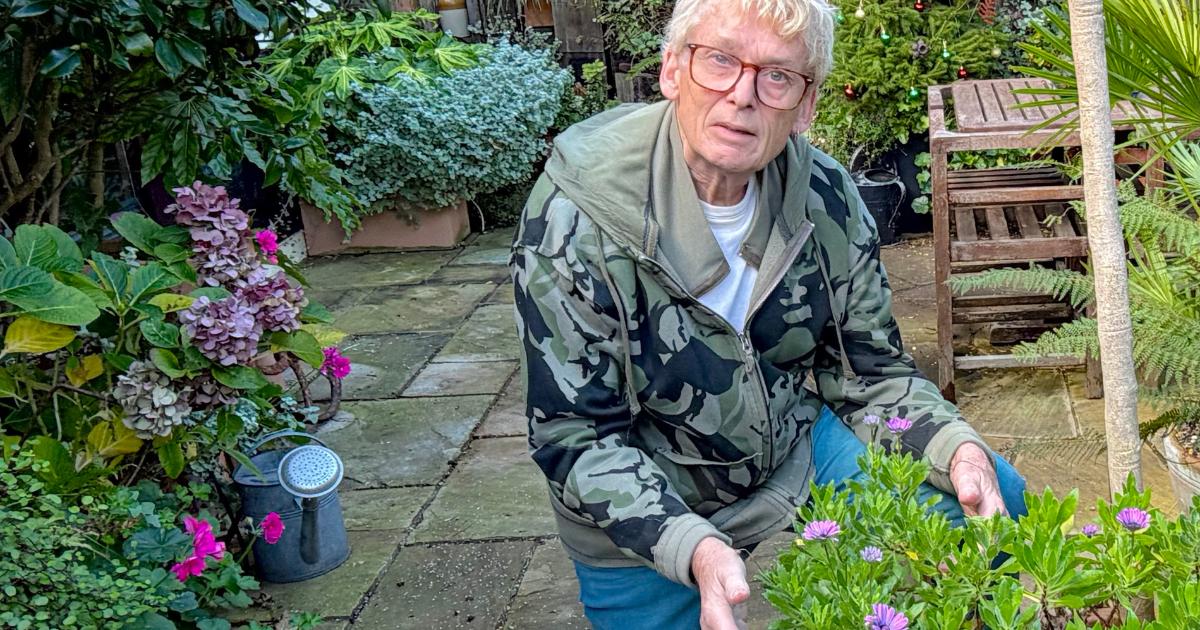
Grow them in a sheltered spot in well-drained soil in full sun. They are perfect for adding colour to containers as they flower for months from May through to September. That said, you can see many of mine are still flowering in December. I leave them in situ through the winter, and many have survived and flowered each year.
Camellias are popular evergreen shrubs that produce a beautiful display of flowers from late winter to early spring, when little else is in flower. There are thousands of varieties to choose from, with white, pink or red flowers, which can either be single or double. Their shiny, evergreen leaves look great all year round. In their native range of south Asia, camellias are woodland plants, so do best in shade.
This makes them useful for growing in shady parts of the garden or as part of a woodland border. The white one pictured came to the party very early this year, blooming in the second week of November following the very mild weather.
Read more of Geoff’s garden at www.driftwoodbysea.co.uk or follow the garden on social media.
Comments are closed.