Normally tiny bright red berries are not edible to humans. They’re for birds and other wildlife.
Suspicious-Elk-899
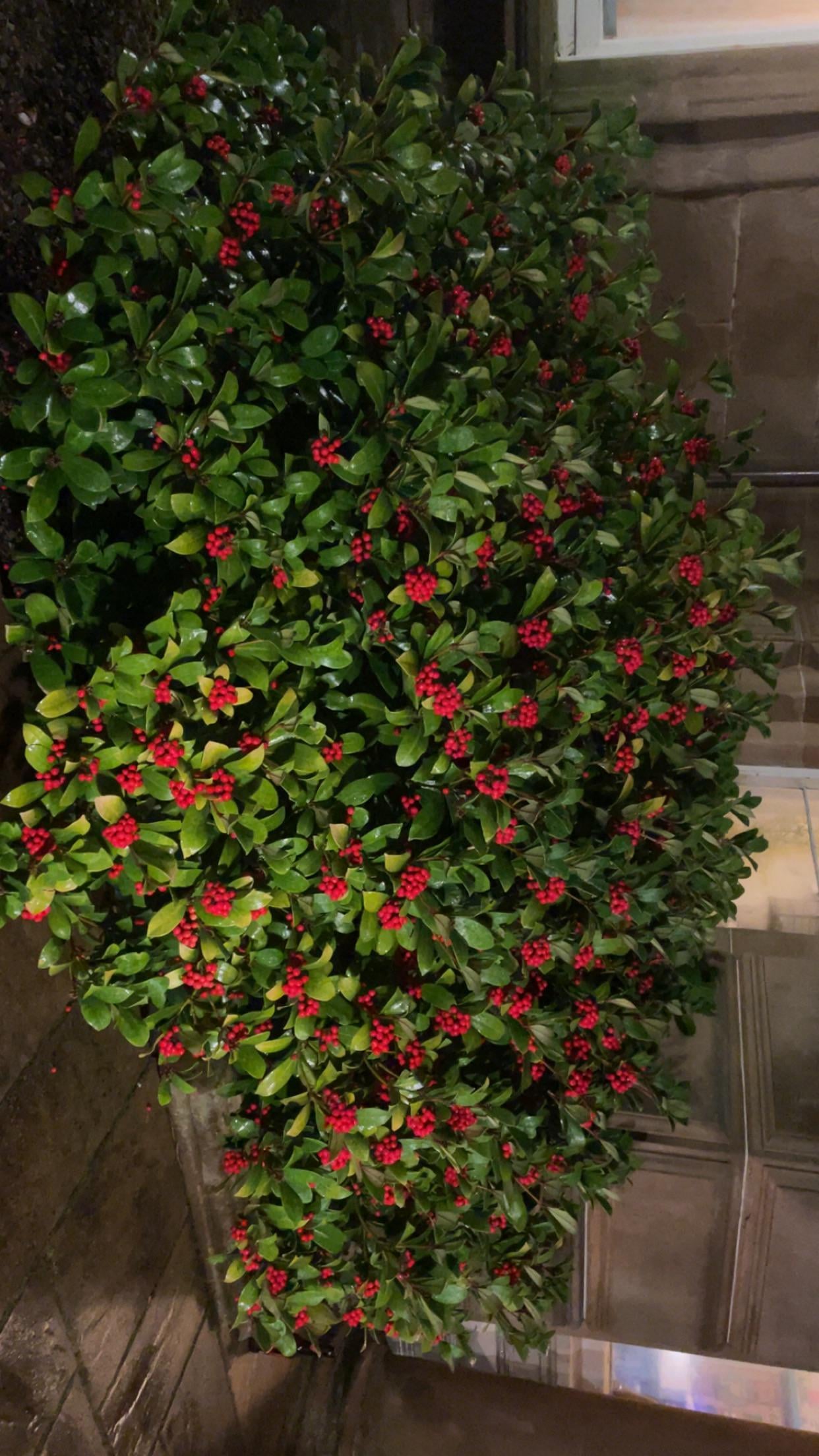
The image appears to show an evergreen shrub with glossy, dark green leaves and a profusion of bright red berries. Given the description of a “big bush in the UK specific,” the most likely candidates for this plant are a species of Holly or a Cotoneaster.
Here’s a breakdown and a very important warning about edibility:
⚠️ CRITICAL WARNING ABOUT EDIBILITY
Do not eat these berries. Many red berries found on evergreen shrubs in the UK, especially those commonly grown as garden shrubs or hedges like Holly (Ilex) and Cotoneaster, are poisonous to humans.
Holly berries are toxic.
Cotoneaster berries are considered mildly toxic, causing upset stomachs.
The safest approach is to assume any wild or unidentified berry is poisonous.
🌿 Most Likely Identification
Based on the appearance of the leaves and the growth habit, the plant is most likely:
Holly ( Ilex aquifolium or a cultivar):
Appearance: They are evergreen shrubs or small trees with thick, glossy, usually prickly (but sometimes smooth) dark green leaves. The berries are bright red and grow in small clusters close to the stem, which matches the photo well.
Edibility: The berries are poisonous to humans and pets.
Cotoneaster:
Appearance: This is a very common evergreen or deciduous shrub, often used in gardens or as groundcover/hedging. It has dense, glossy green leaves, and the berries are bright red and profuse, growing in clusters. The leaves in your photo look similar to some Cotoneaster varieties.
Edibility: The berries are generally considered mildly toxic, causing stomach upset if consumed.
Pyracantha (Firethorn):
Appearance: Another common evergreen shrub used for hedging. It has dense, glossy green leaves and a huge amount of bright red, orange, or yellow berries in autumn/winter. It is very spiny, which is a key distinguishing feature (though not visible in the photo).
Edibility: The berries are generally considered mildly toxic or inedible raw.
Due to the general appearance of the foliage, Holly or a dense, upright Cotoneaster are the strongest possibilities.
If you can provide any more details, such as if the leaves are spiky/prickly or if the bush is particularly tall and wide, it might help narrow it down further!

4 Comments
**northern ireland lol
Looks like Skimmia japonica, NOT edible
Normally tiny bright red berries are not edible to humans. They’re for birds and other wildlife.
The image appears to show an evergreen shrub with glossy, dark green leaves and a profusion of bright red berries. Given the description of a “big bush in the UK specific,” the most likely candidates for this plant are a species of Holly or a Cotoneaster.
Here’s a breakdown and a very important warning about edibility:
⚠️ CRITICAL WARNING ABOUT EDIBILITY
Do not eat these berries. Many red berries found on evergreen shrubs in the UK, especially those commonly grown as garden shrubs or hedges like Holly (Ilex) and Cotoneaster, are poisonous to humans.
Holly berries are toxic.
Cotoneaster berries are considered mildly toxic, causing upset stomachs.
The safest approach is to assume any wild or unidentified berry is poisonous.
🌿 Most Likely Identification
Based on the appearance of the leaves and the growth habit, the plant is most likely:
Holly ( Ilex aquifolium or a cultivar):
Appearance: They are evergreen shrubs or small trees with thick, glossy, usually prickly (but sometimes smooth) dark green leaves. The berries are bright red and grow in small clusters close to the stem, which matches the photo well.
Edibility: The berries are poisonous to humans and pets.
Cotoneaster:
Appearance: This is a very common evergreen or deciduous shrub, often used in gardens or as groundcover/hedging. It has dense, glossy green leaves, and the berries are bright red and profuse, growing in clusters. The leaves in your photo look similar to some Cotoneaster varieties.
Edibility: The berries are generally considered mildly toxic, causing stomach upset if consumed.
Pyracantha (Firethorn):
Appearance: Another common evergreen shrub used for hedging. It has dense, glossy green leaves and a huge amount of bright red, orange, or yellow berries in autumn/winter. It is very spiny, which is a key distinguishing feature (though not visible in the photo).
Edibility: The berries are generally considered mildly toxic or inedible raw.
Due to the general appearance of the foliage, Holly or a dense, upright Cotoneaster are the strongest possibilities.
If you can provide any more details, such as if the leaves are spiky/prickly or if the bush is particularly tall and wide, it might help narrow it down further!