

WET WEATHER WOES: But it is possible to save your soil (Image: Catherine MacBride/Getty)
This article contains affiliate links, we will receive a commission on any sales we generate from it. [Learn more]
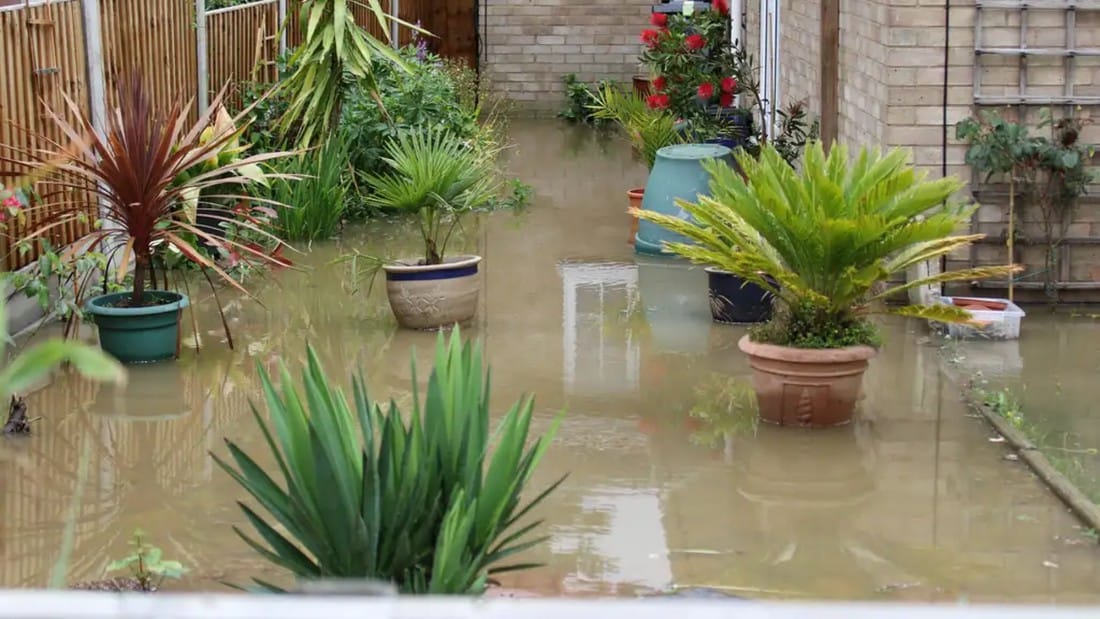
Winter is officially here and the weather is as changeable as ever – one minute it’s cold, crisp and bright, then the clouds roll in and there’s a torrential downpour. When it comes to rainfall, droughts are usually the gardener’s biggest concern, but too much water isn’t good news either.
It’s likely to be wet and miserable for the next few months – so why are we caught out when the rain comes, leaving gardens drowning in great puddles and plants struggling to come up for air? However, there are steps you can take to both prevent and minimise the damage caused by heavy rainfall, according to Tom Massey.
He knows a thing or two about dealing with the impact of climate change as his WaterAid Garden won a gold medal at last year’s RHS Chelsea Flower Show. The garden designer has shared tips on making your garden more resilient to excessive rainfall.
WINTER GARDENINGDisconnect your downpipes
“Often, flooding locally is caused by sewer systems becoming overwhelmed from all the stormwater going directly into the sewers and that’s where you see roads flooded and flooded drains,” says Massey. But reducing the flow from your own property can help.
“Disconnecting your downpipes which come from your roof and connecting them into a water butt or rain garden or a swale (a shallow channel designed to collect and slowly drain water) or soak-away, instead of allowing that water to go into the main sewer system, can be a really good way to help the local area be more flood resilient,” he says.
Improve soil health
Rainwater runs off compacted soil, which can lead to flooding in other parts of the garden. However, healthy soil can act like a sponge, and it reduces run-off too, says Massey. It holds on to rain when it’s wet and slowly releases it as things dry out.
He suggests adding organic matter such as compost, leaf mould or well-rotted manure to enrich the soil. “Even one bucket per square metre makes a difference. There’s no need to dig it in – worms and microbes will do the work, pulling it into the soil. Mulching also prevents compaction, suppresses weeds, and reduces surface run-off.”

Choose plants that love water
“If there is an area of your garden that does regularly flood, choose plants that can draw up a lot of water from the soil, such as salix species (willow), alnus (alder) and betula (birch), which help soak up water and dry out heavy ground,” says Massey.
“Cornus (dogwood) are also a good choice as they bring striking winter colour while perennials like Iris sibirica (Siberian iris), astilbe and Lythrum salicaria (purple loosestrife) thrive in damp soils.” These plants will survive being submerged and any time up until the end of March is the ideal time to plant them.
Lose your waterlogged lawn
If your lawn is prone to flooding, you might want to have a rethink, says Massey. Aerating the soil by stabbing it with a fork can help, a bit, but you’re fighting a losing battle.
Instead, consider creating a bog garden, as plants that like boggy conditions will create a different kind of habitat that can be really interesting for the biodiversity, says Massey. Moisture-loving plants which are ideal for a bog garden include Iris pseudacorus (yellow flag iris), Filipendula ulmaria (meadowsweet), Carex (Japanese sedge) and ferns.
 PATIO PROBLEMS: Large areas of solid paving can be prone to flooding (Image: Alamy/PA)Use permeable surfaces
“If you are designing your garden from scratch, try to include lots of permeable surfaces,” says Massey. Water will run straight off big areas of paving and then overwhelm other parts of the garden.
He suggests swapping solid paving or concrete for gravel, permeable pavers or reinforced grass/gravel grids. “These surfaces let rain soak in rather than run off, reducing flash flooding and topping up groundwater. If you’ve already got big areas of paving, pull up a few pavers here and there to create pockets for planting,” he says.
Dig a pond
If you have an area of the garden which is prone to flooding, consider digging a pond, planting it up with bog plants and framing it with decorative rocks and aggregates. “You’d need to think about overflow, too, but if you dig a big enough space, you could actually have a really attractive seasonal pond that fills and empties,” says Massey.
Reporting by Hannah Stephenson, PA
READ NEXT
Comments are closed.