
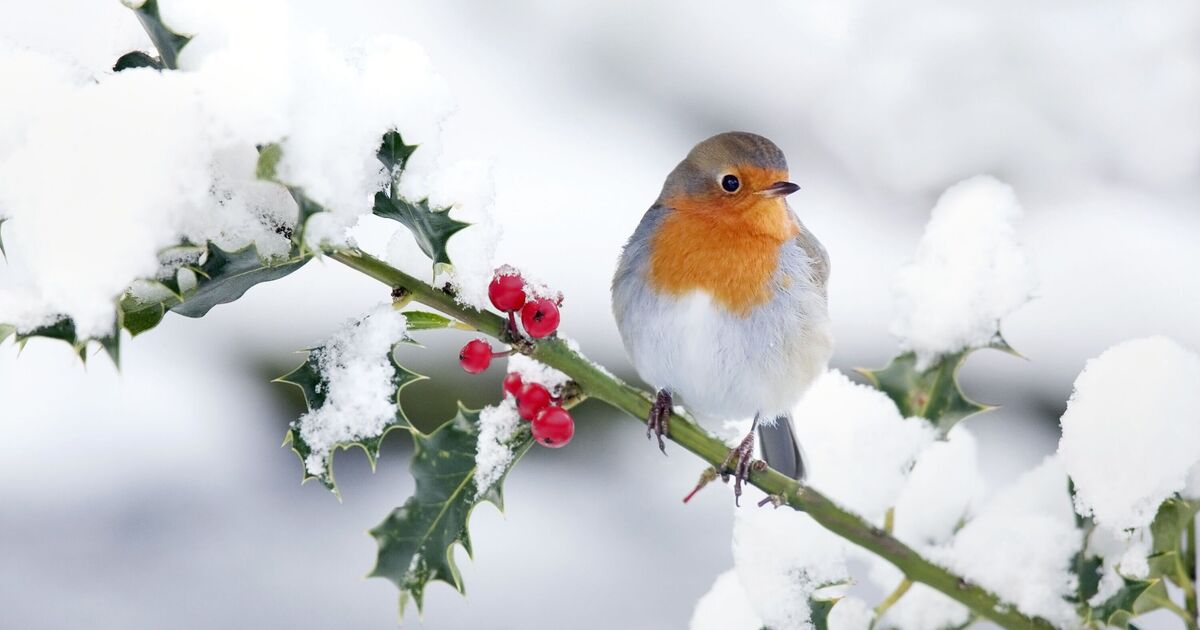
Unlike foxes and cats, robins are a welcome sight in British gardens. With much of the natural world in hibernation, seeing these delightful little birds is especially exciting in the dead of winter.
Winter is a harrowing time for these garden birds. According to Countryfile, robins are fighting a losing battle this season. The birds rarely live beyond two years, with the majority dead by the end of winter. To make matters worse, snowy weather makes their survival even more precarious. Robins are ground feeders, so when the ground freezes or snow falls, they face “imminent death”.
“So for any individual robin, a white Christmas is little short of a disaster,” adds Countryfile.
Of course, there are ways gardeners can lend a hand this season — starting with ditching bird feeders. Robins prefer to eat off of bird tables and “rarely” go to hanging feeders, according to the show.
As for what food will help robins, like most small birds in winter, they require high energy food. Sunflower hearts, mealworms, suet, fat balls are all nourishing sources of food that will help the creatures survive the winter.
You’ll see robins hopping about the ground on the hunt for invertebrates like caterpillars, beetles, flies, snails, and centipedes. Households can attract robins by enabling them to eat their natural prey by simply allowing parts of the garden to grow wild.
“Planting trees and adding features like a log pile or compost heap will help too,” notes Woodland Trust. “These minibeasts will provide food for robins and a host of other wildlife.”
To make your garden a “robin magnet”, Better with Birds says people should leave out fresh water, mealworms, and a variety of fruit. The website shared:
Fruit: Serve up apple slices, raisins, blueberries, strawberries, raspberries, and cherries.Mealworms: These are like candy to robins. Throw them on a bird table, covered feeding tray, or directly on the ground.Water: Robins need hydration too. A clean water dish or birdbath will do wonders.
Comments are closed.