
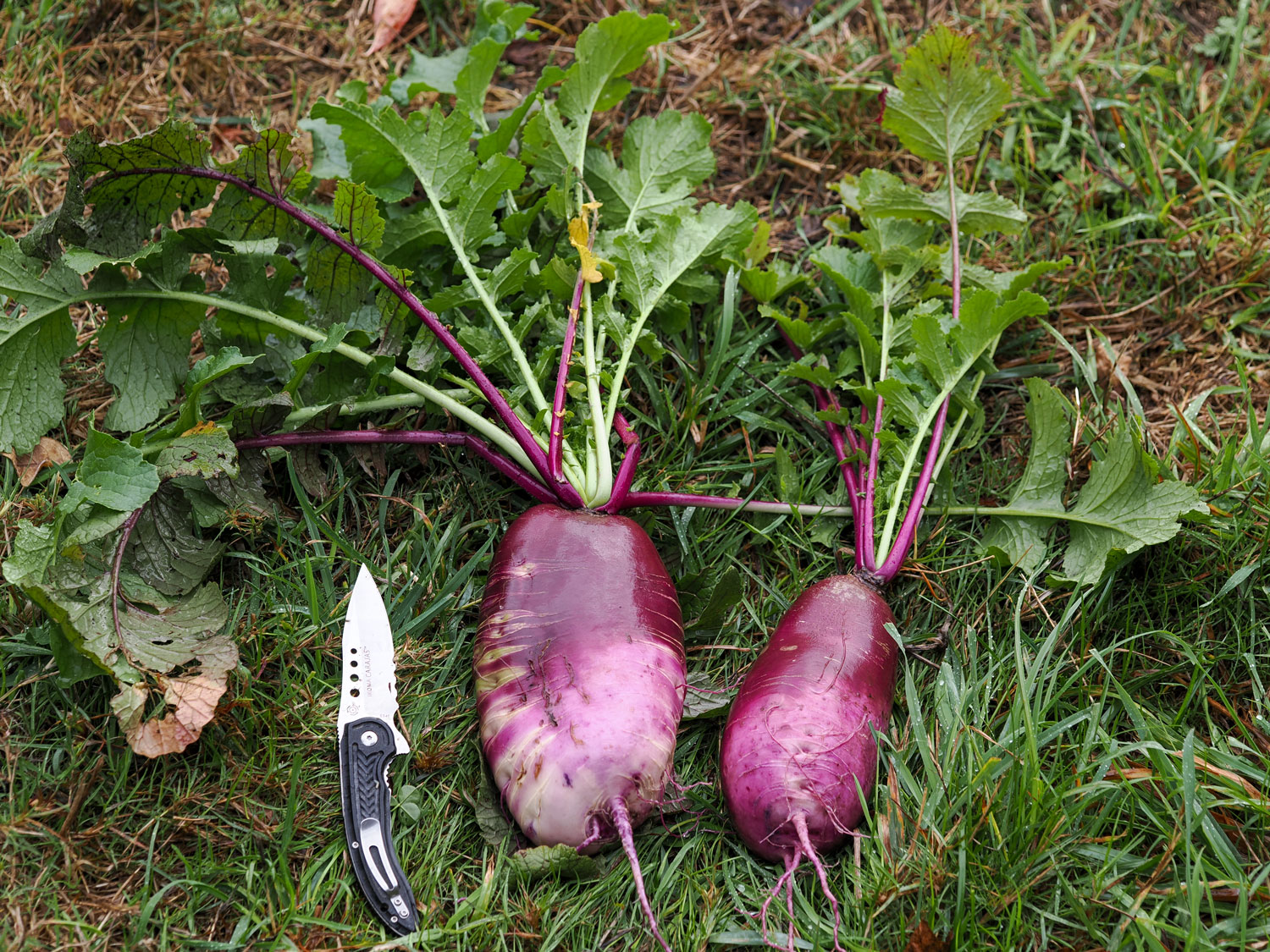
Before fall descends into winter, we vegetable gardeners have to make a decision: whether to put the vegetable garden to bed with a cover crop of crimson clover (or other green manure) until spring, while we cozy up indoors; or to tend a winter garden and have fresh vegetables year-round.
A winter vegetable garden is much easier to maintain than a summer garden, though it does take planning. You must ensure that the vegetable plants are mature enough to stay healthy and grow well through frosty, rainy nights. That means selecting the right vegetables to grow and starting your plants before winter sets in. What can you grow in a winter garden in Humboldt? Some of the best options are beets, carrots, parsnips, radishes and cole plants, like kale and broccoli. Cabbage is an especially hardy crop, and the varieties Deadon and Tundra can be harvested throughout the winter.
Most seed catalogs that cater to the Pacific Northwest will provide suggested dates for planting seeds or plant starts for winter gardens. If the vegetables were planted in late summer, they should be towering over the winter weeds come November. Do keep those weeds from touching the vegetables to discourage disease and easy access by pests.
No need to worry about watering but make sure your cole plants are free of cabbage aphids (Brevicoryne brassicae), which can be a problem early in the winter gardening season. These gray, waxy little insects form large family groups on the plants’ new growth. If the aphids get inside the forming cabbage heads or Brussels sprouts, they’ll ruin the plants, or at the very least stunt their growth and make them unappetizing. To keep aphids at bay, you need to be on guard. Keep an eye on the growing tips of the young plants, and if you find aphids, use a strong jet of water to wash them off. If they have already built up a large population, follow up with an application of insecticidal soap. Repeat this process at least once more in a few days.
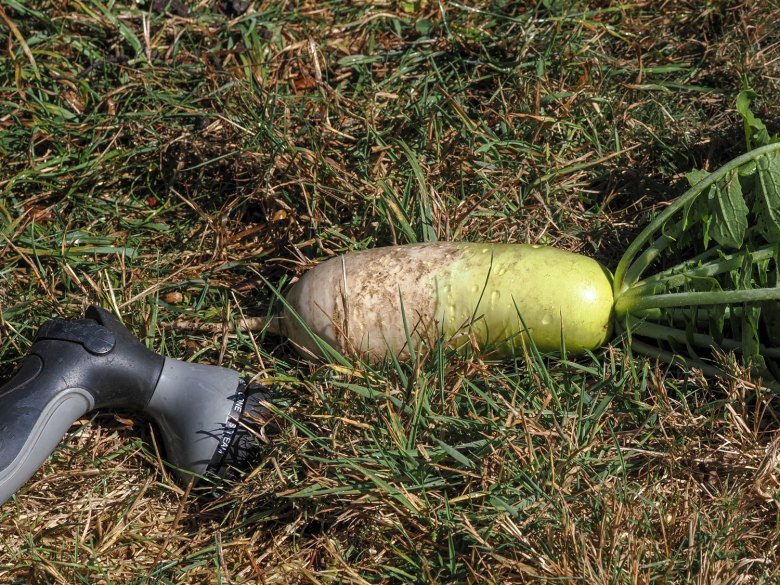 Alpine Korean Radish Credit: Photo by Pete Haggard
If you are looking for some interesting winter vegetables to grow, give these two a try: Korean radish and Brussels sprouts. Both stand up well to our coastal winters and have many culinary uses, including salads, stir-fries, pickling and fermentation. Brussels sprouts are tall cole plants with a single stem on which the sprouts grow. The sprouts are picked from the bottom up as they mature. The plants will last longer and produce more if the mature sprouts are kept picked. I usually have Brussels sprouts to harvest through the holidays.
A “new” winter vegetable for me is Korean radish. I have been growing it for the past four years and while it is not as attractive as the very long white Japanese daikon radish, it is more versatile in the kitchen. Korean radishes are normally white or reddish and stout, often with green shoulders. Their flesh is denser than Japanese daikon’s, with a more robust taste. The crisp flesh and assertive flavor make it perfect for stir-fries, and it even stands up to heavy Asian sauces. Korean radish is the base for many kimchi recipes and, freshly peeled, it’s perfect in a vegetable tray with carrots and celery.
So if you are looking for a reason to get some healthy outdoor exercise — with the side benefit of fresh winter vegetables — pull on your boots and gloves, find the garden hoe and start planting.
Pete Haggard (he/him) and Jane Monroe (she/her) are the coauthors of Rewilding: Native Gardening for the Pacific Northwest and North Coast, available now from The Press at Cal Poly Humboldt and in local bookstores and nurseries.
This article appears in Flash Fiction 2025.
Related
Comments are closed.