
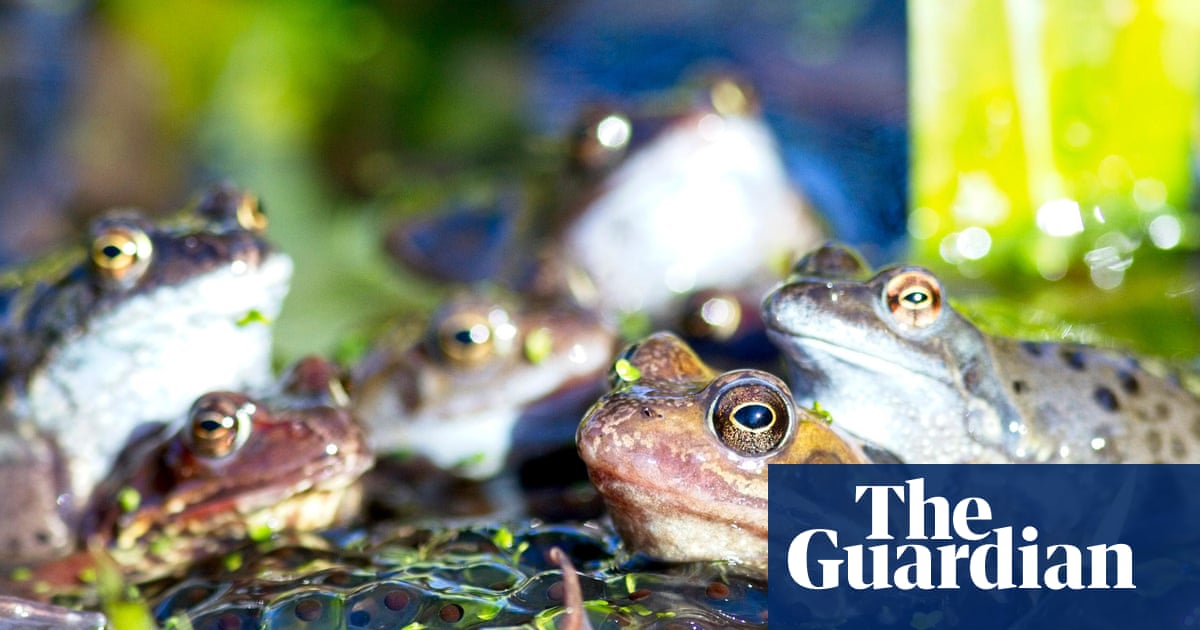
A few years ago I created a little pond in my back garden. It’s barely bigger than a paving slab, but since the pond has been in place we have had a garden teeming with frogs, hedgehogs have taken up residence and bird life has abounded.
Not only do humble ponds like this give nature a boost; they also help to buffer climate extremes. In recent decades, Britain’s ponds have been disappearing, with research revealing that more than half of our dense network of ponds has been lost since the 1900s. Lucy Clarke and colleagues found that 58% of ponds in the Severn Vale region of the UK had been lost since the 1900s, with the average distance between ponds increasing by 25 metres over that time. Similar trends can be seen worldwide, with intensive agriculture and urbanisation obliterating these seemingly insignificant bodies of water.
But now a pond revival is under way, with even tiny ponds such as mine helping to create biodiversity hotspots, plus provide cooling during heatwaves and help to slow the flow of water during heavy rains, reducing pressure on our overloaded drains and recharging parched groundwater reservoirs. Previously overlooked, ponds large and small are starting to be recognised as a vital habitat and a small but mighty climate mitigation tool.
Comments are closed.