
Sarasota, Florida, USA
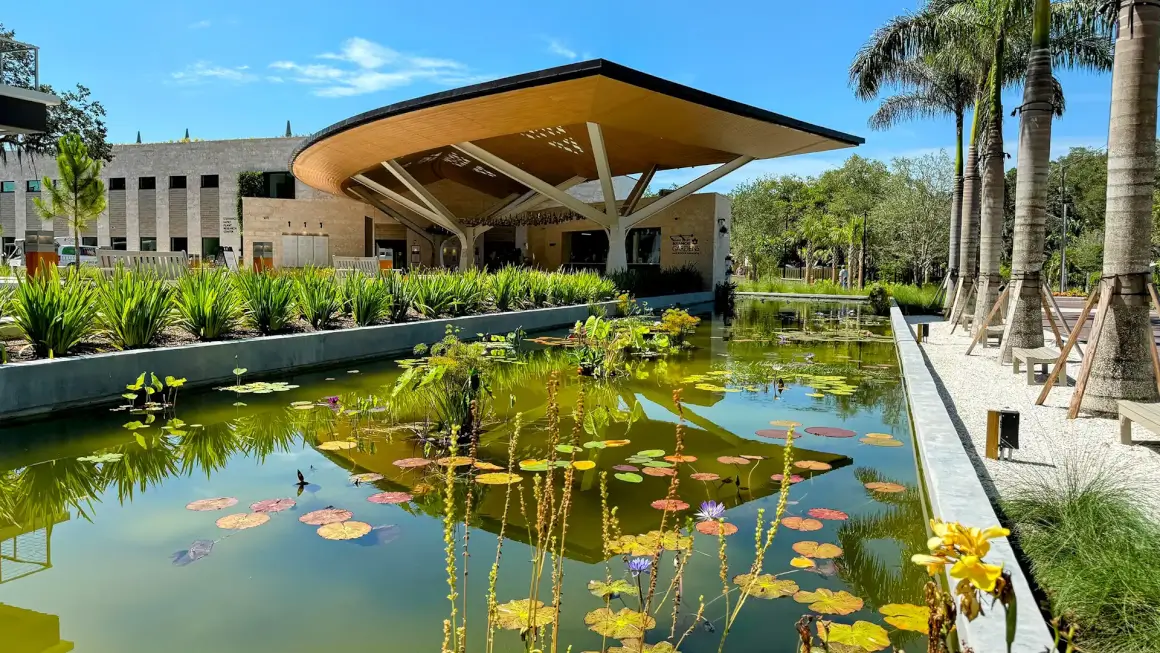
Groundbreaking design lies at the heart of the Marie Selby Botanical Gardens’ ambitious Phase 1 Plan, part of an ambitious reimagining of Selby’s historic 15-acre campus in Downtown Sarasota as a global model of sustainability, resilience, and innovation. Rooted in a vision to preserve Selby’s unparalleled botanical collections while addressing pressing operational and environmental challenges, the project elevates the Gardens, to serve its dual mission as an international leader in epiphytic plant biodiversity research and a cherished community institution.
Marie Selby Botanical Gardens by OLIN Architects for The Marie Selby Botanical Gardenswon an American Architecture Award 2025 from The Chicago Athenaeum: Museum of Architecture and Design.
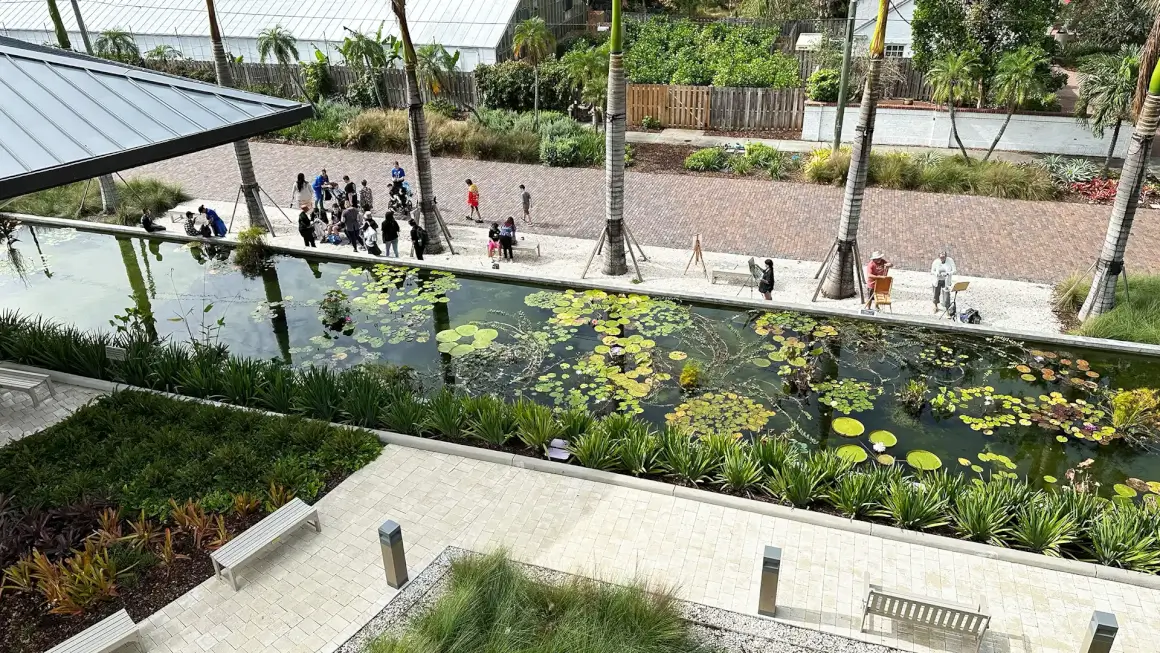
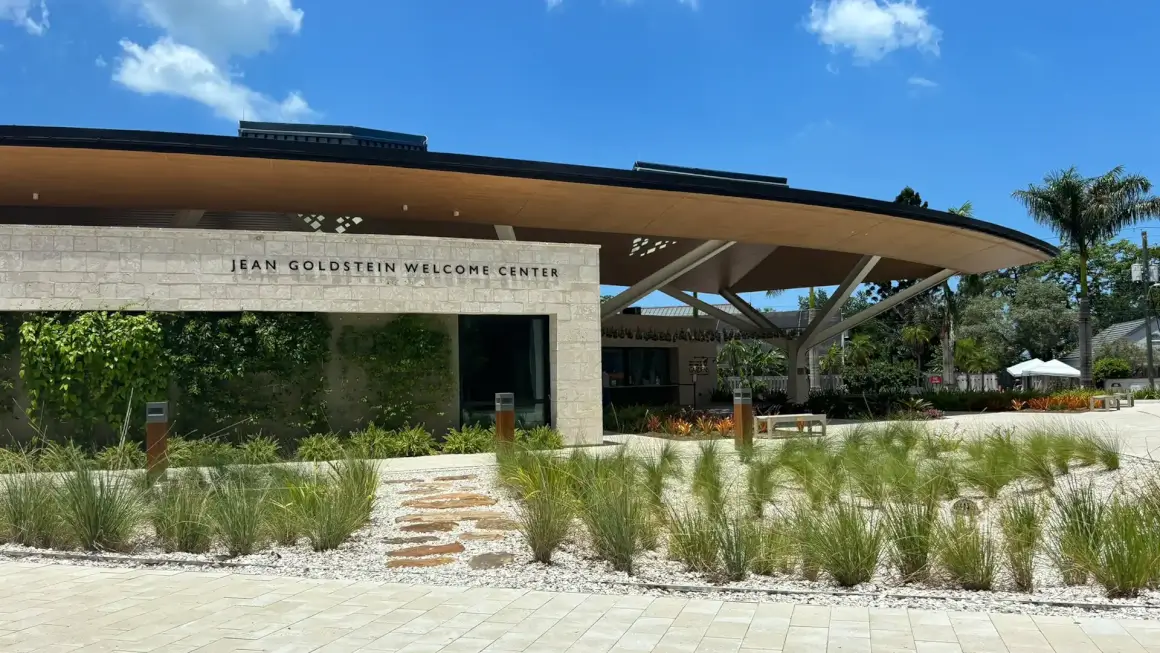
The Phase 1 project was grounded in a Master Plan prepared by the team to develop the campus as a center for botanical excellence and living arts. Selby’s research in epiphytic plant species—orchids, bromeliads, and other air plants—has long been celebrated worldwide. Its work documenting flora-fauna relationships in habitats from Florida’s manatee-filled waterways to the rainforests of Colombia and Belize underscores its global conservation efforts. Locally, the Gardens have become synonymous with cultural exhibitions connecting plants to the arts, alongside one of the nation’s largest botanical volunteer programs. Yet, Selby faced significant challenges. Its infrastructure was outdated, its operations lacked visibility, and its location along Sarasota Bay left it highly vulnerable to flooding and storm damage. The campus also struggled to accommodate growing visitor numbers and showcase its research, creating a pressing need for reinvention.
The Phase 1 project helped address these challenges through an interdisciplinary collaboration of landscape architects, botanists, architects, engineers, and preservationists. The team’s analysis identified underutilized spaces and opportunities for innovation, blending the Gardens’ historic character with forward-looking sustainable design. A pivotal intervention reimagined Palm Avenue as a wide pedestrian promenade unifying the campus, realized today as part of an ongoing landscape reinvention.
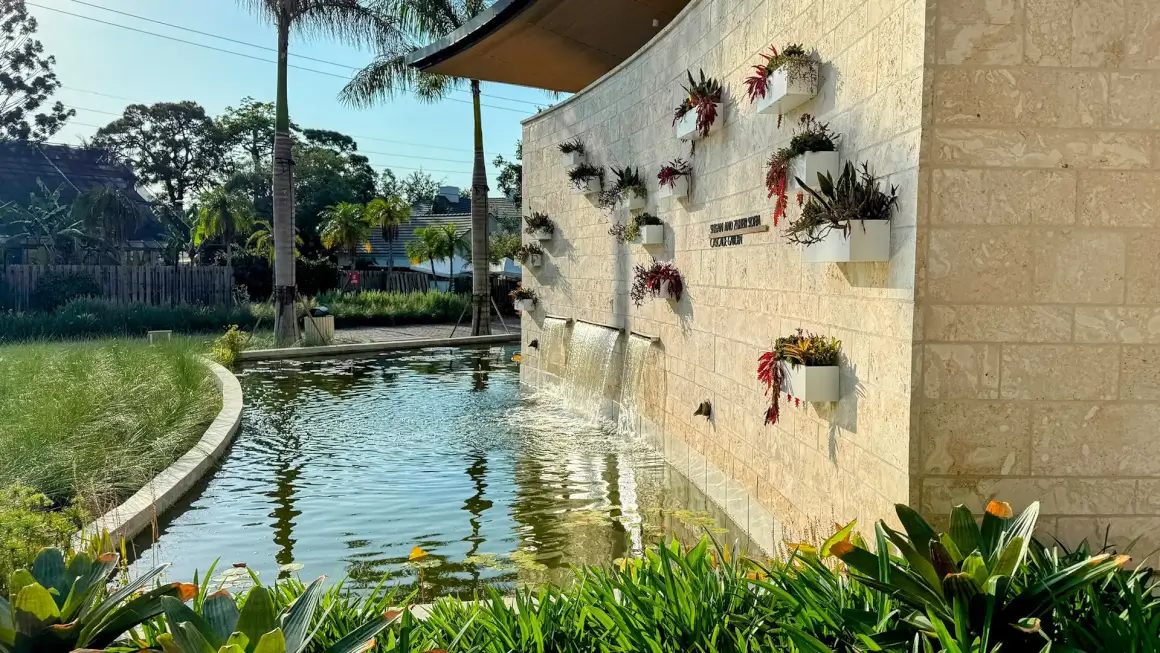
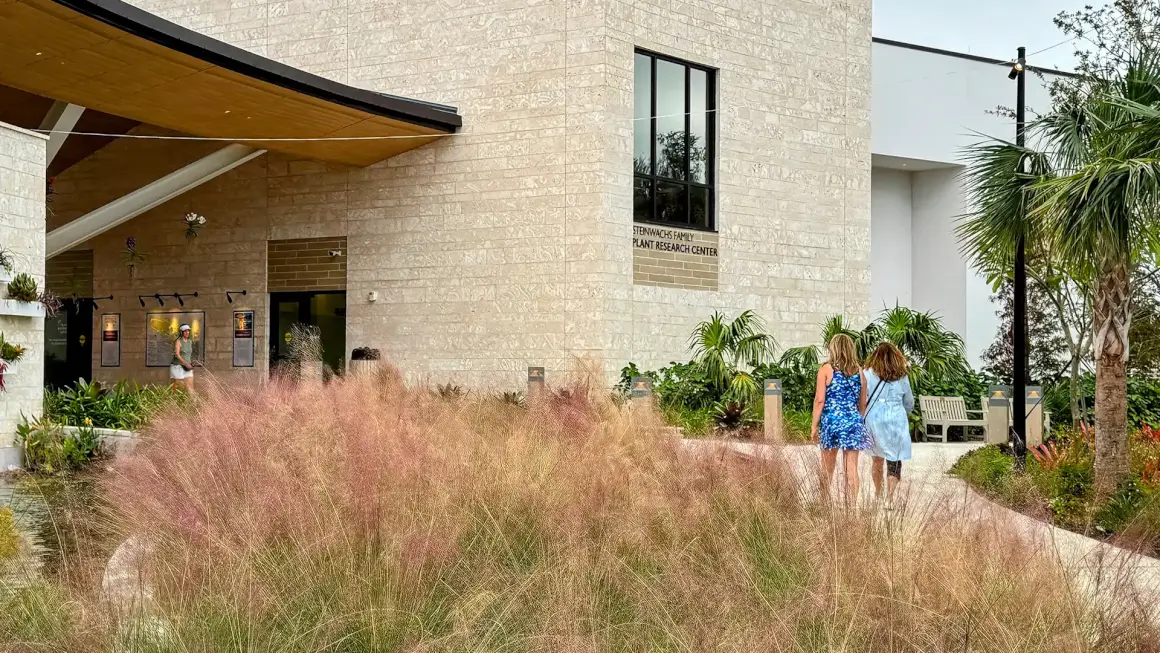
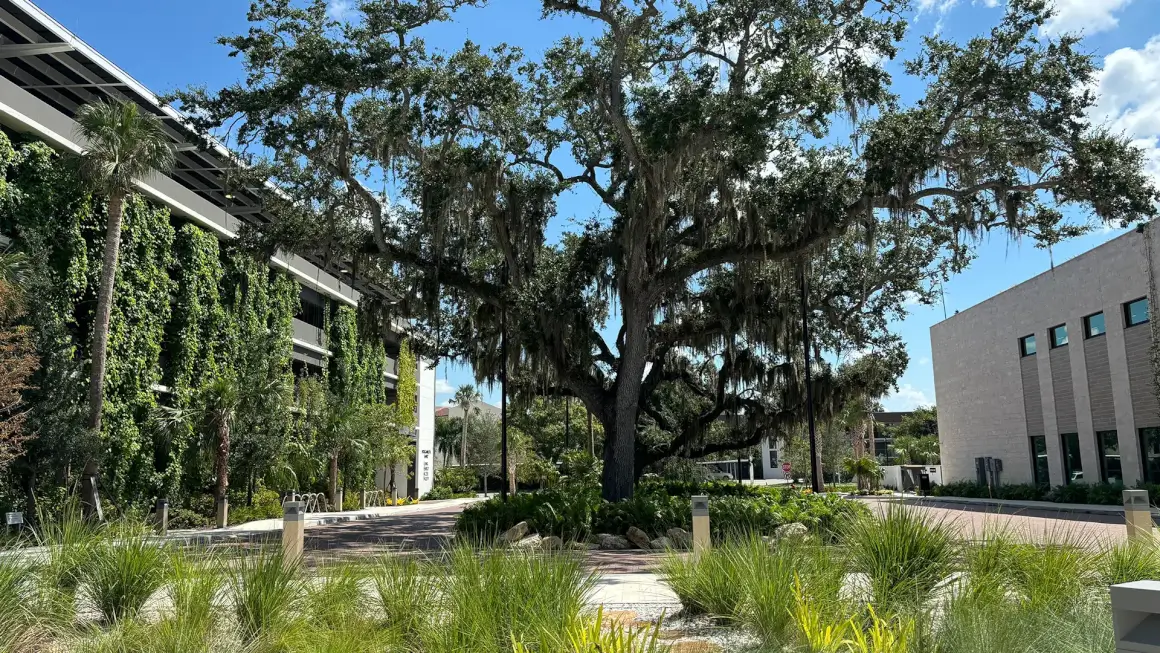
Phase 1 has delivered transformative results. Inefficient surface parking was replaced with a state-of-the-art Plant Research Center, linked to a new Welcome Center and hurricane-resilient Conservatory Houses. A signature achievement was the Living Energy Arrival Facility (LEAF), a structured parking facility topped with a 50,000-square-foot solar array that powers the campus with renewable energy while reclaiming valuable garden space. The redesigned entry sequence celebrates Florida’s native landscapes with stormwater-managed gardens, including the Oak Hammock Garden, Glades Garden, and Bay Lily Pond, enhancing ecological function and visitor experience. Open garden space increased by 30%, fostering greater public engagement while preserving Selby’s botanical collections.
The climate resilience of Phase 1 was put to the test when two hurricanes struck central Florida, particularly Hurricane Milton, which delivered a direct hit to Sarasota. Selby’s new facilities withstood the storm, safeguarding critical research and operations while renewable energy systems powered essential infrastructure. By addressing climate impacts through scalable solutions and seamlessly integrating ecology with culture, the Marie Selby Botanical Gardens Phase 1 project sets global benchmark for botanical gardens, demonstrating how visionary design can shape a sustainable and resilient future.
Landscape Architects: OLIN
Architect: Overland Partners
Design Team: Richard Roark, Marni Burns, Sarah Leaskey, and Dimitra Grigoriou
Client: The Marie Selby Botanical Gardens
Photographer: Sahar Coston-Hardy / Esto
Post Views: 4
Comments are closed.