
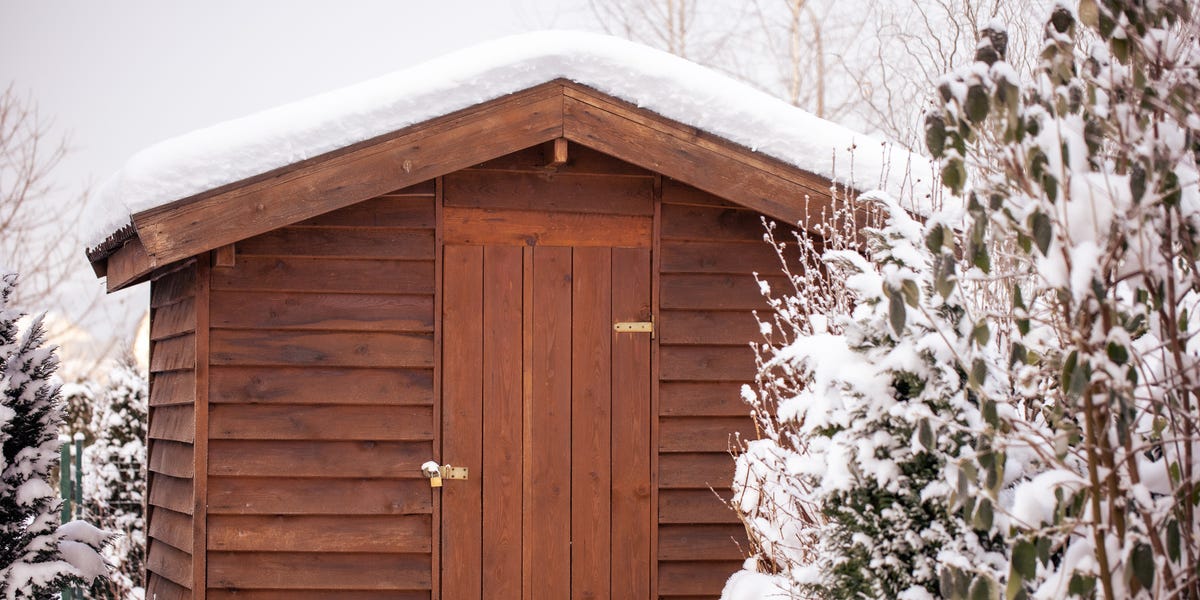
While you’ve spent some time closing down the garden for the winter (the tender plants are protected and the outdoor furniture is covered), be sure to do this one last job: checking the shed.
“There are certain items that shouldn’t be left in your garden shed during the colder months, particularly anything sensitive to freezing temperatures,” says garden shed expert Sam Jenkinson from garden building retailer Tiger.
“Batteries for power tools, such as cordless drills and hedge trimmers, can lose their charge or degrade if left in the cold, reducing their lifespan or making them unusable by spring.”
As well as this, other items to remove from your shed before winter include paints, glues, and finishing liquids, as these can freeze, separate, or lose their effectiveness when exposed to low temperatures.
“In some cases, containers may even crack or leak, creating a mess or damaging nearby tools and materials,” says Sam.

Alexander Walker//Getty Images
It’s also important to check those hard-to-miss smaller items, including drill bits, saw blades, and lubricants, which can rust or thicken in damp conditions. “The best way to protect these items is to move them indoors, to a dry location and frost-free until the weather warms.”
If you’re having a tidy inside your shed, Sam explains it’s worth checking for damp items, such as paper, cardboard, and fabrics.
“These can soak up moisture from the walls and floors of your shed. If you identify such items, remove them as soon as possible,” he says.
We’re uncertain whether snow is on the forecast, but with frost and cold weather firmly here, these simple pre-winter checks can keep your shed (and favorite tools) in shipshape.
More Outdoor Winter Prep Tips
Comments are closed.