The cave bean is absolutely amazing and has such a cool story. We got seeds for it and sprouted them in our greenhouse to save seeds from them.

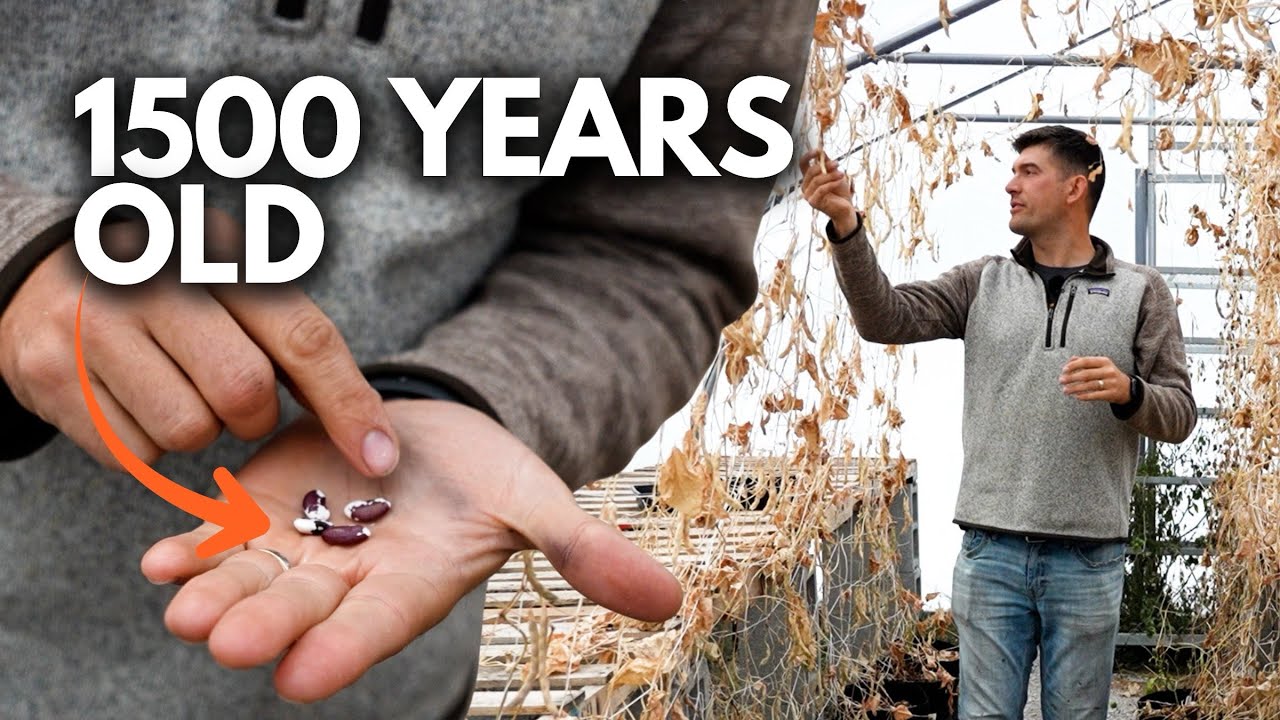
The cave bean is absolutely amazing and has such a cool story. We got seeds for it and sprouted them in our greenhouse to save seeds from them.
32 Comments
🫘
Anastazi beans
Have you tried them? How are they?
Do yourself a favor and get a package of 2'x2' foam "tiles" and use them as a kneeling pad. My knees hurt watching you on the gravel lol 😊❤
They look like Calypso beans
Got em from Baker Creek a few years ago, they are definitely beans…
How do we go about buying some of these seeds?
I grew those this year too!! So cool that it was revived….!
The only problem? I've seen this story on multiple seed stores, but I've found absolutely no corroboration of it in any other context. No account of archeologists finding and reviving an ancient bean at all, other than by people selling them….
Careful, it might be one of Jack's bean seeds.
Naughty seeds go in the plinko machine.
I've got my migardener order in. I'd love to get a few of those.
That mechanical winnower is really cool. Never seen one like that. Great gift idea with the seed packets! I assume you put those beans in soups and such or how do you eat them?
Thanks Luke.
Always like to see the process.
My order is in process and a fouth bean selection pack would be a nice surprise.
Geez, and I'm told I have to buy new bean seeds every year…
I’m starting to get excited for spring and we just had our first snow 😂. I may do winter seed starting because I’m missing playing in the dirt.
Beangate begins
My fifteen bean soup can now be sixteen bean soup.
Aren’t bean seeds just beans?
Are they entirely edible like green beans or just the beans themselves?
I grew them last year. Decent tasting. Extremely vigorous vines. Very low bean production. Our Fortex beans we grew adjacent, produced about 5x as many beans.
Oh bummer I ordered over the weekend. 😅😛
Good luck, everyone!
Pretty amazing. Based on Grok Ai research, the story is that The "1500-year-old cave beans" refer to a fascinating archaeological discovery made in 2011–2012 at the Wanuskewin Heritage Park, just north of Saskatoon, Saskatchewan, Canada.
Archaeologists excavating a First Nations site in a small cave/pocket in the sandstone discovered 10 small, charred common beans (Phaseolus vulgaris) that were radiocarbon dated to approximately AD 500–650, making them roughly 1,400–1,500 years old (depending on the exact calibration).
This is significant because:
The common bean (Phaseolus vulgaris) is native to Mesoamerica and South America and was domesticated thousands of years ago in those regions.
Until this find, the earliest evidence of common beans in Canada (or anywhere in the northern Plains) was only about 800–900 years old.
These beans pre-date that by 600–700 years, pushing back the known timeline of long-distance trade networks between what is now Mexico/Central America and the Canadian Prairies by many centuries.
The beans were charred (likely from cooking or an accident), which helped preserve them. Researchers believe they were brought north via extensive Indigenous trade networks that exchanged goods such as obsidian, marine shell, and copper over thousands of kilometers.
In 2023–2024, researchers at the University of Saskatchewan successfully germinated some of these ancient beans using modern tissue-culture techniques. A few of the 1,500-year-old seeds produced viable plants, which flowered and set seed again — making this one of the oldest known viable seeds ever grown.
So yes, the “1500-year-old cave beans” are real, and they’re an extraordinary window into ancient North American trade and agriculture!
Put 10 seeds of this new bean per bag , so you can share it with more people
I thought beans are self pollinating…?
I grew them a few years ago, I got the seeds from rareseeds and they had the same story. The beans grew well and were prolific, I still have some dried for soup. I will probably plant some again, as I saved seeds, but they do require a trellis. They will make a nice give away item for lucky customers.
Are these the Anasazi Beans?
Thank you!
A ton of seeds is what they are trying to sell ?
Luke is trying to be a Salesman.
Sad to say, but the majority of the seeds I bought from MiG were inviable from 2023 and 2024… I'm a Master Gardener in Canada, and the germination rate from MiG seeds was 5% from tomato plants, 10% in pepper plants, 2% in brasicas. The eggplants and Kholrabi were 0.5%.
I get it that a new start up needs to sell themself, but the seeds were awful that I received. MiG is in the same "Zone" as we are, with the exact same climate and weather. Just giving an honest review
Too bad my seed order is already on its way.
They look like Jacob's cattle bean
I have put the beans in a feed bag or a burlap bag and stomp on it or beat it on a fence post. Shake them into a wheel barrel, and blow the chaff out. Some may need to be shelled by hand