
🌱 Join our FREE workshop!- Learn 3 simple steps to design and set up your kitchen garden before the new year: https://www.gardenary.com/workshop
🌱 Shop the Easy Garden Kit: https://gardenary.samcart.com/product…
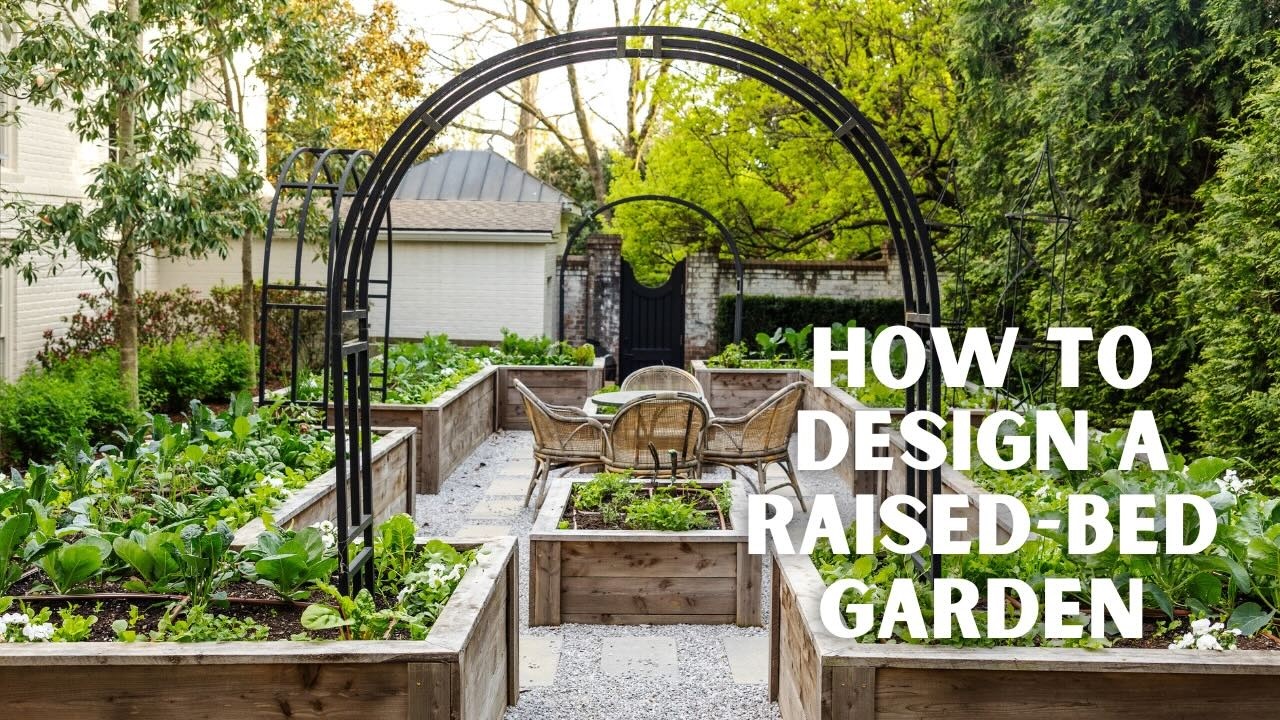
Are you ready to start a vegetable garden but worried it’ll turn out ugly or out of place? In this video, I’ll show you my step-by-step system to design your own raised-bed garden like a pro so that it’s as beautiful as it is functional and fits into your space seamlessly.
IN THIS VIDEO:
➞ Kitchen Garden Revival: https://gardenary.samcart.com/products/kitchen-garden-revival
➞ Nicole Arch Trellis: https://shop.gardenary.com/products/nicole-arch-trellis
➞ Nicole Panel Trellis: https://shop.gardenary.com/products/nicole-panel-trellis
➞ Corten Steel Raised Beds: https://shop.gardenary.com/products/corten-steel-raised-garden-bed
➞ Formal Potager Arch Trellis: https://shop.gardenary.com/products/extra-wide-arch-trellis
➞ Modern Trellis: https://shop.gardenary.com/products/moon-arch-trellis
➞ Traditional Diamond Rounded Arch Trellis: https://shop.gardenary.com/products/moon-arch-trellis
➞ Cedar Raised Beds with Trim: https://shop.gardenary.com/products/cedar-garden-kit
🌟🌟 If you want to order any of our Gardenary trellises or raised beds that you see in this video, use code YOUTUBE for 10% off your purchase in the Gardenary Shop (or follow this link: https://shop.gardenary.com/discount/YOUTUBE).
➞ Watch us turn a blank space into a kitchen garden in this video: https://youtu.be/GorHDl4eAZk
➞ Watch me draw out different garden layouts in this video: https://youtu.be/35rzNinbLqk
TIMESTAMPS:
00:00 Intro to Garden Design
00:48 Step 1: Figure Out Style
03:22 Step 2: Notice Critical Lines
05:37 Step 3: Map Your Site
09:02 Step 4: Pull It All Together
10:00 Step 5: Choose Your Design
Follow Gardenary Here:
Instagram: https://www.instagram.com/gardenaryco/
Facebook: https://www.facebook.com/gardenaryco
Garden Coaching: https://www.gardenary.com/coaches
Find a Garden Coach Business in Your Area: https://www.gardenary.com/businesses
Do you want to grow your own food this
season, but you’re kind of afraid that the whole garden thing is going to be really
ugly? In this video, I’m going to teach you exactly how to keep that from happening.
I’m going to show you this step by step to design your own raised bed
garden like a pro, so that it’s not just functional, it’s also gorgeous. These are
the exact steps that I’ve used to design hundreds of gardens for my clients
who own million-dollar homes. So, no matter what your budget is, I’m going
to show you exactly what to do to create a raised bed garden that looks like a
million dollars, no matter how much money you’ve got to spend on it. So, I’m grabbing
these steps from my first book, Kitchen Garden Revival. So, if you’ve got it, go
grab it. We’re going to go through the first two chapters together. And if you
don’t have it yet, I’ll put a link for it right below this video. So, the first
secret to making your garden look beautiful and gorgeous as well as productive is to
figuring out the style. And we don’t just do this by flipping through a magazine
or searching on Pinterest. We start by looking at our own home, apartment, townhouse,
wherever it is you’re living. You want to identify the style of your home and
then think about how you can match the garden to it. Now this is a trick I
learned from my mom. She’s an interior designer. I grew up with her. If you
can imagine Fixer Upper back in the 80s, that was my life. So I watched her
recreate/redesign all these homes, and I learned quickly from her that she would name each
and every home based on the style. So I borrowed that from her when I first started
working in these gorgeous homes because I’d kind of drive up and be a little
intimidated. Like these places were gorgeous, and I was tasked with putting a vegetable
garden right in the backyard. So I’d start to look and, you know, observe the
different features of the home and try to give the home a name. You want to think
things like traditional or French or Georgian revival or farmhouse or modern
farmhouse. There are so many different styles of homes. And if you’re at a loss of
what the name of the style your home is, you can just do a simple Google search,
put in some of the features of your home like arch doorway or covered patio, put in
some of those features and then see what kind of names come out. I asked my mom
when I was writing this book I was like send me a couple of names of home styles
and y’all she sent me like 50 names. I was like um we’re gonna put that in the
appendix of the book; it’s a little too much. But you want to identify the style
of your home and then start thinking about your garden and how the style of your
garden can match your home. Believe it or not, this is the secret to so many of
the gardens that I’ve made. And it’s the reason why a lot of times when people
come and visit the vegetable gardens that I’ve created, they say, “Did this come
with the home? Like, was the home and the garden built at the same time?” That’s
the kind of feeling you wanna have if you want to have a beautiful raised-bed garden,
a beautiful vegetable garden. You want it to feel like it belongs, like it
belongs to the house and you start to accomplish that when you identify the style
first. So in chapter two, we talk about gathering the key elements for your kitchen
garden design, and on page 48, I tell a funny little story about my first client
Jenny, who told me that her style was French, and I had literally no idea what
she was talking about. So you can cover this chapter, read this, find out about
the style of your home and then you’re ready for step number two. So if you’ve
ever seen those vegetable gardens where they look like they just like literally took
a box and just plopped it right in the middle of the backyard and you thought,
that looks awkward. Yeah, me too. That was actually my first garden. As I worked with
clients, I realized that gardens didn’t have to look so awkward. In fact, to
have a little #nomoreawkwardgardens, okay? So one of the ways we
accomplish this is by starting to pay attention, not just to the style of our
home, but to the critical lines of our home. So this is step number two, and it’s
noticing the critical lines in your home and landscape. So you want to start to
notice where is the line of the home? Where is the line of the patio? Where is the
line of the sidewalk? Where is the fence line? Any natural lines that already
exist, we want to take note of them and see if we could use them as the main line
for the garden space. When you use lines that already naturally exist in your
landscape, whether visible or invisible, it’s going to make the garden feel like it
belongs to the house, and it’s not just some box set out in the middle of the yard.
I’ve done this with so many garden spaces that I’ve designed. One of my first was
with Lori, a client who had a covered porch, that’s what it’s called, screened-in
porch. And I used the lines of the screened in porch to line up the kitchen
garden exactly with that porch, and let me tell you the results were just so beautiful.
She lived on the corner and she had an open lot where she just had like a
iron fence, so everybody (and this is a walking neighborhood) so everyone that
walked by could see this garden. I was super nervous that it was going to look like
an awkward box in the middle of the yard, but lining it up with the screen porch
made it feel like it was part of the home, like it literally belonged right there.
So pay attention to your own lines in your space with your house, with your yard, with
your fence, with your doors, and try to see if you can line up the garden with
those lines. It’s going to feel like it belongs right away. So I start to talk
about this in chapter one under the heading of aesthetic on page 24. And here I start
to outline how you can find the natural lines of the house and tie them into the
garden so that it feels like it’s just part of the whole thing. So after you’ve
identified your style and the lines in your space, it’s time to move on to the
next step. Still in chapter number one on page 20, we’re moving on to step three,
which is to make a map of your site. So once you have decided the lines of your
yard and you’re starting to think through how the garden could belong, you want to
map out the most important aspects of the garden. Now, I would say for my priorities
for the way I set up the gardens a little different. I’ve already thought
about the style and the lines of the home before I’m picking my potential spots. I
think most of us jump to this stage and that’s why our gardens look a little
awkward. So first thing you want to think about now that you’ve lined up your spaces
and thought about potential places you could put the garden, now you want to
map where the sun is. So in your garden space, you want to map if you’re in the
Northern Hemisphere where South is and if you’re in the Southern Hemisphere where
North is because for a half of the year you’re going to have a shadow on the
garden from the South if you’re in the Northern Hemisphere and opposite if you’re
in the South. So marking where South is is going to show you okay I want to be
sure I’m on the southern side of tall things. So things like trees, things like
homes, fences, buildings, anything that’s tall in your yard or space, you want to
try to be on the southern side of it. Switch it if you’re in the Southern
Hemisphere, okay? Next thing you want to pay attention to is water. So you want to
have water as close to the garden as possible. If you’ve already got irrigation
set up, that’s great. If not, you want to mark where all the water spots are in your
property so that you know how far away the garden is going to be from that water
source. The next thing that you want to mark out are any tall things. So we’ve
already marked South, but now we want to think about where the trees are, where
the houses, where the power lines are, anything that’s above six feet tall, those
are things we want to mark out on our map. Now once we’ve considered all those
things. The last thing you want to think about is convenience. So pathways and ways
that you get in and out of your space, you want to mark those on your map as
well. So if you have a driveway right next to the garden space you’re considering
that you know you’ll be in and out of if there’s kind of a walk that you take from
the front to the backyard, if there’s a walk you take, you know, any area of your
space that’s pretty easy for you to do, you want to kind of map those out on your
spot as well so you can see whether or not you’re going to be heading out to the
garden naturally and just seeing it, even if you’re not necessarily purposely going
to the garden ’cause we know that it’s hard to push ourselves out into the
garden sometimes, so we want it to be convenient. So I was working with my Chicago
home when I wrote this book, and I had a garage right to the Southern side. I
had a side yard right there in between my house and my neighbors, then I had a big
backyard, but a lot of it was covered with trees. And then I also had a front
yard that was somewhat open. So as I mapped out my locations, I actually considered
three different spots for the garden. One right on my side yard right next to
the home, one back in the backyard, which was much bigger, and one right in the
front yard. And then I started to map out the sunlight. I mapped out where the
water features were and what was most convenient to my doors and just my normal
traffic flow. So you can do this for your own garden space as well and this map
is on page 20 of kitchen garden revival if you haven’t seen it yet. Once you’ve
got your map you’re ready to move on to step number four. Step four is when you
pull it all together. So based on your home style you want to decide on the style
of your raised beds, the style of your trellises, the style of your borders,
you want to have a cottage garden if your home has a cottage feel and a modern
garden if your home has a modern feel. So you want that to be reflected as you
select your raised beds, as you select all the elements of your garden. As you pick
out all these parts of your garden, make sure they perfectly line up with the style
of your home. Next, pick the lines in your location that you want to prioritize
for the ones you’ll line up with so that when we look onto your property, we can
see this one line continues, not just with the house, but also into the garden. And
then you wanna pick your location based on your map. Find the spot on the map that’s
got the most sun, the most convenience to water, and that of course is accessible
and beautiful. After you’ve done all that, you’re ready to lay out your garden
design, and I’ve got five layouts for you to choose from in step five. Now, when
we started our very first garden, we literally just went outside and put like
a big rectangle in the yard, I mean, and called it a garden. I didn’t realize
until I started my business and making all these big gardens for clients that there
were so many more ways to put garden beds together. And over the years, after creating
dozens, if not hundreds of gardens, I started to have these categories, these
designs that I called my own, and that I would give clients a chance to choose
from. So I outlined these in my book in chapter two, I think starting on page
30, and I wanna show them to you as well. So the first is a border garden. This is
probably the most popular with the most of my clients because a lot of them, they
wanna keep their lawn for their kids to play in, or they have a swimming pool,
or they’re just not quite sure they wanna commit a large part of the yard to a
garden. Rather than putting a box right in the middle of the yard, we go along the
border of the landscape. So we could put a garden either along the driveway or along
the fence line or even along the house. I call these border gardens ’cause they’re
meant to like hug against the lines that already exist in your home and landscape.
And they do just that and that’s what keeps them from feeling awkward. So if
you wanna start small with just one or two beds, highly recommend a border garden.
These are so beautiful. They make the most of your space and they’ll never look
awkward. The next option I call the twin garden, and this is simply two beds right
together. Now I’m standing in a small part of my bigger garden but this on its own
is essentially a twin garden. One raised bed here that’s a four by eight, one
raised bed here that’s a four by eight and two arch trellises. When you think about
twins you literally want to think identical. So these two beds are the exact same set
up as a pair. And that’s where the power starts to come in and making your garden
feel more beautiful and more like it was designed by a pro. Instead of just one
big bed, having two beds connected with an arch trellis totally up levels the
space. The next one is a garden trio. My mom, the designer, she loves putting
things in sets of threes. And I can see why after I’ve done a few gardens this
way. My Chicago garden was actually six gardens, but I call it a garden trio
’cause it was essentially three sets of two beds. So it’s basically garden trio times
two. So anytime you have sets of three, they’re gonna have this really unique
feeling to them. I did these stone beds that were in a circle and it was three of them,
turned out so beautiful. So if you’ve got a round space, or if you’ve got an
unusually long space, then a garden trio may just be the fit. In my Chicago
garden, it was only like 10 feet wide, but it was 30 feet long. So it was a perfect
layout opportunity for a garden trio. Next up is what I call the four garden
classic. So these are four beds, all the same size, laid up together and this is
probably my most popular design. It’s been featured by Better Homes and Gardens and a
lot of other fancy… This Old House loved it too. So I call it a classic for a
reason because a lot of English gardens, gardens that you watch online, they are
four beds just all lined up all the same size. So if you’re looking for that
traditional feel or if you just want something even a cottage feel, four gardens all together
that are identical, set up either going the long way or the short way, or even just
four squares, can be a great design for a garden. And last but not least is the
formal potager. So I had to call in the French language for this one ’cause it’s
so fancy. So this one is four L-shaped beds, and then generally you’ll have a
feature in the middle. If you’ve got a really large space that you’re trying to
fill. This is a great design for it and it’s going to truly make your garden feel
like it’s an outdoor room. You walk in through the arch trellises and you’re
suddenly enclosed in the entirety by the garden. So this is four L shapes with
something in the middle like a fountain or an herb box or you can even have a bench or
a little seating area there with chairs and a table. With these five designs you
can use these as building blocks that you can put together and make a design that
is unique to you. But even these five designs are all perfect to just stand
on their own. We have literally created hundreds of gardens with just these five
designs. If you want to see me put a garden together from start to finish,
like literally drawing it out on paper to walking into the finished product, I have
the perfect video for you to watch and it’s right here.
15 Comments
Good evening mam
Thank you! 🌸💖✨
Thank you
Yes you book is little helpful…as I am planning and taking help from different books and channels..your book seems helpful
What is my style? Poor Redneck LOL! My garden isn't the prettiest, but it produces A LOT of our food! Probably 2/3 of our annual vegetables. We upcycle old containers. Old fencing becomes trellises. Junk days and Facebook marketplace are for treasure hunting. 😊 Happy gardening everyone and God bless!
Would love to see how to plan a garden in a small Houston suburb backyard. Not much space and tons of heat
Would love to see how to plan a garden in a small Houston suburb backyard. Not much space and tons of heat
Would love to see how to plan a garden in a small Houston suburb backyard. Not much space and tons of heat
I always get great advice and ideas from Gardenary
I enjoyed your classes so much, Nicole! They really helped me with formulating ideas that fit our needs (from a food standpoint) and beauty (from a flower standpoint). This first year has been a time of honing my likes and dislikes and discovering what plants grow well together while providing food for us. We are in the midst of a heat wave in North Carolina and your approach of planting closer together has been genius in preventing evaporation. Keep up the great work. I know you enjoy it because it shows. Lovely lady…lovely gardens. Thanks for your invaluable information.
❤❤❤❤
Mid west (45-90 degree Fahrenheit June-Sept growing season)
Beautiful beds!
Great video….thank you!
*Potager