
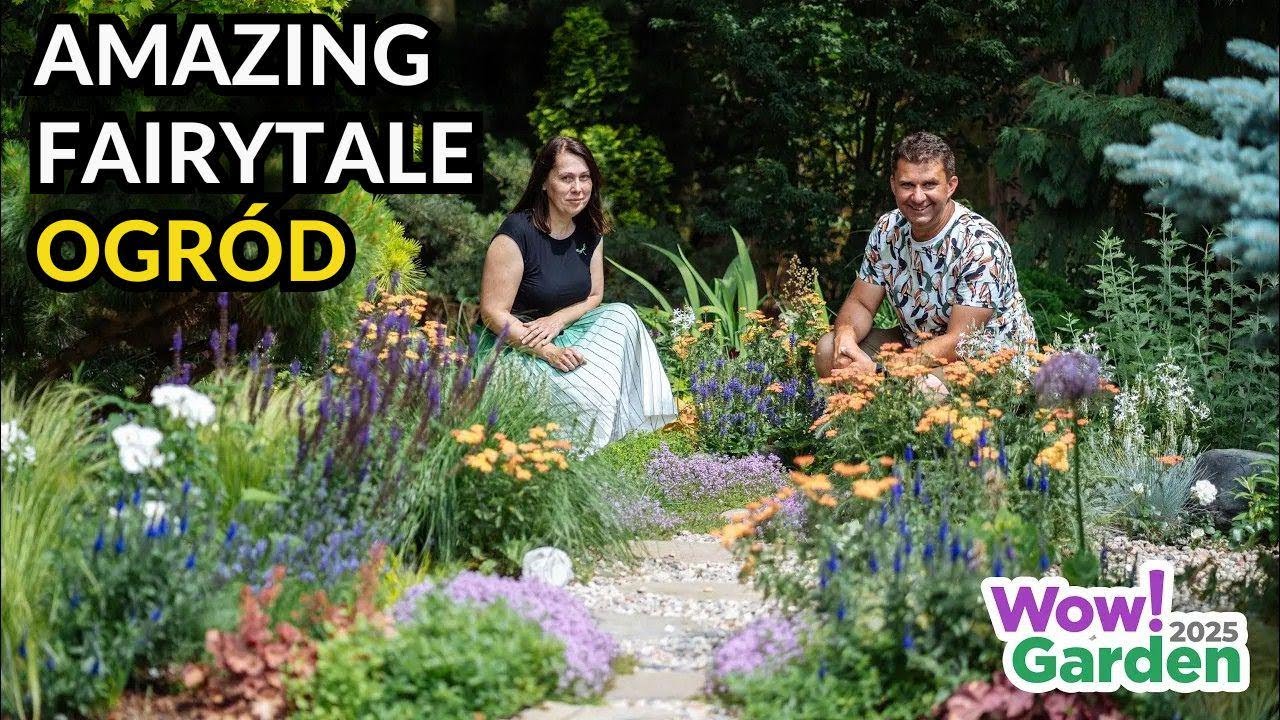
Step into a real-life fairytale! Join us as we explore Kasia’s enchanting garden, where Japanese inspiration meets lush, colorful magic—plus a veggie patch, clever plant “sanatorium,” and even helpful dachshunds. Discover creative tips, fun plant stories, and stunning blooms. Don’t forget to subscribe for more garden adventures and comment below on your favorite part! #gardening #plants #home #DIY #nature
👉 This channel was created in collaboration with @hubertlamanski
00:00:19 – Introduction and Garden Overview
00:01:15 – Meet Katarzyna and Her Helpers
00:01:58 – Garden History and Transformation
00:04:44 – Exploring the Japanese Garden Remnants
00:08:45 – Color Choices and Seasonal Plantings
00:12:08 – Vegetable and Sanatorium Zones
00:18:08 – Container Plantings and Transitional Areas
00:23:55 – Relaxation Spaces and Closing
[Music] Good morning. Good morning, my dear friends. Welcome to another garden as part of the Wow Garden Project. Uh, we’ve arrived in greater Poland again and I am in a fairy tale garden that has changed a lot over the years. And from such a Japanese garden, it turned into a very fairy tale-like garden. Why fairy tale-like? You’ll see that later in the film. Before the owner of this garden, Katarzina, shows us around her fairy tale garden and tells us why it was first in the Japanese style and what it looks like now. You’ll see how beautiful it is. I encourage you to subscribe to the channel. Write in the comments if you like the garden and if you enjoy this fairy tale style. And be sure to share this video further. Welcome, Katuna. Great. I’m really glad we’ve made it to your fairy tale garden. And now you’ll see just the first shots. A fairy tale garden where there are also little elves. Daxons. Do they help you? And what are their names? This is Mia and Messi. And they help a lot here. They have a lot of work to do here. They dick. They do your job, right? Yes, exactly. They help me plant the plants. Really? Are you serious? Or do they get in the way? Yes, they get in the way. Of course, they get in the way. Yes. And you must keep refilling the holes they dig. It’s really a beautiful garden with dogs like Absolutely. Absolutely. The dogs live here and and they’re doing great. Yes, exactly. Awesome. Before you show us around these corners of your garden, tell us where this fairy tale perennial garden came from because I know there used to be a Japanese style garden here. How did it happen? Yes. It was more inspired by a Japanese garden because it’s not like it really was one because it’s hard to do in Poland. Yes. Yes. Exactly. It’s very hard to rake gravel, but it uh had more elements of Japanese gardens like gravel and shaped conifers and Japanese maples. A red bridge which was very distinctive. And when did you create that garden with your husband? 17 years ago. This place was just concrete. Nothing else existed here. On that side, there were weeds as tall as us. And so step by step, little by little, initially it was meant to be a Japanese inspired garden. Exactly. That’s why those distinctive bamboos are at the entrance. Yes, bamboos where I began here. Japanese maples, right? Japanese maples are also on the other side. We’ll show them to you in a moment. So, how long did this stage of the Japanese inspired garden last? No. I think four, maybe even five years. And what happened next? after along the way or maybe even sooner grasses appeared along the way. I really liked the grasses and they added such lightness because for me the Japanese garden was too monotonous. A bit austere. Yes, exactly. And it didn’t change. It was the same all year round. But the nice thing about a garden are those changes, right? And then the grasses brought those changes. The grasses appeared. Some perennials appeared too. Every spring I used to plant a lot of tulips because there are always a lot here every year. And I always dreamed of having even more flowers and simply well my dream came true. That’s exactly what happened. So now that we know the story of how it all started, we can go to the garden and you can tell us a bit about the flower beds, the plants you have there, and those beautiful potted arrangements I saw. Okay, please come in. Let’s go. Thanks for watching. [Music] [Applause] Hey. [Music] We are in this main part of the garden at the back behind the house where the beginnings of this Japanese garden were and where there are beautiful plantings of spruces. Where did they come from? Yes, when we were buying the plot, they really enchanted us and that’s why we bought it. There were many planted close together here and our mistake was not cutting them down. I mean, probably partially every other or every third one. If we had left them that way, it would have been much better. But now they’re heavy. Uh they’re beautiful but lose many branches. The terrain is difficult with many roots making planting hard. But they’re a great background because a tree really makes a great backdrop. This Japanese garden was built here, but it no longer looks like one. However, the stones and some other features remain. And now you have these stone paths laid out among the whole flower bed. Tell me because this place has enchanted me. Actually, when I saw it, it kind of reminded me a bit of a Japanese garden, just in a different form. Normally, they have koi carp, right? Yes, exactly. And there used to be koi carp growing here. Why isn’t it growing? Well, because unfortunately, it didn’t do very well here and faded quickly. As it grew, the middle dried out and fell off, making it look ugly. Yes, it looked ugly, but the time is doing great. It’s spreading out, although I have to trim it so the stones are visible, but it’s really wonderful and I recommend it. But it really looks great. Here is a few varieties. It’s great because besides having this green carpet effect, it doesn’t mind even if you step on it a little by accident. However, the color that appears here down below between these shrubs really gives a great effect. And is your garden attractive in the winter? Yes, it’s very attractive in winter. The perennials disappear, but there are many conifers and stones here which um No. Exactly. These stones create a great structure, don’t they? Exactly. Some grasses remain here and there, but these stones really decorate the place in winter. Great. In this spot, you have the garden divided into different zones. over there under the trees. Thanks to the fact that you have big trees, you have a great hammock for relaxing. You can lie down and admire the garden. You can Well, if only there was time. Well, there is time. There is time. In July, there’s a bit of a lull, right? In the garden beds. That’s when you can lie down and just look around. Exactly. We always say you work all season, but July is actually a brief break in the garden. Just once really, right? By late June, it’s already like that, too. It’s just We admire and observe maybe trim plants that finished blooming. since I dislike dried ones and you don’t like it either when something dries up. Well, since you’re talking about admiring and we’re just before the period when we’ll be admiring. So, let’s go admire some more. All right. [Music] Heat. Heat. [Music] [Applause] [Music] Let’s leave this Japanese garden. It’s basically gone. You have a beautiful garden here created with a variety of colors, stones, and shrubs. Tell me, how did it start with these colors? Uh, do you choose these colors in such a monochromatic way? Do you like accents? How is it? I choose them here. Monochromatic, although I add accents. I like color accents. What color accent appears most often? Oh, those are different accents depending on my mood, right? Because here I planted redacious and they will be a very strong accent and purple for me is a very natural color which it’s like which really should be there. It’s the base here. Yes, I think that’s true in many gardens now. White and violet are the base. Plus, I add these accents. Yes. Additionally, gold red. Yes, red on that side because it matches less with the red for me over there. And here the red appears on this side because there are also maple clones here which I wanted to match with burgundy ones. Cone flowers, burgundy color scheme, right? Yes. Exactly. So that it all works together here. Did the garden even when Japanese extend this far? No, it didn’t. Here there was grass in that place and also there. Although we took it and a little bit of it. You nibbled on it. No, just a little but actually a lot since almost everything was a lawn. And when did that happen? Step by step about 5 years ago. So how long has it been? Yes. Yes. I’m fascinated by the market. Every moment it’s something different. I’m fascinated by the fact that we are here now and some plants are blooming. But I can already see that there are plants that will bloom soon and will create the effect of a second wave of color. Yes, I like it when the plants in the flower bed change that at the beginning. At the beginning it starts here with crocuses. There are a lot of crocuses. Then there are tulips, aliums, irises. There were also a lot of Dutch irises here. They also created really nice carpets here. I can already see verbanas and leatric. There are fewer and fewer of them because unfortunately it spreads a lot. It used to spread and now there are fewer and fewer. I introduced some to other verbanas. Bumpton are there, right? Yes, exactly. This is bumptonum verbana. Uh it spreads a lot and is hard to control, but everyone is happy to take it. You give it away, right? Yes, exactly. This Let’s move on. We’ll see some other corners of the garden. [Music] Yeah. [Music] [Music] [Music] Caseia, listen. We have the front zone. We have this main zone here. Let’s say uh also a representative one. But what other zones do you have in the garden? There’s a vegetable and sanatorium zone hidden over there. Sanatorium. Why sanatorium? Well, that’s where I put the plants that don’t want to grow in the garden. I plant them in pots, water them, fertilize them, and once they recover, I replant them back into the garden. So, we have to go through these thickets here. Yes, exactly. They’ve gotten a bit wild and need trimming. But but for trimming, I’ll say right away that I brought something from our partner here for you a device that will help you cut here. Great. In the package. I’ll show it to you in a moment. Perfect. We’ll need to make a transition and we’ll try it in a moment. Exactly. I made it. I came. But we definitely need to reduce it. Exactly. So that it’s easy to get through. Reduce the bushes. That’s why from the company NAK, I brought you here as a gift for the poison you put in your garden. These electric shears, not only for trimming hedges, but they’re also great for cutting perennials. It has great teeth. It’s handy. Thank you very much. Look how it holds in your hand. When we come next time. Super heavy, right? No, it’s heavy but easy to handle. We’ll come next time and check if it was useful on it will definitely be useful. And you’ll also show us what else it can cut, including things I normally wouldn’t cut. All right. We are in the zone sanatorium zone. Yes. And there’s a lovely vegetable garden, too. Listen, there are just so many different kinds of vegetables here and really in such a small space. How did you manage to fit so much in here? Yes, there are planters here, which is why there can be more more vegetables. Here we have tomatoes, cucumbers, sugar snap peas, broad beans, carrots, peppers, and lettucees, which are a must. Yes, they’re starting to flower, but I feel bad picking them because they look so beautiful. And the sanatorium part is in the back, meaning those plants that you don’t know where to put or they’re struggling or they just don’t fit for you. Yes. Yes. But there’s also a small greenhouse. Yes, things are growing here. Tomatoes. It’s pretty warm in here, isn’t it? Very. The sun reflects off the wall of the house here. And during the day, it’s really hot. That’s probably why they grow so well here. Yes. Especially tomatoes since they like it. But unfortunately here, we had to put clay in the pots so that it wouldn’t dry out. Yes. So it wouldn’t dry out and it’s better now. Do you use a special mixture to water the tomatoes or just regular tomato fertilizer with humus? Um, so you use different ones? Yes, granulated manure. It’s worth it. And I also sometimes say that it’s good to make different fertilizers and use different methods. So you’re not always using just one because each one always has some limitations or lacks something. If we use something else, we always have the full range of options. I saw cucumbers. Greenhouse ones, the long ones, right? These are grafted cucumbers, similar to the short greenhouse ones. Here’s a cucumber that looks just like that. It has huge leaves, doesn’t it? Yes. Here in the back. Uh, and because there’s not much space, you usually grow all of this vertically. Yes, exactly. So, you can have a little space, but there isn’t much since some will be used for raspberries, right? Yes. There are raspberries, blackberries, currants, and on that side there are grapes and blueberries. But plenty of vegetables. So if we adjust vertical cultivation, then we can put in more plants. Yes. And you can have lettucees next to tomatoes and they can grow together. Yes. In large pots. That’s great. Yes. In large pots. Uh cuz these are about 46 L. They’re quite Yes. We later remove the lower tomato leaves so they don’t touch the soil. Also, different types of lettuce can grow there. Yes. Then we cut them out when the tomatoes need more water. When they’re bigger, we cut them out. And that’s it. And it’s all nice and tidy. And we have tomatoes. Yes. They stay here until November since it rarely rains on this side. So we have tomatoes until then. Beautiful. [Music] [Music] [Music] Oh yeah. [Music] Yeah. [Music] And we left the vegetable area. And here’s a surprise. Exactly. I decided and actually brought you another gift this time from the company Yagram. A great raised garden bed. I don’t know if you’ll still be able to fit that one somewhere. We’ll fit it in for sure. Are you sure? We’ll make it work. Yes, we’ll fit it in. I think next time we come, something will already be happening here. For sure. And is this box for you or your husband? I heard your husband might take it over. Yes, it’s possible because he wanted it closer to the kitchen. He wanted lettuce, different things. So, it’s possible that he’ll find a spot and plant it. So, you’ll be the one taking care of it. Exactly. I’ll be taking care of it and he’ll be enjoying it. Great. And speaking of that, since I mentioned that you have a lot of diverse, beautiful plantings and pots, behind us is the entrance to the house, which looks amazing, we’ll show you step by step what’s here. So, here we are in front of the entrance to the house where you have lots of beautiful plantings. Tell me, why did so many of them appear here? Because we wanted to separate this area a bit from the rest of the garden. We wanted to decorate the entrance to the house and it just happened that new flower pots keep appearing all the time. I had garden space and moved plants here. You also have a seat right by the house entrance, correct? Yes. It’s not usually like that there’s a place to sit right in front of the entrance to the house. Yes, it’s not normal, but here the property is very hidden because it’s in the second row of buildings and no one can see us here. We’re sitting here. There’s the house entrance, but it’s just a covered terrace. We can sit here and relax. When do you use this place most often? Most often in the spring, fall, and also in the morning because there’s no sun here. And in the afternoon when the sun has already set because right now unfortunately the sun is out. All right then tell me what motivated you to create such compositions because they are really fantastic beautiful. There are roses sedges verbina shows up somewhere and all the other plants here. Where did the idea for this design originate? This year they are completely different because before I used to plant super tunias and this year I wanted to move away from them a bit because I got a little bored with them and I wanted something different but I still had sges left uh which I planted here last autumn uh and hocaras and they just stayed here so I had to choose something to go with them. I just combined things and that’s what happened. Uh and there’s the rose q gardens which I recently showed on Instagram yet. It’s not like yours yet, right? Well, but it will be. It will be. It will grow and it will be. It works well in containers. Yes, exactly. I read about it being good for pots and I even saw pictures where it looks so beautiful. But also listen because there are different colors here. We have sedum which is lighter. We have Dalia with some dark colored leaves and we have carex which has nice stripes. Mulbeckia because you said one of yours survived the winter. The classic one. Yes, it survived the winter untouched. I trimmed it in spring and now it looks beautiful. It’s growing. I in warmer areas of Poland near the house, they manage, but here you only get variegated mulbeckia. Uh I liked one like that at the garden store and bought two immediately. I knew I would plant them in pots. How long has this been here? A month more. This arrangement has been ongoing for about 6 weeks uh with things constantly being added because of the dalia. They came out later. You know, the dalia was added later, but that’s how it is. I began planting here in midappril. There were also many tulips here before. I replace them. Did you remove the tulips? I take them out, but I don’t dry them. They also go to the sanatorium. Senatorium. That’s a very good thing. Not just for people, but also for plants. I recommend a place like that. I I don’t even want to say what we call that place where I’m from. I’m too embarrassed. But it’s a great thing. Elves, listen. They’re here. I think they like this area best, right? Yeah. Now there’s shade, so it’s nice here. This area really enchanted me. It It’s right in front of the house. You have a lot of different plants here, a lot of perennials also arranged like in that other place, but I feel like there are more of them here, right? Yes, there are more of them. Are grasses appearing in between between the perennials? I really like grasses because they add such aireriness and lightness. Well, there’s a lot of purple color here now. It will be cut out later. Then it will be replaced with cone flowers. And that’s how it goes here. Everything. Oh, you were talking about that yellow one here, right? There’s a paradox here. Yes. They’re starting to bloom. Exactly. Here. It’ll be yellow, but only in some spots. I see gar in some places, but likely not the large varieties. These are miniature gores since the large ones were too big. Here, however, the large ones were sprawling and were knocking over my other plants. I also see a lot of stones here which are currently covered by all these perennials. Yes, but when these perennials aren’t here, it probably looks really bare. All this greenery looks great with the scattered plants. I love the winter garden here. The garden often feels sad in winter, but not here. No, you can see there’s always something happening here. Just like I said, new plants are appearing. I see that more and more plants will keep appearing because they’re just starting to bloom. So, when we come next time, what colors will there be more of here? Well, here it might, although I don’t know exactly when that will be, but here in the middle, let’s say in the middle of August, they’re here, but I think they’ll already be past their bloom, right? I think they’ll be past their bloom. Yeah, because more corn flowers will come out here and there might be more dark pink here. Maybe a hydranger. Yes, there’s a hydrangeanger here. And there are hydrangeers here as well. Yes, because look here, we also have something like a transitional zone winding nicely like this. And that’s characteristic now in these kinds of super trendy modern gardens. So there’s very little lawn. Yes. And there used to be a lot of lawn here because here was lawn. There was a very small flower bed, only pines and a really small flower bed. And every year, every year we make it smaller. We cut something out. And I feel like everyone does that. So let me know if you also reduce your lawns or on the contrary if you make them bigger. I’m really curious if it’s the same for you. [Music] [Music] [Music] Yeah. [Music] Heat. Heat. Heat. [Music] Listen, [Music] Kashia, you also have that part of the garden that basically everyone has somewhere a hidden spot. Maybe not exactly representative, but in your case, it looks very representative. How did you make a place that’s basically a technical area next to the house look so super attractive? Yes, this is a place prepared for the gardener’s house. So, there’s a plan. Yes, there is a plan for the future. And so that there wouldn’t be bare concrete here, I put up planters. More planters. How many planters do you have? More than 100. More than 100. Listen, you can’t even see it here. Together with tomatoes, right, with vegetables. I understand, but you still can’t see it. All of this needs to be watered because it’s hidden here under the ferns too, right? Since these ferns have grown so much here and yes, it needs to be watered. The clay is put into the pots and it really holds. No, it’s worth putting in this kind of clay. Listen, it’s good to use such pots between the plants that naturally grow in the garden because you can create additional layers and make space for both the plants that are there and the ones in the pots. That’s great. Besides, if someone has a place to store them, you can keep plants in these pots that don’t survive the winter here, right? Yes, you can overwinter them in a greenhouse, for instance, or in a brighter area of the house. We came to your relaxation zone. Personally, I’m enchanted because these trees, this wind, and this hammock here, I just want to jump right in. Is that so? Yes. Coolness on hot days? Yes. It’s very pleasant here. You can lie down, admire, and enjoy what has been created here. So, this area is great, but you miss a little light here. Yes, exactly. That’s right. That’s why I brought you a little lamp from our partner, Nova Dwarski Lighting. A portable lamp for the table. Great. But you could also put it nicely here. The lamp is not even battery powered, but rechargeable and heavy. High IP rating, so it can easily stand outside. Here you go. Thank you. This will be useful throughout the garden. Exactly. In every place in the garden. Yes, exactly. You can move it around and like you said, you can relax by the light. So, I hope it works out. You’ll tell us when we come in August whether it worked here or somewhere else. At this point, we’re going to continue walking around this garden and we invite you to leave your comments and also to follow other gardens as part of the Wow Garden project and we’ll see you in August. Thank you for this. Exactly. Thank you very much for your visit. A great journey through your garden. Thank you.
1 Comment
I have a garden helper too. My Lucy often digs holes where she’s not supposed to. I love the garden tours.