
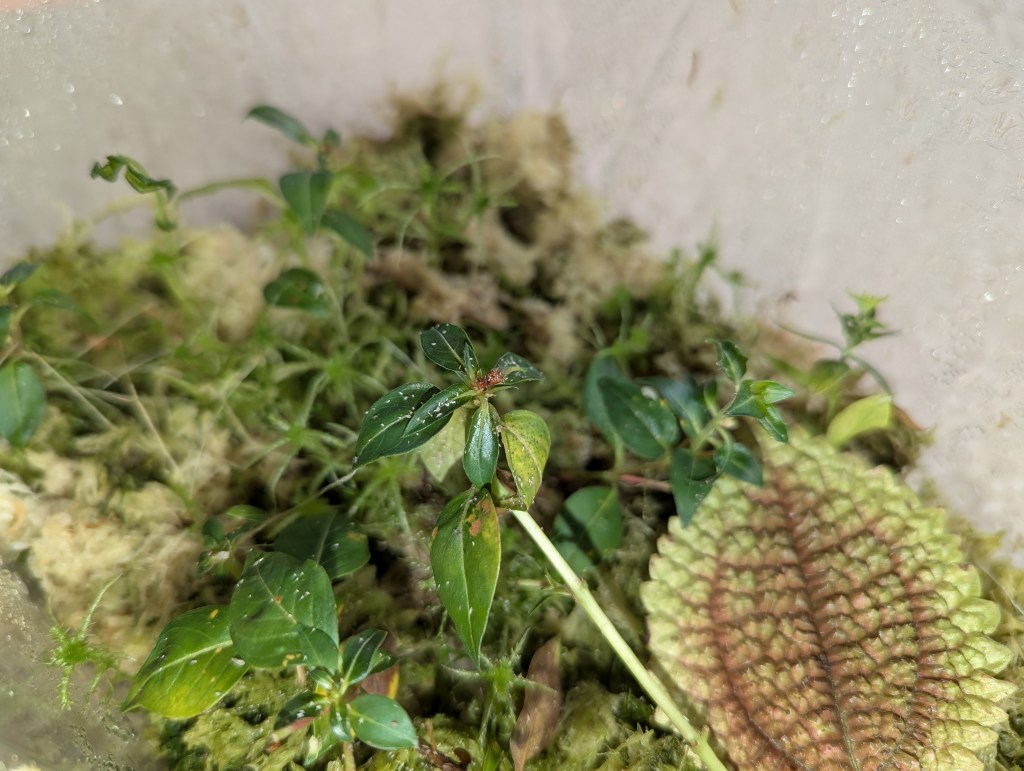
Q: I took some cuttings from a couple of annuals I want to continue to grow next year, and they’re rooting inside, where I’ll overwinter them. I see some greenish and white debris on the leaves that wasn’t there when I took them in. What could it be?
Likely aphids. I’ve run into this problem myself in the same situation. We may not notice the aphids on the plant while it’s outside, likely due to natural predators eating enough of them, but indoors, populations can rise quickly. Often, the insects themselves are green, while their shed skins (exuviae) are white and shriveled, typically sticking to the leaves near the aphid colony.
You’ll generally see aphids near tender growing tips, rather than on older leaves. They also tend to feed on the leaf undersides out of sight, so peek under leaves and in crevices to find them.
Fortunately, management is easy, if not tedious. Knock the aphids off the plant with a strong spray of water from a sink or shower head. Be careful not to blast the soil out of the pot in the process. An alternative method is to squish the aphids with your fingers, or carefully dab them with a cotton swab dipped in rubbing alcohol. Be aware, though, that alcohol may damage the leaves of sensitive plants, because it could remove their protective waxy layer, the same way it helps to dehydrate the aphids.
If you need to spray, horticultural oil or insecticidal soap will work, but the spray must contact the aphids directly. You will also need to find a product labeled for indoor use. (Even if they share the same active ingredient, different products may contain different inert ingredients, not all of which may be okay to use indoors.)
Whatever method you use, expect to repeat it a few times before the aphids are under control. It’s easy to miss one or two aphids, and since females are effectively “born pregnant,” they can repopulate a plant even after most of them are eliminated.
Q: I’ve retired and now have more time on my hands to educate myself about various gardening topics of interest. Do you have suggestions for local resources?
With several formats available (reading, video, workshops, etc.), the Home and Garden Information Center (HGIC) and Master Gardener (MG) program have a number of options, ranging from short videos to recorded webinars, blog articles, and hundreds of web pages (go.umd.edu/hgic). Long-time fans of HGIC may remember a plethora of fact sheet handouts that used to be printed; rest assured that the majority of them have been transformed into web pages (which are still printable), that are more accessible and easier to update.
HGIC’s YouTube channel (UMDHGIC) hosts hundreds of videos featuring experts, and the MG program makes many of their continuing education webinars available. Check out content listings at https://go.umd.edu/MGContinuingEd or find county-level program points-of-contact at go.umd.edu/MGLocalPrograms.
Another resource option is the new 2025 edition of the Maryland Master Gardener handbook, a hefty and useful reference to have at the ready for the next growing season. “The Maryland Grows” blog covers a range of gardening topics and highlights interesting wildlife; you could search prior posts for topics of interest or subscribe for updates. The Extension podcast, “The Garden Thyme,” also makes appearances there, if you don’t already follow them on a podcast platform.
Botanic gardens are a valued source of information through their plant trials, besides inspiring future plant acquisitions and landscape layout ideas. If you’re a native plant enthusiast, you can peruse Mt. Cuba’s assessment studies, viewable through their website, to see what plant species and cultivars have been evaluated for garden performance and pollinator visitation. The Chicago Botanic Garden also evaluates common garden plants, and while they’re not local, most of the species or cultivars grown there will also do well here.
Local native plant societies also offer continuing education through their YouTube channels and webpages. The Maryland Native Plant Society hosts webinar speakers on topics like plant ID, the highlights of particular species, and planting for wildlife. The DNR’s Maryland’s Wild Acres program website publishes material for wildlife gardening and shares webinar videos on its YouTube channel, such as “Gardening for Pollinators.”
University of Maryland Extension’s Home and Garden Information Center offers free gardening and pest information at extension.umd.edu/hgic. Click “Ask Extension” to send questions and photos.
Comments are closed.