
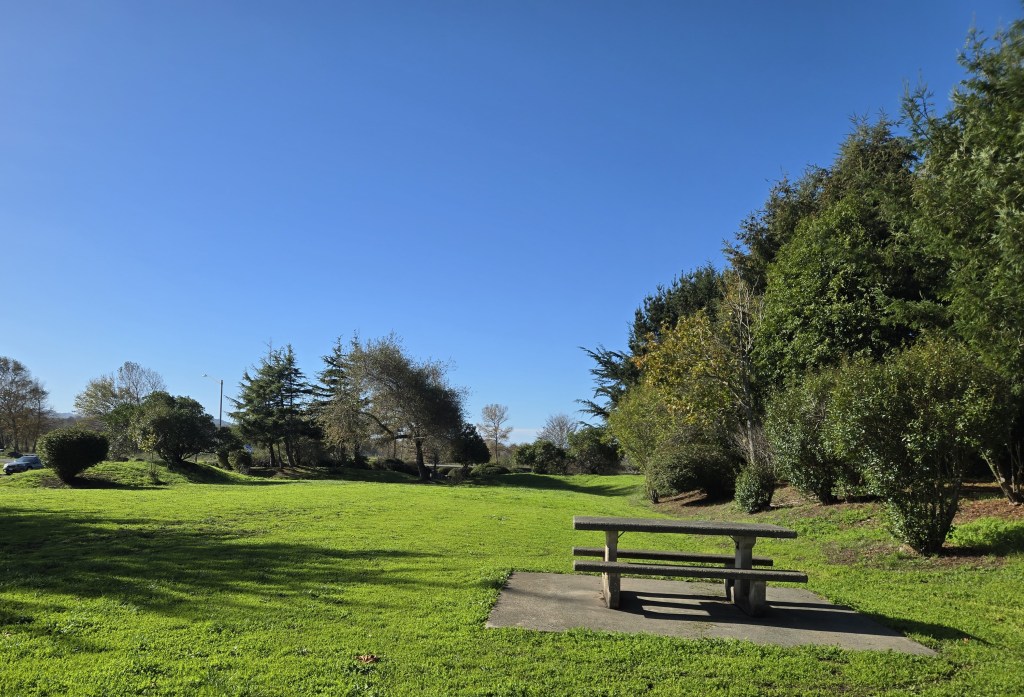
There is a special free public garden in Fortuna, that few even know exists. It is the North Coast Low Maintenance, Drought Tolerant Demonstration Garden on Alamar Way, next to the Fortuna campus of the California Conservation Corps.
The Fortuna Garden Club has recently decided to make a donation to the garden, and according to Garden Club member Janet Green, “The general intent is to enhance the existing garden with either rejuvenated planting and/or signage to identify what’s planted.”
The Garden Club’s donation is earmarked for further education on the low maintenance, drought tolerant plants that do well in Humboldt County.
The garden was planted in 1993 when then U.C. Cooperative Extension Farm Advisor Deborah Giraud received a grant from the Elvenia J. Slosson Endowment for Ornamental Horticulture. The grant’s purpose was to create a garden where homeowners, business owners, city and county parks departments and landscapers could see plants growing that are drought tolerant and low maintenance.
With the grant, the U.C. Cooperative Extension worked closely with both the City of Fortuna and the California Conservation Corps to get the garden established.
There were several objectives of the newly planted garden. One was to evaluate the species planted and develop a list of shrubs and groundcovers that would do well in the North Cost climate. Another objective was to identify plants and techniques that require minimal maintenance such as water and fertilizing.
The garden was created to provide public education and serve as a learning tool to help residents and city and county planners understand and implement water-wise, low maintenance landscaping practices. It was also to be a demonstration that low maintenance, drought-tolerant gardens can be aesthetically pleasing and suitable for publicly visible areas.
Species originally planted included manzanita, wild lilac, rockroses, sunroses, English lavender, cotoneaster, penstemon and rosemary.
The Fortuna Garden Club’s donation will hopefully renew interest in the demonstration garden, by enhanced signage, not only for the garden itself, but for the specific plants growing there.
Comments are closed.