
Key Points
Leaving the leaves on garden beds is the most beneficial for nature and the environment.To prevent leaves from suffocating your lawn, shred them into mulch with your rotary mower.When composting leaves, make sure to alternate them with nitrogen-rich materials.
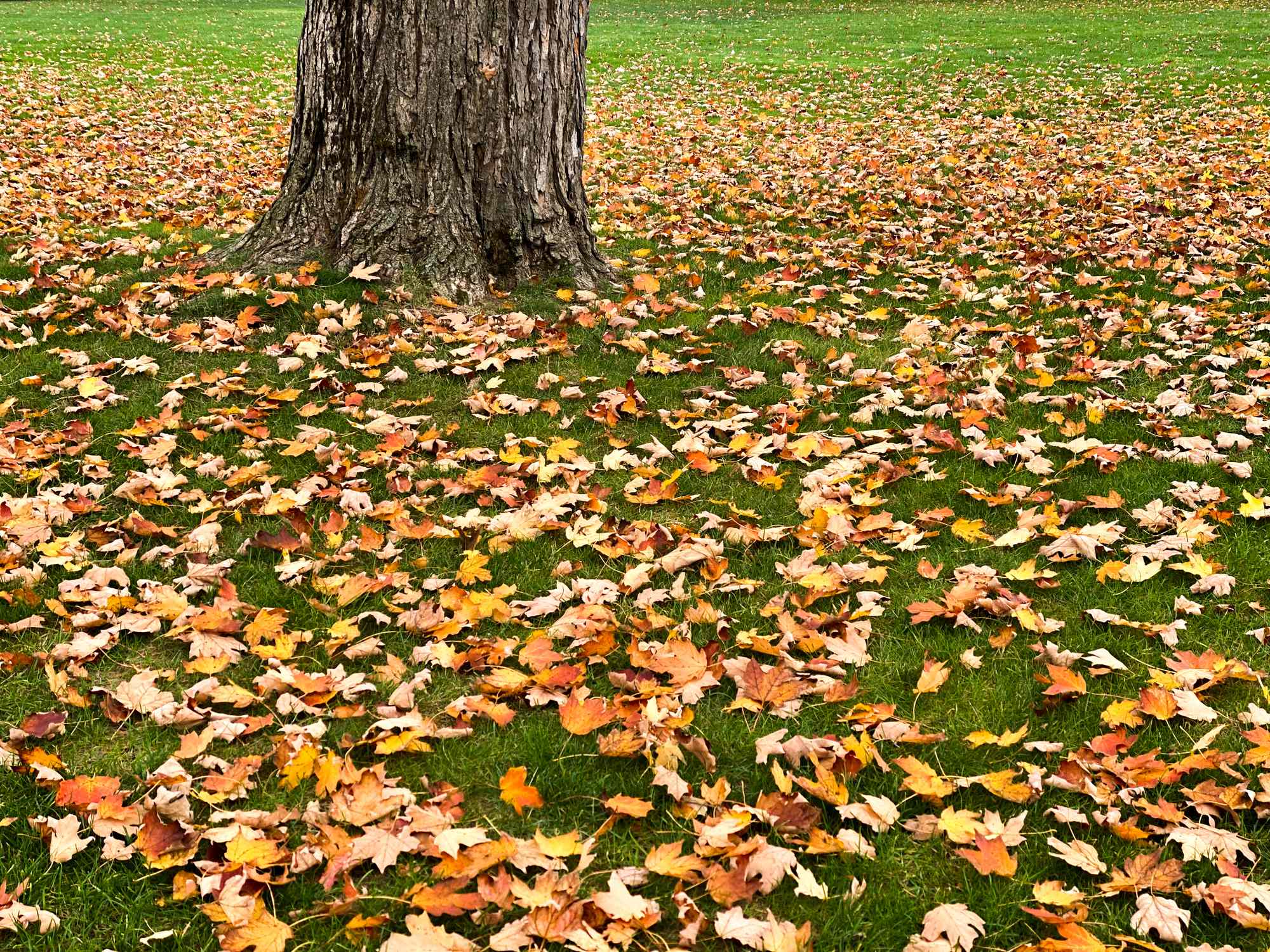
Nowadays, more homeowners decide to leave the leaves, at least in some sections of their yard. This creates less work and less pollution (if using a rake rather than a leaf blower), benefits the ecosystem and biodiversity, and supports healthy soil.
We asked experts what they do with the leaves in their own yard, and here is what they had to say.
Meet the Expert
Steve Brodecky is a product manager for Murray Mowers, a brand of Daye North America.
Teddy Rutberg is the founder of the landscaping company Rutheo Designs in Seattle, Washington.
What Pros Do With Fallen Leaves in Their Yard
There are so many options for what you can do with fallen leaves, and none of them is wrong. Here’s what the pros themselves do in their own yards.
Bag Them
Credit:
Herman Bresser / Getty Images
Lawn expert Steve Brodecky bags the leaves that accumulate in his yard during the fall.
“There are just too many fallen leaves for me to keep up with them with my push mower. I use my leaf blower to move them into piles, then bag them,” he says.
Want more gardening tips? Sign up for our free gardening newsletter for our best growing tips, troubleshooting hacks, and more!
Use as Mulch
Credit:
Cappi Thompson / Getty Images
Instead of getting rid of your leaves, turning them into free mulch is an excellent way to return nutrients and organic matter to the soil. If the leaves are on your lawn, do not wait until they are piled up knee-high on your lawn.
“Early in the fall, you can run the [rotary] mower over the leaves and mulch them right into the grass. It keeps things tidy without much effort,” Brodecky says.
Landscaper Teddy Rutberg doesn’t personally have a lawn, but his professional recommendation is also to mulch-mow the leaves into the lawn instead of bagging or raking them.
“Running your mower over the lawn when it’s covered with leaves helps break the leaves down so they can decompose into the soil, adding critical nutrients and organic matter,” they say.
Leave Them
Credit:
andreaobzerova / Getty Images
“In my own garden, I’m all about leaving the leaves,” says Rutberg. “It’s the only route that makes sense.”
Doing so protects soil from cold winter rains, returns nutrients to the soil, and protects overwintering insects and their eggs, he says.
Compost Them
Credit:
Louise Docker Sydney Australia / Getty Images
If you have a moderate number of leaves to get rid of, adding them to your compost bin is another excellent solution. You can add the leaves either whole or shredded, which speeds up the decomposition process.
If you add them to your compost, make sure to alternate a 6-inch layer of leaves (a carbon-rich brown material) with a 2-inch layer of nitrogen-rich green material, such as grass clippings or vegetable scraps. Large amounts of leaves can be piled up separately to turn into leaf mold.
4 Other Leaf Tips From Pros
Use a bag insert when bagging. This specially designed chute for large bags makes it easier to get leaves into the bag and saves you a lot of time.Don’t leave too many leaves. “An inch or two of leaves will eventually decompose. But a thick layer of leaves around the base of plants or covering the leaves of plants for extended periods of time can be detrimental to their health,” Brodecky warns.Keep leaves from blowing away. To prevent leaf mulch from blowing away, weigh the leaves down with small twigs and sticks, which you pick up in the spring. To keep the leaf mulch in place, it also helps not to cut the stems of perennials before spring.Don’t get rid of the leaves in spring. “If you leave them until they decay naturally, it lets all the nutrients return to the soil, and gives butterfly eggs a chance to hatch when the weather gets warmer,” Rutberg says.
Comments are closed.