
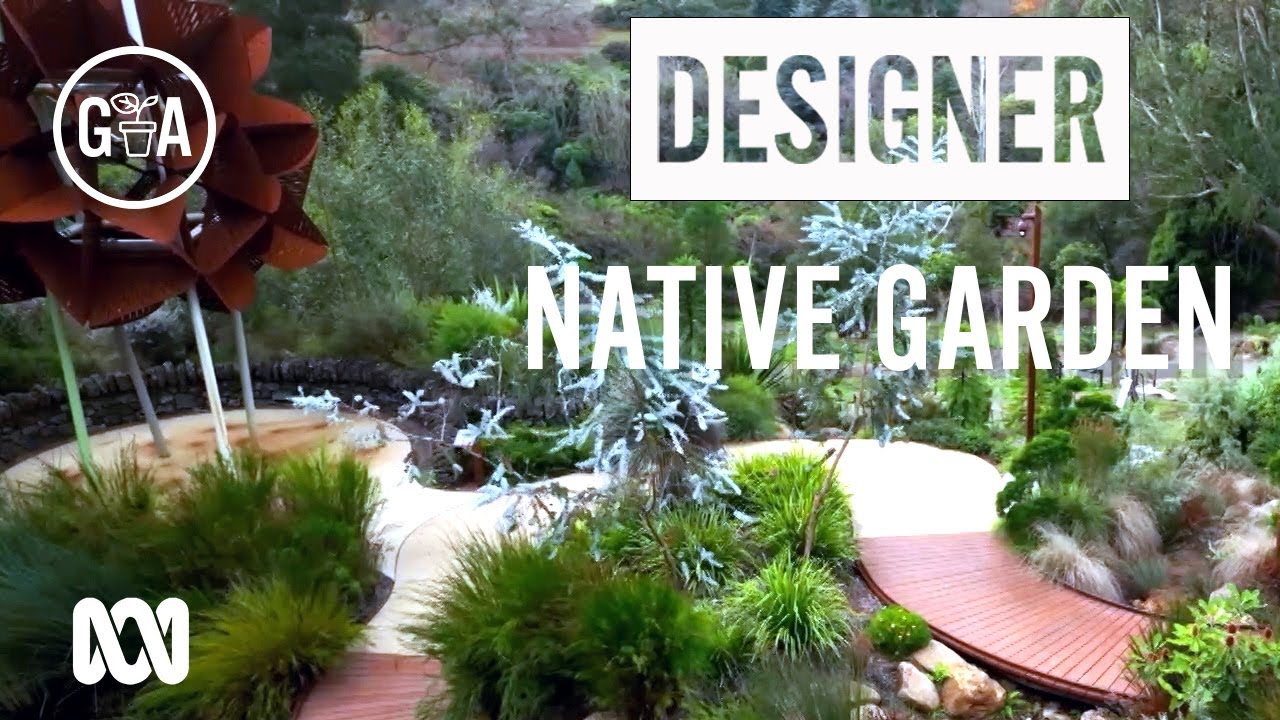
Be inspired as Costa tours a new public garden celebrating Australia’s incredible flora, adapted from an award-winning display at the Chelsea Flower Show.
Subscribe 🔔 http://ab.co/GA-subscribe
___________________________________________
Gardening Australia is an ABC TV program providing gardening know-how and inspiration. Presented by Australia’s leading horticultural experts, Gardening Australia is a valuable resource to all gardeners through the television program, the magazine, books, DVDs and extensive online content.
Watch more: http://iview.abc.net.au/programs/gardening-australia
Facebook: http://www.facebook.com/gardeningaustralia
Instagram: http://www.instagram.com/gardeningaustralia
Web: http://www.abc.net.au/gardening
___________________________________________
This is an official Australian Broadcasting Corporation YouTube channel. Contributions may be removed if they violate ABC’s Online Conditions of Use http://www.abc.net.au/conditions.htm (Section 3).
Dense… ..delicate… ..spiky… ..soft… ..ancient… ..colourful… ..and dramatic. I love everything about
the plants of the Australian bush. And I’m visiting a new public garden designed by someone
who obviously feels the same way. MAN: They’re from our country. It connects me
to this amazing place. And I just
want to see ’em everywhere. COSTA: I’m in
the Dandenong Ranges Botanic Garden, where the relatively new
Chelsea Australian Garden is already looking
well and truly established. This is Phil Johnson’s
upsized adaptation of a garden
he and his team designed and built for England’s
famous Chelsea Flower Show back in 2013,
when he and his team won gold and Best in Show, a huge achievement that
shared Australian flora and design with the world. Guys, what’s today been like? Oh! The most incredible day,
second to having a baby. Watching the birth of my baby.
(ALL LAUGH) Well, 12 years ago,
we won gold and Best in Show with a unanimous decision in… ..at the centenary year
of the Chelsea Flower Show. To get here, it’s taken
another 10 years to get funding, the planning, the design,
and then to build it was epic. COSTA: While the original show garden
was squeezed into a concentrated 220-square-metre plot, the new one can afford
to stretch out a little more. Built on what was once part
of the Olinda Golf Course, the garden spreads over a much more
generous 6,000 square metres and even gets a
bit of borrowed vertical real estate from the region’s iconic
mountain ash. And the plants are the backbone. (LAUGHS) I’m a horticulturist. And I’m all about plants. Now we have over 400 different species of native plants
in this garden. COSTA: Wow.
PHILLIP: I know. And it’s…
it’s actually quite, uh, sad to say, we actually have close to 100 threatened and endangered species
in this garden as a collection, which is pretty humbling
and pretty devastating to actually realise that, but, uh… ..uh, I think it’s a…a wonderful,
uh, natural encyclopedia for people to come and enjoy,
learn about plants that we can grow
in our urban environment. COSTA:
And it’s like a…a…a speaker. It’s like a…an amplifier of these
stories for people to come and… ..share and learn –
“Oh, that’s endangered. “But…look at it in this context.” How did you choose
your palette of plants? Uh, I wanted plants
from throughout the country to represent
all different areas of Australia, like the blue Themeda, um, which
is just such a beautiful plant. These transitional wet, boggy areas for our swamp banksias. Another favourite one
is my Meeboldina. Uh, but, hey,
you must love the qualups. They’re looking fantastic,
aren’t they? COSTA: Look at the colour, the lime
green drifting into the pinky-red. It’s spectacular.
PHILLIP: Extraordinary plant. COSTA: Tell me a little bit about the layout
and the design choices that you made. So, really, I wanted garden beds
that had good depth so we could create
layers and layers of planting, some small shrubs
to ground covers to… ..the architectural, um,
Xanthorrhoea glaucas, uh, and just creating these focal
points, um, these views, the vistas, like looking through to the, um…
the Queensland bottle tree. We’ve got, like, combinations.
We haven’t just got one. we’ve got big ones right down to the
little juvenile little baby ones. So plant a couple together.
They look great. And then…
look at this view line we’ve got, this focal point, looking straight
down to the waratah sculpture that was designed by Dylan Brady. Tell us about the build. Uh, let’s think about the worst weather you could
possibly build anything in. On top of the mountain in red soil. That’s what we built in.
It was full-on. Mud, mud, mud. More mud. We’re building on a slope. We’re building on a…
a substantial level change. Uh, we had to make it
wheelchair-accessible. So that was our number one driver. Then if we excavated substantially, like, six metres,
into that…that hill, it allowed us
to create depth of garden beds, allowed us to create the size of the
billabong that works with the space around this natural amphitheatre
of big massive mountain ash. What would you say is the… ..the key feature of this garden, the…the building block? As a designer and a…
very much a conservationist, passionate about conservation and the importance
of connection to nature, is… ..really the soul is the billabong. The billabong fluctuates seasonally, uh, and I think that’s something
really important in this country. We know
it’s an extremely dry continent. Uh, we need to design
for climate change. We don’t have these bodies of water
that are always static and alwa… ..always up
at the top of the coping. We designed this to
purposefully fluctuate seasonally. Guess what. My favourite part of this is this beautiful
stormwater engineered drain. That stormwater drain
has allowed us to create this incredible habitat, ecosystem. COSTA: And it’s great, isn’t it, that the word ‘drain’
is saying drain it away, but you’re actually doing what
nature wants, which is slow it down. Slow it down.
Capture it. And then, of course,
that quality is upheld by the plants. PHILLIP: Yeah. So these are
local plants to the local area. Um, that’s
what cleans our waterways. Every single waterway – creeks,
billabongs – across this country has these palettes of plants, or once did have
those palettes of plants. Um, we’ve got some of my favourites.
It’s…you’ve got your nardoo. It’s got that 4-leaf clover. Uh, even it’s got some
droplets of water on it right now. Um, Baumea is another lovely plant. Uh, a great habitat
for frogs and things. And one of my favourites
is your water ribbon. Uh, it’s a bush food, uh, has
a beautiful flower spike as well. Uh, and it’s a great habitat, again. COSTA:
The focal point of the billabong is the 5-metre rock wall. It not only gives
multiple solar-powered waterfalls an impressive height to fall from but this side
is deliberately south-facing, which creates a microclimate
for the spectacular tree ferns to shelter from the sun. Phil’s design style
celebrates light, texture, contrast and spatial harmony, all informed
by the way he perceives the world. PHILLIP: Actually, I’m colourblind. Did you know that?
COSTA: No. I never told anyone until, like, a few years ago. When someone says,
“See the red flower over there?” “Where?” I can see the foliage
and the structure, but I can’t see the redness
against the green. And then, uh,
purples and blues and mauves, um, pinks and reds and… Yeah, there’s a bit going on
in there. (LAUGHS) But what an incredible thing. As a landscape designer,
most people are thinking, “Oh, plants, flowers.
Colour, colour, colour.” Yet you’ve got this different angle. PHILLIP: I think it allows me
to see things in a different light, different textures. Yeah – I…that reminds me, my dad
was an incredible photographer, and he did it in black-and-white. Yeah, right.
And he saw light. It works really well. But over in London,
after I won the Chelsea Flower Show, I started telling people
that I was colourblind after that. I encourage everyone to be proud of
being colourblind. I tell you that. You’ve dedicated
a large chunk of your life since the success of Chelsea to getting this garden up and going here. What is it that
you want people to take away from this effort and this space? PHILLIP: Not everyone
had the opportunity to go to London. Um, now you can come here
and actually experience that. Quite moving to be in this space now and to…to see
the joy it brings to people. COSTA: What is it about
the connection to plants that… ..you want people
to feel like you do? To be proud of what we have. Not always search for Tuscany,
search for Europe. Be proud of what we have here. We have the most extraordinary
palette of plants to work with. I…I love just hearing people being inspired by that plant and actually
then going and buying that plant. That’s done…I’ve done my job.
That’s amazing. That’s them
getting on board of this… ..little revolution that we need
in this country, uh, to connect people
back to nature.
23 Comments
Would love to see more native content from you guys. Keep up the great work
Wow, I'm a native enthusiast, my gardens are all native but that is magnificent. Got to go there.❤👍
WOWSER!! Every plant in that paradise is a favourite. Thank you soooo very much for sharing🙏🏼💚
Is Murdock now doing editing as well, other than financing his cause.
🎉🎉🎉seeing all plants I'm really excited about little shrubs n huge bushes awesome garden ❤❤❤
As a native plant lover, I found this video inspiring. Phillip's enthusiasm to create a garden, that is not only aesthetically pleasing, but also protects endangered species is heartwarming. It's so well landscaped and a place I would love to walk around in. Thanks, Costa. 🪴🌳🌱🐞🐝🪲🦎🦆
I almost cried when I visited this garden in person. It was so beautiful and so heartbreaking to see what we've been missing out on in Australian garden design. I have been inspired and changed!
Amazing native garden. Definitely want to come see it. Please keep the native content coming!!!
Absolutely glorious. Australia has such a wealth of beautiful native flora.
Inspirational. The black and white world makes our eyes see more shape and light.
This segment should be shown on Gardeners World
I absolutely loved your garden. You should be so proud ❤️
stunning garden
beautiful
I wish this episode went for a few hours!!! This is so stunning. I'm all for a native garden revolution 💚
Amazing
That's an amazing landscape design
Congratulations
My favourite native garden in Australia! The billabong area is spectacular! Well done on such a wonderful work of art!
Connect people back to nature 🍀🌿🌱 SO beautiful!
Just absolutely stunning. I know when I got into native plants I was absolutely devastated to learn how many are rare or critically endangered- development, farming and mining have destroyed so many beautiful things. I honestly believe if more people saw how gorgeous our native plants are they would rethink and reconsider growing natives instead of invasive plants. The animals desperately need food and habitat, it's the least we could do for them considering us humans wrecked everything and besides how could someone not love a garden like this. This is what I call a botanical gardens- I'd love to see these gorgeous plants everywhere too ❤
Wow, what a sublime garden. I so appreciate when a garden respects the bio region.
The Hawkesbury and Nepean Wars (1794–1816) were a series of conflicts where British forces, including armed settlers and detachments of the British Army in Australia, fought against Indigenous clans inhabiting the Hawkesbury River region and the surrounding areas to the west of Sydney. The wars began in 1794, when the British started to construct farms along the river, some of which were established by soldiers.[3]The local Darug people raided farms and murdered settlers until Governor Macquarie dispatched troops from the 46th Regiment of Foot in 1816. These troops patrolled the Hawkesbury Valley and ended the conflict by killing 14 Indigenous Australians in a raid on their campsite.[4] Indigenous Australians led by Pemulwuy also conducted raids around Parramatta during the period between 1795 and 1802. These attacks led Governor Philip Gidley King to issue an order in 1801 which authorized settlers to shoot Indigenous Australians on sight in Parramatta, Georges River and Prospect areas.[5]Many of the Aboriginal nations occasionally allied themselves to the British settlers in order to conquer more land for their tribes, and just as quickly returned to a state of war against the settlers. The Indigenous Australians fought in the Hawkesbury and Nepean Wars using mostly guerrilla-warfare tactics; however, several conventional battles also took place. The engagement resulted in the defeat of the Hawkesbury river and Nepean river Indigenous clans who were subsequently dispossessed of their lands.[6]
With the expansion of European settlement, large amounts of land was cleared for farming, which resulted in the destruction of Aboriginal food sources. This, combined with the introduction of new diseases such as smallpox, caused resentment within the Aboriginal clans against the settlers and resulted in violent confrontations, coordinated by men such as Pemulwuy.[7]
❤ 3:24 🤩
Maybe Phil can come and do my garden… mine is in need of a bit of love front and back