
By Genoa Barrow | OBSERVER Senior Staff Writer
For three years, a local nonprofit helped seniors maximize their food stamp benefits to buy fresh fruit and vegetables at local farmers markets and taught them ways to maximize the healthy benefits of their purchases. Then the state grant that funded the effort ended in March as part of President Donald Trump’s tsunami of federal funding cuts.
“The office is closed and people are looking for jobs,” Sharon Chandler said of the finality.
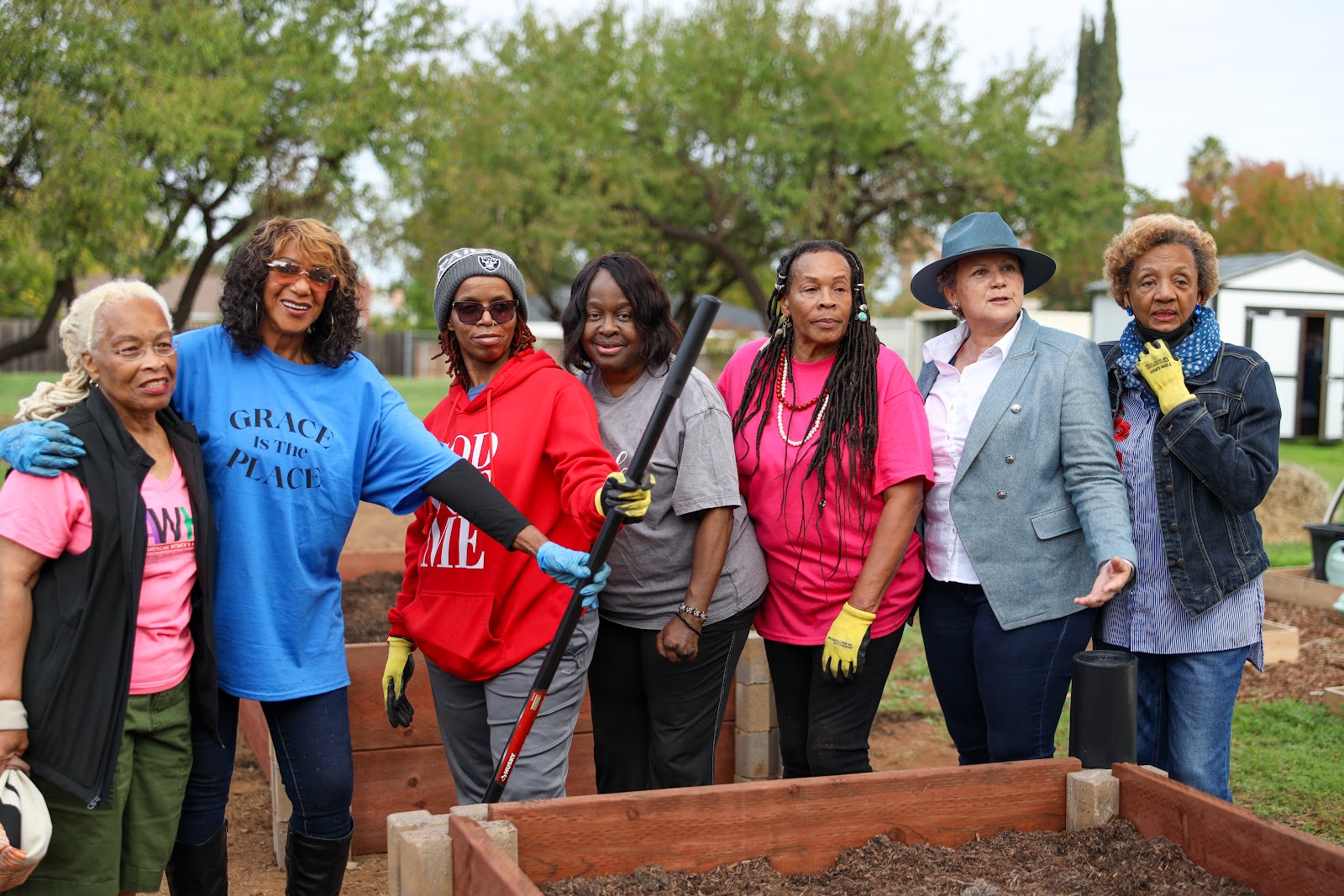
Chandler ran her Senior Mini Patio Gardening Program through her Yes2Kollege Education Resources Inc. organization’s African American Women’s Health Legacy activities. Its mission is to empower and educate community members — in this case, seniors in particular — to manage chronic diseases through self-management, healthy eating and active living. The program assisted residents at senior living complexes in building and maintaining small gardens.
With the grant gone, Chandler said area seniors will suffer.
Matters were further exacerbated by the federal government shutdown and uncertainty of future Electronic Benefit Transfer benefits. Trump vowed to withhold November benefits nationwide until Democratic lawmakers agreed to broader policy concessions, specifically the permanent elimination of federal subsidies for Affordable Care Act health insurance plans.
“How can anyone of consciousness not want people to eat?” Chandler said.
The senior gardening participants took field trips to local farmers markets where participants could use their CalFresh (SNAP) EBT cards. The program also helped seniors take advantage of a market incentive that matched their EBT dollar for dollar and offered additional incentives of up to $15 per market, per card, to make fresh local produce more affordable.
The program’s master gardner, Yemanya Napue, coupled the field trips with cooking demonstrations using the ingredients seniors bought or grew. Some of the fruits and vegetables were new to the elders.
“Some would say, ‘I don’t eat this’ or ‘I don’t know what that is,’” Chandler said. “Pretty soon there’s not going to be a choice.”
Chandler’s grant was funded by the CalFresh Healthy Living program, which was supported by the U.S. Department of Agriculture through its SNAP-Ed program. In California, state agencies, including the departments of public health and of social services, administered the grant and partnered with local organizations and universities, such as UC Davis, to deliver the program to eligible Californians.
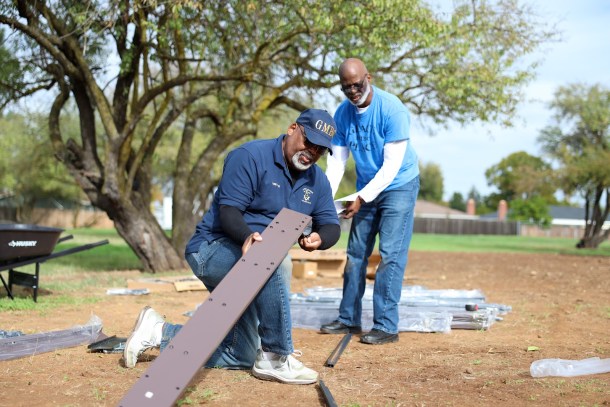 The Bible speaks of reaping what you sow, planting gardens and eating what you produce, suggesting that growing one’s own food is a cornerstone of a stable, long-term life. Grace Missionary Baptist Church volunteer Walter Lomax, left, and Pastor Gordon Thomas set up planters at the church as an extension of a senior gardening program. Douglas Carter, OBSERVER
CalFresh supports more than 11 million adults aged 50 or older nationally, according to AARP. In Sacramento County, approximately 270,000 people receive CalFresh benefits. Recent data shows that nearly 39% of households receiving SNAP benefits include at least one member aged 60 or older. Changes to federal Medi-Caid programs are also expected to eliminate nutrition education and cap benefit increases for seniors and threaten to leave millions struggling to put food on the table.
Despite the setback, Chandler and her organization are looking toward self-sufficiency.
African Americans have historically turned to the soil — and turned soil — to feed themselves. Chandler urged people once again to “grow their own” to help minimize the impact of uncertainty, whether it’s created by cuts, government shutdowns, rising grocery costs, or unemployment.
“We need to get back to nature,” she said. “Everything we’re supposed to have is already provided for us.”
The senior gardening program also was offered to 25 families at the Grace Missionary Baptist Church for parishioners with limited incomes. Earlier this month, the program erected large produce boxes on church property with the help of Home Depot. Grace Missionary plans to open and maintain its own farmers market with its yields.
Before the abrupt end to the grant, Chandler anticipated being able to reapply for the Healthy Eating grant for additional years. She hopes to secure other funding to keep the gardening program going, but like others in the nonprofit space, acknowledged she’s “unsure of what will happen” as volatile times continue.
“What are families and seniors supposed to do?” she said.
Related
Comments are closed.