
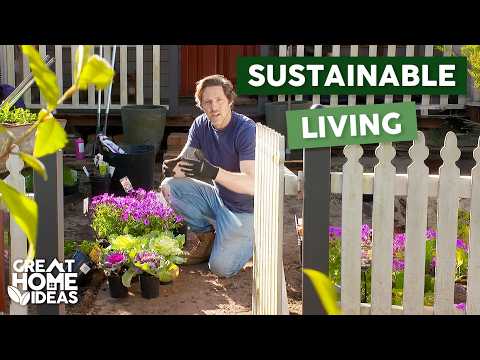
Learn how to transform a front garden into a lively veggie patch with hanging Tomatoes and leafy greens. Charlie also demonstrates how to get the most out of Agave and Agapanthus with effective propagating.
00:00 Edible Garden
02:20 Installing A Screen
06:30 Propagating Agave
08:25 Propagating Agapanthus
▶ Subscribe: https://bit.ly/3hxN7d5
▶ Full Episodes: https://www.youtube.com/@GreatHomeIdeas/playlists
Welcome to Great Home Ideas, your destination for DIY fixes, home makeovers and amazing ways to bring your garden to life. Each week, we’ll be sharing fascinating stories, fresh projects and expert advice to help you transform your space and make your dream home a reality. Whether you’re up for a full on reno or just like to watch other people bring their visions to life, subscribe for inspiration, tips, and easy-to-follow DIY projects.
#GreatHomeIdeas #DIY #Gardens #Renovation
If you head to the supermarket these days, you could be spending up to 12 bucks on one of these. So, I reckon that’s a pretty good reason to become self-sufficient and start your own edible garden. Joel Ollie, who’s this little one? Ariela. Hello. Is this your house? So, tell me a bit about the house, guys, in the garden. Well, we’ve been trying to grow veggies, but they’ve always been out the back, and we’ve had no success out there. So, we’ve going to try and get some veggies going out the front. You’ve already started out the front here. You’ve got things like rosemary, chilies, stuff like that, but then the weeds have taken over. What happened? They did. Well, we had a baby 10 months ago. That will do it. Yes. Yes, that will do it. Yes. And that really did put a bit of a halt on things. My plan for the front garden is to get rid of all the weeds and turn it into an edible front garden space. So, be really nice when you get home, walk through the garden. You got the lovely smell of the herbs. And then when you’re out here, hopefully it’ll bring in the community as well. Good job. You got a front fence as well. You want them in, but you don’t want them stealing your veggies. That sounds wonderful. You happy for me to do that? Great. Please go for it. The homeowners have got this fantastic old wash tub. Now, these are all across Australia, but if you’re not lucky enough to have one for yourself, you can probably pick one up from a salvage yard. They make fantastic planters. If you get the drainage right, you can raise them up and the concrete heats up, which is perfect for root growth. [Music] To create a solid base for our trough, I’ve just put down two papers. And on top of those, I’m going to lay a couple of bessa blocks. And the reason I’m doing this is just to bring our trough up a little bit higher. That way, it’s less backbreaking work when you’re tending to your veggies. [Music] For our raised planter, I’m just planting it up with mixed leafy greens. We’ve got some spinach, end dive, and lettuce. Now, it’s perfect to put them in a garden like this because it’s so much easier to work with them when you get home from work. Now, all over the East Coast, this is perfect to be planting now, but you always want to check what’s in season to avoid disappointment. I thought it’d be a really good idea to put a grow screen along this wall. That way, we’re going to save space and we can start putting some plants vertically. And to do that, I’m using H4 treated pine posts, which I’m going to concrete in. [Music] And then I’m going to use a stainless steel wire across the top so we can have a variety of plants growing up this vertical feature. Having a simple wire between our posts means this grow screen is really quite versatile. We could put some netting on there and grow sweet peas. You could even do cucumbers or even some runna beans up here. I’m actually going to be doing tomatoes. And this system is called growing them like accordance. And that means long and straight. And that’s where our piece of string comes in. You want to be supporting the growth up and removing any of the side shoots out. That’s these ones. It will grow long and thin and you’ll get lots and lots of fruit because there’s light on that fruit. Investing in your soil is the most important thing you can do in your garden, especially if you’re growing herbs and veggies. Now, I’m just using mushroom compost cuz that acts like a sponge in the soil to hold on to moisture and nutrients, which is perfect for things like leafy greens. To add to the list of our edible plants, I’m using some strawberries. Now, strawberries are low growing, so I want them to be at the front of the garden bed so they’re easily accessible and they’re a great way to get kids involved in the garden. Towards the back in the sunny spot, I’ve planted some chilies just to fill in around that tomato that we’ve planted and then some zucchinis as well. Now, zucchinis like quite a lot of water and quite a lot of space. That’s why they’re going at the back of the bed to give them enough room to ramble around. [Music] To add to our edible plants, I’m putting in some ornamentals. Now, this is a great way to add structure to your garden bed. At the end of the harvest when you remove things, you don’t want to leave lots of gaps. That’s why ornamentals are great, and they’re also great for bringing in bees and insects. Now, this is an ornamental kale. You can eat it, but really, it’s not grown for its taste. It’s grown because it looks so cool. And this is paracus. Have a look at these bright flowers. That’s sure to bring in a smile every time you look at it. The best part about all this planting though is you can all get it from Bunnings. And over on this side of the garden to balance out the trough, we’ve got a lemon scented myrtle. Now, this can get quite big, but by trimming it down, you get all the lovely clippings that make a great cup of tea. Now, we all know mulch is really important for your garden. You want it to be about between 50 and 75 mm thick so the water can get down to your edible plants. But in an area where you’re constantly changing your produce over the stuff that grows really quickly, like your lettuce, you want to use something that breaks down quickly. So, if it gets mixed back in the soil, it’s not going to cause any problems. I really like using sugar cane cuz it gives you that grow your own look. [Music] When it comes to watering in your garden, it’s really important that you have a fine mist on there and spend some time getting it into the soil. That way, it’s not going to affect the delicate roots and you’ll get much better establishment. [Music] Hey Ollie, it’s been a busy day, but how do you think we did? It has. This is fantastic. [Music] So, it looks great now, but it’s only going to get better with time. And you get loads of produce to take inside. It’s brilliant. And I’m sure in the years to come, Ari is going to love coming and just grabbing a few things for the garden for us to cook with. It’s going to taste better than your thumb, huh? [Music] One of the easiest plants to propagate is the agave. They pretty much do it for themselves. This is agave a tenuata. And you can see all the way down the stem, it’s already shooting roots off. So when you’ve got a congested amount like this, all you really need is a pruning saw to cut through the stem. You’re good to go. But what you can also do is if you look down on the stem, you’ll see these smaller little pups forming. You can just give those a twist and they come off. Now, you could plant that directly into the garden, but it’s quite tender with its leaves and they could damage as it grows. So, I like to take up jar of water like this. Simply pop it in and you’ll watch the roots develop and the plant get bigger. Also looks great on the kitchen bench. There’s a few more in here and then I’ll get into chopping that stem. [Music] Now, before I plant this in the ground, I’m just going to go around the base and remove any of these ugly looking leaves just to expose the trunk a bit more. [Applause] [Music] song. You set me free. [Applause] In all honesty, you can lay these agave down on the soil, scatter a bit of dirt over the stem, and they’ll keep growing. But I’m digging mine in so I can orientate them just the way I want them to look. [Music] [Applause] I can hear it. [Applause] A little bit of instant impact in an otherwise barren bed. But we do have a couple of spots. And I have spied some of the second most easiest plants to propagate. Some agapanthus. You either love or hate agapanthus. Now I absolutely love them because they’re tough as old boots. They like their roots to be cramped, so they’re perfect for a pot. But when they get over congested, you can get a reduction in quality and quantity of the flowers. So every five or six years, it’s a good idea to dig them up and separate them out. That gives you loads more plants to place around the garden. You can be really rough with them. You just want to dig out large clumps and then you can separate them out by hand. [Music] Now, agapanthas are really hardy when you plant them. Something like this. There’s plenty of roots to these leaves, and I would just pop that in the ground. If you’ve got something that is got too many leaves for root here, you can simply chop it in half, and that reduces the stress on the plant and you can plant that straight up. Doesn’t look the best, though. So, I like to pop these in the ground as they are, and if any leaves die back, so be it. We are the moon. [Music] [Applause] [Music] [Applause] [Music] [Applause] Whenever you transplant anything, it’s really important to give it a really good soak in. Now we have a free garden bed. I am a genius. A thrifty thrifty genius. [Music]
5 Comments
Great I'm watching regular your videos from Pakistan
“Is this your house?” Hope so coz y’all just dug it up 😂
I did this several years ago. My gardens front and back are beautiful and mostly edible
What are your favourite veggies to grow?
I really wish this program would list the various plants especially in a newly planted garden with natives etc. as they tend to use the botanical name and not the common names.