

The Palm Beach Daily News gardening columnist will discuss her new book, “The Sustainable South Florida Garden,” on Dec. 3 at The Society of the Four Arts.
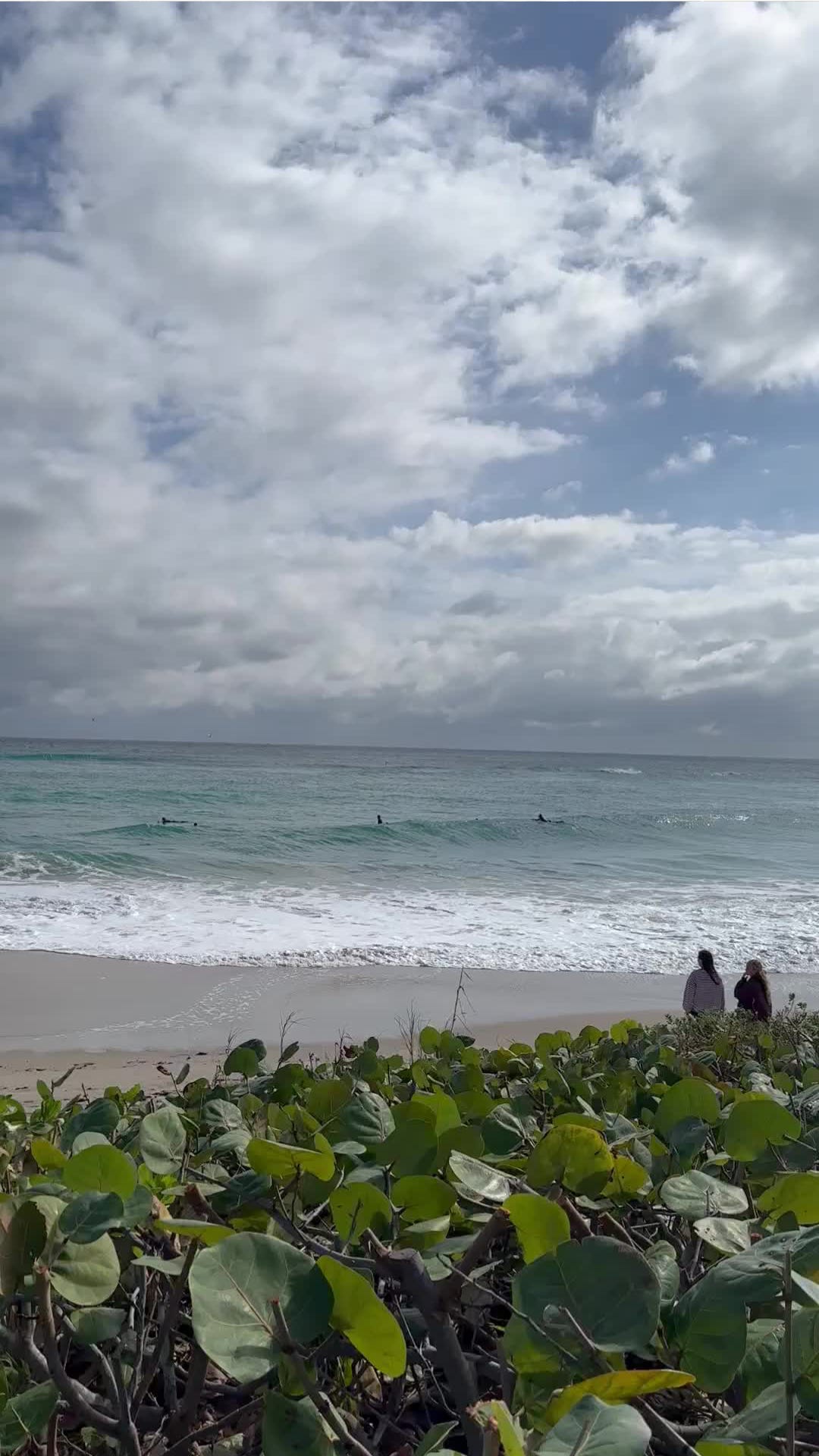

Surfers brave chilly waves after cold front in Palm Beach
With temperatures in the mid-40s and wind gusts up to 20 mph, surfers flocked to the Atlantic Ocean in Palm Beach to catch some waves Nov. 11.
In a Q&A, Kim Frisbie of Palm Beach stresses the importance of eco-friendly landscapes and discusses her new book, “The Sustainable South Florida Garden.”Frisbie will take part in a conversation about sustainable gardening moderated by artist Bruce Helander on Dec. 3 at The Society of the Four Arts.”We are losing our essential pollinators, and subsequently our birds, at an alarming rate,” says Frisbie, who writes a gardening column for the Palm Beach Daily News.
If Palm Beach resident Kim Frisbie had her way, the world would be free of what she views as harmful herbicides, pesticides and fungicides. And the result, she says, would be a far healthier environment for plants, animals and insects — and for people, too,
She also envisions a world where native plants thrive as the most important feature of residential and commercial landscapes.
Frisbie for several years has written a regular column for the Palm Beach Daily News, filled with tips for property owners on how to create environmentally friendly outdoor spaces. And now she has adapted many of those essays for inclusion in her new coffee-table book, “The Sustainable South Florida Garden,” which is lavishly illustrated with Frsibie’s own photos.
Frisbie will speak Dec. 3 at The Society of the Four Arts in a program billed as a “moderated conversation” with artist Bruce Helander, who wrote the introduction to the book and whose Helander Publishing is its publisher. Priced at $70, the book is available by emailing Frisbie at KimFris6@gmail.com.
In addition to offering gardeners practical advice, the book is a visual treat. There are images of brilliantly colored butterflies resting on bright green leaves, for instance, and a striking photo of a honeybee hovering above a sweet almond bush. The pages are filled with photo after photo of the plants she favors for South Florida gardens.
Frisbie began visiting Palm Beach in the 1990s. She moved in 2014 to the island with her family, including her husband of 47 years, Robert Frisbie Sr., a principal at the real estate investment firm Frisbie Group. With four adult children and a second home in Nantucket, Massachusetts, she and her husband for years owned a farm in her native Pennsylvania, where she honed many of the gardening skills that serve her today.
Her professional resume includes teaching botanyat Germantown Academy in Pennsylvania after she graduated from Smith College in Northampton, Massachusetts, with a bachelor’s degree in English and a minor in horticulture. She also holds a master’s in ornamental horticulture from the Longwood Graduate Program at the University of Delaware.
She once worked as an assistant to the director of the Massachusetts Horticultural Society in Boston and has also hosted a radio show about gardening.
In Palm Beach, she is an active member of the Garden Club of Palm Beach and credits two of its members — fellow islanders Vickie Denton and Beth Dowdle — “for getting me started on native plants,” she says. “I can’t thank them enough.”
She recently talked with the Palm Beach Daily News about her book, her life in Palm Beach and her concerns for the environment, particularly her worries about the use of harsh chemicals in gardens and landscapes. The following interview has been slightly edited for clarity.
Q. Do you often feel like a “voice in the wilderness” when you talk to others in Palm Beach about sustainable gardening practices? Or do you find people already know about these issues and want to learn more?
A. I don’t feel as much like a “voice in the wilderness” as I did when I first started writing for the Palm Beach Daily News. There has definitely been an increase in awareness and interest regarding the importance of native plants and the dangers of excess pesticides. The Town of Palm Beach’s series of seminars titled “Where have All the Songbirds Gone?” was a big eye opener for many residents (after it was launched in 2019).
What exactly is a “sustainable garden” and what do you see as its benefits?
Sustainable gardens — those without chemicals — benefit you, your children, grandchildren and pets by supporting pollinators and native plants that are essential to clean air, clean soil and clean water. It’s also really fun to find butterflies in your gardens and to hear birdsong in the morning and crickets at night, and to smell the wonderful fragrance of flowering jasmine, brunfelsia, or other tropical native and Florida-friendly plants.
What surprised you most when you reviewed your previous articles about sustainable gardening as you worked to adapt them for the book?
I originally started writing about the importance of native plants, but as I discovered the magnitude of toxic chemicals being forced upon new and existing residents by “environmental” companies, I shifted more to the dangers of the overuse of pesticides, herbicides and fungicides.
What is the main takeaway you’d like people to get from your book?
We are losing our essential pollinators, and subsequently our birds, at an alarming rate. The neonicotinoids (insecticides) being sprayed on our Ficus hedges for whitefly are neurotoxins (researchers have) directly related to diseases. Each of us can make a positive difference in the environment by reducing chemicals used on our properties and by adding native plants to support pollinators.
Do you find that professional landscape and lawn-maintenance crews are on board with these ideas — and if they’re not, how would you convince them otherwise?
Sadly, most landscaping companies encourage pesticides as a cure-all, without appreciating or explaining to clients their collateral damage. Lawn maintenance companies are typically all about killing the healthy microorganisms in the soil, but these beneficial organisms actually provide the essential nutrients for plants to survive.
Additionally, routine spraying on a pre-arranged schedule is never a good idea, and many companies spray plants that do not require pesticides in the first place. At the very least, these “environmental” companies should be regulated — they should not be permitted to spray in heavy winds, causing chemical drift onto neighboring properties and waterways . And chemical spraying should not be permitted adjacent to the Intracoastal Waterway.
Since it appears we cannot ban the use of neonicotinoids on Ficus hedges along the Lake Trail, pedestrians should be warned in advance, as breathing these chemicals can be especially damaging to young children and pets. You can’t convince these companies that their chemicals are harmful, as the U.S. Department of Agriculture still allows their use. Don’t get me started here…
If you could convince people to do just one or two thing to make their landscapes more sustainable, what would that be?
Support diversity in plant material. And if you have a landscape “contractor,” find out what chemicals are being used on your property.
Looking at the photos in your book, it’s clear that you have a hearty appreciation of the natural beauty of South Florida and Palm Beach in particular. What does the perfect Palm Beach day look like to you?
My perfect day would be a bike ride followed by a swim, then some time working in the garden and then baking cookies with or otherwise playing with my grandkids. Then golf or a beach walk, and finally dinner with family. Since there are 18 family members within a two-block radius, that gives me lots of options. Basically, every day in Palm Beach is pretty perfect.
What are three things on your bucket list?
To find enough sun for an organic vegetable garden, to teach my grandkids to sail and ride horses, and to finish my book about our Pennsylvania farm.
Five words that describe you?
Fun, passionate, energetic, happy and perceptive.
IF YOU GO
“The Birds and the Bees and the Flowers and the Trees: A Discussion of The Sustainable South Florida Garden” with Kim Frisbie and Bruce Helander, will begin at 3 p.m. Dec. 3 in The Society of the Four Arts’ Dixon Education Building, 240 Cocoanut Row. A book-signing will follow. General admission is $20. For information, call 561-655-7226 or visit FourArts.org.
Darrell Hofheinz is a USA TODAY Network of Florida journalist who writes about Palm Beach real estate in his weekly “Beyond the Hedges” column. He welcomes tips about real estate news on the island. Email dhofheinz@pbdailynews.com, call 561-820-3831 or tweet @PBDN_Hofheinz. Help support our journalism. Subscribe today.
Comments are closed.