
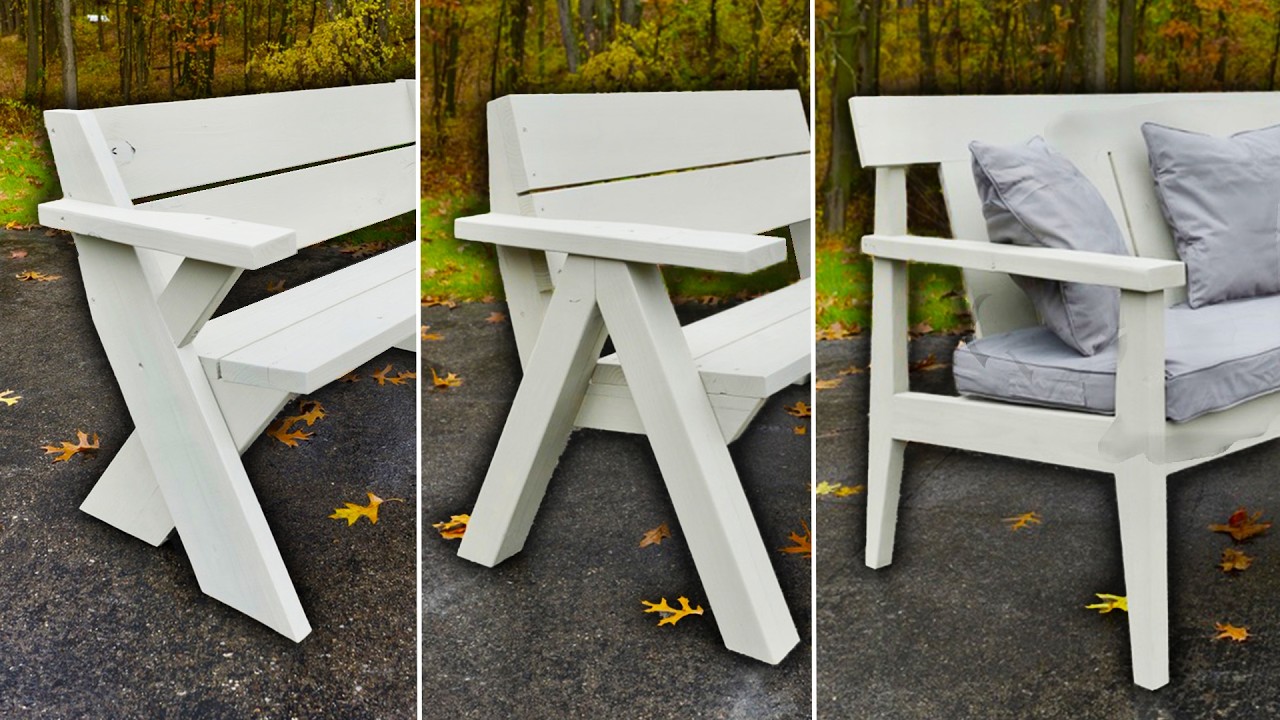
We built three outdoor benches in just one day — each one totally different. The first is a redesign of my most popular bench build ever, the second was inspired by a $1,800 designer chair, and the last one takes cues from a $4,300 English garden bench. The best part? You can build all three for less than a trip to the grocery store.
Bench 1 Plans: https://rogue-engineer-shop.fourthwall.com/products/2×8-outdoor-bench-plans-w-arms
Bench 2 Plans: https://rogue-engineer-shop.fourthwall.com/products/outdoor-bench-plans-4×4-a-frame
Bench 3 Plans: https://rogue-engineer-shop.fourthwall.com/products/outdoor-bench-plans-english-garden
Bench Cushions: https://amzn.to/4ous919
Kreg 20V Pocket Hole Joiner: https://amzn.to/47ihMaF
Kreg 20V Drill/Impact Kit: https://amzn.to/4qH25l6
Kreg 20V Circular Saw: https://amzn.to/4oNzCIx
Kreg 20V Sander: https://amzn.to/4hN3vGs
Kreg 20V Jig Saw: https://amzn.to/484TXDv
Subscribe: https://www.youtube.com/@rogueengineer?sub_confirmation=1
————————————————————————-
follow me here too..
https://www.facebook.com/rogueengineer/
https://www.instagram.com/rogue_engineer/
@rogueengineer
https://www.pinterest.com/rogue_engineer/
https://rogueengineer.com/
————————————————————————-
Today we’re going to be building three different benches. The first is a bench that I built about 6 years ago and has racked up nearly 2.5 million views. It’s my spin on the timeless Leopold bench, but this time I’m going to be adding a feature that you guys have been asking about for years. The second is a totally new design inspired by an $1,800 designer chair, which of course will be making for a lot less. And finally, the third bench could pretty much double as an outdoor sofa and was inspired by an English garden bench that cost nearly $4,300. The best part is you can build all three of these benches in a weekend for less than your next trip to the grocery store. Let’s get started. Now, for the first bench, this is going to be the simplest bench, and it’s actually a classic. It’s a bench that I built about four years ago out of four 2 by8s and it has made its rounds on YouTube racking up over millions of views. Not only that, but a few of you have come out and actually put out videos of building the bench yourselves, which I love to see. But there was one feature that a lot of you asked for in the comments, and that was armrest. So, today we’re not only going to be rebuilding this bench, but we’re going to be incorporating that feature out of the existing lumber that we had left over. Now, the thing that I love about this bench is that it can be built with just some common power tools, and a few screws, as well as a speed square, tape, measure, pencil, all of the other tools that you guys called me out in the original video for using. And I’ve already got the two boards that I want to use for the back and the seat. And essentially, these are 8ft boards. We’re just going to be cutting them in half. So, let’s do that now. [Music] All right, I’ve got four boards now. Those are going to be for the seat in the back. Like I said, essentially those are just the 2×8 by8s cut in half. So, they should be about 4 ft each. Now, we’re going to be cutting the long legs. We’re going to get two legs out of this board. And we need to cut a 30° bevel on the top and the bottom. Now, the way that we’re going to do that is using a speed square. Obviously, you could do this on the miter saw, but I wanted to show you guys that don’t necessarily have a miter saw setup. So, you can take a speed square and all you got to do is pivot this around your pivot point and you go all the way over to 30° where it says 30° on the 45° angle on the speed square. Kind of set that up and draw your line. And now you have a 30° line. We’ll just extend that line all the way over and then make that cut. Now, the long leg itself is 38 in from point to point or each side is 38 in. So, we’ll just grab a uh line with our tape measure off of that point and mark 38 in. And then we’ll just repeat the process here with that speed square and getting that 30° bevel. One leg down. And then repeat the process on this other board. Now, we’re just going to cut a nice little taper across the back. This is the back leg. So, this is going to go like this. But, I really just want to chop this off because h it just looks better. So, to do that, we’re going to measure from the point 4 and 1/2 in on the top of the on the top of the bench. And then um we’re going to measure from the point down the back 17 in. So now we have our two points. And then we’ll just use a straight edge, whatever you can find, an extra scrap piece of wood or a level or whatever it is, something straight to mark from point to point. That is the line that we’re going to be cutting. Now I’m also going to go ahead and do the same thing on the other leg. Four and a half. And all right, let’s get cutting. So, our back pieces are cut. Essentially, these are going to go like this. And then our back is going to get attached to this line right here, which will give us the proper angle for the back. Now, we need to cut the shorter leg, which is going to support the seat, as well as be a foot for the bench. For the short leg, it’s essentially kind of the same process, but with different angles and lengths. You’re going to first need a 40° cut at the end of the board. So, we’ll go ahead and use the same process with our speed square to get that 40° line and we’ll make that cut. But first, I wanted to lay out how everything is going to go. We got a 40° cut 19 in over and then a 45°. So, we’ll do that now. Mark 19 in over. And then this time we don’t have to pivot because this angle is 45. [Music] One of the biggest comments that I got in the video when I built this bench was which angle goes down on the ground, 40 or 45°. Now this leg is going to be at the back of the bench. This is going to be at the front of the bench. The bench seat actually has a recline of 5°. So, this should be sloping back, right? So, your 45° cut is going to go at the top or the front top front of the bench. And this will support the seat and give you that nice little angle. Now, we just need to repeat that process. We’ve got 45° here. So, now we need a 40° cut over here. And for that, we can use this one as a template. Now, this is the excess that I was talking about, and this is what we’ll save to use for our armrest. So, what I’m going to do is actually just go ahead and cut two 20-in long boards out of this. [Music] Okay. Now, I don’t want my armrest to be this wide. So, we need to cut these down to 4 in. Just going to make a 4in mark at each end of this board and then connect it with my straight edge. Now, these will eventually be our armrest. We’re going to have to do a little bit more to them, but we’ll save that for later. Now, these are essentially how the legs are going to go. Now, you kind of want to lay them out like this, kind of mirrored. And the reason for that is going to be because you’re going to screw through here, and you want your screws to kind of be hidden on the inside of the bench. That way, there’s no exposed screws on the sides of the bench. In order to orient these boards how you want them, what I did was I kind of threw together some measurements. We’re going to come up five and 3/8 from the back point on this uh on the base of this leg. 5 and 38. And we’re going to go from the point 12 and a/4. And then I’m just going to use my straight edge to connect those two. So what we’re going to do is kind of line this up. And then I’m going to take my scrap board. The other thing is I did provide another measurement which is 6 in on the inside of this shorter leg. We can mark that there and kind of have an idea of where this point is going to line up. Should be about there. But we’re going to use a scrap piece of wood to kind of simulate the ground and just make sure that this bench is going to rest nice and flat on the ground. Okay. So, I’m going to go ahead and throw four screws in this And then we’ll just repeat the process on the other leg. Now, one thing I did want to point out again is that when you’re aligning these, it’s going to be hard to remember which one’s 40 and which one’s 45 unless you threw straight edge on it. But essentially, the biggest part is you’re going to want this to have a recline, right? So, you’re going to want the shallower side of this board to be at the back. There’s your leg. So, now is where it gets a little interesting. Essentially, this is going to be our seat. Front of this seat is going to overhang this point by an inch and a half. So, measure that out and hope that this doesn’t fall. And now we can go down to this end, this guy lined up, and repeat the process. Now we just take another one of these boards and add it to the back. And I I think in the plans it calls for/ inch spacing. Doesn’t need to be exactly that. I usually just use a carpenters’s pencil to space things out. But what you will notice is that you can really only get one screw in here. And the second screw in the back will actually go through the side of this leg. Okay. Now, all we have left is to put the back on this bench. Now, as far as the back goes, you can kind of get this in there however best works for you. Now, one thing I did notice is that my legs were kind of the top of the legs were kind of cocked in. So, I actually have enough tension to kind of get this board where I need it and then I can secure it. Now, as far as where to place this board, the top edge of this, I just kind of flushed up with the very top of this board. And, uh, obviously the back of it, you want to be flush with this. So, what I’m going to do, kind of get some screws started here. Come on, B. [Music] There you have it. Our bench. Now, time for the armrest. Now, when it comes to the arms, essentially, we just need to cut out a notch with a nice little taper to kind of feed into that side of that leg. So, we’re going to mark out an inch and a half cuz that’s the material that we need to cut away. And then we’re going to come up 7 in right here and 12 in on the side. So at the seven inch mark, we want to again mark out one and a half. This is going to be straight from here to here and then angled from here to our 12-in mark. So what I’m going to do is I’m going to start by cutting this with the circular saw up to that mark. Now we just need to finish off that cut with a jigsaw. So now we just need to repeat the process on this board. 7 and 12 inch and a half. [Music] [Music] Now all we need to do is clean up these edges with a little sander. and round over. We’ll ease all the corners as well as on the bench. And then we’ll go ahead and get this these things mounted. So, as far as the armrests go, essentially all that we need to do is measure up 25 in and make a mark. So, be the exact same for both sides. So, then we take a level and we get that nice and level. and then we mark it. So, our armrest is going to go just like this. Now, the issue is is that we’ve got some space here. So, we really need to fasten these from the inside. So, I’m going to try to clamp this in place so that we can screw it from the inside. Double check that this is nice and level. Not bad. Kind of wish it was a little bit longer, honestly. And maybe a little bit higher. Let’s try a little bit higher. And I will adjust these measurements in the plans, which by the way, the plans are going to be available in a QR code that you can scan on the screen. So, go ahead and scan those if you want to build this bench, and you’ll get all my new set of plans with the armrest. And that’s with the armrest in the correct locations. Yeah, that’s better. And that’s pretty pretty stiff. I don’t think I would pick the bench up with it, but we can tighten these up. I guess you can pick the bench up with it. Might get loose over time, but I like it. It’s kind of like a floating armrest. Doesn’t mess up the detail of the side. I think it looks pretty sharp. So now we just need to do same thing for the other side. So instead of 25, it’ll be 26 and A2. All right, I’m going to be totally honest with you. These armrests are just not very stable or not stable enough for my liking. So, this was one of the off cuts from the armrest itself. And I was able to kind of fashion an angled piece. This is 10 in across the bottom. We’ve got a 20° cut here and a 40° cut on this side. Um, but essentially, this is going to go like this. I think this is a nice addition. It’s not going to take away from the design of the bench. It kind of matches all the other angles and uh I think it’ll do what we need to do. So, I’m going to go ahead and get this installed and see how it goes. That is much better. Yeah. All right, let’s cut another one for the other side. [Music] And there you have it. Bench number one is done. I actually love how it turned out with the armrest. I think they’re a great addition just for getting in and out of the bench. And I think they go with the bench, the angles and all that stuff. It doesn’t really take away from the design which I like a lot. Now, as far as the total cost for this bench, I used four 2 by8s. That is it. I did not for the armrest. I was able to get that out of the scrap from those four. And that comes in at 4272. $42.72. Now, if you want to tack on the price of the screws, you can get a box of 2 1/2 in exterior wood screws for about 10 bucks. So, we’ll round that up to 5272 to build this bench. If you want the plans to build this bench, just scan the QR code on the screen or click the link in the description to get those plans. Now, without further ado, let’s move on to bench number two. Look at that. A poet. Didn’t even know it. We are on to bench number two. And I actually really like this design. This is a new design. And for this, we’re going to be using two 4x4s. two 2 by8s, a 2×4, and a 2 by six. Now, I will admit that this is not going to be the best use of this lumber. However, if you’re making multiples, you know, you can probably make it work or buy less lumber for multiples. Nevertheless, I’m going to get to cut up the lumber. I’m going to have a cut list in the plans. Um, so if you want more details on that, but honestly, I think you’ve seen me cut up enough lumber so far in this video. So, how about a nice little montage? [Music] So, these 4x4s are going to be our legs. And to be honest with you, I don’t know exactly how I’m going to do this part or if this is going to work. I think I have a I’ve come up with an idea, but essentially they’re going to rest like this and um it’s going to kind of create an A. But the issue is is I need to kind of cut these on a 90 degree angle to that. But you can’t just put this on a miter saw like that. So I need some stability. I know all this isn’t making sense, but I promise you it will in a second. So what I’m going to do is I am going to screw this board to the top of this 4×4. Okay. So that is going to support it against the fence of my miter saw. Now, I did line the end of this board up with the tip, and I don’t know that that’s going to really matter, but I’ve got to come from the tip over an inch and a half. Again, I know this might not make sense, but I promise you it will in a couple minutes. I’m going to make a mark an inch and a half over. Confirm that my screw is not in the way. And then we’re going to cut this on the miter saw. So, like I said, this is going to rest against my fence. And I’ve got my mark at an inch and a half from the point. It’s pretty aligned. Now, let’s see if this works and I don’t hurt myself. Not bad. This is essentially what the leg will look like. And then the other one will rest. Now we’ll do that three more times. [Music] So, these are essentially going to be our legs. And now you can kind of see what I’m talking about about how these kind of come together to form this A at the top. They’ve got a nice flat so they can rest together. Now, I’m going to set these aside for right now. The next thing we need to work on is the other pieces. So, I’m going to start with the back rest. These shorter pieces are going to be for the seat itself. These longer ones are going to be actually supporting the back. If I remember correctly, I think we need to come 1 in from the top. So the back is going to lean like that. We got to come down one inch there. And then we need to come down here 9 and 1/2. So we’ll just use a straight edge to connect those two points. And then we’ll cut that with a circular saw. Now, much like the last bench, we’re going to be cutting out the armrest. Now, these are going to be out of 2 by six’s, but kind of the same process. We’re going to go 12 in from the top and we’re going to go 6 in from the bottom. And essentially, we’ve just got to cut out an inch and a half material out of back here. So, we’ll mark out an inch and a half. And then at that 6-in mark, we’ll mark out an inch and a half again. Now, we can use our straight edge to kind of give us this little diagonal here. And then our straight line here. So, we’ll be cutting this portion out. And I’ll do that with a circular saw. We’ll do that for both of these. And uh I’ll just go ahead and p this out again on this. [Music] and off with the jigsaw. [Music] Now, we’ll just go ahead and get these sanded up so they’re ready for assembly. [Music] Okay, think we’ve got all the pieces we need together. Now, we can figure out how this is going to get assembled. I think I know how this is going to work. Essentially, I went ahead with our scrap 4×4. I cut some 1in spacers because in order to get these in the right spot, I need some space. So, we’ve got 1-in spacers. And these again are going to be the legs. And those are going to come together like this. And my armrests going to go like so. I’ve already gone ahead and marked 9 and 1/2 in from the front of the armrest to where this needs to connect on these legs. And what I’m going to do now is I’m actually going to just apply some R in here. [Music] Not too bad. Okay, now we need to lay out our seat supports. Like that. I’ll get some exact measurements and come back to this. So, I’ve cut some 1/2 in spacers because that is what you actually need. And uh we’re going to try this again. Okay, that is our leg. And we’ll have to figure out exactly where the seat goes. Essentially, the seat’s going to kind of go like this. Now, we need to come up 13 and 3/8 of an inch. And this is going to be 20° off. We line that up there. Strike. So that’s going to give us a little subtle angle. Now this board, the point or the the end of this board is going to be at that mark. And then the bottom will be along that line. That should be where we need it. What’s going on? Why is that off? Oh, something’s not right. Okay, we’re just going to have to roll with it. For some reason, this is not as wide as it should be in the design. And I’m sure it probably has something to do with this joint right here. But if I’m going to have these problems, you guys are probably going to have these problems, too. So, again, we’re just going to roll with it. I’ll get this lined up as best I can. And then we will fasten this to the 4×4 leg. And then for this piece, I know this angle needs to be there. We’ll go through the back. Now, normally, per the design, this joint was kind of more in the middle of this 4×4, but uh you know, we got to work with what we got. I’m going to try and sneak one in there. So that is our leg. As you guys see, we got our seat support and our back support and our armrest. Now we just need to do that again. [Music] Okay, leg two is complete. Now for the fun part. This is going to go this our seat and our back. Pretty much just the same as the other bench, just 2 by8s. So, the front of this bench is going to get a 1/2 in overhang. [Music] And again, I use my trusty spacer. [Music] All right, last board. [Music] and now we have bench number two. And again, this is a new design for me. I actually love this design. The bigger armrest, I think, are very nice. It’s kind of like a more upright design. But overall, this bench cost $56.88 to build. That is the lumber itself. If you throw in another 10 bucks for screws, you’re at $66.88 to build this bench. Now, I built it out of untreated lumber. The nice thing about that is you can kind of come back and stain this with uh I would just use like an outdoor deck stain. You can get those tinted in basically any color that you want. The legs themselves, those are untreated. But the nice thing is is that those legs, the 4x4s are from Lowe’s, and I was able to get those in Douglas fur. Douglas fur is a little bit more rot and insect resistant than just say pine. Um, so that’s a good a good option for the legs, or at least better than pine. Not quite as good as treated. Again, you could build this whole thing out of treated and just leave it as is or add your outdoor deck stain to this in whatever color you choose. Overall, I like the bench. I love how it turned out. And now it’s time to get on to bench number three, which is going to be a little bit more intricate. Let’s get started. For the third bench in this, I’m actually very excited about this. This is a new design just like the last bench was, but it’s a little bit different in the way that it’s actually only going to be built out of six 2x48s and six 1x 68. So, it should be a lighter bench, easier to manage as far as moving it around or whatnot, but also it’s going to be bigger. So, I’m not exactly sure how that’s going to work out, but hopefully it does. And in the meantime, I’m going to go ahead and start cutting up or rough cutting up the lumber and kind of getting it to some more manageable pieces. That way, we can kind of figure out how everything’s going to come together. I went ahead and got everything cut down to size, or roughly cut down to size. Now, there’s a few more cuts that I need to make on the table saw, and I’ll explain why later, but essentially, I’m just going to be taking off one edge of these 2×4, or at least these four 2x4s. And that’s just going to remove that kind of eased edge and give me a nice cut line or crisp edge, a nice 90° angle. Now, this board is just going to get ripped into 2 by twos. And that is going to act as some supports for our bench. I’m going to go ahead and do that. Now, with everything kind of cut down roughly to size, I’ve got a bunch of weird dimensions and angles that I need to get cut into the these six boards. Some are going to be the armrest, and some are going to be the back and the front legs. Those got some nice little angles on them, but we’re going to get those cut down and all that laid out. Those dimensions are all going to be included in the plans. Just scan the QR code or click the link in the description to get those. But, I’m not going to bore you with all those dimensions. So, let’s cue that cutting montage. [Music] [Music] So, this is what we’re looking at essentially for the side. The back leg and the front leg have those angles cut on them and that just adds, I think, a lot of character to the bench itself. Now, this is going to be the handrail. This is also got a bunch of angles cut into it and I can’t get it all the way down, but that pretty much will go right about there. Now, in order to secure these, I’m going to be using pocket holes. Now, we’re going to put the pocket holes on the inside of so they won’t be seen. So, I will take this board because this is going to be one of the sides. Flip that over and we’ll do two pocket holes on each end. Now, for the pocket holes on these boards, I’m going to be using the 20 volt Craig Rebel. This is their new pocket hole joiner. Obviously, everything is allin-one. So, it’s got the drill and all of the fixtures and whatnot that you need to drill those pocket holes accurately. You can easily just use like the Craig 720 or even just the smaller clamp-on version and those will work just as well. But, they sent me this, so I’m going to try it out. New tools. I like trying new tools. So, I don’t know. It’s very easy to use. And it’s even got like a little dust collection there, which you can hook a shop back up to it and do what you need to do. I’ve already gone ahead and marked out the locations for this guy. So, we just need to flip this over, clamp it, and screw it together. Now, before I screw these together, I am going to apply a little bit of glue to this joint. And then we’ll use just some exterior pocket hole screws. Now, the reason I kind of made those boards a little bit narrower to cut the eased edge off of the natural 2×4 was for this joint right here. Essentially, I didn’t want to have this side of the board roll over and have that eased edge. I wanted a nice crisp line here. That way, this was nice and smooth. And the same reason applies to this backward. There’s our leg. Now, I’m going to attach the armrest. And I should be good for right now. Okay, there. All right. One down, one more to go. Now for the second one, I’m going to use the first one as a template. So I’ve got the first one there, completed side, and I want these to be exactly the same. All right, so that is where that’s going to go. We’re going to get my pencil and kind of mark these lines. All right, let’s get this together. Before [Applause] I go any further, what I want to do is actually sand all of this down. Now, these straight edges that I put on here, the ones that are exposed, I want to ease those over to kind of mash the other profile or edge of those 2x4s. So, we’ll roll those edges over, get everything nice and smooth on both sides, and then we’ll continue on with the assembly. The front and the rear stretcher are these longer 2x4s that I’ve cut. That’s what’s going to connect the sides together and support the seat and whatnot. So, I’m going to go ahead and actually drill the pocket holes in each end of those and then we can start assembling all of that. Now, the rear stretcher is actually going to support the back as well. So, that is going to come in on an angle, and uh I’m marking that right now. This should be a 15° angle to this side. So, I’ve got that marked. I’ve got my front stretcher marked where that needs to go. Now, we’ll just put some glue on these ends and get these screwed in place. [Music] [Applause] [Music] Aha, this will be helpful. Now, that is like a uh pocket hole clamp, which is handy for exactly this thing. Now, the back and the seat are going to be made up of 1x six’s. The seat has three 1x six’s, and the back has a bunch of these slats that are going to go vertically, as well as one long board. across the top. These are all going to get pocket holes, which means I’ve got a ton to drill. So, let’s go. [Music] [Applause] I went and installed the back and that turned out pretty good. I’m hoping that that top piece is strong enough with all of these boards connected to it. Hopefully that stiffens it up enough to where it won’t flex when you lean back against it. Now I’ve got to install the seat. And what I did for that is I actually ended up just clamping a couple boards to the top of these pieces on the sides. And then I’ve got my 1/2 in spacers. So my theory here is to set these cuz we got a/ inch of gap there. And that board that’s clamped should keep it where I need it. Now, we just pocket screw those in. And uh these are just going to kind of temporarily hold these in and make it so that I don’t have any fasteners showing through the the face of it. But I’m going to come back in here and add some more support so that these screws aren’t the only thing holding the seat. [Music] So, the supports are these 2 by twos. These are going to go in here, and uh these are going to get screwed to the side, and that’s going to hold everything up. All right. Now, we’ve got these supports, which you kind of got to finagle in there. These supports will support the weight of the seats and um we just need to secure those with these 2 and 1/2 in pocket hole screws and then the seat itself will be supported by those. So we shouldn’t have that much flex or [Music] I’ve got every other length screw except for twoin screw. So, we’re going to see how it works without. Moment of truth. All right. I’m going to be honest with you. I don’t really like how these boards are on here. So, I’m going to do this a little different. I’m actually going to take these off and get rid of the pocket hole screws. Get all of these support structure underneath of this where I want it to go. And then I’ll attach the boards. Trying to attach the boards first. I just noticed there was kind of some uneven spots here. This board’s a little proud. That didn’t work out exactly like I thought. And the gaps, in my opinion, are a little bit too big. So, we’ll be able to kind of visually set those in here where we want. But honestly, this bench is nice. I think it’s plenty sturdy and it’s a deeper bench, but it’s comfortable. I think it looks sharp. And the other cool thing is it’s like super light. So, I just the 1x six’s and the 2x4s don’t really weigh that much. Overall, I like it, but I’ve got to fix something first. So, what I ended up doing was just taking a little piece of scrap and using that as a spacer to mount these supports where I needed to go. And rather than screwing the slats down, what I’m going to do is I’m actually just going to put some glue down on here and then brad nail them into place. So, let’s try and figure out where we want these gaps. I definitely want them smaller than before. I like that. I think that’s probably about an eighth of an inch gap rather than a/2 inch gap. There it is. I think that looks pretty good. And that concludes bench number three. Honestly, I love how it turned out. I think it looks sharp. It’s very light and easy to move around. And I ended up only using six 1x68s and five 2x48s. That came to a total cost of $70.88 in lumber. If you had $10 in screws there, you round that cost up to 80 bucks for to build this bench. Now, if you want the plans to build this bench, just scan that QR code right there, or you can click the link in the description. Now, I was able to put some stain and sealer on all three of these benches, and for that, I went with Cabbats stain and sealer in a semi-olid. And the color that I get it tinted in, it was dune gray. Now, the other thing I was able to find on Amazon were some cushions for the third bench, which I love because you can use this bench with or without cushions. So, there you have it. Three inexpensive benches that you can build in a weekend. But, I want to know which one’s your favorite. So, hit me up in the comments and let me know. Until next time, be safe and happy building.
16 Comments
Love your project videos!❤ keep them coming
Seriously, you are the Bench King! I love them all, but my favorite is bench no.3. I prefer a deeper seat.
I did the first bench as an SBA project with my woodwork students. We built 4 benches and they all came out excellently
Yeah man because of you I made that bench for my patio. Thank you
Question why glue on the second but not the first bench?
I like them all. About 5 years ago from your plans I made the 2x8x8's your Leopold bench. Many liked them. I Also built a set of 3 benches. One at 4 feet. Another at 3 feet and the last one was two feet. I sold all three as a set. I sold about 6 sets in the past 5 years. Not many but these with my other items I do ok.
Thanks for a great video.
On that first bench, I would use a wider, and maybe slightly longer arm rest, and drop some cup holders in them.
Nice looking benches.
#1 and # 3 my favorite
Be less confusing to call the measurement given for the 38" legs not point to point, but toe to heel, in actual carpentry terms. Just easier for me to explain to the high school students that I teach..
I made that 1st one 5 years ago, as per your plans thanks!
Heads up – Link for 3rd bench plans doesn't work
I've built the first bench for my wife on her birthday for seating around the horse tack shed. I built it two years ago and stained it. It's still holding up strong even with our crazy rain storms.
Built original leopold…legs a trip hzd. I modified…perhaps this version is better albeit heavier.
Thank you sir. Very helpful