
Winter can be a tough time for many birds, and gardens across the UK play a more important role than people realise. Food becomes scarce, insects disappear, and cold weather makes survival even harder for smaller species. And experts say there is one tiny bird that will happily visit gardens in the colder months, especially if one simple thing is left out.
This species is known for being hard to spot, fast-moving and incredibly small, yet more people see it in winter than at any other time of year. It often appears in parks, woodlands and gardens, darting through branches in search of food.
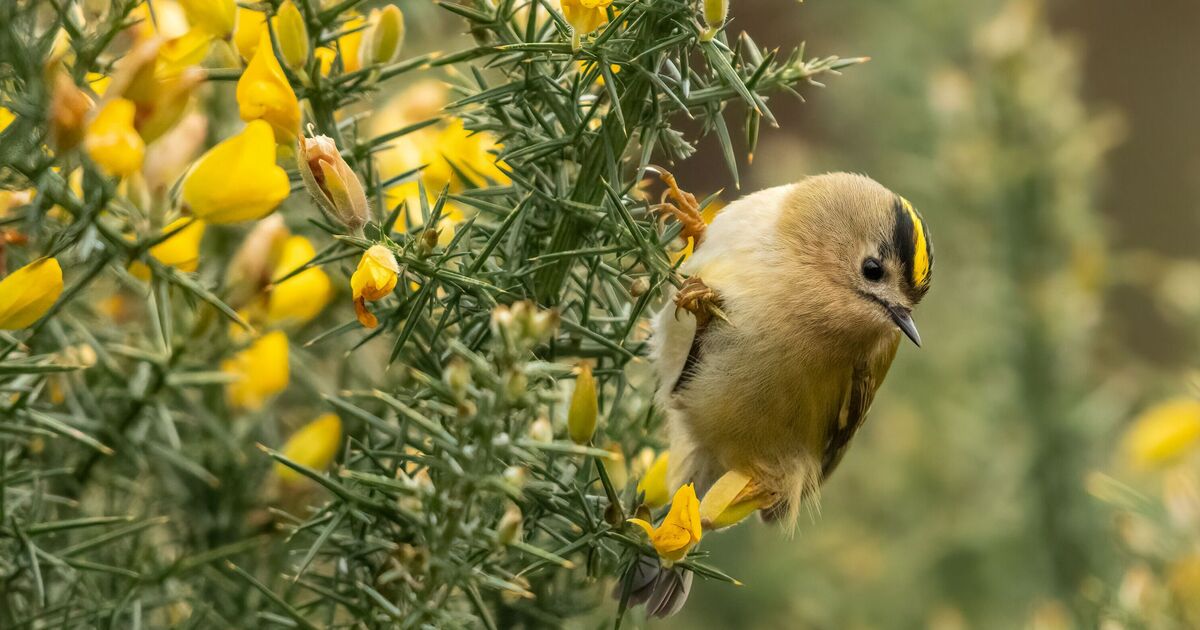
Experts at The Awesome Wildlife Company, say the bird is recognised by its olive-green feathers, pale underside, thin beak and the bright crown stripe on its head.
The bird in question is the Goldcrest, sometimes known as the gold-crested wren.
It is officially Europe’s smallest bird, weighing just six grams, which is about the same as a 5p coin.
With a wingspan of only 13.5cm, the Goldcrest is one of the lightest and quickest garden birds in the country.
Although tiny, they are widespread. The UK has a large resident population that stays here throughout the year, and this is joined by migrating Goldcrests from Scandinavia each winter, some travelling more than 800 miles to reach Britain.
Sailors used to see them landing on boats in the North Sea during their long journey, which led to the old nickname “woodcock pilot”.
Experts say the species is common and not considered at risk. They are listed as ‘green’ on the conservation scale and can be found in many types of habitat, including gardens with trees, parks, conifer plantations and mixed woodland.
Goldcrests mainly feed on insects, spiders and tiny invertebrates, often hopping quickly through branches to pick food from leaves.
In winter, when insects disappear, they will also take seeds and berries if needed.
And this is where gardens can help, especially during cold spells. According to The Awesome Wildlife Company, gardeners can attract Goldcrests in harsh weather by leaving out breadcrumbs and small pieces of cheese.
They say breadcrumbs and cheese can give the birds enough fat and energy to survive freezing conditions, when as many as 80% may not make it until spring.
Gardeners can also support the species by planting evergreen shrubs or conifers, avoiding pesticides to encourage insects, and putting up small-hole nest boxes in sheltered spots.
For those lucky enough to see one, the Goldcrest is easy to identify: a fast, nervous movement, an olive-green body, and a bright yellow crown stripe that earned it the nickname “king of the birds”.
Comments are closed.