
Credit: Special thanks to Mark from Self Sufficient Me for his excellent gardening content on growing food naturally, keeping poultry, and living more self-sufficiently.
Check out his channel here: https://www.youtube.com/selfsufficientme
Watch his Sweet Potato Tips video: https://www.youtube.com/watch?v=lbc1rnEfbcM
Watch his Pineapple Growing video: https://www.youtube.com/watch?v=lU2T5Dog-0g
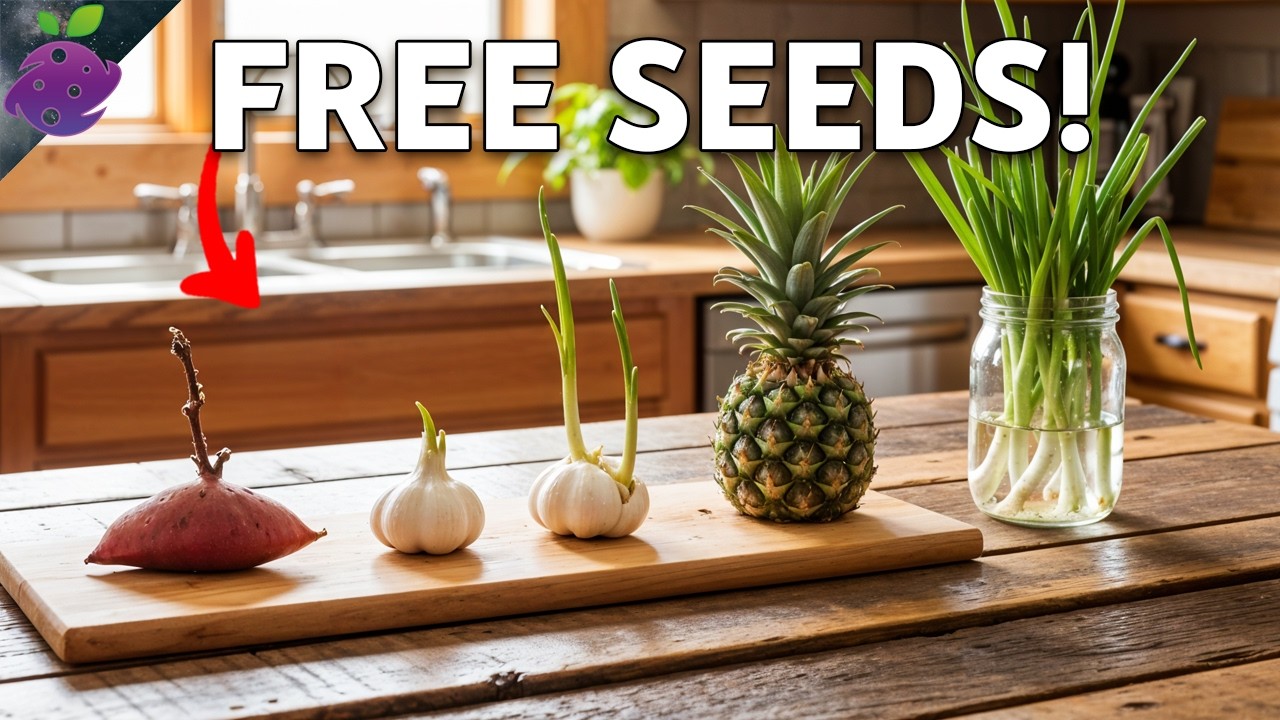
Your grocery store is hiding a secret garden. From pineapple tops to sprouted garlic and dried beans, this video reveals the 10 easiest crops you can grow for absolutely free using kitchen scraps. No seed packets. No fancy tools. Just your leftovers—and a little knowledge.
We explore regrowing food from scraps, including herbs, root vegetables, and pantry items like dried legumes and sprouted onions. These DIY gardening hacks not only save money but can create a self-sustaining food supply right at home. Perfect for beginner gardeners, urban homesteaders, or anyone looking to reduce food waste and grow food naturally.
These are powerful kitchen gardening tips you won’t hear at the store—turning what you’d normally throw away into food for months or years to come. Whether you’re living in a small apartment or starting a backyard food forest, this guide gives you the fastest, easiest plants to grow without buying seeds.
Grow your own food for free. It’s possible. It’s fun. And it starts right now.
📺 VIDEO TIMESTAMPS:
00:00 | Intro
01:17 | Pineapple Tops
02:43 | Sweet Potato and Potato Slips
04:50 | Tomato Suckers
06:12 | Fresh Herbs
07:41 | Carrot Seeds from Wild Plants
08:59 | Garlic Cloves
10:27 | Dried Beans and Legumes
11:55 | Green Onions/Scallions
13:08 | Pumpkin and Winter Squash Seeds
14:21 | Sprouted Onions
👇 Have you tried growing from scraps before? What worked best for you? Let us know in the comments.
#gardeningtips #growyourownfood #kitchengardening #regrowfromscraps #urbangarden
[Music] Have you ever noticed a sweet potato sprouting purple shoots in your pantry and wondered, “If I plant this, could I actually grow my own sweet potatoes?” Or have you ever been cutting the top off a pineapple and thought, “Can I somehow turn this into an actual pineapple plant?” What if I told you that your weekly grocery shopping is already stocking your garden for years to come? that the waste you throw away contains enough seeds and cutings to grow hundreds of dollars worth of food. Today at Stellar Eureka, we’re revealing the hidden garden living inside your kitchen. From sprouted garlic cloves that become entire bulbs to fresh herbs that multiply into permanent plants with one simple trick to wild plants growing roadside that are packed with free seeds. These aren’t just budget hacks. They’re the foundation of gardening independence. Some techniques will give you fresh food in weeks. Others will establish crops that produce for decades. All of them will transform how you see every trip to the grocery store. These are the 10 easiest crops you can grow for absolutely free. Prepare to discover that your kitchen is already a seed vault waiting to be unlocked. We begin with something that sounds absolutely impossible until you see it happening. The leafy top of a store-bought pineapple can grow into a full pineapple plant that produces its own fruit in 18 to 24 months. It’s one of the most rewarding long-term projects in gardening. And it starts with something you normally throw away. Cut the top off a fresh pineapple, leaving about an inch of fruit attached to the crown of the leaves. Let it dry for a day, then either place it in water to root or plant it directly in well- draining soil. The crown contains dormant growth points that will activate and begin producing roots within weeks. Pineapple plants are surprisingly attractive house plants with sword-like leaves arranged in a rosette pattern. They grow slowly but steadily, and after 12 to 18 months, a flower spike emerges from the center. This flower develops into a new pineapple that grows above the plant. One of the most unusual and satisfying fruits to grow at home. Even if you never harvest a pineapple, the plants are worth growing for their tropical appearance and the satisfaction of growing something so exotic from kitchen scraps. In warm climates, they can grow outdoors year round. In cooler areas, they make excellent container plants that can move indoors for winter. From tropical fruits to underground treasures, both sweet potatoes and regular potatoes can become a foundation of an incredibly productive garden. One sweet potato or sprouted potato from your kitchen can become 10 to 20 plants that produce hundreds of pounds of food. Sweet potatoes propagate through slips, shoots that grow from the tuber, making them incredibly easy to multiply and amazingly productive once established. Start by placing a sweet potato in water, either fully submerged or with one end in water, using toothpicks to suspend it. Within weeks, you’ll see shoots, slips emerging from various points on the tuber. Once these slips reach 4 to 6 in long, twist them off and root them in water or plant them directly in soil. Regular potatoes work similarly, though they’re even simpler. That sprouted potato in your pantry is ready to plant directly in soil. Each eye or sprout can become a full plant. Cut the potato into pieces, ensuring each piece has at least one eye. Let them dry for a day. Then plant them about 4 in deep. Each sweet potato slip becomes a sprawling vine that can spread 3 to 4 feet in all directions. The entire vine is edible. Leaves can be harvested like spinach throughout the growing season, but the real prize is underground. After four to 6 months, each plant produces 3 to eight sweet potatoes, often larger than the one you started with. Regular potatoes are equally productive, with each planted piece potentially yielding 5 to 10 new potatoes. Both sweet potatoes and regular potatoes are perfect for food security gardening because they’re incredibly nutritious. store well without processing and produce massive yields in relatively small spaces. The plants are also beautiful with heart-shaped leaves that make attractive ground cover or even hanging basket plants. Up next, we have what might be the easiest free vegetable plants on Earth if you know where to look. If it’s tomato season and you know someone growing tomatoes, you found a gold mine hidden in every tomato plant. dozens of potential new plants called suckers that growers actually want to remove anyway. Tomato suckers are the small shoots that emerge from the joint between the main stem and the branches. Most tomato growers pinch these off regularly because they compete with fruit production on the main plant. But here’s the secret. Every single sucker can become a full-sized fruit producing plant if you plant it. The process couldn’t be simpler. Find someone with established tomato plants. They’re everywhere in summer. Ask for their suckers. They’ll be thrilled to give them away. And stick them directly into moist soil. No special rooting hormone needed. No complicated propagation setup. Just sucker soil water and you’ll have tomato plants in weeks. If you start early enough in the growing season, plants grown from suckers produce just as much fruit as plants started from expensive seeds months earlier. You’re essentially getting free tomato plants from what other gardeners consider garden waste. From seasonal vegetables to year round abundance, the herb section at the grocery store is actually a propagation nursery in disguise. Every bundle of fresh basil, mint, oregano, or rosemary you buy can become a permanent plant that provides free herbs for life. If you know the simple trick that makes it work. Most culinary herbs belong to the mint family. And if you’ve ever grown mint, you know it’s basically a green takeover machine. This aggressive growth habit means these plants are incredibly easy to propagate from cutings. A single sprig of basil from your pasta prep can become a thriving plant in just weeks. The technique is surprisingly simple. Take a young, tender cutting about 4 in long. Remove the lower leaves to expose the growth nodes, those little bumps where leaves emerge, and stick it in water or moist soil. These nodes are packed with cells ready to become roots at a moment’s notice. Within days, you’ll see white roots emerging. Here’s where it gets interesting. Once you have one plant, you have infinite plants. These herbs want to spread, so regular cutings actually improve the parent plant while giving you new ones to share, trade, or expand your garden. Many gardeners maintain their entire herb collection this way, never buying another herb plant after their first cutting. Now, here’s a secret that will change how you see roadside weeds forever. Those white umbrella-shaped flowers blooming everywhere in late spring and summer are often wild carrots, and they’re packed with free carrot seeds for next year’s harvest. Wild carrots, better known in the US as Queen Anne’s lace, are the wild ancestors of today’s domestic carrots, and their seeds can grow edible roots right in your garden. The flowers are distinctive flat topped clusters of tiny white flowers on tall, sturdy stems. When these flowers dry and turn brown, they’re full of seeds ready for collection. Harvest the dried flower heads in late summer. Rub them between your hands to release the seeds, and you’ll have enough carrot seeds to plant a significant patch. These seeds are often more reliable than expensive hybrid varieties because they’re adapted to local growing conditions. If you already grow carrots, here’s an even easier method. Let two to three of your planted carrots go to seed instead of harvesting them. They’ll produce the same umbrella flowers and scatter seeds naturally throughout your garden. You’ll find volunteer carrots emerging the following year wherever the seeds landed. Moving from wild foraging to cultivated abundance. Walk into any grocery store, buy a bulb of garlic, and you’ve just purchased 8 to 12 individual plants. Every single clove in that bulb can become an entire garlic plant that produces its own full bulb in just one growing season. Garlic is probably the easiest crop on this list because it practically plants itself. Simply separate the cloves. Plant them pointed end up about 2 in deep and wait. No special treatment, no complicated timing. Just clove in soil equals new garlic plant. The hardest part is waiting 6 to 8 months for harvest. Here’s what makes garlic special. It’s essentially a savings account that grows. Plant one clove. Harvest a bulb with 8 to 12 new cloves. Plant those cloves the following season and you’ll harvest 8 to 12 full bulbs. The math is staggering. Within 2 years, one grocery store garlic bulb becomes enough garlic to last most families an entire year. The quality difference between homegrown and store-bought garlic is remarkable. Fresh garlic has more complex flavors, stores longer, and cost a fraction of buying bulbs year round. Plus, you can choose varieties that aren’t available in stores. From mild, sweet types to fiery, hot varieties. While garlic multiplies underground, let’s explore what’s hiding in plain sight in your pantry. Stop buying seed packets when your cupboard is already full of them. Those bags of dried beans, lentils, and peas sitting there, they’re not just ingredients. There are thousands of seeds waiting to grow into prolific plants that will produce hundreds more beans than you started with. Every single dried legume you can buy is essentially a bag of viable seeds. Black beans, pinto beans, chickpeas, lentils, split peas, they’re all just waiting for water and soil to transform into productive plants. The vegetable we eat is literally the seed of the plant. Which means what you’re buying at the grocery store is exactly what seed companies are selling for 10 times the price. Here’s the secret most gardeners don’t know. Soak them overnight before planting. These seeds have been deliberately dried for storage, so they need extra time to rehydrate compared to fresh seed packets. Plant more than you think you need. You can’t be sure how long they’ve been sitting on shelves, so hedge your bets with quantity. The payoff is incredible. One pinto bean becomes a plant that produces dozens of pods, each containing multiple beans. From a $2 bag, you can harvest enough beans to last months while saving hundreds on seed packets. Speaking of instant gratification, this next crop might be the most satisfying quick result project in gardening. Buy green onions once and with a simple trick, you can have a lifetime supply growing in your kitchen or garden. No soil required for the first phase. The viral kitchen hack is real but limited. Stick store-bought green onions in water and the green tops regrow in days. You can harvest these greens three to four times before the plant exhaust itself. But here’s the advanced strategy most people miss. Let a few of them complete their life cycle instead. Plant those waterrooted green onions in soil and let them grow wild. They’ll develop into full-sized plants that eventually produce flowers. These flowers turn into seed heads packed with dozens of tiny black seeds. Let these seeds scatter naturally or collect them for controlled planting. The result, self-perpetuating green onions that appear throughout your garden year after year. They’re easy to identify, simple to transplant, and provide continuous harvests without any replanting effort. From quick crops to seasonal abundance, every pumpkin you carve or cook is hiding hundreds of free plants inside. Those slimy seeds you usually throw away, they’re your next year’s harvest waiting to happen. and winter squashes are some of the most reliable crops you can grow from grocery store seeds. Unlike many hybrid vegetables that produce sterile seeds, most pumpkins and winter squashes are still grown from traditional varieties that produce viable offspring. When you scoop out seeds from butternut squash, acorn squash, or pumpkins, you’re holding next year’s crop in your hands. The preparation is simple. Clean the seeds, dry them for a few days, then plant them when warm weather arrives. But here’s what makes this special. Winter squashes are incredibly productive. One plant can produce three to eight large fruits, each containing hundreds of new seeds. Winter squashes also store for months without refrigeration, making them perfect for food security gardening. Plant seeds from this year’s Halloween pumpkin next spring and you’ll harvest enough squash to last through the following winter. Last but not least, let’s turn kitchen waste into garden wealth. That onion in your pantry that’s starting to sprout green shoots isn’t going bad. It’s showing you exactly how to turn one onion into eight. Those green shoots are the beginning of your next onion harvest. And the process is surprisingly simple. When onions begin sprouting, they’re entering their reproductive phase, preparing to create new bulbs. Instead of throwing sprouted onions away, plant them directly in soil with the green shoots above ground. The original onion will feed the developing plant while new bulbs form around it. Here’s what most people don’t realize. Each sprouted onion typically produces multiple new bulbs clustered around the original. Plant one sprouted onion, harvest four to eight new onions in three to four months. It’s like getting a return on investment from something you were going to throw away. The process works with any type of onion, yellow, white, red, or sweet varieties. Sprouted shallots work the same way and often produce even more new bulbs per original bulb planted. From beans hiding in plain sight to pineapples growing in your living room, these crops prove that the best gardening doesn’t require expensive seeds or fancy equipment, just curiosity and willingness to see potential where others see waste. What’s remarkable isn’t just the money you’ll save, though. Turning kitchen scraps into productive plants can easily save hundreds of dollars per year on groceries. It’s the independence you’ll gain knowing that your garden can sustain and expand itself with minimal outside inputs. These plants are gateway drugs to food security. Start with green onions, regrowing on your window sill, and before you know it, you’ll be planting crop rotations and saving seeds like farmers have done for thousands of years. Which of these free crops will you try first? Have you discovered other kitchen scraps that grow into productive plants? Let us know in the comments below. The gardening community loves sharing these discoveries. If this inspired you to look at your kitchen differently, hit like, subscribe, and share this video with someone who needs more plants in their life. Your garden and your wallet will thank you. This is Stellar Eureka signing off.
35 Comments
⚠ Foraging Warning: Wild carrot (Queen Anne’s Lace) has a deadly look-alike; poison hemlock. Never consume wild plants unless you’re 100% sure of their identity. Hemlock is toxic even to touch or inhale.
Curious how to spot the difference? I covered hemlock and other dangerous plants in this video 👉 https://youtu.be/qlH01oGq6k8
Special thanks to Mark from Self Sufficient Me for his great gardening tips. Check out his channel here: https://www.youtube.com/selfsufficientme
🍠 Sweet Potato Tips: https://www.youtube.com/watch?v=lbc1rnEfbcM
🍍 Pineapple Growing: https://www.youtube.com/watch?v=lU2T5Dog-0g
The many wonders of G😇D
Awwww, I loved this video! I have been able to grow germinate cherry and peach pits I bought, and the satisfaction was great! I will keep growing my plants this way
Putting some copper rods around your garden will give you gigantic harvests for someone like me that is retired. I stay home all day watching after my garden, I never stress about money again because I don't even know what to do with the one I have and that keeps on coming.
Some of these I did not know. Thank you
Great info and channel…thanks and may God Jesus Christ continue Blessing you for your great job
Celery, turmeric ,ginger, strawberries, blackberries, blueberries, lemons, limes, these are all the things that I have had good success with.
With tomatoes, I never pinch off the suckers. Rather, I let them establish a little, then bend down the large leaf directly below it, and removed that instead. I always have tons of tomatoes growing this way.
This is amazing
From India nice👍 tip
Shred diaper filling and drop in rooting water until all is absorbed. cuttings will root and thrive in it! even the fragile ones, like basil.
Fun fact: acorn and yellow squash can interbreed and create a delicious and savory hybrid. Accidentally grew some this year
Grow garlic chives, cilantro, kale, thyme, arugula, thai basil in containers in front of north side window. Gets daylight sun, not full strong sun. Keeps warm with heater vent underneath shelf. Got tired of buying soggy leaves
Green Onions and herbs. 😊
Great video only missing one thing humans damn clankers
Wats wid this documentary style Narration?
What about Bell Peppers or other peppers?
You can grow tomatoes from can tomatoes as well
When I remove the core from a head of cabbage, I cut it into fourths. Each piece will grow a cabbage plant.
What if our fruit is GMO will it still grow
I planted baby leeks, green onions, celery and baby bok choy….first put in water, and once they sprouted roots I planted in pots. I had a few garlic cloves that started to sprout so I planted them. OMG! As the garlic sprouts got large I cut used them in meals, dehydrated some. I ground them into a powder to use. I do the same with the herbs I've been growing. 😊 I have many fruit trees so I share with my neighbors 😊(oranges, lemons, kumquats, peaches, nectarines and dragon fruit).😊 living in Los Angeles allows me to have all of these.
What zone
Ive heard talk that you can buy herb seasonings,of course the ones that are seeds,and they will grow, i am going to try this
It is important for people to teach anyone who is interested to grow for themselves ❤2025
Growing tomato plants from seeds salvaged from a supermarket tomato can be easy, if you follow the correct procedure: The important part is to thoroughly rinse the seeds with cold water first, to get rid of any traces of tomato pulp or juice. If you try to germinate the seeds without doing this, it will hardly ever work, because tomato juice contains a naturally occurring enzyme which prevents germination. This is what rinsing them removes.
Then fill some small pots with fresh, moist compost, poke some half-inch deep holes in it with a cocktail stick or skewer, and drop the seeds down the holes. Most of them will sprout within a week or two. The seedlings can be separated and transplanted into larger pots after another couple of weeks, or once they have grown to at least 6 inches tall.
If you don't want to use them straight away, then let them dry out completely and store them in an airtight container to keep them dry during storage. Most of them will remain viable for germination for at least 5 years if you do this.
Great suggestions sir
So creative and unique.
Thanks 4 sharing DEVINE KNOWLEDGE
Is it all potato leafs or only sweet potatoes leafs you can eat and just grab rinse stick in your mouth and salad?
mais um video fantasioso
So illegally grown trademarked seeds yea no thanks
Thanks
THANKS MY NEW FREND GOD BLESS YOU
The wild carrot plant looks very similar to a poisonous hemlock plant. Poisonous hemlock will kill you within hours make sure you know what you're picking.
Amazing