
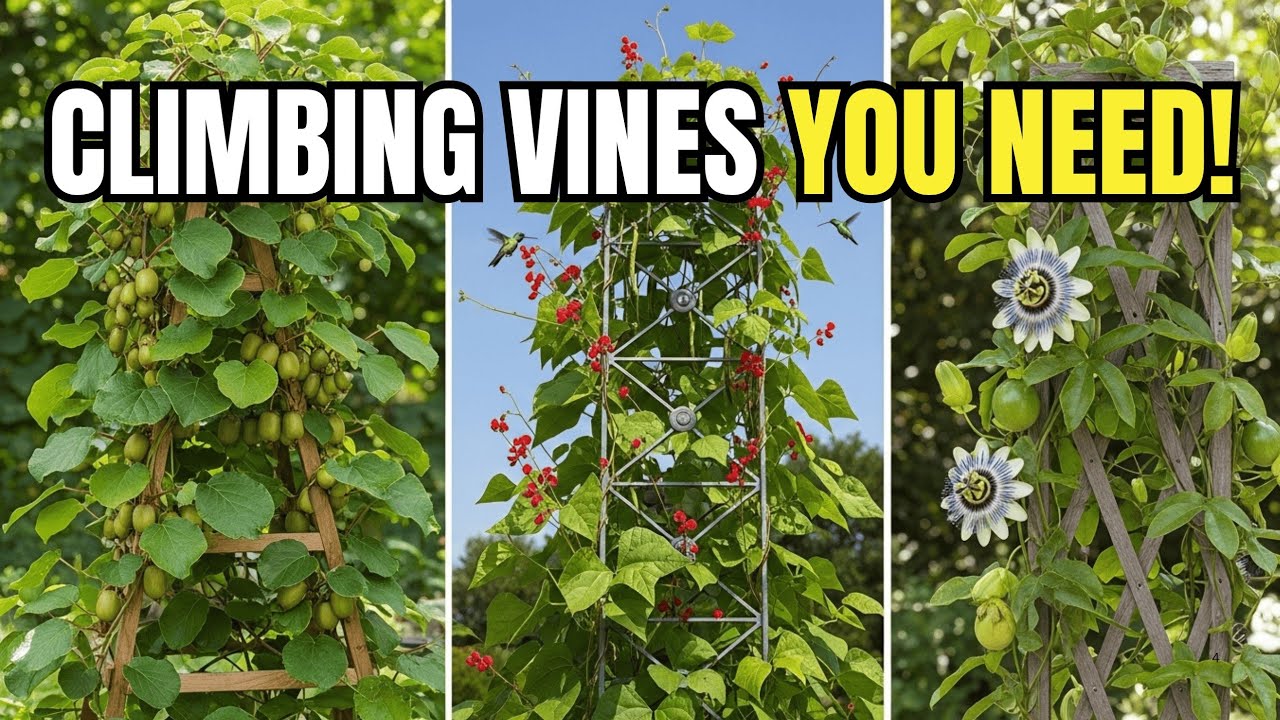
Top 10 Perennial Edible Climbing Vines for Small Vertical Gardens 🌿 | Golden Seniors Living
We’ll cover:
• Why vertical gardening is perfect for small spaces and how it allows you to grow food even without a big yard
• The top 10 perennial edible climbing vines that can transform any wall, balcony, or fence into a beautiful and productive garden space
• How hardy kiwi, scarlet runner beans, and other vines offer year-round harvests while saving space and adding beauty to your garden
• How to grow and support vines like grapevines, hops, and chayote for maximum yield in tight spaces
• Tips on choosing the best support systems and preventing common gardening mistakes
Explore how simple garden ideas can provide fresh food, shade, and beauty right from your small garden space. Whether you’re working with a balcony, small fence, or wall, these climbing vines can help you grow food easily and sustainably!
Practical advice on pruning, feeding, and training your vines to ensure a healthy, productive garden. These tips are perfect for gardeners who want to grow real food in even the smallest spaces.
small vertical garden ideas, perennial edible vines, vertical gardening for seniors, climbing vines for food, garden tips for small spaces, edible garden for seniors, food gardens in small spaces, hardy kiwi growing tips, scarlet runner beans care, vertical edible plants for balconies
#GoldenSeniorsLiving #VerticalGardening #EdibleVines #GardeningForSeniors #SmallSpaceGardening #GrowYourOwnFood #PerennialVines #GardeningTips #SustainableGardening #EdibleGardens
Whether you’re an experienced gardener or just starting out, this video will show you how to make the most of your small outdoor spaces with simple, effective growing techniques. Don’t forget to like, subscribe, and share with fellow gardening enthusiasts. Happy gardening!
Take a look at this small garden space for a moment. Most people think you need a big yard to grow real food. But that’s not true. When you grow vertically, even the tiniest wall or fence can become a productive garden. Today, you’re about to see how powerful perennial edible vines can be. By the end of this video, you’ll know 10 climbing vines that keep feeding you year after year while saving space and transforming your garden walls, balconies, and fences into something beautiful and productive. And before we get started, if you enjoy simple garden ideas that actually put food on your table, tap subscribe so you don’t miss the next videos. Today, we’re going through 10 edible perennial vines that climb quickly, last for years, and give you steady harvests even in tight spaces. And stay with me because one of these vines can produce up to 50 lbs of food in a single season when you give it the right support. Let’s start with a vine that surprises a lot of gardeners. Hardy kiwi. It has a bright, clean look with small, glossy leaves that fill out quickly, giving you a full green wall in one season. It climbs with real energy and can easily turn a bare fence into a living backdrop. Hardy kiwi grows fast, often several meters in a single year once established. At full size, it can reach 6 to 9 m depending on the space you give it. It performs best in zones 5 through 9. If you have a sunny or partly sunny wall, this vine will thrive. The support you choose matters. Hardy kiwi is a strong climber, so it needs a solid trellis, archway, or sturdy wire system. A weak frame will not last long. It likes rich, well- drained soil with steady watering during warm months. Keep the soil moist but not soggy. The fruit is the star. Small grapesized kiwis with smooth, edible skin and a sweet, tangy flavor. They ripen in late summer or early autumn. A common mistake is planting only one vine. Most varieties need a male and female plant to produce fruit. Quick tip: train the main stem early and encourage side branches to spread out for heavier harvests. And stay with me. The next mine is much shorter but produces food in several forms. Two, scarlet runner bean. Scarlet runner bean brings color and food together on the same vine. It has bright red flowers that stand out beautifully against the green leaves and attract hummingbirds throughout the season. Even when it is not producing food, it still looks impressive. This vine grows quickly and easily reaches 2 to 3 m in a season. It is lighter and softer than kiwi, so it suits smaller spaces or delicate trelluses. It grows as a perennial in zones 7 through 11 and as an annual elsewhere. It prefers full sun or light shade. You can use a simple trellis, netting, or rope system because it climbs by twirling around anything it can find. It enjoys loose, fertile soil and steady moisture. Do not let it dry out completely, especially when it begins flowering. Almost every part is edible. Young pods, beans, flowers, and even the leaves in small amounts. The main harvest comes in summer, but it produces flowers over a long period when conditions are right. A common mistake is letting the pods grow too large. When they get old, they become tough and lose flavor. Quick tip, pick the pods often to encourage fresh growth and a longer harvest. And stay with me. The next vine has one of the most beautiful flowers you can grow in a food garden. Three. Mayop passion fruit. Mayop is one of the most eye-catching edible vines for small gardens. The flowers look almost tropical with layered petals and a star-shaped center. Even a single bloom can transform a quiet corner of your garden. This vine grows with a steady pace and can reach 3 to 6 m once it settles in. It spreads by underground runners, so it rewards you with strong growth year after year. It thrives in zones 5 through 9 and handles both full sun and partial shade. Mayop needs a firm support. A fence panel, strong wires or a wooden trellis works well because the vine uses tendrils to hold on tightly. It prefers rich, well- drained soil and regular watering. The soil should stay moist because dryness makes the leaves smaller and tougher. The edible part is the leaf and you can pick it all season. The flavor is mild with a slightly crisp texture, perfect for stir fries, soups, and fresh salads. Harvest starts in early summer and continues well into the warmer months as long as it receives enough heat. A common mistake is planting it too close to delicate plants. May pop spreads quickly and can overwhelm weaker neighbors. Quick tip, give it a defined space or a planter to keep it growing where you want it without taking over. And wait until you see the next vine. It gives you edible leaves and climbs beautifully even in very small spaces. Four, Malibar spinach. Malibar spinach is one of the best edible vines for small vertical gardens, especially if you want fast growth and steady harvests. Its leaves are thick, glossy, and rich green, and they catch the light beautifully when grown vertically. The stems can be either bright green or deep red depending on the variety, which adds a splash of color to any trellis or balcony wall. This vine grows quickly in warm weather and can reach 2 to 3 meters in a single season. Once established in zones 9 through 11, it behaves as a perennial and comes back year after year. Malibar spinach does well on simple supports. A lightweight trellis, string system, or even balcony netting is enough because it climbs with soft stems and gentle twining. It enjoys loose, fertile soil and regular watering. The soil should stay moist because dryness makes the leaves smaller and tougher. The edible part is the leaf and you can pick it all season. The flavor is mild with a slightly crisp texture, perfect for stir fries, soups, and fresh salads. Harvest starts in early summer and continues well into the warmer months as long as it receives enough heat. A common mistake is letting the vines sit in cold soil early in the season. Malibar spinach loves warmth and will stall if planted too early. Quick tip, if you want bushier growth, pinch the tips regularly. This encourages more side shoots and gives you a thicker wall of edible leaves. And stay with me because the next vine can produce fruit, shade, and beauty all at once. Five. Grape vines. Grape vines are one of the most rewarding perennial vines you can grow in a vertical garden. Their leaves create a soft layered curtain of green that provides shade in the hottest months. In spring, new shoots appear with a delicate light green color. And as the season goes on, clusters of grapes begin forming under the leaves. Grape vines grow vigorously, often reaching 3 to 6 m depending on the variety and support system. Their long lifespan means they can stay productive for decades when cared for correctly. They grow best in zones 6 through 9, though some varieties handle zones four and five with winter protection. A strong support system is essential. Grapevines need a sturdy arbor, pergola, or wired trellis because the fruit can become heavy. They enjoy well- drained soil and full sun. Water regularly during the establishment phase, then less often once mature because deep roots help the plant stay hydrated. Both the fruit and the leaves are edible. The fruit can be eaten fresh, turned into juice, or used for wine. The young grape leaves are perfect for wraps and Mediterranean dishes. Harvest usually comes in late summer to early autumn, depending on the variety. A common mistake is skipping pruning. Grape vines need seasonal pruning to encourage fruing and prevent overcrowded vines. Quick tip, train the main stem early and guide two strong arms sideways along your support. This classic shape produces the heaviest and healthiest clusters. And stay with me. The next vine grows so fast you might feel like you can watch it climb. Six. Hops. Hobs bring a fresh textured look to vertical gardens with their deeply loed leaves and vigorous climbing habit. This vine grows with real strength. Once it wakes up in spring, it can easily climb 5 to 7 m in a season, making it one of the fastest growing edible vines you can plant. You’ll see it thrive in zones 4 through 8. It prefers full sun, but tolerates light shade, especially in hotter regions. Hops need a strong and tall support. A tall trellis, a long wire system, or even a simple rope setup works well because the vine climbs by wrapping itself in a steady spiral. It prefers well- drained soil and regular watering, particularly during its rapid growth period. The edible part is the young shoots in spring. They taste surprisingly similar to asparagus and can be sauteed, steamed, or used fresh in dishes. If you also grow hops for brewing, the cones form later in the season and can be harvested when they turn papery and aromatic. A common mistake is planting hops too close to smaller or slower plants. This vine spreads quickly and can overshadow anything nearby. Quick tip, choose one or two strong shoots early in the season and train those upward. Cutting away the extras makes the plant healthier and easier to manage. And wait till you see the next vine. It produces loads of edible fruit and thrives in many parts of the USA. Seven. Chiote. Chiote is one of the most productive perennial vines you can grow in a vertical garden, especially if you want large harvests in a small footprint. The vine has broad heart-shaped leaves that create a dense green canopy. When it grows along a wall or trellis, it forms a soft curtain of foliage that brings instant life to any space. Once established, chiote can climb 6 to 10 m in a season, which makes it perfect for archways, tall trelluses, or the side of a shed. It grows well in zones 8 through 11 and loves warm conditions with plenty of light. Because it grows with real strength, you need a strong support system. Wooden trelluses, metal grids, or heavyduty wires work well. Chyote prefers loose, fertile soil with steady moisture. The soil should never dry out completely because it affects fruit size and production. The edible part is the fruit, which looks like a wrinkled pear. The flesh is mild and crisp, perfect for steaming, stir frying, roasting, or adding to soups. Young shoots and leaves are also edible and taste similar to tender greens. Harvest begins in late summer and continues into autumn. One mature plant can produce 30 to 60 fruits or more each year. A common mistake is planting chiote too close to weaker vines. Its rapid growth can overshadow them easily. Quick tip. Train the vine early by guiding the main stem up one strong support and letting the side shoots spread out. This makes harvesting easier and keeps the plant organized. And stay with me because the next vine brings fragrance, fruit, and shade tolerance allinone. Eight. Aabia. Achabia. Often called the chocolate vine brings elegance and fragrance to small vertical gardens. The leaves form delicate five-part clusters with a soft layered look that dances slightly in the breeze. In spring, it produces blossoms with a light chocolate-like scent that gives your garden a surprising touch of sweetness. This vine grows quickly and can reach 6 to9 m when it has enough support. It thrives in zones 4 through 9, which makes it one of the most adaptable vines on this entire list. Akabia does well on fences, arches, pergolas, or balcony grids because it climbs by twining gently around anything it can reach. It prefers loose, well- drained soil with moderate watering. In hot summers, an extra drink helps keep it lush. The edible part is the pod. When ripe, it opens naturally to reveal a soft, sweet pulp. The taste is mild and tropical, almost like a light fruit dessert. The outer rind can also be cooked as a vegetable. Harvest usually happens in late summer to early autumn. A common mistake is planting only one vine. Aabia needs two different varieties to produce the best yields. Quick tip, plant it where it gets morning sun and afternoon shade. This balance helps it flower heavily and keeps the foliage fresh. And stay with me because the next vine grows beautifully even in tough heat and gives you a completely different kind of edible harvest. Nine. Edible air potato vine. The edible air potato vine is a remarkable plant that climbs fast and produces unusual edible tubers that look like small potatoes hanging from the vine. The leaves are broad, smooth, and heart-shaped, catching light beautifully as they overlap across a trellis. This creates a lush, full look that suits walls, tall stakes, or garden arches. This vine grows rapidly in warm climates and can reach 6 to 8 m in a single season. It thrives in zones 8 through 11 and handles heat extremely well. Because it grows with force, it needs strong support. A metal trellis, chainlink fence, or thick rope system is ideal. It prefers well- drained soil and regular watering, though it tolerates short dry periods once established. The edible part is the aerial tuber. These form along the vine and can be cooked like potatoes. The flavor is mild and comforting, making them useful in many dishes. Harvest happens in late summer into autumn when the tubers reach full size. A common mistake is confusing edible varieties with invasive non-edible types. Always choose the edible cultivar from a trusted source. Quick tip, picking tubers regularly encourages the plant to produce more throughout the season. And get ready because the next vine is softer, colorful, and perfect for gardeners who want an easy edible option. Vine 10, Tuberous Perennial Nesters. Tuberous Perennial Nesttorium is one of the most charming edible vines you can grow, especially if you love beauty and flavor in the same plant. The foliage grows in soft round leaves that stack gently along the vine, giving it a light, airy look. When the flowers arrive, they add shades of orange, yellow, and red that brighten any vertical space, even a small balcony or patio. This vine can reach 1 to 2 m in height, which makes it perfect for compact trelluses, wall grids, and container gardens. It climbs gently, so it never overwhelms its support or nearby plants. Tuberous nesters grows as a perennial in zones 9 through 11 and can be overwintered indoors in cooler climates. It prefers well- drained soil and does best with regular but not heavy watering. Allow the soil to dry slightly between waterings to keep the plant healthy. The edible parts are the leaves, flowers, and the tubers. The leaves have a mild peppery flavor. The flowers carry a gentle spice and add color to salads. And the tubers have a crisp texture that works well roasted or cooked like small root vegetables. Harvest of leaves and flowers begins in early summer and continues throughout the warm months. Tubers form later in the season and can be lifted once the plant begins to slow down. A common mistake is giving it too much fertilizer. Rich soil produces more leaves but fewer flowers and fewer tubers. Quick tip, place this vine near an eating area or walkway. The colors and edible blossoms add charm to everyday moments, and you’ll always have something fresh to snack on. And now that we’ve covered all 10 vines, let’s move into the bonus sections that will help you build a strong vertical garden that works in even the smallest spaces. When you’re working with a small garden, your choice of support can make or break your harvest. Every vine grows differently, so choosing the right structure helps you get more food out of a smaller space. For compact areas, simple trelluses work beautifully. A-frame trelluses, narrow wooden panels, and slim metal frames fit nicely beside raised beds or along narrow pathways. They give lighter vines like Malibar spinach or perennial nesters something easy to climb. If you’re gardening on a balcony or a patio, vertical systems designed for containers are a great option. These include stackable frames, tall pot trelluses, or narrow ladder style supports that stand firmly behind a planter. They work well for softer climbers like scarlet runner bean or mapop. Wall grids are another strong choice. These metal or wooden panels turn a blank wall into a living garden and are perfect for vines like hardy kiwi and aia that like to spread sideways as they climb. They also help keep air flow healthy, which reduces disease. DIY rope and wire systems are excellent when you want flexibility. You can hang ropes from a balcony rail, run wires across a fence, or even build simple rope ladders. These are great for hops and malibar spinach, both of which twine naturally. For heavy producers like chiote or grape vines, make sure your support has enough strength to hold the weight. A sturdy pergola, a reinforced archway, or thick horizontal wires can support the mature fruit load without bending or breaking. Choose your vine based on your space. You’ll be surprised how much food even a single balcony wall can grow. Some vines grow at a steady pace, but others take off so quickly that it almost feels like you can watch them climb. If you’re impatient or you want instant coverage, these are the vines that deliver. Hops are among the fastest. Once the weather warms, they send out long spiraling shoots that can climb 5 to 7 m in a single season. They’re ideal if you want fast shade or need a quick privacy screen. Hardy kiwi also grows with remarkable speed once it settles. In the right conditions, it can stretch several meters each year and fill out large sections of a trellis or fence. Chiote is another fast mover. When the soil warms, its growth becomes rapid and with enough water and sun, it can cover a wall, pergola, or tall trellis in one season. It produces both shade and heavy harvests. Mayop passion fruit grows quickly, too, sending out long tendrils that help it climb and spread easily. Its pace makes it perfect for filling arches or covering unsightly areas. And for smaller spaces, Malibar spinach is one of the fastest soft stem vines you can grow. It climbs upward with ease and gives you edible leaves almost right away. Some of these vines can climb 5 to 10 meters in one growing season, making them perfect for gardeners who want quick results, quick coverage, or early harvests. Before we wrap up, let’s go over a few mistakes that hold back many vertical gardens. These are simple things, but fixing them can double your harvest. One of the biggest mistakes is using weak supports. Many perennial vines grow faster and heavier than expected, and a light trellis will bend or collapse under the weight of fruit. Strong supports make the difference between a healthy vine and a damaged one. Another issue is overcrowding. When too many vines share the same trellis, they start competing for sunlight and air flow. This leads to tangled stems and increases the risk of mildew and pests. Underfeeding is a common problem as well. Heavy producers like grapevine and chyote need steady nutrition during the growing season. Without it, the vines grow leaves but produce fewer fruits. Pruning mistakes also cause trouble. Some vines need early shaping while others prefer to grow freely. Learning when to prune keeps the vine healthy and improves yield. Planting the wrong vine for your climate is another setback. Always match your vine to your local zone to ensure reliable growth. And finally, many new growers forget to train their vines early. Guiding the first few shoots in the right direction sets the shape for the whole season. And that brings us to the end of our top 10 perennial edible vines for small vertical gardens. I hope you discovered at least one new plant you’re excited to try. These vines can turn even the smallest base into a productive, beautiful garden that keeps giving year after year. Tell me in the comments which vine you want to grow first. I enjoy hearing what everyone is planting. If you’re enjoying these garden tips and you want more ideas that help you grow real food in tight spaces, take a moment to like this video and subscribe to the channel. It helps the channel reach more gardeners who need simple, practical advice. Thanks for spending this time with me and I’ll see you in the next one.
15 Comments
Can anyone help me in brainrot evelution
Kudzoo?/Kudzu? (Sp?). You never
Ever Never want that on property
w/in 30+ miles of Your place.
Picking scarlet runners early is not a mistake. Mature beans make an excellent dried bean.
This breakdown of edible vines is incredible! 🌿 I love how you explained not just how each vine grows, but the little mistakes to avoid — like planting only one kiwi or letting scarlet runner bean pods get too big. The detail about maypop spreading, Malabar needing warmth, and grapes needing strong pruning really helps beginners and experienced gardeners. It’s amazing how many of these vines can fit into small spaces and still produce real food. This video definitely got me excited to try a few of these on a trellis this season! Which vine are you all leaning toward?”
Goji berries they are bordering invasive.
Hardy KIWI is not pictured correctly–you are picturing regular kiwi. There have been some new breeding of regular full sized kiwi to tolerate more cold than originals.
Your 'closed captions' for No 8 is displaying "Aabia" on screen and 'Akabia' in the side bar transcript. Google shows NO SUCH PLANT. I believe Google AI = 'American Inbred'.
PS: 'Akebia" – Quickly smothers, outcompetes and kills herbs and seedlings, shrubs and young trees. Once established, its dense growth prevents seed germination and establishment of seedlings of native plants.…
Grapes (Vitis sp.): you need species adapted to your own area. Crosses of labrusca (fox grapes like Concord) with frost grape (riparia?) such as Beta are far hardier than the vinifera California garbage assumed in this video. In the Southeast (especially the Coastal Plain & Piedmont), Pierce's Disease will wipe out nearly all bunch grapes. Muscadines however are almost unkillable in that climate. Note they are very different than European and northern fox grapes. Even on nutrient deficient FL sands, they will grow 20+ feet in one year, so give them more space. Their leaves are too small for wrapping dolmas (this makes them drought tolerant in the brutal summer heat). Wild muscadines are dioecious like kiwis Some cultivars have perfect flowers (male & female parts in the same flower). You need at least one of these self-fertile types to pollinate itself and any female cultivars you have. Muscadine berries are huge but ripen unevenly in small bunches and are picked individually rather than as the bunch. They don't taste like Thompson seedless, more like jaboticaba. Texas native grapes are processed. Ask a Texan.
Your "tuberous nasturtium" photos were of non+tuberous annual Tropaleum majus or minus. Tropaleum tuberosum has different foliage and flowers and is always orange to red. The root is radishy and has an a aphrodisiac reputation.
Hablitzia tamnoides (Caucasian vine spinach) is a cold hardy replacement for the Malabar spinach mentioned here. Not often sold in the USA. Other good options: native Wisteria (Chinese and Japanese types are horrible invasives in the Southeast at least)–only the flowers are edible, Apios americana (lentil like seeds edible but many plants are sterile triploids; mostly grown for their chains of tubers, cooked like potatoes but much higher in protein, native to the eastern USA), and Schisandra (usually dioecious, but S. chinensis "Eastern Prince" is self fertile)–berrires (wu wei tsi, five flavor fruit) are an adaptogen and leaves are lemony and sometimes used in teas. There is a rare Southeast native species worthy of conservation cultivation but I haven't seen it in commerce.
Saw that 5 coming
I just pulled toxic air potatoes out of our greenhouse. My research did not mention an edible variety
So, my research on these showed that each and every one has the potential to be highly invasive, and many are already listed as such in some areas.
Basically, if it WILL grow as a Perennial in your region, it can, and probably will, take over the entire garn darden.
Some are a little less of a hazard than others, but a few of these make Kudzu and English Ivy look tame in comparison.
1) Hardy Kiwi. Fast grower, sturdy, and heavy, will take down trees and pull siding off of houses.
2) Scarlet Runner Bean.
3) Maypop Passion Fruit.
4) Malibar Spinach.
5) Grapes, of course.
6) Hops. Good for more than just brewing, Google it. Make sure you get Common Hops, and not the Japanese ones, they're the invasive ones.
7) Chayote. On top of its invasive potential, it can be so heavy it can topple the tree it's on before it strangles it.
8) Achabia properly spelled Akebia, can be a severely aggressive and destructive invasive species. It is a vigorous, woody vine capable of growing up to 40 feet (12 meters) in a single growing season and forming dense mats that smother and kill native vegetation, including trees and shrubs. Oh goodies, another English Ivy.
9) "Edible Air Potato." So, for a bit of clarification here, my Google Research shows that the "Edible Air Potato" is grown for both the AIR tubers and for its root tubers, and both need to be well cooked to get rid of residual toxins. NEXT!
10) Tuberous Perennial Nasturtium. I think I'd rather grow English Ivy or Kudzu.
Many thanks for that comprehensive Report on edible wines! Very instructive indeed. I shall have many of These wines when i have improved the soil.