
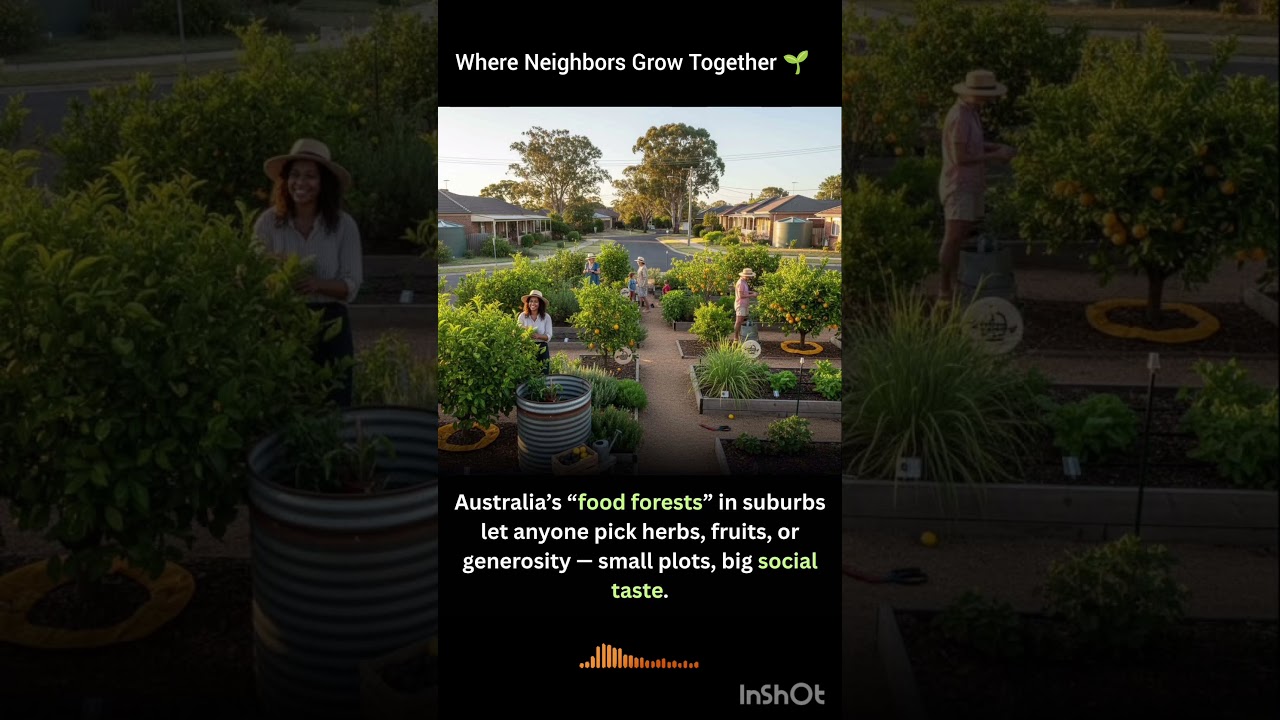
Australia’s urban food forests transform public land into shared gardens, allowing communities to grow fresh fruits, vegetables, and herbs together. These sustainable green spaces promote local food security, environmental awareness, and community connection.
—
#UrbanFoodForests #CommunityGardens #AustraliaGardening #SharedGardens #SustainableUrbanFarming #EdibleLandscapes #UrbanAgriculture #CityGardening #EcoFriendlyGardening #GrowYourOwnFood
In Australia, pockets of land between houses, parks, and sidewalks are transforming into quiet revolutions called food forests. These are shared edible landscapes, free to all, maintained by few, and designed to grow more than just nourishment. From rosemary and lemons to passion fruit vines and leafy greens, these tiny urban jungles blur the line between farming and community spirit. Planted by local councils or resident groups, food forests are accessible without gates or guards. No signs ask for IDs. No permission needed. A passerby can pluck a sprig of mint on the way home or grab a ripe fig during a walk. Children learn names of plants from soil instead of screens. Strangers meet over tomato stakes instead of coffee tables. The model flips conventional food access, bringing freshness into the open, not behind shelves or pay walls. In drought-prone areas, many forests use compostrich soil and water smart native plants. Volunteers manage pruning, composting, and seed rotation. Some forests even leave spare baskets nearby for shared harvest days. These spaces are not just edible zones. They are trust experiments, an invitation to share and not hoard. A reminder that food when placed outside fences grows more than just leaves. It grows eyes that watch over neighbors. It grows roots across streets. Australia’s food forests feed both body and belonging quietly, organically, and on any given Tuesday. # urbanh harvest #sharedgardens #ocial sustainability
Comments are closed.