
http://www.edibleacres.org
https://www.youtube.com/user/edibleacres/join – Join as an Edible Acres member for access to members live Question and Answer sessions and to support our work!
https://www.paypal.me/edibleacres – A simple and direct way to ‘tip’ to help support the time and energy we put into making our videos. Thanks so much!
Edible Acres is a full service permaculture nursery located in the Finger Lakes area of NY state. We grow all layers of perennial food forest systems and provide super hardy, edible, useful, medicinal, easy to propagate, perennial plants for sale locally or for shipping around the country…
http://www.edibleacres.org/purchase – Your order supports the research and learning we share here on youtube.
We also offer consultation and support in our region or remotely. http://www.edibleacres.org/services
Happy growing!
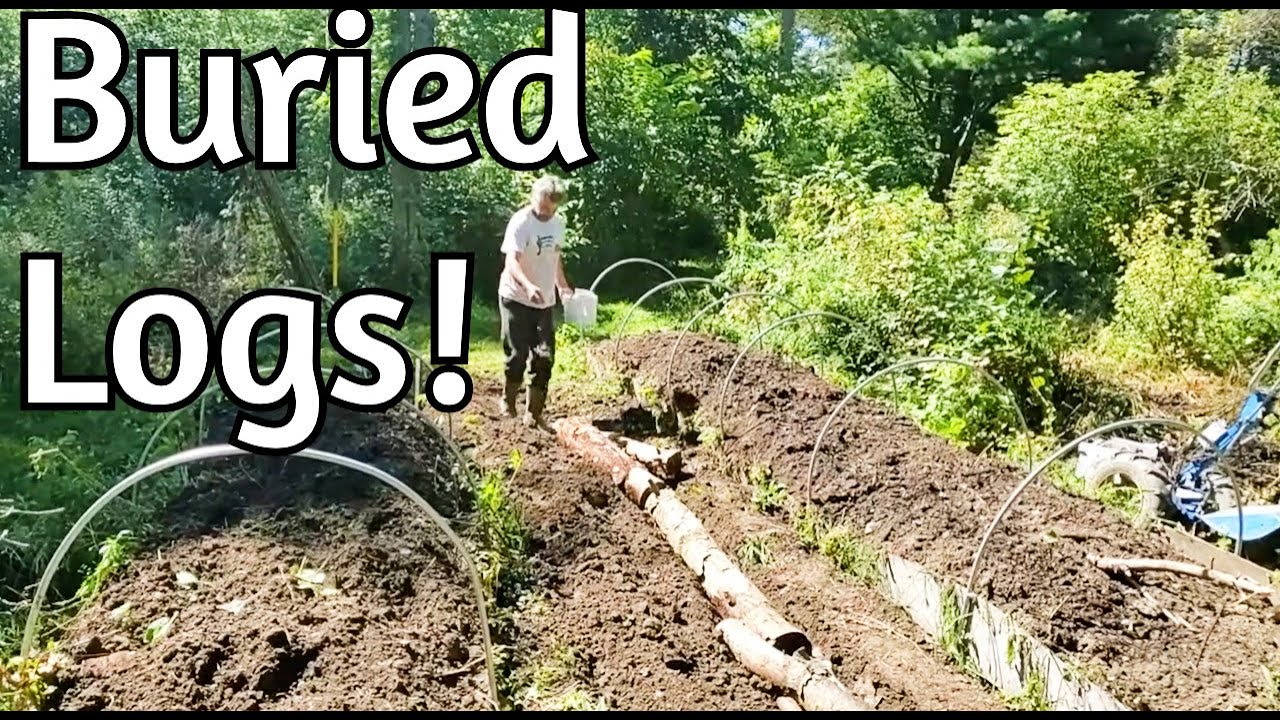
I’m up here at the Trumanburg site today doing the last mowing of the season with our electric riding mower and bagger so I can scoop up all of the leaves and the last bits of clippings and get the garden beds and trees that have been planted this fall mulched. I’ve been enjoying some pimmens and just did a whole bunch of autumn olive harvest. And before I leave, I thought I would take a look at this area, this glade behind me, some movements that happen in the late summer and what that might bode for next year’s productivity. In fact, I’ll spend a little time in here and poke around and show some of the things that I think are pretty fun that are happening. We’ll look at this thicket of what seems like bamboo, which are actually fancy plums. But let’s start here. This is a production area. This is one of the few remaining handfuls of really intensive production areas within this landscape where the idea is to be able to grow annual crops or nursery crops and have a rotation. The rest of this landscape is moving uh ever steadily towards being permanent trees and woodland orchard food forest sort of things. And this area in here went through the summer with one uh maybe 2 months ago. I’ll put up on the screen if I can find the date of when this happened. So it’s mid November right now, 2025. And we went through with our electric rotary plow and disturbed the soil in here to build up these beds. So these are basically hoogal mound beds. They are held together on the sides by slabwood of black locust. So there’s no pressure treated or any weird lumber. And then these hoops, which we bent in a really simple way. I documented way back when, and I’ll link to that. These hoops hold the boards in position and allow us the option of putting poly over this or reay if we want. It really just holds the beds together. um but gives us the option of turning these into low tunnels. And then the interior of these beds are lots and lots of logs from the clearing in here. So this was an overstory of Scots pine a number of years ago that I cleared. So this would have been closed canopy. And I open this up quite a bit. And this is the area where we dug a pretty big pond in the woods. It’s a bad angle from here. It’s just super low and depressing, but whatever. It’ll refill this winter. Um, but those logs were laid on contour in here and then soil was put on top. The rotary plow this summer went through and dug down in this area so we could bury even more logs. In fact, you can see all sorts of old Scots pine and white pine logs through here and a little soil put on top and then the whole thing was set to a really diverse cover crop mix. So there are daicons in here. There are oats. There were peas that went in. There were beets and all sorts of other things. Random kale seed that we had. And we’ve had a good couple frosts. The greens are beautiful in here. The coverage of this is lovely. And it holds an option for lots of different pathways next season. And a really sweet side benefit of all this is it’s luring in an immense amount of deer. So, all the deer that are moving through this landscape seem to want to walk through this area. You can see they’re chewing the tops off of this. And that’s great. There’s like $3 worth of cover crop seed in here. It is not a big deal at all. And as they walk through, they’re stepping on the soil on top of these logs, kind of working it in. They’re putting in manure. They’re putting in urine. They’re basically treading all of this green manure in along with actual mammal manure. It’s pretty lovely. The other day when I was out here, I added a tree layer to this system. So, I imagine next year these beds once all this is chewed up by deer. There’s manure. Uh they’ve died back from the winter, all of this is meant to die when we get deep deep into the winter. So, it should just be a clear bed in the spring. I’d like to do some really high production um or high yielding winter squash. Maybe there’s delicata or acorn squash. Basically, do a hungry annual summer crop in here. And then from there, see if we want to do nursery work. There’s a lot of pretty big chonadoo logs in there. You can see some exposed here as well. And so annuals that I can push the seed in is a lot better than nursery uh crops that I need to dig out. But anyway, on the north end of each one of these beds, we’ve added some trees. So, this happens to be a grafted Asian pair. There’s another one over here, a pollinator. So to the north of this will slowly become the tree layer. These are some lovely grafted trees we got from our dear friend Roger Ort of Ort Family Farms. You should check that nursery out if you have a chance. So, we’ve got this area now where there are two really high value uh turnable production beds that are set in motion that have an interior of old rotten pine logs and some not so amazing subs soil, but then a cover crop that’s adding tons of green manure and inviting the manure from mammals to really get this to be rich and beautiful. just to the south of all this. So, we’ve got a mode pathway that a riding mower can get through with a trailer to deliver materials and eventually someday uh extract some of the yield. So, if there’s enough squash through here, it’s kind of nice to be able to get a way to take them out rather than having to carry them by hand. And then this whole crazy thicket through here, it looks like there’s dead bamboo that was growing here. It’s a whole wall of them with laterals woven through. There’s actually four grafted plums that are hidden in the interior of this. Let’s see if I can show you one. Pretty hard to get to, but that’s the point is that this hides it from the deer. So, here’s Sultan’s favorite plum. There’s four different types in here. These are again all from our friends at Orort Family Farm. And this was bamboo that I cut back in the summer. Let it die and dry out for the summer. And then four or five dead pieces were stuck in a a ring around every one of these trees. So there’s the green tag of one plum. There is the green tag in there of another plum. Super super hidden inside this bamboo. That’s all we need for fencing. So next year they can grow and start working their way through the competition of all this dead material. The leaves will fall this winter, allowing more light in and automatically mulching the soil around them. And then in between them, I can run these long sections of bamboo that tie each of these planting spots together and basically make a bumper so that this cleared avenue. Extremely easy for deer to move through. They’re invited into this patch. This is meant for them. It’s meant for whoever wants to eat these greens all winter. And then our high value future succession planting is tucked in, hidden in here. Very hard for them to push into that. It’s very loud. It’s pretty spiky and they might not even know that there’s something in there. So, uh, it’s a trade of plants. We traded with Roger a whole bunch of pimmen and pawpaw babies for these beautiful trees. So, they cost us nothing. And then the bamboo is already growing in the landscape, so that costs us nothing as well. And we get to establish an orchard hidden in debris. The light fades so quickly. I should probably be getting ready to head back and move some wood chips and check in with Sasha and unload all the bounty of the day, the pimmens and the autumn olives that were harvested. Let me know your thoughts about this kind of cookie, but I think pretty functional, pretty productive idea of rough sketching hoogle mounds, covering them with soil by robbing the ditches uh near them, covercropping them with an invitation for wildlife to consume the greens all winter and add their fertility and flanking the whole scenario in the future forest that’s meant to move us through succession. So, we’re establishing both the potential for high yielding annual crop production and turnover and rotational cropping as well as persistent long-term uh trees that are meant to be here for future generations. All that can happen at the same time cuz the trees take a while and the annuals can do their thing for the next two to five maybe 10 years before the canopy starts to close and we won’t grow delicatas but we’ll come out and we’ll get uh Asian pears and all sorts of different plums. Let me know your thoughts, concerns, um, or things you’ve done in this realm or questions you might have about this. And thanks for watching. [Music] [Music] [Music] That’s probably good enough.
29 Comments
First!
How are the voles treating you these days? I've been finding any fruit/nut tree or cane I have planted near hugels are likely to get girdled sometime during winter or early spring, particularly those where I dug down first. I've been putting hardware cloth around trees + packing rocks in and outside the ring but harder to put a ring around e.g. blackberries. I'm hoping the voles are just temporarily very numerous and the predators will balance things out soon enough. Cheers!
Love it! Love the bamboo hiding the baby fruit trees. The deer hit my fruit trees hard this summer.
How are you planning on keeping the deer from eating the squash you plant in the spring?
I did this like 5 years ago in 4 large beds when I cleared part of my property of brush and small trees. Mine were a bit deeper. It's great. Adding compost over time also keeps it from being a sink hole over time. Mine are significantly deeper but I have low tunnels. You can see the beds on my channel from two springs ago
Love how creative you get to meet everyone's needs.
The deer at my place never damage anything so I don't have to worry. I thought they we're being polite leaving my stuff uneaten but this video made me think maybe it's because I have my fruit trees surrounded by other plants which deer do eat
Creating systems which add fertility is a great thing! 💛
I am excited you are able to hide the fruit trees in the bamboo. The deer in my yard knock down fencing to get to anything I plant. The neighbor told me the deer go up a few of the front steps to get to the potted plants on the porch. I have very motivated deer.
👍👍❤ Such a great idea!
chonkadoo logs added to vernacular
Thank you for another great video.
Folks, please hype this video. You can hype 3 videos each week. This will supoort Sean & family. Futhermore all the new viewer.
Thanks for dubbing in Polish lenguage ❤
I’d grow a nitrogen fixer rather than hungry crop. Or put hot compost and use the logfs to sponge up any leakage. The wood does need lots of nitrogen to compost in place.
In my context the wood core mounds dries very quickly also, again squash, in my medditeranean context, would need irrigation. Your soil has a promising dark colour and i know your context is often wet.
Not to say it’s not a technique to use or pursue, just use knowing its effect (drainage, nitrogen sponge )
Also i’d try to innoculate with forest type mushrooms. That’s my tastebuds talking.
Another method is to broadfork the area and immediately top it with 12-36 inches of leaves. Extra credit if you add just a few inches of leaves first, then broadfork, pushing some of the leaves into the soil, then topping with the rest of the leaves. Double extra credit if you top the leaves with a sprinkling of manure or coffee grounds to facilitate rapid breakdown (all are materials worms LOVE). Worms and other critters will consume the leaves, and drag them down to lower levels, essentially tilling the soil while depositing their castings and aerating it for you. You'd be amazed how fast you can build beautiful rich topsoil in just a couple of years. The YT channel Growit Buildit has been doing this (less the broadfork) for 5 or 6 years and tests his topsoil depth every year, he has a good series on it if you're interested.
Nice. Will we see any garlic prep or planting videos upcoming? Miss those updates.
i think pumpkins would grow great there as long as you can get enough light.
Love it!
Appreciate the effort it takes to dig up the 2.5 month old footage and intersperse it… Worth it from the viewer’s perspective for sure! Love the process/before-after…
I build my raised beds by lasagna composting.
Wood/brush in the bottom, leaves on top of that.
I plant into compost added in pockets, or as an entire layer.
Each fall I add a layer of leaves, and often add urine on top of that.
I like to build a bed like this next to each fruit tree I plant.
They act as a water/ nutrient reservoir.
Yes, this saps some of the nutrients and water from any crops I grow in the bed, but it is worthwhile as a way to care for the trees.
Very smart! Thank you!
Really appreciate your knowledge! You’ve made me really rethink the border around my land.
My native soil is 70% rock. Of the remainder, 40% is clay. Hügelkultur is a great option for me but my soil needs to be screened to 1/4 inch and amended with pumice and rice hulls. For some crops like carrots, I screen to 3/16 inch. Pumice gets expensive when doing this on a large scale, so I mix it with rice hulls to stretch my dollars. I've found one part pumice to two parts rice hulls is a good compromise. When it's in the budget, I use half pumice and half rice hulls. I recommend screening the pumice to 1/4 inch and scattering the bigger pieces directly on the logs.
How do you think about these 2 tensions in permaculture?
1. The greenhouse gas effects of a methane producing anaerobic hugelkultur environment vs water/fertility benefits vs other options for wood?
2. Human health risk of Chronic Wasting Disease prions in deer manure vs. fertility benefits?
Love the bamboo "fence", I am blessed with abundance of bamboo, that I can use also. I use some for my "fencing of blackberries". Thank you!
It's been my experience that logs need to be well on their way to rotting (visably rotting) to be of any use for any kind of Hugel Bed. It takes a surprisingly long time for a log to get rotten enough to hold moisture & not tie up substantial nitrogen in a bed as it continues to decompose. I prefer wood that is literally falling/breaking apart when I lift it up while scavanging.
Thank you.
really nice an inspiration
What's your source for daikon and other cover crop seed? Having a hard time finding a local source for bulk stuff, and online is a no-go. I'm in the finger lakes as well.
Looks like a great place to hunt, if you do that Shaun