
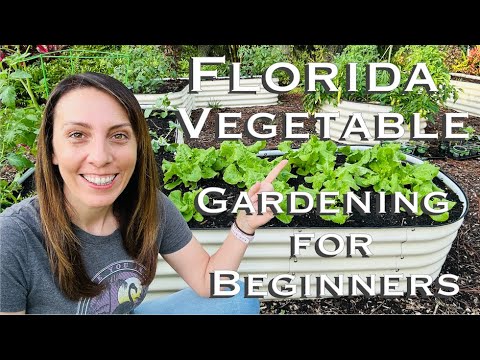
Want to grow a vegetable garden but not sure where to start? This video covers the fundamentals of how to garden in Florida, perfect for gardening in Florida for beginners. Whether you live in North Florida, Central Florida, or South Florida; this is the video for you.
_________
WILD FLORIDIAN GARDEN PLANNER
https://www.wildfloridian.net/planner
_________
LINK TO VEGEGA RAISED BEDS
https://www.wildfloridian.net/gardenbed
10% COUPON CODE
WILDFLORIDIAN
________
GET YOUR QUESTIONS ANSWERED WITH A VIDEO – BE A MEMBER!
YouTube Membership https://www.youtube.com/channel/UC_6EMppOigfuriV1Gk2E6kg/join
DISCLAIMER: This video and description contain affiliate links. As an affiliate associate, I earn from qualifying purchases.
I’m going to help show you today the fundamentals of Florida gardening. Everything for understanding our soil to our sun, the seasons, our wildlife, and I’m going to lay out a game plan for you so that you can take all these big ideas, whether you’re growing lettuce, tomatoes, broccololis, and more, not only plan out your first garden, but know what steps you need to take to get it started successfully. Hi, I’m Jacqueline, the Wild Fidian, and I grow food and flowers here in the Sunshine State. I’ve been gardening in Florida for almost 10 years now. And I have grown hundreds and hundreds and hundreds of pounds of food. And along my journey, I’ve learned a thing or two, and I want to help you skip the mistakes that I’ve made and so many other Florida gardeners have made when starting to get their first vegetable garden started. So whether this is your first attempt or your fifth attempt, this is going to be the video for you. And let’s start first with the soil. Now, when it comes to Florida soil, we have really sandy soil. Whether you live in North Florida, Central Florida, or South Florida, most of the locations have sandy soil. And no, you don’t have to have beachfront property to have sandy soil. But the challenge is is when it comes to vegetables, they don’t like sandy soil. And if we try growing our vegetables in that sandy soil without doing anything, it’s going to be really challenged. And here’s why. When it comes to your vegetables, your vegetables need inside the soil nitrogen, potassium, and phosphate. And Florida soil in general lacks potassium and phosphate. So, right out of the gate, when it comes to the food, the vitamin part that your vegetables need, Florida soil isn’t going to do a very good job. The second thing that Florida soil creates a challenge with is that because it is sandy, it drains really fast, which can be a good thing in some cases. But when it comes to our vegetables, it means when we’re watering them in that sandy soil, the water moves away from the vegetables roots too quickly, which means your baby plants that don’t have established roots are going to really struggle to grab that water before it passes through. The third problem with the sandy soil is it has root knot nematodeses. They thrive in our sandy soil. And if you’re not familiar with root not nematodes, basically it’s a little micro animal that gets into the roots of your plants. It creates knots and then what happens is it causes the plant to not be able to get water or food out of the soil. The fourth problem with Florida sandy soil is it doesn’t really have much organic material. So microbiome like the funguses and little micro creatures that help plants grow don’t exist for our vegetables in Florida sandy soil. So right out of the gate if you bought a really healthy vegetable and try to put it straight into your Florida soil. It’s not going to do well. What do you do? Does that mean you give up? No. There’s multiple ways that we can deal with our sandy soil. We can try to amend the sandy soil or we can do containers or raised beds and just get above the sandy soil. Let’s first talk about amending your sandy soil. That means working with it. And there’s kind of five main ways that you can do this. I’m going to cover the first few, the most common ones that I would recommend. And I also have a video that goes into it way more in depth, which you can check out here. The first way that you can do it is you can just buy soil. Buy lots and lots of soil and put it down on top. You can buy the soil that vegetables like what I would typically go with is like your classic garden soil that has been enriched with nutrients, those nitrogens, potassiums, and phosphates. And to add on top, now if you’re going to take this method, you’re going to want to go at least 6 in deep wherever you’re going to be planting. 6 in is a minimum for things like lettucees, onions, beets. But for plants like tomatoes, peppers, eggplants, beans, corn, broccololis, cauliflowers, you’re actually going to want to go a lot deeper, which is why this can be a really this could be a really cost ineffective way to do it because if you’re going to be trying to do a very large area, it can cost you a lot of money. Now, there are some ways around it. Many times, cities and counties offer soil and compost at lower rates. You might be able to connect with cattle farms or horse ranches to get at some of their manure. So, while this isn’t my preferred method, if you’re going to be doing a large area, it can be one way that you can just jump ahead with amending your soil. And I did this years ago with I first established the backyard garden. We just ripped the grass out and then went and laid down soil on top. method which is slower and is actually what I did to enrich a large area over time is back to Eden method which is basically using wood chip mulch that you put over time that gets broken down by different wildlife and microbes and funguses in order to become really rich soil which is actually why I brought you to this garden right here ago Ben and I went and established Back to Eden method here and while I’m starting to grow native plants in it now up through even earlier this year I’ve been growing ing hundreds and hundreds of pounds of tomatoes on these cattle panels. And when we look below the pine straw, you’ll see the wood chip mulch that we have been putting for years. But below that, you can see some of the richest soil you’ll find in Florida. Every year, we would put about 6 in of wood chip mulch that we would get free from getchipdrop.com. And then it would slowly break down. Now, here in Florida, the creature that goes and breaks it down is going to be millipedes. They help eat this down along with termites and some of the funguses and it builds beautiful black gold soil. In order to be able to get lots of mulch economically is you can use free places like getchdrop.com which connects neighbors with arborists and can deliver them to your house. Also, a lot of times cities and counties that are collecting tree waste from arborists, they’ll chip it down and they’ll either offer it for free or for a really economical price so that you can add to your garden. Now, this isn’t a very fast way to get really rich soil, but it’s not the slowest either. If you listen to other people in other places about back to Eden method, they may talk about years and years, but honestly, here in Florida, that wood chips can break down as fast as 6 months in the right season. Other methods that I’ve used to enrich my soil, things like chop and drop, taking things like what would be garden waste, like these banana leaves, and using it to lay down on areas so it can break down and compost, but also to create a mulch to block out weeds. The next process is through composting. A lot of people do hot composting where you basically layer brown materials and green materials together, which which if you want to learn more about these different methods, I do have a whole video where I dive in a lot deeper and give you pros and cons on each one, whether they’re going to take more time, more money, or more effort on your part. But one of the methods I use is not the classic hot mulching. I actually do black soldierfly composting, which gives some very, very rich soil and creates some other benefits for the garden, which I’ll touch on later. You can see through my slats, I’ve got a bunch of compost ready to go to enrich my soil. And last but not least is a method that I don’t typically do, which is a biochar method. I do have a fireplace, so I do take the ashes and enrich them. And that can also be an option if you’re using a large expansive area is to work that way instead of one of these other methods. And if I could give you all the knowledge and experience that I have, I would actually say start smaller when you’re beginning and actually start in either a container or a raised garden bed. Specifically, I would recommend starting in large containers or grow bags. Containers right here have have everything in them from tomatoes, peppers, lettucees, strawberries, and right now some sweet potatoes. So, if I were you and you’re really hankering to get started right away, I would go ahead and just get yourself a 5gallon pot or a 7 10gallon grow bag, which you can grab right here on the screen. This allows you just to go grab a couple of bags of soil from the store, dump them in, and then get a plant going. I also find when we get to the pest section, the wildlife section, the weeds section that if these become unmanageable, they’re a lot easier to reset than huge areas. I have reset huge areas multiple times. It takes a lot of effort. And I’m not mad that I did it, but if I could save you some steps, I would get you started in one of these first and then make your way into larger inground areas and larger ingrown beds. So, if you were going to start in a container, here’s what I would recommend. At least 5 gallons. Like I was telling you guys earlier when it came to the soil in the ground, the same rules apply. If you’re growing things like lettucees, beets, and radishes, those have roots that are only about 6 in deep. But if you want to deal with things like tomatoes, peppers, squashes, broccololis, cauliflowers, they need about 12 to 18 in. A common depth that’s often found in a lot of containers, raised garden beds is about 17 in deep. Those are ideal because it gives plenty of space for the roots and then soil and water to sit down below. Also, because you may be a new gardener, I would also recommend it has some sort of selfwatering mechanism. These ones have trays down at the bottom. So, as the water comes through, if I overwater it, it’ll sit down here. It has a hole to allow it to drain out. And if I underwater at some time, because I get busy with work or life or there’s less rain from the sky, it also can contain a little bit of water and through osmosis pull the water back up. If you can’t find a pot that has its own selfwatering tray, oftent times you can just get one of those catch trays at like a Home Depot, Lowe’s, Target. Now, when it comes to containers, what material you use will make a difference. If I were you, I would avoid plastic if you can. I’ve done plastic, but it just tends to dry out a lot faster. Found work a lot better. And yes, I know these are flowers, not vegetables, but the same theories apply are these whiskey barrels. They’re not going to be great for long-term use just because wood does break down really fast. That’s why we use the mulch to do enrichment of our bigger garden soil. But for your first couple of years, they look really pretty. They hold moisture really well and they give you the depth that you need. Now, you may be off to the store and wondering what kind of soil should you use and for where if you’re going to just go ahead and buy something. Now, if you’re going to go into those containers, you just want to grab something that says potting mix. Potting mix goes inside the pot. I know, but if you’re going to be going unground, you don’t want to use a potting mix. Instead, you want to use a ground mix. Again, I know this seems very obvious, but when you’re at the store and there’s just a whole just wall of bags, I know it can get overwhelming. Garden soil or ground soil for inground use and potting mix for inside your box. And you can get this brand or any other brand. The big thing you want to know is if it’s been enriched so that it has the nutrients. If it doesn’t, you can grab something very simple like shake and feed. Shake and feed contains things like kelp, earthworm castings, feather meal, and bone meal. And I do what I call a shake and bake on top of my soil before I plant my vegetables. So now you have a pretty good idea about what we need to do for the soil. But the better question is is where are you going to put it? And this next part is going to really help you because we need to talk about sun. And when it comes to a classic vegetable garden, if you have garden in any other state, you know you should put your vegetable garden in a wide open spaces so that it can get sun from sun up to sun down. But when it comes to Florida, well, hang on to your horses because this is a little bit different. As you’ve moved so far south or have grown up so far south, our sun is much more intense than what most of the country sees. metropolitan areas like New York and Chicago, states like Michigan and Indiana, those places max out at what we would call UV index 9. That means in the highest of high summer when your vegetable crops up north would get stressed out, well, that’s a nine. But here in Florida, our average is a nine. But when it comes to our vegetable crops, oftent times our sun can get a bit too intense. Which means having a vegetable garden that goes from sun up to sun down often times can stress out your plants. It’s not the heat that stresses them out. It’s the sun intensity. Because when it starts to peak out, we hit UV index 10, 11, 12, and even in South Florida sometimes can hit up to 13. What does that mean for your vegetable garden? You want to get anywhere from 4, 5, 6 hours of sun on your garden, depending on what you grow and when to grow it. The big thing is going to really matter on what you’re interested in growing. If you’re focused on cold weather crops, that’s going to be things like lettucees, radishes, beets, broccololis, cauliflower, kales, Brussels sprouts. So, if you’re going to be more focused on those type of crops and have the right timing, you’re going to be in those wide open spaces. But if you’re going to also want to focus on warm weather crops, that’s going to be everything from tomatoes, peppers, eggplants, beans, and corn along with squashes, then because they’re going to be in the warmer seasons, the sun’s getting a bit too intense. So, you may want to put your garden in a place that has 6 hours. I’m sure it’s got you asking, “Well, how am I going to know that?” And this is why I wanted you to start in containers because the easiest way to tell is the plants will tell you. You can also do your own studies on your garden and watch when on the weekends the sun first starts hitting an area and when does it last start hitting the area and depending on what the time of year is. If you’re near Christmas, you’ll know that you’re at the shortest days of the year. And if you’re near the 4th of July, you’ll know you’re at your longest days of the year. And so, you can kind of average it out. Some things to think about if you have some wiggle room on the placement of your garden is if it’s going to get direct intense sun, especially when we’re in our early fall and late spring season. We would rather have it be eastern sun than western sun. And this garden is actually designed exactly for that. That is the eastern sun that’s coming up. And you’ll see there’s a ton of palms blocking the west. And the reason is is because the sun intensity in the morning is less than the evening when it’s at the same height. And this really has to do with moisture in the air. That’s why it’s more humid typically early in the day and not quite so much at the end of the day. Though this is Florida and we can still have humidity no matter the time of the day or the night. And did I mention it was midfall right now? This probably pretty confusing to see a garden that looks like this. Well, welcome to Florida and let’s talk seasons. Now, while we can all joke when we’re not thinking about a vegetable garden, about Florida being hot, hot, and hotter, there are actual seasons here in Florida. So, let’s talk about our seasons as it comes to vegetables because this is what trips up most people. Whether you’ve been following classic gardening advice or you’ve lived somewhere else, been successful gardening here, and then you try to do it here, this is probably what got you thinking there’s no way to vegetable garden in Florida. Because in the classic temperate climate, the classic northerner way of doing it is that we start seed starting and getting plants in February and March so they can start planting them out in late March and April, maybe even May, depending on how far north they live. And if you do that in Florida, which many of my fellow Florida gardeners, sound off in the comments, if you have, you are struggling. The plants are struggling and oh my goodness, it’s not a good day in your garden. But here in Florida, we are topsy turvy. So classic vegetable gardening, what they do is in late winter, they’re starting their cold weather crops because, you know, it’s cold. They’re starting their root crops like carrots, radishes, and beets, and then moving into things like potatoes, and then they work their way towards lettucees, then broccololis, cauliflowers. And remember, the key is it’s cold. Then as they warm up, they head into their warm weather crops. So their tomatoes, their peppers, eggplants, and so on. Then as they start to cool back down in late summer, I know they try to sometimes get another round of radishes, beets, and greens in before the winter snap hits. But you live in Florida, so we actually are going to have four crop seasons. And we start off our classic season in late summer, early fall with warm weather crops because I know, you guessed it, we’re warm. We usually start in August seed starting things like tomatoes, peppers, depending on where you live, maybe late July for seed starting. If you’re in North Florida, if you’re going to be in South Florida, you’re going to probably push to late August, early September for seed starting or for buying transplants. And that means you get to do tomatoes, peppers, eggplants, squashes, corn, beans, lots of the crops that people love to grow, which is why things like having lots of salsas and Italian dishes are great down here because you can grow a lot of tomatoes and peppers. tomatoes and peppers a lot. And then as we head into fall, we’re going to be starting our cold weather crops. So, we actually start with reversing it because we’re still really warm. We get our broccoli, cauliflowers, Brussels sprouts, cabbages, and kales going because they take a little bit of longer and we want to get them done before our cold snaps that happen in December and January. And then we move into doing our root crops because we’re actually cooling down. So, we get our carrots, our radishes, and our beets in ground so that we can restart warm weather crops as we get past our cold snaps in January. So, that’s right. We’re going to be restarting tomatoes, peppers, and all those good things in the winter time. I know, right? So, we get two warm weather seasons. Now, this is why most people got tripped up is because they will tend to start their cold weather crops in the middle of wintertime, February, March, when really here in Florida, we’re starting hot weather crops. And this is stuff that up north they don’t grow. This will be things that you do recognize and some people can get away with growing up north like sweet potatoes and okra, but also push into things that they don’t. Things like rosels, cranberry hibiscuses, and lots of yard long beans. We can grow things that no way they’re growing up in New York and Chicago. I know a few of you are feeling like, what’s the haterade for New York and Chicago? Look, I grew up in South Florida and most of my neighbors were from New York, so I know how they were thinking about gardening cuz that’s what I grew up around. And when it comes to Chicago, I was born outside Chicago. So, if you are just like me and you’re a transplant down here to Florida, hi. Me, too. So, now you got your head kind of wrapped around when we might be planting things. And if you’re thinking yourself, “Wow, that was a lot of information. How do I keep myself on track?” Well, for one, every month I put out a monthly garden guide. And I’m going to talk you right through the steps that you need to be thinking about for that month, whether you’re in North Florida, Central Florida, or South Florida. And if you want to be able to build your own plan and keep yourself on track, I have the Wild Fidian Garden Planner, which I update every single year with new tips, ideas, variety information, and you can go ahead and pick it up right here. Cuz my number one goal is to get you to not only be successful in your garden, but actually have joy in your garden. And you’re not going to have joy if you’re stressed out about what to plant and when to plant it. Before we move on from seasons, let’s just also quickly talk about watering frequency. So, how often do you water your beds? Now, this goes back a little bit to your soil, but in general, once you have nutritious soil, typically twice a week is all you need to do when it comes to these bigger spaces. When it comes to your containers, it may need to be something like three times a week, especially if you have those selfwatering trays, but you may be able to get away as little as once a week depending on how the watering tray situation is set up. Me in my garden, I just water twice a week, and I don’t water my vegetables in particular. It’s just my lawn sprinklers run and those are the things that water my bed. I know I get questions all the time about my inbed irrigation and my drip irrigation. I don’t do any of that. I just have lawn sprinklers and they’ve hit the front, they hit the back and that’s it. And how do I know how much water I get in the garden? I have one of these rain gauges right here. And it basically tells me literally how much water, whether it came from my sprinklers or the rain. and then I can mark it down in my planner so I know how much water my garden’s getting. Be thinking to yourself, hey, is this too good to be true? I’ve got neighbors telling me it’s too hard or maybe that you’ve tried yourself and you’ve seen a lot of struggle. By degree, I’m a mechanical engineer. I worked for almost 15 years in a factory making food for people all across the United States. I also have a special needs child, which is why I got into vegetable gardening. It was part of his eating therapy. But I could take my mechanical engineering skills, my industrial engineering skills, and apply them to the garden, which is optimizing, streamlining, and making things super efficient. So, let me tell you, I have through the years figured out the wins, the hows, and what types of varieties of crops are going to be the easiest to grow here so that I could grow them successfully and then I could pass on the knowledge to you guys, too. And I’m proud to say not only have I been giving advice for years, there are so many Flidians who now have lots and lots of success because they’ve taken my tips and ideas. So I know that if you follow these tips and ideas, you will have success, too. Which is going to bring me to the section that’s going to get most people the most freaked out in their garden, and that’s going to be the wildlife. See, here in Florida, we have massively unique wildlife. And because we really don’t get very cold most of the year, the wildlife is always around. So whether it’s going to be bees, butterflies, and lots of bugs, you’re going to have them in your garden pretty much. I’m going to say 3 days a year, maybe down to 355. But if we set up the garden correctly, we can turn these pests from faux to friends. So just to set your mind at ease, when it comes to the garden, I do not use any pesticides. My garden is 100% run by the wildlife. I use everything from bees, butterflies, and birds, wasps, and ladybugs in my garden to help manage the other wildlife that could destroy my crops. And here are some tips to set up your garden so that you can actually have a really successful garden and not be stressing about a lot of the wildlife. So, let’s talk first about this one section that I feel like catches a lot of people offguard and is a reason I don’t tend to stress about when I do finally see things eating my vegetables. And that’s the fact that because our seasons are different, the ending of our seasons look different. What most people are taught up north is that they put the plant in, it grows, and then eventually a cold snaps wiping out their plant. That’s the end of their vegetable season. But because you never really truly have winter, the classic version here, we roll from one season to the next. We move from warm to cold to warm to hot weather crops. So often times people are misunderstanding the end of the season as a problem. So oftent times a classic example and if it’s June and you’re watching this video then I’m telling you that’s what it is. In June your your tomatoes are going to look awful and all sorts of things are going to come on them. And I’m telling you it’s just the end of the season. June to July if your tomatoes are failing on you it is not because you did something wrong. It does not mean you need pesticides. It means the season is over. It’s different here and it’s okay. And that’s one of the things I see a lot of people going and grabbing chemicals for is because they’re not understanding the ends of their seasons. The sun’s getting intense, the heat’s too hot for them. You do not have winter coming to end all of your crops. You’re going to have bugs, funguses ending your crops and telling you, “We’re done.” And as you learn the seasons, you’ll just learn to pull the crops before they even get to that point. So, you don’t need to get stressed out about them. And like I told you guys, if you watch my monthly garden guides, I’m going to tell you each month what to expect is coming to an end. And so oftentimes people feel the need to go grab the BT sprays and the neem oils. And I don’t even know all the other chemicals because I don’t use any of them. So I’m really not sure. I just know those two ones because people usually ask me about them. So let’s first talk about how we can minimize having pests by doing proper setup. So one of the first things you can do for proper setup to avoid pest issues or pest issues coming out of troll is spacing. When we space out crops enough, we don’t give places for the pests to hide. And I’m going to start calling them bugs because they’re to me they’re just bugs. This is just food for bugs. That’s food for bugs. That’s food for bugs. That’s food for bugs. But this is food for bugs that I just don’t want them to eat. And so what happens is we want to leave space between crops. Why? Because we want predators to come in and eat them. And so by having things like birds hopping around between our lettuce plants, which they were earlier, but not I’m here, so they’re not hanging out. But by giving them spacing, they can hop in between and grab any of your caterpillar type pests off your vegetables. Caterpillar pests will be things like you’ll hear people talking about tomato hornworms, spacorn worms, cabbage moths. Those are all just caterpillars. They’re either caterpillars for a butterfly, they’re caterpillars for a moth, but they’re they’re caterpillars. And birds like eating caterpillars and they like feeding them to their baby birds. And the great thing is is when we’re growing stuff like that, lots of birds are here in Florida. The second thing we can do is on crops like our tomatoes is we can prune them up off the ground. One, it makes it harder for little caterpillar type bugs to come up and in it. The second thing is is that the birds again can come in and access it. Also, things like predatory wasp can come in and access it. They love eating caterpillar types. They also love eating aphid types in here. Now, some of y’all freaked out because you heard me say something about a wasp and you’re like, I do not want wasps in my garden. Here’s the thing. In Florida, we have big wasps and we have teenytiny wasp and you want the teeny tiny wasps hanging out in your garden and eating this stuff. So, having a predatory wasp population in your garden is a good thing. Secondly, you want to get ladybugs, but don’t go buy them. One, they’re taken from wild areas that they should not be taken from. And two, you can get them in your garden really easy. I use things like my native fire bush to constantly keep in a whole myriad of wildlife that can help me in my vegetable garden. That’s why it’s planted right next to my vegetable garden. So plants like our native fire bush will bring in things like predatory wasp, ladybugs, but also things that will help you with your tomato crops, your squash crops, your eggplant, all your warm weather crops. It’ll bring in all the bees. It’ll also bring in butterflies, too. And some of your butterflies are very territorial and they will do laps around your vegetable garden, which I would highly recommend considering learning more about native plants. And I just made a video about eight native plants that can help increase your vegetable harvest, which you can watch right here. I’m a big proponent of Florida native plants. One, because they like your sandy soil. You don’t have to do anything about it. You just find out the right one to put in and you put it in and they do lots of stuff for you. I think for when it comes to wildlife or wild things in my garden, bugs and animals tend not to be the biggest challenge. It’s these little green guys in the ground, it’s the weeds. And this comes back to Florida’s lack of a cold cold winter. We don’t really reset at any single time for a lot of these weeds that are getting into our ground. And also, they tend to be invasive species, which means they’re really good at growing really fast and getting really far. And in your vegetable garden is like always an ideal climate for them. Here we have invasive Chinese day flower. We have Chinese crown orchid that comes in your mulch. Tropical sage that’s native invasive shrimp plant. If you want to learn more about identifying what is that weed and should I keep it or move it, you can check out that video right there. Let’s make a game plan for how you’re going to get started. We talked about you’re going to start in those 5gallon containers. You’re going to grab either garden soil, bag soil. You’re going to get yourself a rain gauge so you actually know how much water you’re putting in to places. You’re spacing your plants out. You’re going to put in maybe some native plants to help bring in beneficial wildlife. You’re going to go ahead and plant the right seasons cuz you’re going to be watching my monthly garden guides. Questions might you have? Of course, you’re putting those in the comments below. And if you want to have the book that helps that will continue to help you wrap your head around Florida gardening, whether it’s for vegetables, flowers, native plants, bees, butterflies, or hummingbirds, go ahead and grab the beginner’s guide to Florida gardening. It’s a fun and easy read. You can knock it out on a Saturday and be planting your garden on a Sunday. And you can grab it right here. Or get the planner that will help keep you on track, help you build your plan, and give you tips on varieties that work best here in Florida. And if you just want another video to watch, you can go ahead and check out this video, which is going to tell you the varieties that really work here in Florida. Okay, I’ll see you soon. Bye.
14 Comments
I did chip drop and it seems they attract a ton of carpenter ants.
You use miracle grow? I know that is a no no for most. You like it?
I've been watching you for about two yr. and I believe this to be the single,BEST VIDEO you've done! On point, easy to understand 👌, perfect new gardener guide! Thank you.
I never thought of horse manure. My son works for a therapeutic riding center. Not sure what they do with the manure. Does it have to be dry or it makes no difference?
I have the 2026 planner. I have potatoes, tomatoes, banana peppers, and sweet potatoes. I also have flowers around our garden.. Love see butterflies, bees, and birds around the backyard. We recently harvested our bananas. Oh my, they are so delicious.
I'm in Texas 9b & think alot of your seasons may be similar. Tomatoes are over by end of June. July & August is a waste of time because heat stops flowering. Do you use sprinkler to water with Tomatoes, Squash & Cucumbers. I think your calendar works for here, at least flip some seasons.
Such a thorough video! So great!
💚💚💚
First off, I started 4th of July tomatoes based on your recommendation – my plant is a BEAST and fruit is coming along!
Great video, Jacqueline. I haven’t had any luck getting g a response from Chip Drop, but I do have a great local composter who will deliver bagged or bulk compost and will install for a fee in Jacksonville area. It’s pricey but I get what I pay for with excellent yield.
I’m already planning out in my Wild Floridian 2026 planner – right now I’m growing amaranth, cabbage, broccoli, Brussels sprouts.
Good, informative video on Florida gardening!
Hi there great information thank you. Will you have any Black Friday deals on your garden planner?
Just built my first raised garden bed. Going to plant lettuce, cauliflower, and onion today.
Thanks to all of your helpful info I feel much more prepared and confident. Thank you! 🙏🏻
So, if you want to retain your crops long term over the seasons to avoid replanting. How does one go about that?
My security backyard camera help me know what part of the yard gets the most or least sun. Simply play back the video on a previous sunny day in fast mode. It shows the hours and minutes. 😊