
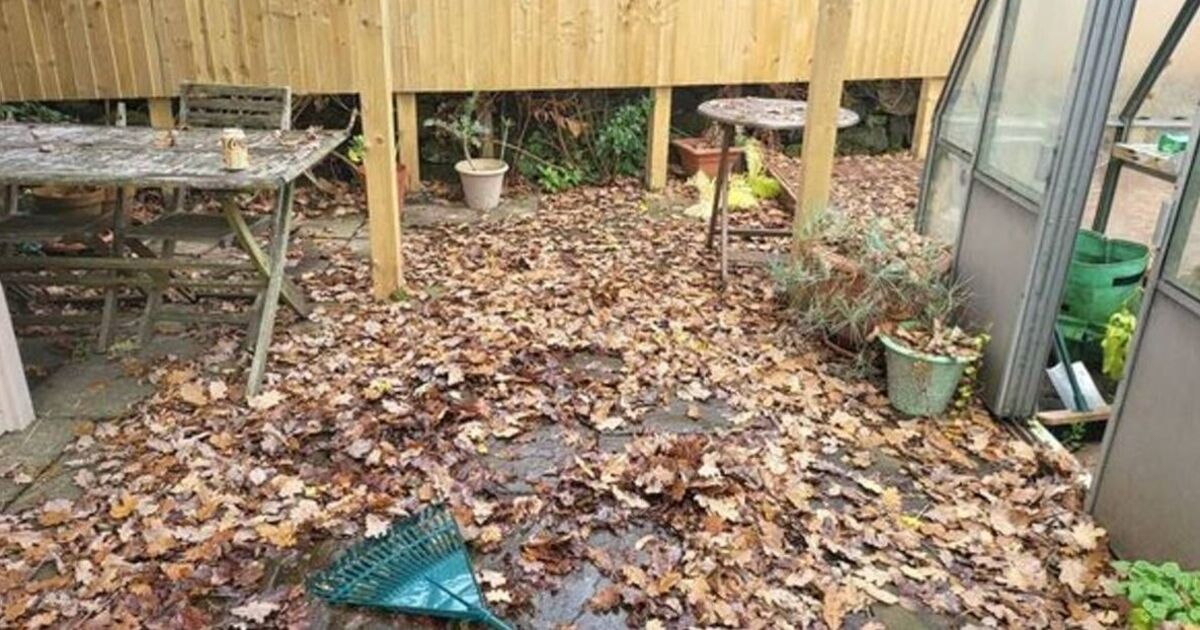
Everyone with a garden is being urged not to rake up leaves this winter due to a potential threat to an endangered species in the UK.
For anyone lucky enough to live somewhere leafy with lots of trees, this time of year brings a swirling blanket of leaves thickly covering lawns, patios, and decking and everything else which when rain, ice and snow arrives as it has this week can often turn into wet mulch and slippery ice.
However, experts now advise against clearing all leaves from outdoor spaces, recommending that some piles be left intact.
Leaves are beneficial for gardens, as they decompose and enrich the soil with essential nutrients, acting as a natural fertiliser to promote healthy lawns, crops, and flowers in the following year.
Of course, an overabundance of leaves can be detrimental if they completely cover a lawn, blocking sunlight.
When gathering leaves, especially for burning in a fire pit or bonfire, hedgehogs are particularly vulnerable. They often seek shelter in log piles and leaf piles.
Hedgehogs are a useful creature to have around in a garden: they eat the much hated slugs and snails that destroy our gardens and help keep their populations in check.
But a mixture of climate change, garden design changes and over-management of outdoor spaces – like clearing all the leaves – has increasingly left them with nowhere to go.
According to the Wiltshire Wildlife Trust: “Unfortunately, the native British mammals regularly fall foul of unchecked bonfires and are killed because of it.
“Considering their recent classification as vulnerable to extinction on the Mammal Societies Red List, the warning for bonfire night is now more crucial than ever. Since 2007, numbers of wild hedgehogs in the UK have halved, and there are now thought to be fewer than a million left in the UK.”
Gardeners are being urged to create wildlife havens for hedgehogs facing the harsh winter months. The Trust specifically recommends: “Leave wild areas in the garden, such as piles of leaves and logs. These make effective nests and attract the insects that hedgehogs need as part of their diet.
“Cover any drains or holes, and ensure any ponds or swimming pools have an escape route. Avoid using fruit netting as hedgehogs can become entangled in it.”
The Trust also suggests trying to get or make a hedgehog house, tucked away in a secluded spot and concealed with foliage, compost, or branches.
Comments are closed.