When it comes to crop rotation, it is totally unnecessary for home gardeners. It’s actually a total waste of time and energy. Here is why.

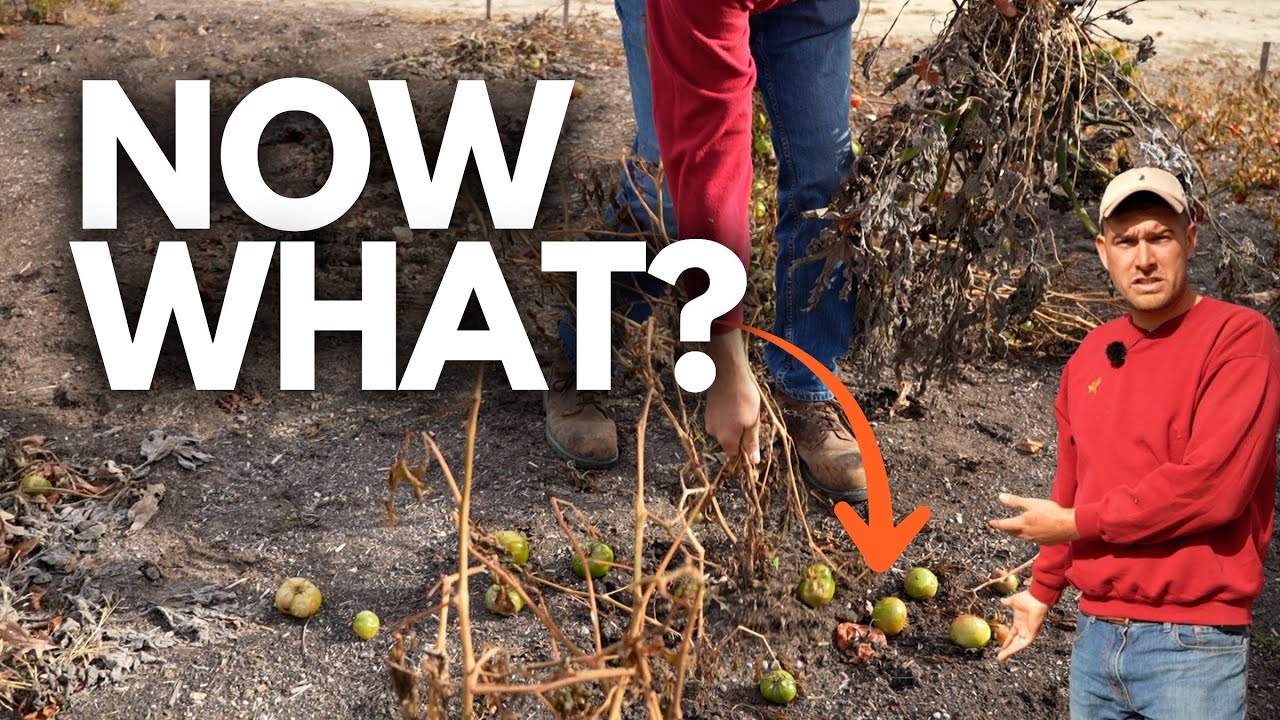
When it comes to crop rotation, it is totally unnecessary for home gardeners. It’s actually a total waste of time and energy. Here is why.
18 Comments
Thank you!
I often struggle with trying to figure out the best way to rotate crops. Its difficult with a small garden. Thanks for putting my mind at ease.
I have to disagree when it comes to stink/seed/leaf-footed bugs here in the South. Given the chance, they lay their eggs in the soil in the fall and the nymphs will chew through root crops and when they emerge in the spring, will continue to wreak havoc on tomatoes. Even beans aren't safe although that's not their favorite meal.
My husband took a weed torch to a big pile of dried out green bean vines, sunflower and okra stalks until it reached the greener stuff. The pile was in this year's cucumber area. Ive got 2 large compost piles going on in 2 other sections.
The weed burner just eliminated the middle man
The only crop my grandfather (who I learned gardening from back in the 70's) rotated was the beans, I don't recall asking why.
–
On a side note: Ten Day turnaround on the seed order this year. The folks over at the St. Claire Post Office have gotten faster at processing approvals, I think they only held it for two+ days this year. Your team is awesome Luke! Thanks for the extra seed saving packet (brown envelope), it will be put to use!
Good info, although it seems a little chancy beause of what I am already used to hearing. 😐
Thanks for the topic. I hope you might want to talk about whether or not to till the garden. I bought a farm in Indiana that had a 12,000 sq ft garden that lost alot of topsoil due to runoff from rain caused by too much tilling over decades. I have been trying to rebuild the soil, but it is so hard from the remaining clay content. I think talking about soil health really needs to include how and when to till.
Thank you. This has confirmed a theory I have had for years.
I do rotate potatoes due to Colorado potato beetles. If I plant in the same location the following year, lots of beetles. I don't return to a potato location for 2-3 years, resulting in far less issues with the beetles.
I rotate only for a little change/variety in the garden. I do rotate corn with peas/beans.
How did you make those tomato cages they look awesome.
Whatever happened to the extinct tomatoes that you brought back? Or was it someone else?
Same thing happened to me with the hard frost 😢 I have 12 × 12 garden converted from sandbox. I pull everything let it go over winter, burn early in fall, turn in some new compost, plant and grow. Been doing it this way for 12 years. Only thing I've ever had a problem with is Japanese beetles but they were all over ALL plants be the vegetable or ornamental.
I am especially interested in your information about both powdery mildew infestation and crop rotation for our suburban raised beds garden. Due to our small space and limited light from house shadows it will be very helpful not to have to change the planting layout every year! I have been quite concerned about our zucchini:/ butternut squash bed that was a major fail – zero fruit! My biggest mistake was tenting it with plastic that became a mildew incubator. I have been worried about next year and what to do about that soil. Thank you so much for all of your helpful info!
What a relief for my small yard!
For a few reasons, I haven't usually worried about crop rotation to begin with although this was mainly based on lazy ignorance of the topic, on top of experience with it not seeming to matter. Seeming, in that as I moved several times over the past 2 decades almost of gardening as an adult, I would garden where there had never been one to anyone's knowledge, nor were there any close by, yet have disease and pest issues. Added to that, I didn't think I had the space to truly rotate as directed. Then, I learned about soil health and a more biological approach to gardening/farming, and this freed me even more from what I already wasn't personally suited for, which was a technical and chemical approach, a cold science vrs. something my more "art" brain ( can never remember which side that's sposed to be) could sustain interest in. Then, along came Charles Dowding and his experience, experiments and opinions on the topic, assuring me in my course even more.
BUT…. .
Then ( I think it was…) Jesse Frost, in an episode of his daily podcast in the past year, talked about the why and how of still caring, to a fair extent, about crop rotation even in a home garden. It quite persuaded me to revise my ideas on the topic and convinced me to incorporate rotations into my planning & planting, after all.
On tomato cages plus crop rotation. I really, really, really like the "trellis to make you jealous" method Josh Satton showed in a vlog several years ago, far and away above using any trellis. While there's a lot of pros to this system, my fave is the easy of take down at season's end, far over any other approach. THAT SAID : If one is dedicated to crop rotation, and never has tomatoes in the same spot for 2 seasons in a row, that does become a factor potentially against it vrs. cages. Still only potentially, as it's really probably not any harder to move the posts conduit yearly than it is to deal with and store all the cages, but depending on just how easy the latter is for you and just how hard it is for you to erect the trellis system/framework. The main factor in the latter is, in my experience, if you're going to doing it alone or not. Another one being if you have a post driver or not, and also if you're ground is very hard to install and remove posts from.
That said, if one had the resources for this and was growing the other crops, one could have multiple of the trellis systems around the garden, and use them also for anything else one can trellis ( pole beans, cucurbits… flowers ?).
Hi and Happy Thanksgiving to Luke and family and staff, and to y'all out there in YT gardeners land 🙂 , from west-central Wisconsin !!
I have an exception to this. I live in the hot and humid southeast and succession plant a lot of my squash and cucumbers. I'll start a crop in early April and I can expect, due to disease and pest pressure, that these crops will be on their last leg by mid-late July. I usually have transplants started to go into the ground to replace them at that point.
I DO NOT put these transplants in the same bed. I've tried removing the old crop and covering these beds with a tarp for a week or 2 and letting them bake in the sun to hopefully kill off some of these pests and what not before putting in the transplants and, while that helps, I've found it best to just plant them in another bed.