
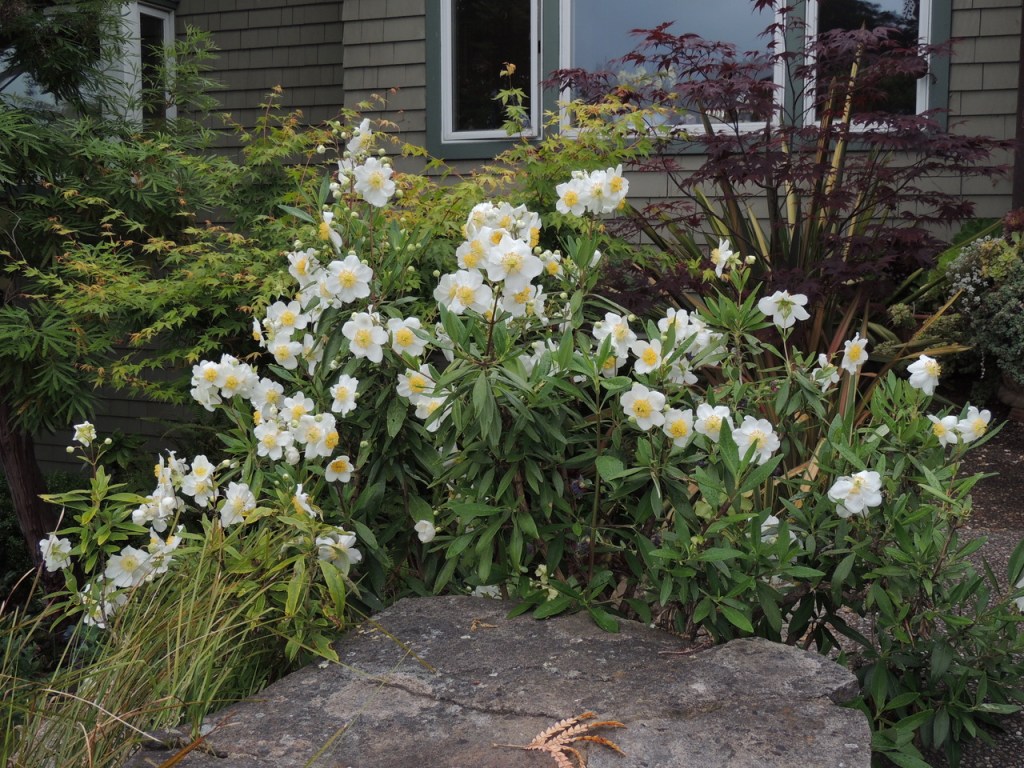
Carpenteria californica blooms from late spring to early summer. (Photo by Diane Lynch)
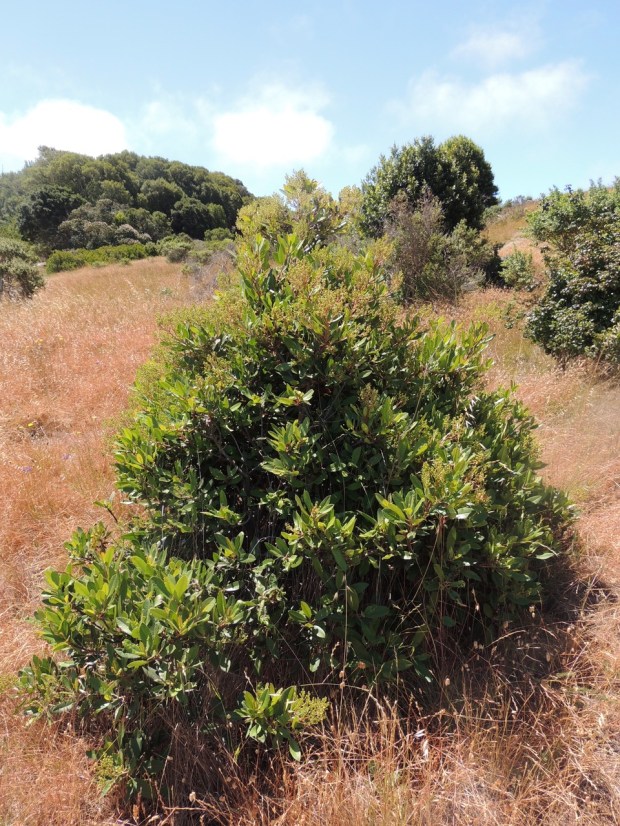
Toyon pictured on Ring Mountain. (Photo by Diane Lynch)
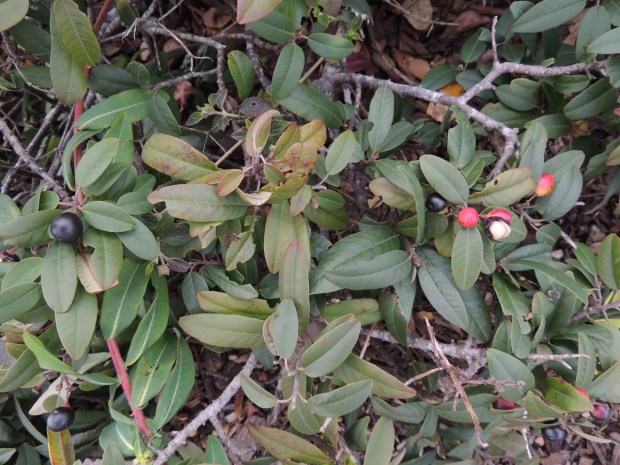
Coffeeberry is widespread in coastal California. (Photo by Diane Lynch)
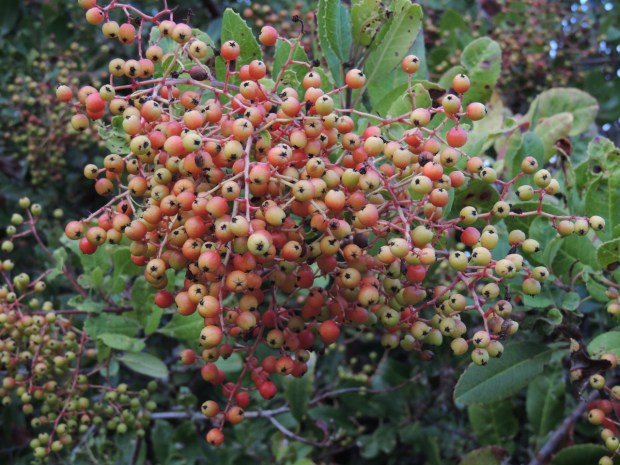
Toyon produces beautiful berries. (Photo by Diane Lynch)
Show Caption
1 of 4
Carpenteria californica blooms from late spring to early summer. (Photo by Diane Lynch)
Expand
The value of natives is indisputable: most need less water after being established, they attract pollinators and birds and they’re beautiful and easy to care for. What more does any garden or gardener need?
Myrica californica, or Pacific wax myrtle, can grow up to tree size but will happily do heavy-duty work as a hedge. It’s aromatic, and the fruit attracts many birds, including flickers and warblers. It will grow in sun or shade and is drought-tolerant, though some summer water may be nice, depending on your location, but especially as it gets established. If it grows too large, you can cut it way down to restart it.
Rhamnus californica, or coffeeberry, is widespread in coastal California but also happy inland and tolerates both sun, where it will grow into a dense mounding bush, and shade, which will result in a more sprawling plant. Tiny spring flowers attract beneficial insects and pollinators. The berries start out limey green, ripen to red, and then turn almost black. Birds and small mammals feast on them.
Toyon (Heteromeles arbutifolia) is one of the best habitat plants for any garden. It provides berries for birds and other critters, has a tidy aspect and grows to about 6 to 10 feet but can be pruned to stay whatever size you like. A good place to see toyon and coffeeberry is Blackie’s Pasture in Tiburon, where they grow between the parking lot and Tiburon Boulevard.
Sambucus mexicana, or western or blue elderberry, is a large bush or small tree if limbed up. It’s a great spring pollinator, with large white cluster flowers. The fruit appeals to birds, such as grosbeaks, nuthatches, orioles, tanagers and flickers, along with humans, who use the fruit for jams, pies and wine. It’s native to the entire West Coast; if you have space, this is a great plant to have. It’ll benefit from summer water inland but can get by on very little near the coast.
One of my favorite natives is Carpenteria californica, a rare plant native to the foothills of the Sierras, commonly called bush anemone. It blooms from late spring to early summer; the beautiful white flowers have a bushy crown of brilliant yellow stamens. After bloom, you can prune them back hard to tame upward growth. They can grow to 12 feet but usually top out at about 5 to 6 feet. They have a period after bloom when some of the lower leaves will die back, so planting something smaller, such as Zauschneria, a magnet for hummingbirds, in front can cover that stage up if it might be bothersome.
There are many native Salvias or sages. Hummingbird sage, Salvia spathacea, with its deep red whorled blooms, is gorgeous. It spreads slowly by rhizomes, so you can plant some and let them mature into a colorful hedge. You could even make a multicolored hedge by mixing in some blue sage, Salvia clevelandii, which has similar whorled flowers in a range of purples. Salvia apiana, or white sage, has a slightly rangy quality unless pruned back to new buds, but its striking silvery, almost white foliage is worth the effort.
There are more native stalwarts such as Ceanothus and manzanita (Arctostaphylos spp.) not covered here, varieties of which can be used as shrubs. They come in dozens of named cultivars ranging from ground covers to trees, so there’s something for everyone in those two genera. “The Sunset Western Garden Book” has a list of cultivars.
If you have a swath of land that’s currently wild, consider planting a native hedgerow that can take care of itself after a couple of years of irrigation. Check out Nancy Bauer’s “The California Wildlife Habitat Garden” for ideas.
Now’s the best time to plant as we approach what we hope will be a bountiful winter of rains to get plants established. The California Native Plant Society is a good source of information and inspiration on this amazing world of plants.
Sponsored by UC Cooperative Extension, the University of California Marin Master Gardeners provide science- and research-based information for home gardeners. Email questions to helpdesk@marinmg.org. Attach photos for inquiries about plant pests or diseases. The office is closed for drop-in visits. Subscribe to the Leaflet, UC Marin Master Gardener’s free quarterly e-newsletter, at marinmg.ucanr.edu.
Comments are closed.