
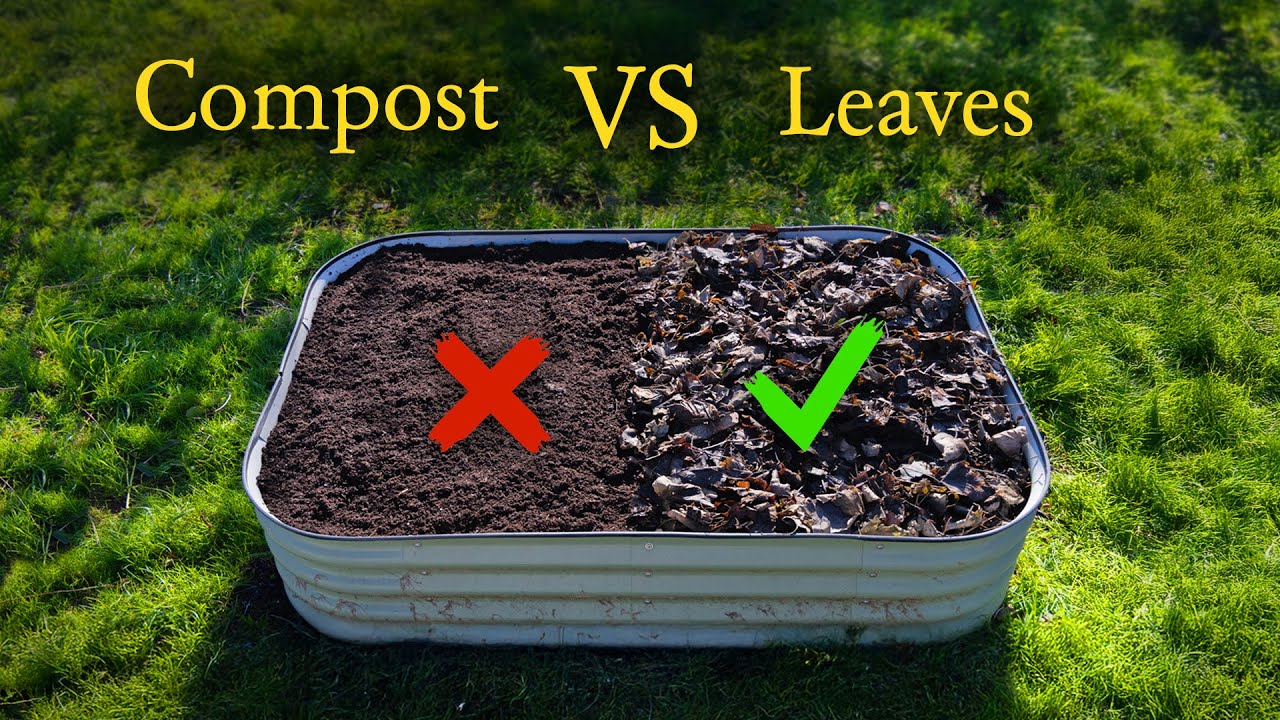
Compost. It’s one of the most valuable resources a gardener has – but are we using it in the right way during winter?
In this video, I share what happened when I stopped mulching my beds with compost and started following what nature shows us every autumn: protecting soil with leaves, plant matter and other natural materials.
For over a decade, I mulched my garden beds with compost every autumn because that was the common advice here in the UK. But after years of observation, research, and a lot of questioning, I realised something important: compost isn’t the best winter mulch , and it may actually be wasted during the cold, wet months when nothing is growing.
Pre-order my latest book How to Grow Food: https://geni.us/HowToGrowFood
A collection (not extensive) list of sources:
Sharpley, A.N., & Moyer, B. 2000. “Phosphorus forms in manure and compost and their release during simulated rainfall.” Journal of Environmental Quality 29(5): 1462–1469.
García-Albacete, M. et al. (2014). Risk of Leaching in Soils Amended by Compost and Digestate from Municipal Solid Waste
Plant and Soil: Six et al. 2004 – Living roots are essential for aggregate formation; compost additions are more structurally beneficial during active root growth.
New Phytologist: Rillig & Mummey 2006 – Roots and fungal hyphae physically stabilise soil aggregates; compost improves structure more when roots are present.
Agronomy Journal: Villarreal et al. 2016 – In-season compost applications improve nutrient availability and yields; winter applications are least effective.
HortScience: Agehara & Warncke 2005 – Compost applied during active crop growth increases nutrient uptake compared to pre-season applications.
Cornell University (Soil Ecology Laboratory): Lehman et al. 2021 – Leaf litter mulch increased fungal network activity and microbial biomass through winter compared with bare soil or compost-treated soil.
Soil Biology & Biochemistry: Bray et al. 2012 – Decaying leaf litter maintains microbial respiration and nutrient cycling during cold periods.
26 Comments
I add a small amount of compost in the fall protect the beds with leaves over winter then in spring add more compost!
Just create hot compost on your bed breaks down so nice while protecting roots it gets hot but stays moist then broke down in fall put to rest couple ammendments leaves then tarps i also put cedar pet bedding chips which breaks down whatever breaks down yes look in forest how the floor is youll never fail
I also did a lot of chop and drop too!
Thanks for this video my brother, I've always practice this habit subconsciously, and the reality i don't always have enough compost to mulch and use in large amount. For that I've always just add Compost when I plant, just in the way you are doing now! I dig my hole for the plant add some compost, and then use extra compost for support around the plant roots.
It's a great feeling to see someone of you expertise to regroup and come again with such study and compassion finding the best results making life and working in the Garden a little more easier and even more so rewarding. I salute you, as I keep learning and improving myself. Thank you Sir!
Been doing this for years. From South Africa. Being in an extremly hot low rain fall area I cannot afford to leave my beds exposed waiting for compost piles to break down. I mulch anything i can lay my hands on directly onto the beds. Weeds, Spent veggies, grass, leaves shredded paper, egg shells. Small sticks. What ever is biodegradable. Result fantastic soil.
Every fall my compost is finally finished and I do put it out then since I need to start the pile again with all the leaves available but I top each bed with a good layer of leaves and then we get a blanket of snow on top of that. Most years I've also done a green manure for extra nutrients. The soil is very happy.
Results will vary according to area.
You can see the Texas sun will kill microbes in compost mulch in my vids. Leaves prevent uv.
I only use leaves and they make all my soil. See my pathways that i harvest! 🤓
My most successful garden years followed applying seaweed and leaves covered with a layer of straw. In the spring, the leaves and seaweed had pretty well disappeared and the soil was teeming with life.
This year, I added a 4 to 6 inch layer of chopped leaves to my raised garden beds and then topped with homemade compost. My compost bins were full and I needed to empty them so I could add more scraps over winter. I then topped the beds with a tarp. I would like to know how your store your finished compost so it doesn't have nutrient leaching until your ready to use it?
I totally agree with the points you make, Huw. My compost is a precious resource which I need to use carefully to feed my 2 allotment plots. There is no way I can make enough compost to cover all my beds. What I do is green manure, and chop and drop on empty beds, and add chopped straw and leaves around crops for over winter, preventing leching of nutrients in the rain and rare snowfall. It seems to work for me. Happy growing 😃
Agree totally! I now simply spread leaves all over any bare soil and let the worms do the work, saving my precious compost for my planting holes in the spring!
What a load of pretentious nonsense 🤣
in a hot and dry climate, this lesson is learnt very quickily 😆
I seem to remember Fukuoka didn't recommend composting, just chop and drop.
In Germany there is the word "Flächenkompost" which roughly means area compost, so not putting compost on a pile but on a larger area.
For example i put my kitchen scraps on my veggie bed in between the growing vegetables.
I know of one gardener who puts all his compost on the pathways in between his beds until there is a really thick layer of composting material everywhere he walks.
I never want my beds to be naked. I only pull away the mulch on the rows where i sow something.
Also weeds i pull out i just put roots upwards back on the veggie bed. Why waste organic material and nutrients?
we always had a problem with adding compost every year. we have a lot of flowers in our beds and the seeds get burried too deep
making terra preta and convering the earth seems to be enough for the soil to thrive
there is a company from austria that makes terra preta and they also have a youtube channel (Sonnenerde). they back everything up with data and they even say that if you have a terra preta bed you never have to add extra nutrience once it is established. just mulch, keep the soil covered and moist. nature does the rest
Watched you for almost a decade and a massive fan but I turned away for a while as I learned more and more how growers in other nations do things and discovering syntropic practices. This video is 10/10- spot on!! So glad you are so open minded to always be re-examining what you think and do- reflects very well on you as a grower and has made my day hearing you say all this- I feel like a lone voice at times!
I love both on our beds! Here in Oregon, our winter is a little weird. It definitely has a cold patch in January, sometimes down to 15°F. But in general we stay above freezing temperatures frequently. It is very wet, but I've found that the cool season crops will generally keep on growing (slowly), feeding us and the soil life. I like to put a layer of compost down, and then give it all a blanket of leaves. The leaves keep the compost and soil just a little warmer, which helps keep the biology going and feeding the plants there.
I treat our garlic bed a little differently though, since I typically throw a cover crop in the same bed, followed by a layer of compost. I wait until the January freeze kills the cover, and then toss the leaves on top of everything. The garlic is so happy come springtime, and there's loads of fertility for interplanting during the season.
I had a raised bed that needing topping up, so as an experiment last autumn I topped up half with bagged compost and half with leaves. The soil with leaves looked better through the winter, with worms under the leaves whenever I lifted it and not freezing solid so easily. I put a little fresh compost on in spring, and a small handful of compost beneath each plant and couldn't see any difference between the leaf half and compost half, so I'll definitely do it again.
Yes, for me a layer of unfinished compost with worms, grass to feed them more and 3rd a layer of thick leaves. To keep warm. The grass plus leaves make heat together.
I have thought about this too , watching how nature works and by the way nature doesn’t just happen it has a creator . It takes honesty more faith to believe everything just happened by some big bang than our creator God that created everything . God is perfect and it’s amazing how His creation works together perfectly. We rake the leaves in the fall but there is a reason why they fall to protect and fertilize the ground and I recently heard dragon flies lay their eggs in them and I love the dragon flies. Thank you for your videos 🙏
I've been using leaves as mulch for years. Can't help but shake my head at those who bag up their leaves like trash and send them away.
Unfortunately we have got used to calling just about everything we can buy in a bag 'compost' but most of it has not actually been 'composted' to make it so. Since many mulches are 'compostible' they are essentially just underdeveloped compost. Mulch protects the soil, compost feeds the soil and mulch becomes compost eventually. The difference is perhaps just that more time, effort and material goes into compost and the result is more nutrient and biologically dense. So yes it does make sense to use compost for spot application and much for wide application but to some extent it depends on what it is that you are calling compost in the first place. What is interesting about mulch is whether it causes an increase in pests problems or not, specifically slugs and snails?
I feel almost a compulsion to have clean bare soil (in between plants I want to grow) but that isn’t nature is it !
@HuwRichards. You are not alone in your thoughts. Good video. I am trying a new experiment using a short lived cover crop this winter, which I'm expecting to die in a frost (now) creating a natural mulch with roots etc. I'll then use compost in spring as required. This seems to reduce my compost requirements. I'm also lucky to have loads of horse poop which I can stack up ready for spring.
6:02 Could that be attributed to Charles Dowding's popularity?