
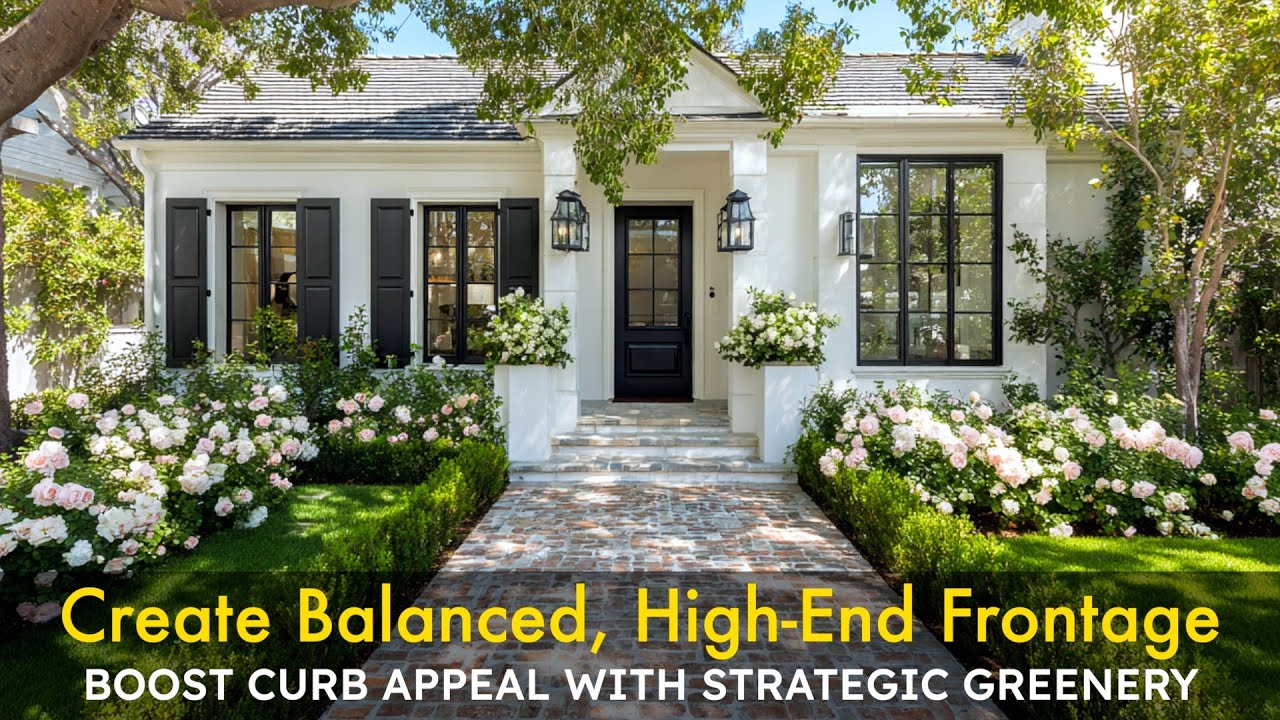
#FrontGarden #CurbAppeal #GardenDesign
This video delves into front garden landscaping with a design-forward focus on creating stunning curbside appeal through thoughtful planting, hardscape, and seasonal strategy. We start by clarifying objectives: establish a welcoming entry, provide year-round interest, and design for realistic maintenance. The structural approach comes first—defining paths, edges, and focal points so that plantings appear intentional and cohesive. Evergreen anchors and specimen shrubs give winter form while a layered palette of perennials, ornamental grasses, and seasonal bulbs create waves of color and texture across the year.
Practical guidance covers soil preparation and installation: building healthy soil with organic amendments, creating well-defined edging to separate turf from beds, and applying mulch regimes that conserve moisture and suppress weeds. Hardscape accents—curved paths, low retaining walls, stepping stones—are used sparingly to frame plantings and improve circulation. For sustainability, the video recommends drought-tolerant and native plant mixes, smart irrigation zoning with drip lines, and alternatives to high-maintenance turf such as fine fescue blends or pocketed groundcovers.
Composition principles emphasize rhythm and scale: repeat plant groups to create visual movement, use odd-numbered clusters for natural appeal, and place taller specimens toward the back to preserve sightlines to the house. Lighting extends both safety and drama—low path lights, subtle uplighting for specimen trees, and soft accent lights for beds transform the frontage after dark. Seasonal care sections map a simple calendar for pruning, division, and replenishment so the garden evolves without overwhelming effort.
The video provides adaptable templates for narrow urban frontages, typical suburban lawns, and expansive estate drives, plus budget vs premium options and weekend-friendly projects. Photo-case studies and plant lists illustrate real-world applications, helping homeowners choose palettes suited to their climate. The aim is a front garden that welcomes visitors, supports local ecology, conserves resources, and meaningfully increases curb appeal—designed to look effortless, durable, and beautiful through the seasons.
Welcome to Garden Glow Studio. [Music] Heat. Heat. [Music] Planting is layered to perform at both distance and closeup. Low ground covers and tidy perennials occupy the front of bed so the garden reads clearly from the street. Medium shrubs form a middle layer that provides year- round structure and taller specimens. Small trees or vertical evergreens anchor sightelines and offer seasonal interest. Each plant is chosen for its fit to the site. Sun lovers in bright exposures, shade tolerant species under eaves and beneath trees, and moisture adapted varieties where runoff collects [Music] [Music] The palette favors restrained combinations of green textured foliage and measured color bursts placed for longevity rather than novelty. The effect is a composition that reads as coherent and intentional, reducing the impulse to tinker and increasing the chance the garden will age gracefully. Texture and rhythm matter as much as color. Broadleaf shrubs provide backbone and visual weight. Fine textured grasses and perennials add movement and lightness. Repetition groups of three to five plants repeated across beds creates visual rhythm that calms the eye. Seasonal accents, bulbs and drifts for early spring, robust perennials through summer, and interesting seed heads in autumn ensure the yard has moments of interest without requiring constant redesign. [Music] [Music] The advantage is a predictable comforting sequence. The garden changes, but it does so within an understandable pattern that rewards attention rather than punishes neglect. Paths and circulation connect uses and define how the garden is experienced. Secondary paths lead to service areas, a side gate or a hidden compost bin, keeping utility out of the primary view. Where steps are necessary, they are broad and shallow with gentle risers and clear sight lines. Handrails, where present, are designed to be unobtrusive and coordinated with the home’s materials. Surfaces are chosen for safety and comfort underfoot, textured stone, permeable pavers, or well-finished concrete. So movement is reliable in wet weather and accessible to different ages. [Music] [Music] By resolving these details up front, the landscape reduces accidents and makes the act of moving through the front yard straightforward. Soil and foundational work are understated but decisive. Beds are prepared with attention, deepened where roots need room, amended where the native substrate is poor, and mulched to conserve moisture and suppress weeds. Drip irrigation is placed beneath the mulch to deliver water to root zones efficiently, minimizing overhead spray that can create slippery conditions and disease pressure. These basic investments translate into fewer replacements, less replanting, and a garden that performs predictably across seasons, saving both time and disappointment. Edges and transitions are practical grammar. A crisp edge between lawn and bed prevents the slow encroachment that makes borders look unckempt. A narrow gravel strip between paving and planting catches displaced soil and prevents staining. And shallow curbing at storm-prone points protects against erosion. Where the bed meets the porch, plants are set back to maintain visibility and to prevent abrasion against windows or doors. These small decisions avoid cumulative problems. An otherwise sound garden can deteriorate from overlooked seams, but attending to transitions keeps performance intact and maintenance simple. Heat. Heat. [Music] [Music] Lighting is layered to support arrival and safety. Downward-facing fixtures mark the walkway. Recessed step lights clarify level changes, and subtle uplights emphasize specimen trees or the house facade without casting glare. Controls are simple and reliable. Zone timers or smart controls align to common routines, so lighting is an asset rather than another system to manage. Good illumination extends use into the evening and reinforces security, all with minimal visual fuss. Utility elements are integrated rather than exposed. Hose bibs, irrigation controllers, trash storage, and mechanical access are tucked into service areas with screening or concealed within planting enclosures so they are reachable for work but unobtrusive from the main view. This reduces the visual clutter that can make a front yard feel unfinished and keeps day-to-day tasks efficient. [Music] [Music] furnishings and accents are restrained and functional. A single bench offers a pause point without cluttering the approach. Pots near the door allow for seasonal interest that can be rotated cheaply and simply. and one or two sculptural elements provide focus without dominating. These choices encourage use sitting, greeting neighbors, or watching the neighborhood without shifting the landscape’s purpose toward spectacle. Maintenance is designed around regular modest attention. Heat. Heat. [Music] tasks are distributed across the year. Mulch refresh in spring, pruning in early summer, a tidy in late fall. So no single season becomes overwhelming. Tools are stored nearby in a compact, unobtrusive location, making short, frequent care more likely than sporadic, large efforts. Plant choices favor predictable forms, limiting the need for corrective work, and irrigation and drainage are built for accessibility, so servicing is straightforward. [Music] [Music]
1 Comment
❤Great inspirations, I like everything very much