
Building doors and windows for a DIY shed is easier than you might think!
Get Plans to build your own DIY 10×12 Shed! https://fixthisbuildthat.com/product/modern-10×12-diy-shed-plans/
Sponsored by WD-40 Brand. Pick up the new WD-40 Precision Pen at Lowe’s here: https://low.es/44KzRva
🎥 What to Watch Next:
DIY Shed Build Series:
1. Building a Shed Foundation – https://youtu.be/XodcMhvfkXg
2. Framing a Shed Alone – https://youtu.be/cGqx95JVsws
3. Roofing a Lean-To Shed – https://youtu.be/Hv3EOTkR3xw
4. DIY Shed Doors & Windows – https://youtu.be/rp3rJUWJeKE
5. Finishing My Overbuilt Shed – https://youtu.be/uPO46hSpP0A
➤Join the FTBT Builders Club!!! http://bit.ly/2abkaSV
More content, early access, FREE plans, video credits
➤Tools/Supplies Used (Amazon affiliate):
Our Amazon Shop – https://amazon.com/shop/fixthisbuildthat
WD40 Precision Pen – https://low.es/44KzRva
Kreg Track Horse Stand – https://amzn.to/3TqiHiX
Kreg Track Saw – https://geni.us/aASS
Kreg VersaGrip Clamps – https://amzn.to/46I53uc
ISOtunes Bluetooth Hearing Protection – http://bit.ly/2Ru4Es8 (10% off code: FTBT)
ToughBuilt Tool Belt – https://amzn.to/3N9PEMz
ToughBuilt Project Pouch – https://amzn.to/3RsSsqF
Gorilla Cart – https://amzn.to/3FOo6Ip
Cordless Sliding Miter Saw – https://amzn.to/3N5XE0L
M18 Cordless Brad Nailer – https://amzn.to/44PzOOP
Metal Threshold – https://homedepot.sjv.io/N97kX7
➤Support the FTBT Channel:
Buy FTBT Woodworking Plans: https://fixthisbuildthat.com/plans
Buy FTBT Merch: https://bit.ly/2YgiHnd
Links to My Tools & Gear: http://bit.ly/FTBT-tools
Subscribe: http://bit.ly/FTBT-youtube
➤Thank you to these partners for supporting our channel. Go check them out!
Kreg Tool: https://amzn.to/2FXZIGp
ISOtunes: http://bit.ly/2Ru4Es8 (10% off code: FTBT)
➤FOLLOW FTBT on Social Media:
Instagram – http://www.instagram.com/fixthisbuildthat
Facebook – http://www.fb.com/fixthisbuildthat
Twitter – http://www.twitter.com/fixthisbuildtht
Pinterest – http://www.pinterest.com/fixthisbuildtht
➤Referenced people/videos:
Shop Nation Shed – https://www.youtube.com/watch?v=bJAaqG7cnAc&list=PL1M8AL9FTs_UWRaTvhjCM7-AteiCdhHBo
DIY Pete Shed – https://www.youtube.com/watch?v=kTPrEjCcX2k&pp=ygUNZGl5IHBldGUgc2hlZA%3D%3D
Music Licensed through Epidemic Sound – Get a FREE month: https://bit.ly/3qCwWiW
Today I’m going to be putting doors and
windows on this shed and finally getting it all sealed up. We’re going to have
accented trims on the base, the corners,
as well as the soffit. So I’m going to go ahead
and start with that. We’re going to go with the base first. All right, here’s my base trim. And I already cut it to size and
painted it a little bit earlier and went ahead and put a little scrap
piece on the end here so I could measure it and make sure it’s exactly right. So now I’m just going to line this up. So I’ll tack it in place
with some trim nails, and then come back and screw
it in place all the way down. I don’t want this to be
right on top of the OSB, so I’m gonna use some little paint stirs
that I cut down to size as a spacer. I’ll just put these on top to make sure
we have a little bit of a gap there. I know a lot of you were worried
about these big gaps down here on the side and that, you know,
a whole family of raccoons or beavers or turkeys or ghost deer we’re
gonna be hiding under there. But don’t worry,
this is gonna cover it up. That’s why they call these rat boards. I’m also gonna mark where
the sleepers are here, so I can drive the screws
into there as well. Right now, I’m going to move on
to the soffit up here, and I’m going to be
using half inch plywood. And I did think about this for a while
because I thought it would look really cool if I had some tongue and groove
and maybe had some natural wood there, like a cedar. I know my buddy Travis from Shop
Nation and also Pete from DIY Pete, both have done that. Looks really nice, but I’m saving that for
another project later. So I’m just gonna go with the
painted half inch plywood, which is gonna be the same material
I’m gonna be using for the door. So trying to get a little bit
extra usage out of that material that I bought as well. I’m gonna have to break this up
into two runs because it’s about 13ft across the front here. I’m gonna go ahead and
get those measurements, and then we can cut them to size. And,
of course, like Norm taught us,
when you’re using power tools, there’s no more important
safety rule than to wear these safety glasses. All right, so I didn’t think about this. But I’m marking where the rafters are on the wall because
once I put it up there, I don’t know where they’re at. I have to nail into something. So we’ll see how it works. I can’t underscore how much I just fly by the seat of my pants and just forget things all the time… Just ask Susan, she’ll tell you. All right, soffits are done. All right,
next up, I’m going to move over
to the corner trim. And I’m going to have a one by four
on the front and then a one by four on the side to make a nice corner. And that will be where the lap siding
is going to terminate into on each side. So here’s a little drawing somewhere
around here about how it’s going to look. I think it’s going to look really awesome. And what I want to do is assemble them
beforehand so I have a nice little corner and then I can put
that corner up all together. That’s gonna be a lot easier. So
let’s just do a pre assembly. You know, sometimes I wish I wasn’t
such a perfectionist because I just realized as I clamped these up,
this looks horribly disgusting when you have this
nice textured cedar look on the face. And then if I put this on the edge,
it’s not gonna match at all. Also, it’s going to be the entire
width of the thickness of this wider than what the front would be. So what I’ve decided I’m going to do
is miter these together so that it’s a nice seamless edge and joint. I’m going to go ahead and take this
home and miter it and then we’ll come back and fix everything later. So now I have a nice 45 degree angle. And so here’s how we’re going to match
up the corner and make it look good. These two pieces right here are
going to be my front right corners. Since this one here is my front right, I did that back bevel on the top
to match the top of the roof. And you can see that right here. This is about a nine degree bevel. And so what I need to do,
since these are going to be together as I close up the miter, this one needs to come back at
the same nine degrees to match the downward sloping side of that side. So I’m going to go ahead
and butt up the end here, mark it. Then I can cut my nine
degrees over on the miter saw. I already test fit the front. So now let me test fit the side here before we do the assembly. That is just right. I’ve got just enough space for
the caulking so it looks like that fit is going to be perfect. Now. Let’s hope it stays that way after the glue up. To glue these up, I’m going to use a trick that I
used on my floating shelves video. And I’m going to have this packing tape. I’m going to get these butted up so
that they are right where I want them. I’ll go ahead and clamp
them in place down here. Now I’m going to take the packing tape
and just tape it right along the seam. And then I can flip it over and
glue it and just fold it in. We’ve got this nice valley
here with the miter. And I can just put the
waterproof wood glue in there, put it together,
and hit it with some me nails. I was thinking about it, and I’m going to go ahead and install
it while it’s still a little wet. So if there’s a little movement in there, it will just kind of form
fit to the side here. And then if there’s any
kind of gaps on the corner, I can always deal with that with caulk and everything else, because caulk and paint make a carpenter a man. Caulk and paint. Make a carpenter caulk and paint make you the carpenter that you ain’t. The back corners are a
little bit different. So this is the back right side. This is the side, and this is the back. And so you can see on the side,
it’s actually sloping down. Now to,
again, follow the slope of the roof. So just make sure that you have
everything in order as you’re doing that. Double check, triple check, measure, thrice, cut nice. It’s going to start raining really soon. And that’s okay because next up,
I’m going to tackle the door. And right now I just
have this OSB up there. And that’s to keep the,
you know, ghost deer,
raccoons and skunks out. But I want a nice big double wide door
that’s going to come out and make it easy to get in a lawnmower or anything
else that I want to put in there. So head back to the shop,
get started on that. These doors are going to be pretty basic. It’s going to be a two by four frame. Then we’re going to have
plywood on the front. So I’ve already cut down
the two by fours to size. I’m going to go ahead and
put together the frame first, and I’m going to be using pocket hole screws to do that. And I’m going to be using these bigger HD pocket hole screws,
which are nice and beefy. And you can also just screw in
from the sides if you don’t have the HD pocket hole screws. Since these are going to be double doors,
I want to have an overlap. One of the frames is going
to be wider than the other, and on the front,
it’s going to look like they’re the same, but there will be an overlap on the back. So I did cut the boards
to two different lengths, so I want to make sure
that I get those correct. I’m going to lay out some lines on the
sides as well as the top and the bottom. And then that way I can position the
frame exactly where it needs to be. So I’m going to lay down some wood glue,
and then also secure it with some screws. Make sure that those are nice and flush. And before I get everything all locked in, I’m also going to make sure that
this little frame is square because I think it’s out just a little bit. I’ll pull it in,
and we should have a nice square door. I can do the other one. I’m going to put some OSB
on the backside of these, but all of that is over at the property. So right now, what I’m going to do is
put the trim on the front. I’ll be using this same textured trim
that I have on the corners there so everything will match and look nice. And basically, I’m just going to trim all around
and then one right down the corner, and I’ll hit it with a little bit of glue and some me nails. All right, we had some rain move in, and this is what I keep to,
you know, keep the rain out. This is probably my favorite
part of the project day when I don’t get squashed. The way I’m doing this
door is a little unique, different from some of the other folks
that you’ve probably seen out there. And I’m going to be
actually using a door jamb. So I’ve got a little one by four here. And I just grabbed the
furring strip because super cheap. Had to dig a long time to find a
somewhat straight furring strip, by the way. So this is just a one by four,
and it’s not cut the length yet. But this is going to go in here right against this side of the door. And basically,
it’s going to go right where the trim is. But I am going to rip the edge
off of this first so it doesn’t have that rounded on there. And it can make a nice hard corner
so that the house wrap won’t be shining through. And this is the absolute perfect use
case for this little Alibaba crazy miter saw. No, it’s actually a table saw. So I’m gonna rip off the
edges right on this bad boy. Yeah. Yeah. Kind of forgot that you’re supposed to
have a dust bag here on the front… That was an absolute disaster. Oh, my gosh. Gotta love a tool off Alibaba. You know, sometimes you’re so worried about
a mistake in the future that you just don’t see the one that
comes up and bites you right in the butt in the present. Right as I was coming to
put this bad boy in here, I noticed that right down here,
the sheathing is actually out further than the door frame there. And I didn’t notice it
because of this house wrap. So, yeah, I’m gonna have to… take this trim off and deal with this because it’s gonna screw everything up. Alright, that was a nice little detour. But now I can put in this door jamb here. And I measured it,
and the door thickness of that plywood, plus the trim on the door is actually
just about a 16th more than this external one here. So I’m going to use my
tape measure to measure off one and a 16th of an inch. And that’s where I’m going
to tack this thing in place. We’ll do it around and get the doors. The moment of truth is upon us. I have gone ahead and put down a little
piece of OSB to hold it off of the floor because that’s going to be the bottom gap. Now,
this is going to be the stationary door. So this was going to
be the one on the left. That’s why you have this piece of two by four sticking over, and then the other one
is going to overlap it. See
how we did? Come on, baby. All right, that’s looking good… This might be a stupid idea because
there’s nothing holding this door up here except for this two x four, but I’m going to try to
put the other door in. Well, let’s just see how this goes. Looks like this door is a little twisted, but I’m hoping once we
put the hardware on there, that should hold it in place. But, yeah, that looks pretty good. While I’m prepping these doors, let me show you something new
from the sponsor of today’s video, WD.
40 brand. They just came out with their WD
40 precision pin and this thing is great for on the go fixes. It uses the same original WD 40
formula that we all know and love, along with that wonderful smell. And since it’s so small, you can get into tight places
and put on just the right amount with the pinpoint precision. It’s perfect for indoor jobs where you
don’t want to get any overspray on things. So I went ahead and
tossed one in my truck. And it also fits easily in
your pocket or tool belt. So now, whenever or wherever I run into
a squeaky door or a sticky tool, I can grab the precision pin
and apply a little lubrication and rust protection. A WD40 brand has a lot of ways to
apply the original formula protection, but this might be my new favorite. It comes in a one pack or a three pack, and I’ll have links down below
to where you can find them. And a big thank you to WD40 brand
for sponsoring today’s video. Right now that we’ve
got the hinges on there, it should be pretty trivial
to get it mounted up there. I just have to get it shimmed. But then again, nothing is trivial because starting thunder and I think
those storms are coming back. So…
we’ll see. This is fitting differently this time. I don’t think we’re gonna make it. It is starting to really
get dark here and stormy and I definitely don’t want the
fresh paint to get rained on. So I think I’m actually going to put
the doors inside the shed and then stick up the little temporary door
and then come back when it’s done. Hopefully this just
blows through real quick. And this is a great example of why this has taken me so long to build. The weather has not been on my side. All right. And we’re back after a lot of back and forth. I think I’ve got it set up. The lines and the gaps are not completely all the same, but we have a quarter inch down
the middle and quarter inch most of the places. A few things are out of whack because,
you know, building and all. But as long as these
hinges go in the right way, it should be a nice. I’m just gonna put two screws
in each one and just make sure everything is squared up before I go drilling them all in there. All right, let’s see how we did. About to get another downpour. So hopefully… this is done. All right. Oh, I can’t open that with that in there. Oh, boy. Okay. Oh, this is in here. Good. Okay. Now they’re not swinging closed
which means they’re pretty plumb. All right. Now just need to have some latches
on here to keep things shut… I think this is great. I’ll finish the screws in there as well. We’re going to finish the doors
off with a little locked handle. And it is just a little
handle with a key way in it. And then this little piece on
the back that goes on here. And so we can lock and unlock it. And this locks onto the other door. So all we need to do is just drill a
hole for this little rod to go through. And then we can mount it and hopefully not get electrocuted. Now this does pain me a bit
because I actually have to go in a little bit further because of this overhang on the door. I need to go through the two by four
and not through the thinner part here. And so it’s not going to
be centered on this rail. But
you gotta do what you gotta do. That needs to be on the other way. Alright. Let’s see how it works. That is a bit too tight. Back this off a little bit. There we go. I need to lock these doors in place still,
obviously, but lock works. I am going to be putting some
stairs or maybe even a ramp, not sure yet on the front here. But this front plywood is going to
be real susceptible getting tore up. And you can already see
it’s kind of getting rough. So I’m going to go ahead
and put this little window sill threshold on here. This is just an aluminum piece and I’m
going to screw it down on top of there. And it’s going to be a great way
to protect that front edge from really getting beat up. And this should also drain away the
water because it’s got this nice little standoff there that’s going
to slope it down towards the front. To keep the stationary door in
place I’m going to use one of these little spring latches. And it just will lock in place like that. So it’ll be nice and easy. I’m going to have one on the
top and one on the bottom. But I’m only going to put the one on
the top right now because I don’t have my bit to drill into the aluminum. So I’m going to put this on here. And then we will locate
the hole on the top. So you’ll see me using this
little OSB shim on the back. And that’s going to pull
this off a little bit. The reason I’m doing that is because
I want to put a full sheet of OSB on the back of this door. But I don’t have the long screws that
I want to switch out on the hinges. I don’t want to put too much weight
on those because it’s only got those small screws in there right now. All right, let’s see how it turned out. Oh, yeah. Nice. I’ll probably put a little metal piece
on top of there just to give it some reinforcement so it’s not just wood, but… that’ll work nicely… Now, if you’re hearing some things in
the audio that is not buzzing. Audio. Those are the cicadas. We have cicadas here in Tennessee
and in the south and the midwest of the United States, and they come up every 13 or 17 years,
and they’re this crazy looking bug. They’re all over the place. They’re up on the shed. They break out of these little shells, and they’re just the most disgusting
looking little creatures… We have turkeys up here. They’re eating them. It’s just all kinds of crazy. So if you hear some buzzing, it’s just that it’s probably going to
get worse as the shed videos go on. Gotta love the cicadas. Another storm just blew through,
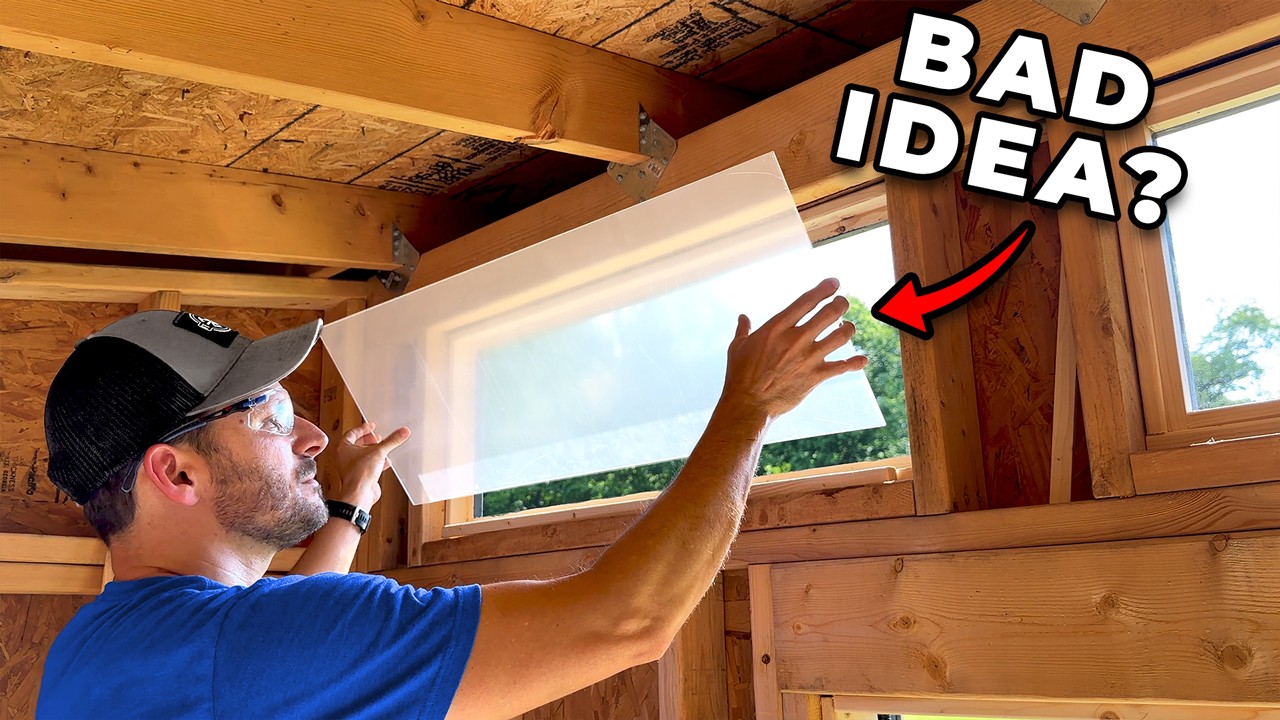
but now it is time to get to the windows. I am so excited about these windows. They’re actually going
to be built in place, and I’m going to use
some acrylic for them. I’m going to go ahead and go inside
and measure for the interior pieces before I cut this out,
just in case anything goes wrong. I don’t want to cut the house wrap first. And doing the house wrap
has been really nice because it’s just covered up those windows. And I haven’t had to worry about
water getting in it after I’ve had the house wrap up, but
it’s time to cut into it. So I’m going to be using some one
by fours that I’ve ripped down. These are actually,
I think, two and a half inches right now. And then I’m going to
use the other pieces for the trim to hold in that acrylic, the stops or mullions or
whatever they’re called. But I’m going to go ahead and put these in and measure for them. And they’ll just go up, flush up against the front of the shed. I’m going to measure
for the vertical pieces, cut all those to size
for all of the windows. Then we can cut open the house wrap
and start nailing this stuff in place. So I’m just going to go ahead and start by cutting in this notch. And I’m not sure exactly
how this is going to go. I know I’m going to seal this up so we’ll see what happens. I know I’m going overboard with this, but I’m going to weather
seal these windows. And just because I want to, I want to figure out how to do it
because I’ve never done that before. I think it’d be good experience
to try to flash a window. So I’m going to use this zip
tape that we used up on the roof, and I’m going to go around the base and
the sides and just make sure that if any water comes in through those windows, if anything leaks behind there, it’s not going to get inside
the shed or the sheathing. It’s going to go on the outside, hit the house wrap and go
all the way to the bottom. I’m actually going to cut
all this house wrap flush to the front here because I
will seal that with the tape. And this is not stretchy tape. So I’m going to start off with
little patches here on the corners. Then I’ll do my bottom
and work my way up there. All right, now I’m going to do a big piece
right around the front edge of this. All right,
now I’m going to wrap this around. We should have a nice
waterproof corner there. Guess we’ll find out. Now, I’m pretty sure on the video they
said just to pull these corner things, not to cut them. So I’m going to do that here. And don’t worry about wrinkles, I believe, is what they said. Oh, yeah, way better. I absolutely did not do that. Right.
So let me know down in the comments,
is there better ways to do that? I feel like the house wrap was kind
of weird when I was pulling it down, but I did kind of like,
you know, putting it in the center first and then
rolling it into the corners instead of trying to start up on the
side and go into the corners. That was way easier. So I would suggest definitely
starting in the base and then going up the walls versus the other way. But
I don’t know. I think it’ll work. Now I can start installing these frames
and I’m basically just going to put these in here and butt the front
end so it’s flush with the exterior of the front of the shed. And then I’ll have some trim later. We’ll have some nice reveals. Now I’m going to use these little
three quarter inch strips of mullions, or stops or I don’t
know what you call them, but these are the off cuts from
the other side of that one by four. And I’m just going to place
those around the interior and then the window will
go up against those. I’m just going to nail them
in place with some me nails. For the windows,
I’m going to be using this acrylic sheet. And this is,
I believe, right about an 8th of an inch thick. If you go any thinner than that,
you can really start to get wavy. And the quarter inch
thick is pretty expensive. So this is a nice, happy medium. I’m going to put some caulking on
the inside and then just stick these on there and we can start
nailing off from the back. I’m in the shed because the cicadas
are incredibly loud out there and you can’t hear me out there. Now I can start putting the window in. I don’t want to use the black silicone
because on the windows it might creep up and show through. So I’m going to be using a
clear silicone for this one. And it’s rain ready in 30 minutes,
which can really help out in these conditions I’ve been in. So I cut these little mullions, which is just like what
we did on the outside. And we’re going to sandwich the window
in between the one that I already painted and then this one. So I’m actually just going to put
a bead all around the outside, nice and thick so that it
will really seat into it, but not too much that it will actually squeeze up and be
able to see it from the exterior. So see if we can do that. I’m just gonna put a bead
in this corner as well to keep it from leaking. Even though I sealed the outside, some of the extra protection. And I’m gonna peel off the
protective coating on one side. I’m just going to push it in
here and get all attached. All right, now I can peel off the other
side of the protective coating nice and clear. I love this acrylic. And now I can start putting in these little mullions, which are going to hold
everything in place. And then I can take
these out if I need to, if I need to replace the window. All right. now for this one,
I’m actually not going to peel it all off. I’m just going to peel off the edges because my nailer was hitting the inside of that other
one and it scraped it up a little. All right, now we can rip it off. Oh, yeah, that’s looking good… now. A lot of birds banging into this, I bet… And when you’re pushing the
acrylic into the silicone, you can really see it go against
the window and press out. Then you’ll know if you have a good seal. But you can see as I push this in, it just squishes out. And I’m also going to caulk on
the outside right here as well. So that’s going to weather seal it. Alright. This is looking amazing now. But now that I have the windows there
and then the sun setting in the west, it’s gonna be super hot. So I definitely need to get some vents in
there to get some cross breeze because I’m working in there,
man, sweating like a hog. And to make sure that no water
makes its way down the window. And behind that little mullet. Mullet. Going to call them mullet
strips from now on. In between the acrylic and the
little wood mullion there, I’m going to put another
little bead of some clear silicone and that should make sure
that everything stays watertight. And we can just put the trim
on the outside of the windows and they’ll be great. These windows are looking great
and they are weather tight now. And I just need to add the trim. But we’re going to do that in the next
video and I’m going to side and paint the whole thing and have the grand reveal.
33 Comments
Get Plans to build your own DIY 10×12 Shed! https://shop.fixthisbuildthat.com/collections/outdoor-projects/products/modern-10×12-diy-shed-plans
If you want to see the rest of the build you can find the videos here:
1. Building a Shed Foundation – https://youtu.be/XodcMhvfkXg
2. Framing a Shed Alone – https://youtu.be/cGqx95JVsws
3. Roofing a Lean-To Shed – https://youtu.be/Hv3EOTkR3xw
4. DIY Shed Doors & Windows – https://youtu.be/rp3rJUWJeKE
5. Finishing My Overbuilt Shed – https://youtu.be/uPO46hSpP0A
Why use mullions inside, instead of glazer points? What if a panel needs to be replaced?
Also, why wrap a shed in the plastic?
You've done a great job on the storage shed, it looks great!
you should do a rolling door
😮😅
Why do you make three passes on everything you cut?
Using any kind of plastic, even acrylic, will look like crap after 5 years, foggy, and extremely brittle.
Nice saw. You can keep it in your purce when not needed
I remember reglazing my grandparents' garage windows as a teenager. I wish more things were made to be repaired and renewed today.
So it's driving me crazy. How do you make the soffits airtight? I don't want bugs coming into the shed via the underside of the roof overhangs.
That saw was simultaneously ingenious and terrifying…
It explicitly says not to miter the edges of LP trim like that in the installation manual. People should really read the manual…
takes about 1/5 of the video to even get around to mentioning the door. 0-6min trim work, 6-19min door, 19min+ windows
Why did you use acrylic? Its more expensive, it will scratch and get hazy, and worst of all your silicone will not stick to it as well as glass and you will get leaks.
23:36 – Where do they get 0.093" from? Even 2.36 mm doesn't seem intuitive. I'd like to see how these are made; it might reveal a clue…
The nail gunning to the beat got me laughing 🤌
Oddly, not getting squashed is my favorite part of the day as well. Weird
You don't need to mark on the wall just look up on your fascia board nail will show you where to nail your soffit.
bro you spent £4000 on wood then used acrylic windows?
another useless video typical to Home Depot partners. No, you didn't waste my time I quickly skipped
You put lock for your Doors but all your screws for the hinges are outside… minor détail..good work
Stop saying"go ahead"
Nice talent! 🎉🎉🎉🎉 Amazing! Couod you plis tell me if those Windows avoid the sound of outside? Thanks
Skunks will laugh at your rat boards, LOL Those little buggers are tough to disuade from coming around;
You can use biscuit jointer on your 45 degree corner joints.
What size did you cut the acrylic for the windows down to?
the housewrap should have been cut from corner to corner diagonally, wrapped around the wood , spare pieces could have been used for the corners.
Norm would be proud!
OSB is trash built to fail . Asphalt shingles also trash.
Great video once again! We’re in dire need of one of these acrylic sheets for our shed, I had glass panes spared from our old house windows and of course one got broken. I’m already framed out for the same style you went with so I need to find something that I can cut to fit lol. I may get a sheet from the local hardware store but it’s super expensive. Where did you get yours? Thanks!
The Ghost Deer are awesome !!! 😂😂
What did you use to cut the acrylic?
We get same bugs in MO. too