
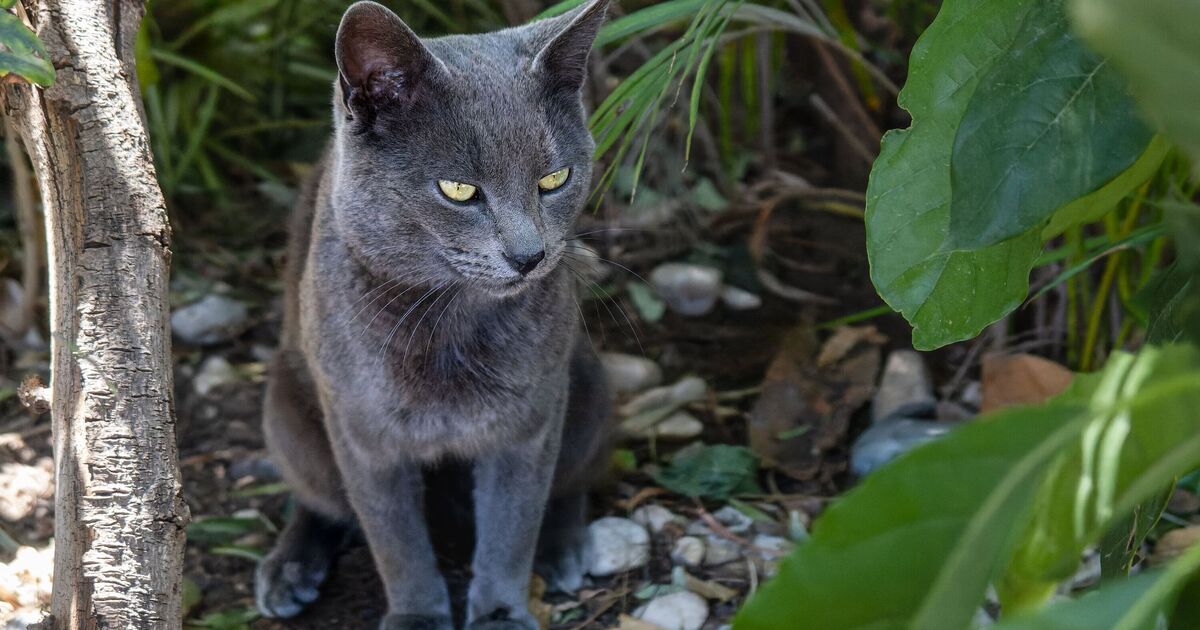
Cats love to explore the great outdoors and will often see carefully planted flower beds and immaculate lawns as the perfect spot to pee or poo. Although this can be frustrating for garden owners, it’s simply part of a cat’s natural behaviour. They’re not being a pest by destroying your prized blooms.
Whether they’re your own cat or belong to a neighbour, all cats are different. Some methods may be more effective than others. Gardening guru Linda Ly took to her blog Garden Betty to share one of her “favourite ways to safely and humanely keep unwelcome cats out” that “works long term”.
While scents can be used to deter cats from your garden, this doesn’t always provide lasting results, but something that does is adding obstacles that will make cats feel “uncomfortable”.
Cats like to do their business on firm, smooth surfaces, so Linda recommended using plastic fencing or chicken wire around your garden beds to create a “weird and uncomfortable surface,” one that “cats will avoid since they don’t like the feeling of mesh under their feet”.
She pointed out: “They also try to stay away from gravel and any areas covered in stone and pebbles.”
The type of plastic fencing she likes to use is a UV-resistant hex netting or square mesh fencing.
She said: “The flexible material is easy to cut and move around. With any leftover fencing, you can use it to create an effective barrier around saplings, seedlings, and delicate plants to protect against other pests as well.”
But does it work? Linda said, “It works as a good, long-term solution. Instead of using your fencing vertically, cut your fencing to size and lay it flat in your garden beds.
“The plants can grow up and around it, and the fence can be removed or rearranged when necessary.”
For more defined beds, try lining the borders with pea gravel or coarse rocks or adding decorative elements like ceramic shards and shells on the soil to “make the ground less hospitable to cats”.
Comments are closed.