
Interested in an SWI Fence franchise opportunity? 👉🏻 https://bit.ly/SWIFenceFranchise
Get everything you need for this gate in one kit, here 👉🏻 https://bit.ly/SWIcedargatekit
👇🏻ALL Tool & Product Links Below In The Description👇🏻
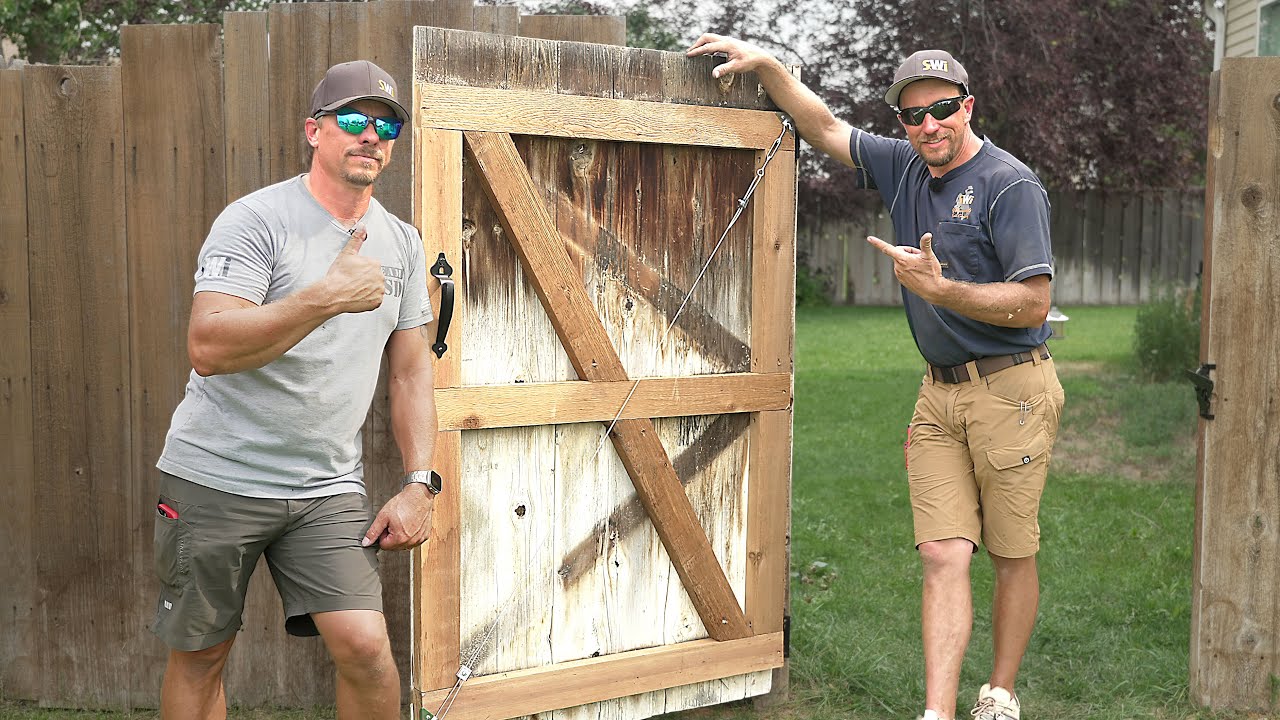
This is by far the easiest way to build or rebuild your wood fence gate. Fixing up your privacy fence has never been easier (I mean, it will take a little bit of elbow grease, don’t get the wrong idea).
👉🏻 Complete Cedar Gate Kit: https://bit.ly/SWIcedargatekit
👉🏻 Black Strap Hinge: https://bit.ly/SWIstraphinge
👉🏻 Black Wrap-Around Adjustable Self-Closing Hinge: https://bit.ly/SWIwraparoundhinge
👉🏻 Black Reversible Paddle Latch: https://bit.ly/paddlelatch
👉🏻 Anti-Sag Gate Kit: https://bit.ly/anti-sagkit
👉🏻 Extra Cedar Gate Hardware: https://bit.ly/gatehardware
👉🏻 Picket Topper Bump Board: https://bit.ly/Picket_topper
Contents:
00:00 – Framing
10:46 – Simple Brace
12:12 – Pickets
14:18 – Hinges
19:14 – Latch
21:34 – Anti-Sag
you see this right here this gate has actually like gwed its way into this picket in this post and then it drags we’re going to show you how to build a gate properly and I’m going to show you just how to do that today some of the fence structure does need to be replaced a little bit later down the road you might see a couple banana rails you’re going to have to look past that but right now main focus just getting a new gate and without any further Ado let’s dive right into the gate should we have a moment of silence for the old gate okay now now we can take it out we’re going to use a quarter inch impact to take the nuts off these bolts to Dismount this [Music] gate keep track of your old Hardware so that that way you don’t risk hitting it with a lawn [Music] mower we are going to harvest the old wood pickets and we’re going to reuse those we’re not going to reuse them with the existing screws we’re going to put new screws in we’re going to use cedar 2x4s and we’re going to use stainless steel fasteners why if you don’t use a stainless steel Fastener or a coated Fastener you could use a coated but we recommend stainless steel you’ll start getting all these black streaks from the tanic acid reacting against the metal in the in the hardware now we’re going to take off the hinges we’re going to get rid of those we’re going to salvage the pickets and we’re going to build a brand new Cedar frame and put the old pickets on that this fence is customed with a K and we want to keep it that that way I’m going to use a T25 bit I’m going to use 3in stainless steel screws that were provided in the gate kit this is going to be my go-to throughout the whole video of how I’m going to install my screws how I’m going to install my Hardware it’s always going to be the quar inch impact and here what we have is we have our Cedar stringers that we got in our gate kit one at the top one in the middle and one at the bottom and then we’re going to go vertical this way on the end and then we’re also going to have our one diagonal so on the last gate we were hinged on this post and we were latching on this post which is totally fine because I don’t really think that there’s a true slope one way or the other just like any other gate though if we had a slope we still want to hinge on the low side so if we were slanted like this this would be our hinge post because we’re going to gain elevation as it opens if you hinge on the high post you’re going to drag into the ground as it opens always always always always hinge on the low post and I’m going to make these tight so I want to cut them just a little bit proud so that that way I have to wedge them in place and then I can screw them and I believe we’re 40 and a/4 on the top we’re going to go 40 and 38 just to make a little bit tighter so we’re just going to go ahead and put a small tea on here you don’t want to Mark the whole entire thing something small in a small place that they’re not going to be able to notice when you’re said and done perfect on the back side here we were talking earlier about how we had banana rails back here so what they have back here is they have this 2×4 but they have it turned the opposite direction the unstructural direction this is not the way because what happens over time is they naturally sag what we are doing is we’re taking ARS this way and we’re going to go ahead and match the center line of this we’re going to go 5 and 3/4 to the center we want to make sure that this 2×4 doesn’t stick out past the face of that post the reason being is because later when we go to skin it with pickets we’re just going to go ahead and install the hinges and the latches before we even cut it free and with these screws just got to put it somewhere gentle that we can access later to get them back out so all we’re doing right now is we’re matching from top to top I don’t need a ton in there I just need a little bit just to hold it now we’re going to grab this measurement 40 and [Music] 3/4 41 so all the way from the top to the bottom is 5/8 of an inch out of [Music] level if you have a 2×4 and you have one side that’s just a little bit fava nicer than the other face the eh not so nice side to get covered up by the the pickets ouch oh no all right just do a little bit of a [Music] trim just a little bit easier to get in and out we do have a little bit of a split here I think will be okay okay just like the top we’re going to measure find Center and place [Music] that okay so now that we have our 2×4 seater stringers up in place the next thing we’re going to want to do is we’re going to put a vertical here all the way through and a vertical here all the way through and then we’re going to go ahead and do our compression brace so this side is going to be the h this side is going to be the latch so on the latch side what we’re going to do is we’re just going to mark one in so we’re not going to go past that Mark nothing can come past this Mark because that’s how much room I want to have for my latch I’ve gone closer I mean if you want to hit the bare minimum 3/4 of an inch will work but I guarantee you that you’re going to be fiddling with that latch in the next few weeks and on this side 38 we’ll give ourselves 38 of an inch so that that’s where any framework will come to a stop and that’s where the pickets will come to a stop and same right here on this side and before we do anything else I just want to stand back and look at everything to make sure everything’s kind of flowing the same way 1 two and 3/4 I don’t have an extra set of hands but I got a clamp and we can sit and measure the these out all day long we can get them the right length but getting them the right angle makes it a little bit more of a challenge so what I’m going to do is I’m going to clamp this so I’m just going to draw a line right there I’m going to draw a line underneath there the only I need to do now is I need to identify the two different parts some way so we’re going to go ahead and put B here for Bottom t for top [Music] once we cut the gate free we can access this side and run some up that way too now hey what are you doing here oh I’m excited now oh you’re so excited yeah so one of the things is why we don’t want to build our gate on a bench or in your driveway now typically what we have is we have sloping ground away from houses and that’s where a lot of the gates are if we had a sloping gate away from the house and we make our fence match the terrain then our gate will not be square necessarily if you don’t know how your Gate’s sloped you can put a level up here and see and this gate is actually going to be fairly level now it looks a little funny because we have a little different reveal on this post than we do here but what we have is from here to the top of the picket 5 in and same thing on this side from here to the top of the picket is 5 in so we know that this Gate’s flat but if it wasn’t and we were building it in place it wouldn’t matter what the slope was everything would always line up and the tops of the pickets would always match and we don’t have to do a whole bunch of math to figure that out we don’t have to do a bunch of figure out what our angles are because we’re basically just drawing our angles on here like you’ll see coming up because the next thing we need to do now that we’ve done this is put the brace on but I want to rewind for just a second and talk about these gaps knowing the type of Hardware you’re going to put on your gate is going to make a big difference in the gaps when I first showed up I asked Dan why we would have a gap like this and didn’t realize that he had brought this style hinge now this isn’t the hinge we use all the time but it works really well if you need a lot of adjustment uh not the standard hinge we use and not the one that would come in a package like this but this is an option if you need some adjustment or maybe your gate sagged and you want to put some better hinges on it and you want some adjustment for the future this will allow you to do that because we have two screws here as opposed to the other style hinge which is what we call a traditional strap hinge uh this is the Western wattgate kit but a hinge like this is going to give you zero adjustment the reason we’re not using a hinge like this and we’ve chosen on this gate to use a hinge like this is very simple so if I put this type of hinge on here I’m trying to make that strap line up exactly with this rail and this rail is all warped and bent and it’s very thin and trying to hit that it’s difficult again we would never turn our rails like that but if we’re doing a rehab like this we have no choice and I don’t know necessarily if we’re going to hit that Rail and especially if we had real steep slope we might start off hitting the rail here and be completely off the rail by the time we got to the last bolt whereas a hinge like this not only we get that extra adjustment but all these screws are going to be right into that post the only thing to remember is is that if we’re going to use a hinge like this we probably need to leave these post just a little bit taller on that hinge side luckily for us these people did leave it that much taller so we can do that because this hinge has a little bit of adjustment we need a little larger gap for this than we would a hinge like this because there’s no adjustment so that’s why knowing the type of hinge that you’re going to use can change the type of Gap that you’re going to have here and when we get done what we’ll do is we’ll trim all these off so they’re even and it’ll look perfect this is what we like to call a strap hinge they have butterfly hinges that would basically be without all this and it’ have three holes here and then the other one we have is like a t- hinge and the t- hinge just bolts to the post and then we can hit that center of the rail every time so a few different types of hinges the standard hinge we use on all our gates is this hinge so if you order a gate kit from us this is the type of hinge it will come with if you need hinges for a rehab or anything like that then these are a great option and we’ll put a link to these down below so that you can buy them easily now that we’ve covered all the hardware that we’re going to use and why we did what we did and why we didn’t do what we didn’t do what’s next compression brace oh yeah yeah so that means we’re going to hinge it off this side so that means we’re going to go this way right no that’s a tension brace oh silly goose we line it up down there and then we’re just going to we’re going to cut that off a little long a little wild okay so you got that side you got the bottom yep I’m good on the top so he labeled these top and bottom because they are different we just want to make sure we can easily put them back in the same spot so that’s a great idea because we’re going to hinge off of this side we don’t want to put the brace in tension and the tension means that the natural way for this gate to settle is going to be straight down on the latch side here and we want to prevent that and if we did a brace going this way it would be trying to pull all those pieces of wood together whereas this way it’s trying to squish all that wood together when it’s supported by a hinge down here so this is going to be the strongest way and the way that is least prone to sagging over time doing a compression brace this way and so a compression brace will go from the hinge side being low to the latch side being high and that’s how you’ll know whether or not you’ve done it correctly and that is the only brace that matters there’s no need to go this way with another brace we would not want to do it like the old gate was with braces switching directions there’s just no reason to do that so that’s why we’ve done the compression brace here is because that’s going to be the strongest and lead to the least amount of failure over time now now we can actually put pickets on as soon as you’re done you get your screws out just in the street it’s the best place for those we can come back and put more in in just a second even though it’s an old fence we are going to use stainless steel Hardware which will come in your kit we just believe in stainless steel because then it’s not going to leave all those streaks all over your fence hey you know what if we’re it’s worth doing it’s worth doing right the only reason we’re not replacing the picket is because we want to make everything match it’ll have that unique antique look yeah this is like Old Pine I think you might have a straightaway for making sure all your tops are even other things you can use are strings the straightaway is the fastest we sold those on our website it goes right across the top makes it super fast and easy to run boards and if you want one of those check out the link down below but today what we’re going to use is we’re going to use our handy dandy [Music] level okay so now now we have a little more of a problem I need that when we line this up to rip this what we don’t want to do is go past this 2×4 we want to line everything up because that would eliminate our Gap and the whole purpose of having that Gap is so we have enough room for our hinge or sorry our latch and the mosquitoes mosquitoes have come out is it good oh yeah okay it’s [Music] good oh skew brother that looks good [Music] okay that’s about as far as we want to take this for today um it’s 3:30 and there’s cooler places to eat and drink elsewhere and so we’ll be back what couple weeks oh yeah easy easy yeah couple weeks homeowner will have a new gate not a big deal just kidding that’s not how we work we work until the job’s done so one of the things here when we were talking about the hinges we have to use this other style of hinge instead of the 8 in strap hinge if we’re going to use the 8 in contemporary strap hinge what we could do here is apply it right now apply it right now after that hinge is on cut this gate free right here bada bing bada boom gate swings we apply all of our hardware for the L side and it’s done it’s that easy so we’re going to do this a little differently because these are wraparound style hinges which means I’ve got these flanges sticking out on one side and those flanges actually run into the 2×4 here so we’re going to cut this into the gate free right now he’s going to climb over the fence somebody should really put a gate here some we really need a gate right here don’t we o I bet that hurts H your shin right there that hurts I can feel I feel for you buddy he’s 10 years younger than me so I don’t have to do that stuff anymore he gets to be the hopper so we cut the top and the bottom free and The Middle’s still supporting it so guess what we were we were thinking just a little [Music] bit it’s probably not wide enough yet but if I just got break that out yep that’s it right there it just fell out so the screw that come with these hinges just so you’re aware are very small they’re not very good they’re black but they’re not going to bite into that they’re going to sit on the top of the picket and that’s just not going to be good enough so we’re going to use some of the stainless steel screws that we use for the pickets and attach that that way and I’m fine with that because we’ve got three here and then of course like we mentioned we’ve got the wrap around so that’s actually going to hit that post we hope we want to get it centered so that these screws actually hit that 2×4 if you wanted to you can put some 3 in in that yeah and we could use big 3in screws right here since we’ve got 4×4 back but over here we don’t have the option because we don’t have enough meat so [Music] [Music] okay that’s it for that one you want to free it up yep and the cool thing is I didn’t have to lift the gate or hold the gate and try and keep it perfect okay and so that’s all we do to cut that free remove the screws trim it off so the other thing you can do is use a reciprocating saw and it may be a little bit easier to do that and you can see that when we let it off it settled a little bit but that’s not a big deal because remember we have this adjustment over here and the reason it settled is because these hinges have just a little bit of play in them not a big deal to just raise this corner back up and we’ll get this thing to line up perfectly yeah I think that’s good the last thing we need to do on the inside here is add the extra screws here we could probably make those three in so the cool thing about these hinges is that they are spring-loaded and self-closing whereas the other ones aren’t so these hinges are quite a bit more but there’s a lot they do that the other hinges won’t and work really really well but there is a right way and a wrong way to do this we’re going to turn these counterclockwise to load the hinges if you’ve done it right it will close the gate for you and if you’ve done it wrong it will open the gate for you and if you’ve done it really wrong one hinge will try and open the gate and the other one will try and close the gate and it’ll do nothing but sit there in the same spot don’t do that and does it close a now was it going to do that in a great big Windstorm no probably not so about 90% of the time here in Wyoming this gate won’t self close but we’ve done all we could do and that wrap around really adds a ton of strength I can’t tell you how much strength that adds then we got two back here we can do okay so you’re probably right about now asking where’s the hinge that goes here please please whatever you do this is not a door it’s not made in a factory and things are not exactly perfect and when things aren’t exactly perfect if we put a third hinge on here this hinge or one of these hinges will always be in a bind and it just is prone to failure and wearing out faster because extra wear it adds nothing to this gate and we suggest that because hinges come in pairs of two the manufacturer only wants you to put two on and that’s all we recommend as well so that third hinge please don’t do it just buy better hinges if you need the weight carrying capability don’t put three hinges on now there’s two ways to put this latch on a right way and a wrong way actually it just depends on what you’re using it for we can put it on like this people like that if they have dogs because if the dogs jump up and pull down on this it’s going to make the latch stay closed whereas if you put it on like this it will open potentially the gate if a dog jumps up on it so it’s really your preference how you install this we’re not going to get mad at you either way all we do is pop that screw out take this spring off and then flip it the other way all of a sudden we have a latch that is exactly what we need so these are reversible we like these latches because we don’t have to cut holes in the gate they’re super easy to use from both sides of the gate we’ve never had a complaint for our customers about how these es perform and they actually can hold some of the weight of the gate if you install them correctly so helps prevent it from sagging because we do have a nice big Striker and all I’m doing is lining up this right on the center rail may seem a little bit low and if you wanted to you could put another piece of blocking in here and raise that up but I don’t find it necessary usually cow now what we will do is we’ll put our Striker on and then we’ll put this over it and this gives us a little bit of added stability because these are going in and this is the correct way to do this latch so what you want to do is not insert it all the way like that because then we have no meat to put this on so we actually want to pull that back to go right about there maybe so it’s catching here but then we get this nice big strap support to help keep it from if somebody slams a gate getting ripped off because now we have support clear out here as well because I’m going to be putting some screws close to the end of this I am going to pre-drill all these this is where that blocking on the back side of this gate right here actually helps us the blocking over here is not really necessary if you want to skip that step um you certainly could and it would be totally fine but wait there’s more uh we like to put a handle on both sides and I’m going to put this in just a little bit higher because it’s not as important where it is so we’ll just Center it on this 2×4 and make it a little bit handier heye that’s that now just as an added measure of security I like to say that I’m a belt and suspenders kind of guy so we like to overbuild everything so we’re going to go ahead and put a brace on this because we’ve built everything right but we want to make sure it’s not going to SAG we want to make sure this customer has a gate that operates for a very long time so we’re going to put the anti-ag kit on it and that is going to be in tension not compression so instead of running this way we’re going to run it from this corner to this Corner because what we want as the gate tries to settle that thing just gets Tighter and Tighter and Tighter and doesn’t go anywhere difference being this is a flexible object this is a rigid object so we have to install them differently so what you’re going to do is you’re going to unscrew your turnbuckle all the way out just like so you’re going to thread this through just like so could I please yes you did such a good job could you do it again I’m going to do it again okay I saw that other hole and I was thinking to myself self you know what would be really good in that other hole another screw oh that was so good man actually I already screwed up cuz you were talking about W to put this at the top huh I was there go now it’s at the top okay and then what we’re going to do we’re going to take this we’re going to put this at the bottom just like you did at the top do I need to show you where to put them no I’m going to assume they go in the oh wow this is I’m going to have to hold my tongue just right to get this clearly don’t have my tongue held right then we kind of pull a little bit tightish don’t be afraid to hang your tongue out your mouth if you just can’t quite get it oh you know what if I pull a little tension on it like that and then put it on there it kind of squeezes it up that makes it real nice and there’s our clamp one on each end if you have a sagging gate and you just want to try this first before you rebuild it you know that’s we saw just these you got a screwdriver or something some sort of a tightener device I think you picked up what I was going to use oh you’re just going to use a 3-in screw that’s brilliant yeah look at that man man’s sakes live that is good if you want you can take a little bit of electrical tape or something and just rewrap that so it doesn’t Fray yeah I like that and that’s how you install an anti-sag brace so now we have not only our compression brace we’ve got an anti-ag brace I’m Dan with swi I’m Mark with swi we are a Wyoming fence company and we hope you no we demand you have a good dang day for sure that really closes the door on today’s video
30 Comments
Informative and well-shot. But— grrrr — I came here In hope of getting some screw placement advice for the compression brace. Omitted.
Great Video. Gate was easy to build. Thanks
This why I love YouTube; great instructional people like this guy here. Thank you for the great lesson!
Does the tension has to follow the 45 degrees rule?
Thanks for this video. Do you ship to Canada 🇨🇦?
So I've watched about 7 videos this week on gate building, but yours is the only "build in place". What a fabulous method. I had a professionally built fence made, 1 piece at a time, about four years ago now
You would have thought I would have learned by watching that board fall on him. But no it just now happened to me right after I watch this part😅
Fantastic video gents. Thank you.
can you do this with a double wide gate
Bruh(s)!!! You guys are cooler than a menthol snowball!! Built one of these this last weekend!!! Been building standard “Z” gates for years!! This thing is tuff as hell!! Nice to not have to build on the ground and use about 10 clamps to hold it to mount the hinges!!! Think I nailed it the First time!!
Hi, love you Profesional ways of doing these projects & also am a subscriber of yours. I am trying to have a large double door gate that would open enough to have two vehicles side by side and able to drive out w/o hitting the fence or other vehicle.
Note: Posts for the gate would be Installed in dirt ground, not on a concrete slab! Do you have any videos close to what I'm describing on here? I'm in a jam here! Thx much for your expertise & helping me out here.
How does this gate method compare to the brace kits in terms of strength? Is it equal, stronger, or weaker?
How would this change if the gate needed to open inward towards the backyard?
One thing I like to do is put a 16 penny nail between the boards, so when the pickets get wet and expand they don't break the screws or try and tear the fence apart. Thanks for the video, Loved it. Best Blessings. Keith Noneya
Wish you guys were on the east coast, I would hire you yesterday to build new gates for me! Great video, not complicated but beyond me at this point in my life. 🙄
You guys are the best
Very useful. Thankyou for the great presentation.
Good thing about a wood gate is homeowner will be calling you later on to come and fix it when it sags $$$
I’m doing one tomorrow, but I’m using pressure treated wood, and it’s wet! I’m also doing a double gate. If I make the gate with a one inch gap at the latching point when that would dries and shrink it will be left with close to a 2 inch gap. I google it, and they said you can do between 1/2 and 1 inch. I’m going to have to go with the 1/2 to account for the future shrinkage. So I’m assuming I’m going to also want to account for the latch bar moving as well. I’m fairly certain this is the right way, but any extra tips on this would be greatly appreciated.
Parabéns pelo vídeo Deus abençoe
Hey you're video. Very helpful with to Very active guys 🎉👍👍 thumbs up living colors 😂😂😂😂😅
Oh maybe the guy who i owe my entire chainlink fence to can also help with the other side of the house where im tying into my neighbor's cedar fence! At this point i guess im a loyal fan 😂😂
Thanks for posting!
Really cool way to build the gate. Just a bit strange to have the hinge on the outside of the property. Does this technique work well for board over board style?
Go Pokes. Awesome video, use to live in WYO, moved to lower middle TN and you guys are the BOMB. True craftsmen you are a rare breed, you do a great public service about pride and professional building, the Wyoming way. God Bless from TN.
I love your work and your videos. I might even redo my entire gate this next week with you guys as my inspiration. I am tired of my gate sagging and dragging on the sidewalk.
Thank you. Getting ready to rebuild my gate so this was super helpful.
Los breiser están invertidos es mi opinión o talvez estoy equivocado 😮
Hi! Just a few questions! Can you post a link with all of the tools you used? Also, I have a metal frame fence with wood pickets. How would you suggest I build my gate?
Does it matter if you pressure treated 2×4 for the frame of the gate?
Also, if you were to rebuild a two door gate (double swing) whatever you wanna call it…would you repeat this same process?
I’m having to rebuild a double swing gate (gate on the left and right, hinges on both sides) and I’m doing one side at a time.
Is this ok to do this way?
First time having to do this for family.
Great video. I do have a couple of questions:
1) Why cedar and not pressure treated pine?
2) Will this strategy work for shadow-box?