
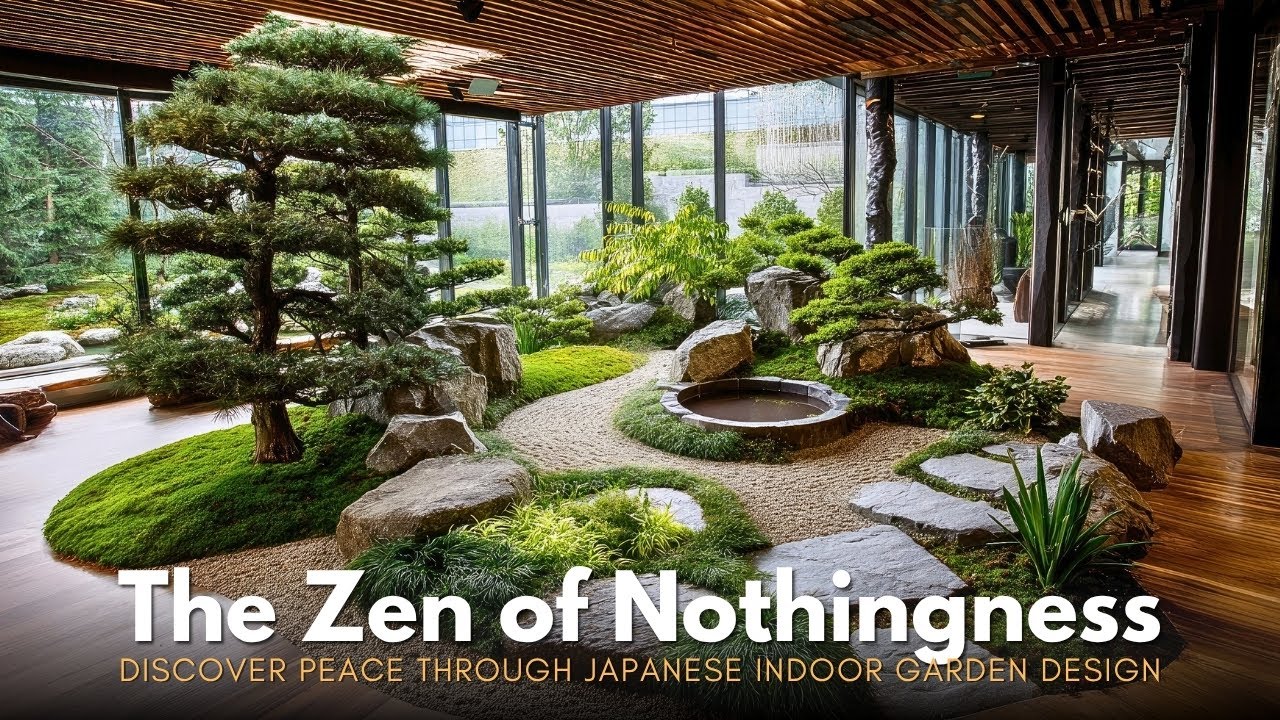
“The Empty Space: Meaning in Japanese Gardens” explores the profound philosophy behind *Ma* — the space between things — and how it shapes the emotional depth of Japanese indoor gardens. The narrative emphasizes that emptiness is not a void but an active design element that gives form, rhythm, and balance to every natural and architectural detail. From stones and moss to light and shadow, each element interacts with the surrounding emptiness to evoke stillness, harmony, and introspection. This emptiness becomes a living canvas for mindfulness, allowing the observer to connect deeply with nature and inner peace.
Through the interplay of simplicity, symbolism, and sensory awareness, the narrative reveals that Japanese garden design is as much about what is left unsaid as what is shown. The silence, minimalism, and subtlety within indoor spaces reflect the Zen belief that beauty emerges through restraint and awareness. Modern interpretations may vary in form, yet they all preserve this timeless truth: emptiness holds infinite meaning. By embracing it, we rediscover tranquility — the quiet center of existence where serenity, awareness, and design become one.
00:24 Introduction: The Poetry of Nothingness
01:36 The Essence of Ma — Space Between Things
03:12 Zen Roots: Stillness as Design Principle
04:48 The Minimalist Philosophy in Nature’s Language
06:24 Indoor Gardens as Spiritual Sanctuaries
08:00 The Role of Light in Defining Emptiness
09:00 The Art of Arrangement — Less Is Infinite
10:12 Symbolism in the Void
11:36 Stones: Sculpting Silence
13:12 Sand and Gravel: Movement in Stillness
14:48 Water Features: The Sound of the Void
16:12 Moss and Green Textures: Softness in Stillness
17:48 Pathways of Thought — Invisible Journeys
19:24 Architectural Harmony: Merging Indoors and Nature
21:00 Seasonal Emptiness: Time in Still Form
22:24 The Power of Negative Space in Design
23:48 Bonsai and Emptiness: Nature in Miniature
25:24 The Sound of Silence: Acoustic Design in Emptiness
27:00 Natural Materials as Carriers of Stillness
28:24 Furniture and Flow: Respecting the Void
30:00 Light Reflection and Shadow Play Indoors
31:36 The Role of Fragrance in the Void
33:12 Emotional Space — The Garden of the Mind
34:36 Designing for Reflection, Not Decoration
36:12 Conclusion: Finding Peace in the Void
#JapaneseGarden #ZenDesign #IndoorGarden #MinimalistAesthetics #MaConcept #WabiSabi #ZenPhilosophy #JapaneseInterior #PeacefulSpaces #GardenDesign #MindfulLiving #NatureInDesign #TranquilHome #ZenLifestyle #SereneSpaces
Japanese gardens are more than visual poetry. They are silent museums of time among their tranquil ponds, sculpted sand, and whispering bamboo. The stones stand as timeless witnesses to centuries of artistry and philosophy. In this narration, we explore how ancient stones in Japanese gardens carry layers of cultural memory, geological wonder, and spiritual symbolism. From outdoor landscapes shaped by nature’s hand to indoor sanctuaries refined by human touch. We uncover how these stones embody the history and soul of Japan itself. In the outdoor gardens of Japan, stones are considered the soul of design. Before a single plant is chosen or a pond is dug, the placement of stones defines the garden’s energy and flow. Known as I is Ishinooro, the heart of stones. This ancient principle connects human intention with natural harmony. Garden master selects stones not merely for beauty but for balance. Ensuring every rock aligns with the invisible rhythm of wind, water, and spirit. The reverence for stones in Japanese culture traces back to ancient Shinto beliefs. Rocks were seen as the dwelling places of divine spirits called cami. These sacred stones often wrapped with straw ropes known as shyanawa marked holy spaces long before formal gardens existed. Many Japanese garden stones today still echo this sacred origin placed deliberately to invoke protection, reverence and continuity between humanity and the spiritual realm of nature. It’s just me. Each stone used in traditional Japanese gardens. carries its own story. Born from mountain cliffs, shaped by flowing rivers, and weathered by time, garden artisans sought out these stones for their natural wear and unique forms. They avoided cutting or polishing them excessively, respecting their raw, aged appearance known as wabishabi. This deep respect for imperfection and natural aging reflects Japan’s philosophical embrace of transiencece and simplicity. Heat. Heat. That’s something. Every stone form holds meaning in Japanese garden design. Upright stones represent strength and permanence. Flat stones suggest calm and rest. Arch stones symbolize flow and transition. When arranged together, they tell stories of mountains, islands, and rivers. Even a single stone can symbolize Mount Fuji or a distant island in a dry landscape. These symbolic forms transform the garden into a microcosm of the natural world, teaching that beauty lies not in abundance but in thoughtful representation. Stone pathways or tobbyishi are perhaps the most personal way to interact with these ancient elements. Originally inspired by tea gardens, these stepping stones guide visitors with intention. Each placement encourages slow mindful movement, aligning body and spirit with nature’s pace. Walking on them is like walking through time. Each step reconnecting the modern world with centuries of craftsmanship and cultural grace. Heat. Heat. Stone lanterns Toro are iconic features in Japanese gardens, bridging function and symbolism. Originally used in temple grounds to light sacred paths, they evolved into ornamental beacons of peace and enlightenment, each lantern, whether snow viewing yukimi pedestal tachi or buried style iikcomi, hold spiritual resonance. Their gentle glow once guided monks through temple courtyards. Today, they illuminate the timeless harmony between stone, shadow, and light. Among the most profound expressions of Japanese stone artistry is the kerosansui or dry rock garden. Here stones replace water symbolizing islands in a sea of raked gravel. These minimalist landscapes such as Kyoto’s Rio and Gi invite deep meditation. Every rock’s placement is intentional, meant to evoke emotion and contemplation. Through stillness, the stones speak of oceans, mountains, and eternity. Proving that in simplicity lies infinite depth. Chocolate. As centuries pass, moss begins to embrace ancient stones, softening their edges with emerald velvet. This union between moss and stone symbolizes coexistence, the balance between permanence and decay. In temples like Sehoji, known as the moss temple, the stones appear to breathe with life, draped in nature’s quiet beauty. The site teaches that aging is not loss but transformation. A living testament to harmony between human creation and nature’s reclamation. Stone bridges of Shibashi are more than functional structures. They are metaphors for crossing from the mundane to the sacred. In Japanese gardens, each bridg’s curve reflects the flow of life, connecting one realm to another. Walking across them encourages reflection, as if each step brings the spirit closer to enlightenment. Ancient bridges crafted from a single slab of granite or volcanic rock still endure, symbolizing steadfastness through centuries of change. Choose true. Rocks form the backbone of Japanese waterfalls arranged to mimic natural cascades found in mountain valleys known as taki. These features combine fluid motion with stone’s solidity, creating a living sculpture. Each rock is placed to control water’s rhythm, rushing, trickling, or whispering. Embodying the poetic contrast between motion and stillness. This ancient interplay reflects life’s duality, strength grounded in grace, and tranquility flowing from power. In traditional town houses, Machia, limited space inspired the creation of small courtyard gardens called Sabanoa. Here, ancient stones still take center stage. Even a single weathered stone can symbolize distant mountains, connecting the homeowner to the wider world beyond. These intimate settings prove that the essence of Japanese garden philosophy lies not in scale but in spiritual intent. The ability to evoke vastness within confinement. You know, Unlike western symmetry, Japanese gardens embrace fucinsi, the beauty of asymmet. symmetry stones are never placed evenly or predictably. Instead, they follow natural irregularities, forming organic compositions. This deliberate imbalance mimics nature’s spontaneous order. Garden masters may spend days shifting a single rock until it feels right. Guided not by measurement but by intuition. This patient process connects the designer to centuries of artistic meditation on harmony and imperfection. Heat. Heat. together. In temple gardens, stones often serve as anchors for meditation and prayer. Monks believe that their presence stabilizes the energy of a space, grounding human emotions amidst chaos. Certain arrangements follow Buddhist cosmology with stones symbolizing earth, water, fire, wind, and void. Together, they create a sacred geometry that channels balance and mindfulness. A visual prayer rendered in stone. Heat. Heat. Japanese gardens frequently feature groupings of three stones called sanzenishi. This arrangement symbolizes Buddhist triads often representing the Buddha flanked by two attendants or heaven, earth and humanity. The subtle variation in height and angle creates visual dialogue as if the stones converse silently across centuries. These triads remind viewers that balance is not achieved through equality but through respectful coexistence of difference. Time in the elements leave visible marks upon garden stones, cracks, stains, and softened edges. Rather than being seen as flaws, these traces are celebrated as sabi, the beauty of aging. Each weathered surface becomes a living chronicle of seasons endured and stories untold. Standing before an ancient stone covered in moss or rain streaks, one senses a quiet continuity, a link between past and present, life and decay. Japan’s early garden design drew inspiration from Chinese and Korean landscape traditions, yet evolved into something uniquely introspective. While Chinese gardens use rocks to symbolize grandeur and mythic mountains, Japanese gardens adopted a quieter tone. Stones were chosen for their humility, not majesty. This subtle shift from representation to reflection marks the spiritual difference where the stone ceases to be a symbol of power and becomes a vessel of peace. Stone water basins sukubai are small yet deeply symbolic elements in Japanese gardens especially tea gardens. Guests bow to cleanse their hands before entering the tea house signifying humility and purification. The worn surface of each basin tells of countless visitors over centuries. Each leaving an invisible trace of respect. Even in stillness, these stones echo with the sound of flowing water. A reminder that purification is both a physical and spiritual act. Little cute. In larger estates and temples, Boundary stones mark transitions between sacred and secular spaces. Sometimes arranged in subtle lines or embedded in walls. These stones act as silent guardians, preserving the purity of what lies within. Their quiet presence reminds visitors to move with awareness and gratitude, acknowledging that every threshold crossed in a Japanese garden is a moment of transformation. You’re really interested. As the path leads from the outdoor garden toward indoor living spaces, the philosophy of stone placement does not end. Japanese homes often blur the boundary between nature and architecture. Stones appear in entryways, verandas, and atriums. Continuing the story of the garden inside. This seamless transition creates harmony. The belief that nature should not be observed from afar, but lived within. inside the home. Small zen inspired displays called kanchchonia extend the serenity of the garden. A few ancient stones set in sand or gravel become focal points for quiet reflection. Homeowners arrange them as miniature landscapes, infusing daily life with calm and awareness. These indoor gardens are living metaphors, teaching that tranquility begins within, even in the smallest of spaces. Modern Japanese inspired interiors often incorporate ancient stones as sculptural art. A single riverstone displayed beneath soft lighting can evoke timeless calm. Designers use these stones not merely as decoration, but as grounding symbols of authenticity. Their texture and weight bring the natural world into contemporary living rooms, bridging old and new aesthetics while honoring the enduring soul of Japan’s garden traditions. Whether outdoors or indoors, stones invite silence. They absorb sound, slow movement, and encourage awareness. In traditional homes, the placement of a single stone near a shoji screen or water feature enhances the sensory atmosphere, balancing light, sound, and emptiness. The Japanese concept of ma, the space between things is reflected here. Stones in their stillness, create emotional resonance in the spaces they inhabit. The ancient stones of Japanese gardens teach more than aesthetic beauty. They embody patience, endurance, and reverence for time. Each one has witnessed centuries of human change, yet remain steadfast in silence. They remind us that life, like stone, is shaped by pressure, erosion, and transformation, and that true beauty lies not in perfection, but in persistence. To walk among these stones is to walk beside history itself. From the sweeping outdoor landscapes to the intimate indoor sanctuaries, ancient stones in Japanese gardens form a bridge. between worlds, past and present, nature and art, silence and spirit. They remind us that even the most unyielding elements hold deep tenderness, and that history can be felt through texture, shadow, and space. As we leave the garden’s path behind, we carry its quiet lesson. That serenity is not found by escaping time, but by standing still within it. Stop. Heat.
1 Comment
AI 👎