
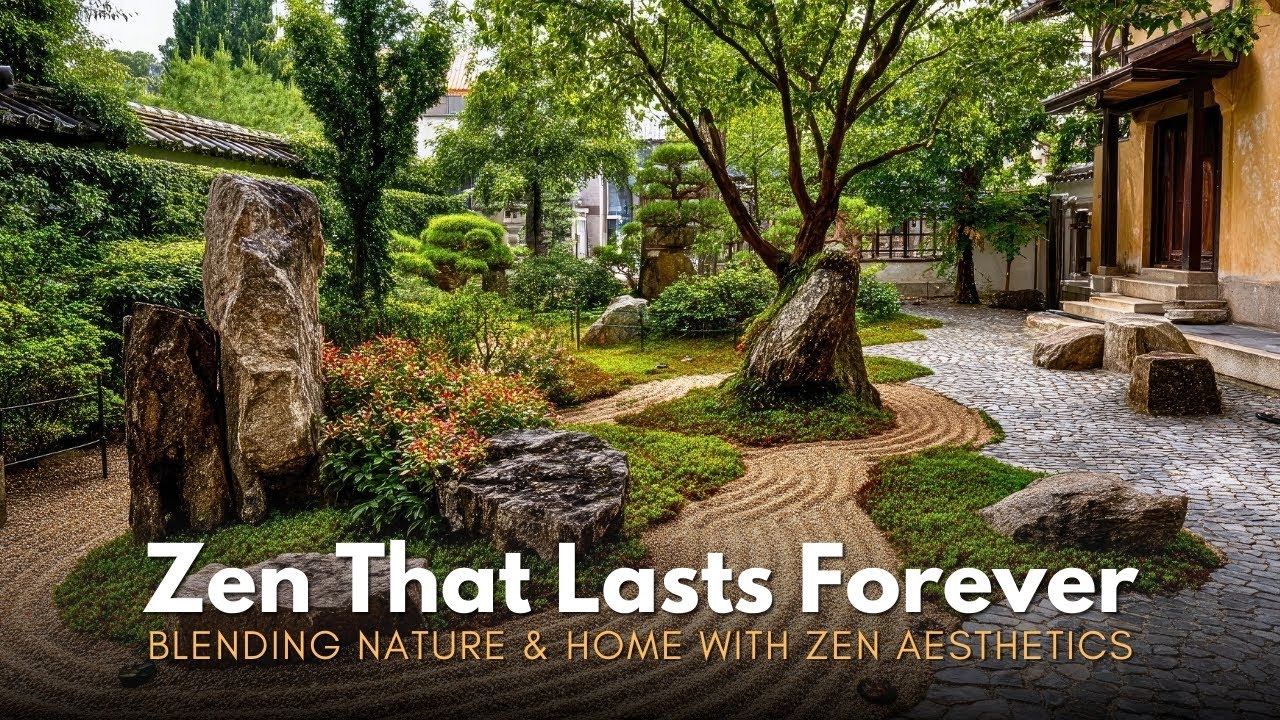
Japanese Zen gardens embody the philosophy of simplicity, balance, and mindfulness, offering a timeless refuge from the noise of daily life. From the moment you approach through wooden gates and winding stone pathways, every element is designed with intention—rocks symbolizing mountains, raked gravel representing water, moss reflecting time, and lanterns guiding the gaze. Water features, bamboo, bridges, and seasonal plants enrich the outdoor space, reminding us that calm is sculpted not through abundance but through harmony with nature. The outdoor garden becomes a living meditation, where movement and stillness coexist in perfect rhythm.
This serenity extends seamlessly indoors, where architecture and design continue the flow of calm. Tatami rooms, framed garden views, shoji screens, and natural wooden interiors mirror the garden’s restraint, creating sanctuaries for daily living. Subtle details like indoor water basins, artwork inspired by nature, minimalist furniture, and gentle air circulation integrate the Zen philosophy into everyday life. Ultimately, Japanese Zen gardens teach us that peace is not confined to an outdoor retreat but can be woven into the rhythm of our homes, offering a continuous sense of eternal calm.
00:24 Introduction: The Timeless Appeal of Zen Gardens
01:36 The Spirit of Japanese Zen Philosophy
03:12 Approaching the Garden from the Outside
04:48 Gates as Thresholds of Calm
06:12 Pathways of Stone and Silence
07:48 Sculpting Nature with Stone Arrangements
09:24 The Ocean in Raked Gravel
11:00 Moss: The Green of Time
12:36 Water Features for Subtle Soundscapes
14:12 Lanterns as Beacons of Tranquility
15:36 Seasonal Plants and Subtle Blooms
17:12 The Role of Bamboo in Design
18:48 Garden Bridges as Transitions
20:24 Courtyard Spaces for Reflection
22:00 Transitioning Toward Indoor Calm
23:36 Indoor Views Framed Like Art
25:12 Tatami Rooms and Simplicity
26:48 Natural Light and Wooden Harmony
28:24 The Tea Room as a Sacred Retreat
30:00 Indoor Water Basins and Subtle Sounds
31:36 Artwork Inspired by Nature
33:12 Furniture and Minimalist Living
34:36 The Flow of Air and Scent
36:12 Living with Zen Daily
37:48 Conclusion: Eternal Calm Within and Beyond
#ZenGarden #JapaneseGarden #GardenDesign #LandscapeDesign #MinimalistGarden #ZenLifestyle #JapaneseZen #PeacefulBackyard #TranquilSpaces #MeditationGarden #OutdoorDesign #IndoorZen #CalmLiving #MindfulDesign #EternalCalm
[Music] [Music] Japanese zen gardens have captured imaginations for centuries. Serving not only as artistic expressions but also as sanctuaries of peace, these gardens are designed to create harmony between nature and human presence, guiding the mind toward stillness. In our modern fast-paced lives, the idea of carving out a retreat for calm is more appealing than ever. This journey will take you from the outdoor landscapes where stone, sand, and greenery combine into the indoor spaces that extend the same quiet serenity. [Music] [Music] At the heart of every Zen garden lies philosophy. It’s not merely decoration, but an embodiment of wabishabi, the beauty of imperfection and impermanence. By appreciating subtle changes in light, shadow, and seasons, the garden encourages mindfulness. Stones symbolize mountains. Raed gravel represents water, and moss reflects the passage of time. This symbolic language allows us to contemplate balance, emptiness, and simplicity, turning the garden into a living meditation. To fully appreciate the design, we must begin from the outer surroundings and gently move inward. [Music] [Music] [Music] [Music] The first encounter with the Japanese Zen garden often begins outside its boundaries path. Pathways lined with natural elements, stone lanterns, bamboo fences, and wooden gates invite you to slow down even before entering. The journey prepares your senses to detach from distractions. The garden is never abrupt. It eases you into tranquility step by step. By carefully curating the approach, the designers extend the calming effect beyond the inner courtyard, transforming the entire surrounding environment into a buffer zone of peace. [Music] A traditional garden often begins with a gate. Sometimes simple, sometimes elaborately crafted. This gate is not just functional but symbolic. It marks the transition from ordinary life into sacred stillness. Passing through the gate feels like stepping into another dimension where time slows and thoughts quiet. Often constructed from wood or bamboo, the gate complements the natural world it leads to. By starting the journey here, visitors are reminded that entering a zen garden is an act of intention, leaving behind chaos to embrace clarity. [Music] Walking paths in Zen gardens are deliberately designed unlike straight straight roads. These winding stone pathways encourage mindfulness by slowing the pace of walking. Each carefully chosen stepping stone is placed not for convenience, but for rhythm, creating a meditative stride. Sometimes stones lead to focal points such as a water basin or a lantern, offering moments of pause. The journey through these pathways highlights how every step matters, reinforcing that peace is not rushed, but savored. One mindful footstep at a time. [Music] [Music] [Music] Stones are the backbone of any Zen garden. Large upright rocks symbolize mountains while flat stones represent islands or shorelines. Their placement is never random. It follows principles of balance and asymmetry that echo natural landscapes. Designers often use oddnumber groupings, arranging stones and triangles to suggest stability and harmony. By sculpting nature in this way, the garden becomes a miniature world where the vastness of mountains and rivers can be contemplated in a small controlled space. Stones anchor the garden’s eternal calm. [Music] Gravel or sand meticulously rad into flowing patterns represents water, streams, rivers, or even the vast ocean. The act of raking itself is meditative, requiring patience and concentration. Patterns may change with the seasons or moods, reminding us that peace is fluid, not fixed. The rippling lines contrast with the stillness of the rocks, creating dynamic tension within stillness. This ocean of gravel becomes a canvas of calm where movement and stillness coexist, embodying the paradox at the heart of Zen philosophy. [Music] Checking. [Music] Moss is a subtle yet powerful presence in Zen gardens. It thrives in quiet corners, on stones, and under trees, adding a touch of softness to the austerity of rock and gravel. Moss is a living symbol of time, persistence, and quiet endurance. Unlike ornamental flowers, moss does not demand attention. Instead, it gently whispers of resilience. Its velvet texture and deep green color invite the eye to linger and the mind to slow. In a Zen garden, moss is a teacher of patience and humility. [Music] While many Zen gardens are dry landscapes, some incorporate water features to enrich the sensory experience. A bamboo water spout known as Sherserodoshi creates rhythmic sounds as water fills and tips the vessel. The soft trickling of a stream or pond introduces a soothing layer of sound, masking the noise of the outside world. Water symbolizes purity and renewal, reminding us of life’s continuous flow. When combined with stones and moss, these features enhance the sense of balance and amplify the eternal calm of the space. [Music] [Music] Stone lanterns or Toro often appear at focal points along pathways or near water basins. These lanterns are not just decorative. They serve as symbolic beacons guiding the spirit toward enlightenment. Traditionally, they were lit to honor sacred spaces, but even unlit, they embody presence and stillness. Their weathered stone exteriors harmonize with moss and gravel, enhancing the timeless atmosphere. By integrating lanterns thoughtfully, the garden provides subtle anchors for the gaze, allowing visitors to find rest points for meditation. [Music] Though Zen gardens are often minimalistic, seasonal plants can be introduced thoughtfully. Cherry blossoms in spring, maples in autumn, or chamellas in winter each bring fleeting beauty that highlights the impermanence of life. Unlike colorful flower beds, these plantings are restrained, emphasizing elegance over abundance. Their presence enhances the rhythm of change and invites reflection on cycles of time. Even in winter when the garden is stripped down, the bare branches and quiet stillness remind us that peace can be found in simplicity. [Music] Heat. Heat. [Music] [Music] Bamboo is a versatile element in Japanese gardens, serving as fences, water spouts, or even sound makers. Its hollow stems resonate with wind, creating natural music that enriches the meditative experience. Symbolically, bamboo represents flexibility and strength, bending without breaking. In the garden, bamboo fences subtly define boundaries without creating harsh separations, allowing light and air to pass through. These living and crafted bamboo features remind us of resilience and adaptability. Echoing the gentle balance that underlies eternal calm. [Music] [Music] Small bridges, often crafted from wood or stone, connect different areas of a zen garden. Crossing them is more than practical. It symbolizes transition. Moving over a bridge suggests leaving one state of mind behind and entering another. Whether arching elegantly over a pond or spanning a bed of gravel, these bridges are invitations to pause and reflect. Their simplicity complements the landscape, guiding movement while also reinforcing the garden’s symbolic journey from complexity to clarity, from distraction to peace. Heat. Heat. [Music] Many Zen gardens are enclosed within temple courtyards or walls creating spaces of refuge. These boundaries are not meant to confine but to protect the calm within. Courtyards allow for focused contemplation without outside distraction. Sitting on the edge of a wooden veranda and gazing across the raed gravel, one experiences stillness in its purest form. These spaces demonstrate that simplicity can be profound. Emptiness is not absence but a vessel for awareness. The courtyard garden is where external beauty meets inner meditation. [Music] [Applause] [Music] Heat. Heat. [Music] [Music] As we move from outdoor landscapes into indoor spaces, The continuity of calm becomes essential. Japanese design emphasizes flow, ensuring that the serenity of the garden does not end at the threshold, but continues inside. Shoouji screens, sliding doors, and open verandas create a seamless transition between the outer garden and inner rooms. Light, shadow, and natural textures extend the garden’s philosophy inward, making the home itself a sanctuary. This blending of indoor and outdoor reflects the idea that peace is not confined. It is lived. [Music] [Music] [Music] [Music] Inside traditional Japanese homes, windows and sliding doors frame views of the garden like living paintings. Every angle is intentional. A mossy stone, a lantern, or a maple tree position to create seasonal scenes. These framed views remind residents to pause and notice the world beyond walls. Unlike western gardens designed to be walked through, Zen gardens often function as visual meditations appreciated from a seated position indoors. This connection transforms daily life into a series of contemplative moments. [Music] [Laughter] [Music] Kiss. [Music] Indoor tatami rooms embody the same spirit as the outdoor zen garden. Covered with woven mats, these rooms are uncluttered, allowing space for thought and breath. The simplicity of design, low furniture, natural textures, and minimal decoration echoes the restraint scene outside. When combined with garden views, tatami rooms become meditative chambers where one can rest, write, or sip tea in silence. The balance between space and simplicity reinforces the message of eternal calm. That true peace comes from less, not more. [Music] I wonder [Music] cheese. [Music] Light plays a critical role in Japanese interiors. Just as shadows shape the outdoor garden, wooden lattises, shoouji paper screens, and exposed beams create warm tones that complement natural light. This interplay of brightness and shade is called kamaribbe. The dance of sunlight filtering through leaves. Indoors, it softens the space and mirrors the shifting light outdoors. The use of natural materials like wood and paper fosters continuity, ensuring the peaceful atmosphere flows seamlessly from garden stone to interior wall. [Music] [Music] One of the most profound indoor spaces influenced by Zen gardens is the tea room. Built with humble materials, it is designed for the ritual of tea where every gesture becomes meditation. A small al cove or tokenoma displays a flower or scroll offering a focal point of beauty. The T-room reflects the values of respect, harmony, purity, and tranquility. With direct access to the garden, it becomes a bridge between outer nature and inner stillness. Embodying the philosophy of sculpted peace. [Music] Bringing the sound of water indoors extends the serenity of the Zen garden. Small indoor fountains or basins allow for continuous trickling, masking noise and creating meditative soundsscapes. The gentle movement of water enhances awareness of the present moment, echoing the rad gravel or flowing streams outside. These features do not overwhelm, but harmonize with silence, reminding us that peace thrives in balance. A single stone basin placed indoors can transform a corner into a private retreat where calm flows like water. [Music] Hello beautiful. Japanese interiors often include art inspired by the same elements seen in Zen gardens. Ink paintings of mountains, calligraphy reflecting mindfulness, or ceramics shaped with organic forms. These artworks are not loud or extravagant, but subtle reminders of nature’s beauty. Placed within aloves or walls, they invite reflection without overwhelming the senses. By echoing the garden symbolism indoors, artwork bridges the external landscape with the internal space. Every brush stroke and shape whispers the same timeless message. Pieces sculpted through simplicity. [Music] You know, you got another Heat. Heat. N. [Music] The choice of furniture inside mirrors the restraint of the garden. Low wooden tables, floor cushions, and open shelves replace heavy imposing pieces. Each object is chosen carefully with purpose and harmony in mind. This minimalism is not emptiness but intentional space creating room for breathing and clarity. Just as rocks are placed with care in the garden, furniture is positioned thoughtfully indoors. The result is a living space that feels expansive, balanced, and aligned with the eternal calm outside. Yeah. Air circulation and natural fragrance play subtle but important roles in sustaining calm indoors. Sliding doors and windows invite breezes from the garden, carrying the scent of pine, moss, or blossoms. Incense may be used sparingly, adding depth to the meditative mood. This invisible connection ensures that the calm experienced outdoors is carried into every corner of the home. The blending of scent and air reminds us that peace is not just visual but multiensory, sculpted in layers of experience. [Music] Japanese zen gardens are not static monuments but living companions in daily life. By integrating outdoor serenity with indoor design, they create a holistic environment that nurtures well-being. Preparing tea, reading by a garden view, or simply breathing in a moss-scented breeze, all become mindful acts. Zen is not about creating occasional retreats, but about sculpting peace into the rhythm of everyday life. The garden extends into the home, and the home reflects the garden, creating a circle of calm. [Music] [Laughter] [Music] [Music] [Music] From the first gate leading into the garden to the final tea room within the home, the journey through Japanese Zen gardens is one of intentional calm. Stones, moss, and gravel outdoors blend with tatami, wood, and light indoors, creating a continuous sanctuary. The design teaches us that peace is not accidental. It is sculpted with patience and purpose. By carrying the philosophy of Zen beyond the garden into our living spaces, we discover that eternal calm is not a place but a way of being. [Music] [Laughter] [Music] You are beautiful. [Music]
1 Comment
สวยงาม❤