
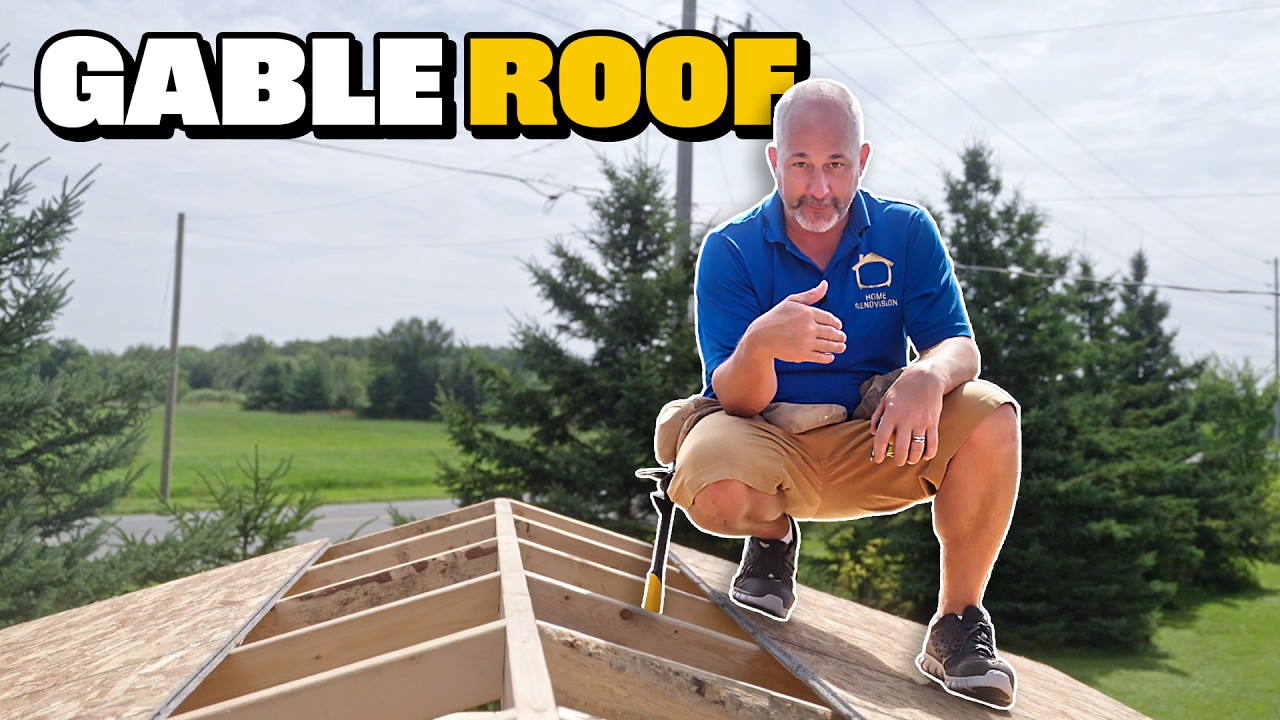
Today we’re framing the roof on my new shed. This is a ridge beam design which allows you to make a shed that looks like a mini version of your house. Cheers! Watch me frame the walls 👉🏼https://www.youtube.com/playlist?list=PL34cQkzKfXWZjAohJEWQ4WD6LUXxH904u
Need Answers or Advice for your DIY Project?
BECOME A DIY MEMBER NOW! Click 👇🏼
https://www.youtube.com/c/HomeRenoVisionDIY/membership
► Get FULL access to me and my team for Q and A’s in the DIY Crew Forum
► Participate in LIVE streams for live consulting and Member support!
🔨 PRODUCTS IN THIS VIDEO 🔨
DEWALT Pneumatic Coil Framing Nailer – https://amzn.to/46EJj2A
DEWALT Impact Driver – https://amzn.to/47nRyRT
DEWALT Beam Level – https://amzn.to/3SvxzMm
DEWALT Trigger Clamp – https://amzn.to/40GfltG
DEWALT Tape Measure – https://amzn.to/468iHXu
DEWALT Mitre Saw – https://amzn.to/3R3TebZ
OLFA Knife – https://amzn.to/3SwTTVT
Shop Jeff’s favorite tools and great products and help support our next project!
► Shop Wayfair 🇨🇦: http://www.jdoqocy.com/click-9148559-14525657
► Shop Wayfair 🇺🇸: http://www.jdoqocy.com/click-9148559-14524913
► Shop Amazon 🇨🇦: https://amzn.to/3g5Wdyq
► Shop Amazon 🇺🇸: https://www.amazon.com/shop/homerenovisiondiy
► Shop Home Depot: https://homedepot.sjv.io/nBVOX
► For up to date discounts visit our website:
https://homerenovisiondiy.com
Power your handyman or home service business with Jobber👇🏼
Free 14-Day Trial + 20% off for 6 Months: https://go.getjobber.com/homerenovisiondiy
Sign up for our newsletter 👉🏼 https://homerenovisiondiy.com
🔨 SHOP JEFF’S FAVOURITE TOOLS 🔨
Tape Measure – https://geni.us/TapeMeasure25FT
DeWALT Mitre Saw – https://geni.us/MiterSaw15Amp
Level – https://geni.us/BeamLevel72
DeWALT Circular Saw – https://geni.us/CircularSaw
DeWALT Sawzall – https://geni.us/ReciprocatingSawCorded
DeWALT Drill – https://geni.us/CordlessDrillComboKit
Makita Jig Saw – https://geni.us/TopHandleJigSaw
Oscillating Multi Tool – https://geni.us/ElectricMultiToo
WHAT TO WATCH NEXT:
► Easiest Deck You’ll Ever Build | Anyone Can Do This https://youtu.be/H596PLvg2AY
► DIY How to Build a Shed A to Z https://youtu.be/BLk_CAMmQPc
► Kitchen Remodel Tips To Save Money | A to Z https://youtu.be/VM-lc8rYolQ
#justdoityourself #lovingit #perfecteverytime
If you found this video useful and entertaining please subscribe to our channel 💪
SUBSCRIBE TO OUR SPANISH CHANNEL 👇🏼
https://www.youtube.com/homerenovisionenespanol
FOLLOW US ON SOCIAL MEDIA
INSTAGRAM👉🏼 https://www.instagram.com/homerenovisiondiy/
FACEBOOK👉🏼 https://www.facebook.com/homerenovisiondiy/
TIKTOK👉🏼 https://www.tiktok.com/@homerenovisiondiy
Disclaimer:
Videos produced by Home RenoVision DIY are provided for informational and entertainment purposes only. All material provided within this website is for informational, educational, & entertainment purposes only. Some of these projects, materials, and techniques may not be appropriate for all ages or skill levels. The DIY instructions used here are used to simply breakdown projects to their simplest steps. Please use a clear mind and use all safety precautions while following the tutorials provided by this site. Home RenoVision DIY does not make any claims of the safety of the projects, techniques, or resources listed on this site and will not take responsibility of what you do with the information provided by this site. Viewers must be aware by doing projects on their homes they are doing it at their own risk and HRV cannot be held liable if they cause any damage to their homes. With different codes around the world and constantly changing standards, regulations and rules, it is the sole responsibility of the viewer to educate themselves on their local requirements before undertaking any sort of project. That being said Home RenoVision DIY cannot claim liability with all applicable laws, rules, codes and regulations for a project. Be safe, have fun renovating and ALWAYS stay informed with your local building code.
HomeRenoVision DIY may earn an affiliate commission if you purchase something through recommended links. #commissionsearned
hey guys it’s roof day and today I’m going to show you how to frame in a roof so you can get a traditional Peak with a ridge beam so that you can make your shed look like your home all right guys so there’s basically three kinds of roofs out there one one is a single slope and if you were following along we did a couple of different sheds with different kinds of single slope we did one that just had a waterproofing membrane on it did another one with a metal roof today we’re going to do a ridge beam the Third Kind is truss and that is a pre-fabricated roofing system that you just set on top now we’re going to do the ridge beam because it’s really convenient and it gives you a lot of flexibility right because you can change the position of the ridge mov it forward or backwards and have two different size slope if you want the we’re going to try to go right down the middle and in order to do that we’re going to measure to 5T remember this shed is 10 by 16 so we want to just double check our side here we go we are just to hair off with this double plate no big deal this is now my Center Line okay now the basic concept of a ridge guys is we’re going to have piece of wood up here all right and then we have wood coming from each side going all the way to the other side of the the other side of the shed but what we got to do is we got to find out what this slope this angle is going to be all right we don’t know what the angle is going to be yet so first first thing we’re going to do is identify the maximum height that this thing can be in order to make sure I don’t run into compliance issues with the building inspector got to make sure that the top of my roof is 24 or less okay so I’m going to have a 2×6 I’m going to have plywood it’s going to Peak so I want to make sure that I got 5/8 plus another inch so I’m going to just account for 2 in of extra buildup on here just to make sure that I’m going to be okay 2×6 is 5 1/2 Inus 2 it’s 3 and 1/2 24 7 1/2 from 24 all right so if that’s my height I need 2 in for all the buildup and then 1 2 3 4 5 and 1/2 in there’s the bottom and now I’ve got that marked we’re going to count that at 16 1/2 in we’re going to put a post here on the out side of the other the other end 16 1/2 in this sounds like a lot of work but it’s actually pretty straightforward we’re going to temporarily install this block right here set our rge Beam on all right all right okay there we are pH now I’m going to go set up the same thing at the other end and then we can lift the ridge beam in place and throw a screw or two through the outside temporarily holding it in place rid of the brace and we can start getting our measurements so we’re using the same Dimension Lumber I just measured 21 in to the top so it’s very similar to the other side I’ve got my Center Mark here I got my Center Mark here and that is my flush we’re going to throw a screw in that and good wooo hang on there we go all right now we’re going to throw a level on it Matt can screw down the bottom while he’s doing that I’m G to Mark the same height my 16 and a half line that’s where my 2×6 Rim comes so now I got to struggle every every step of the way okay going get that on the line we’re using screws for all of these stages because screws can be adjusted really important that we get this as perfectly level as possible so we’re going to get the rim in place get up here with the level try to see we need to make any adjustments now we need that 16t board yeah see if there’s a crown on it too Matt if you can now guys if you’re not familiar with the crown all these pieces of lumber that are straight usually have a bit of a bow to them so you want to put the bow at the top it’s a lot easier to manipulate flattening out a bow than it is to try to push up on a ball you know what I mean I mean it’s pretty yeah I yeah it was pretty good the first day but we’ve been delayed a week because of rain so I don’t like building roofing in the rain thank you we go all right I’ll go to the other end yeah why not okay here’s my Center Line Lumber is 1 and 1 12 in so 3/4 on each side so I need my outside line and because I’m going to be on the wrong side of that beam I want to mark it over here as well okay here we go now we know exactly where this is supposed to land all right all right there we go so I’m in position okay just pull it out a little bit and make it make it fit because we use the braces on the uh bottom it makes it nice and compressed okay hold it Mo your hand so I can see my mark yeah perfect throw screw from the outside in the top and the bottom so it won’t flip over on us okay there you go now you got to grab the level throw it up here and let’s uh let’s see if this sucker needs to be adjusted very important when you’re using a level that your eyes are right in front of it you’re not looking up or down or from the side all right okay so we are a hair off all right so we both have the same measurement but we’re a little out on the level part of that might be a slight curve in the wood okay the thing here is if I make the ridge perfect and there’s different heights from the plate then every one of my Rafters is going to be at a different depth off the wall so I would rather be a hair out unlevel then start adjusting it to be perfect to make the whole roof kind of go like this to Flat at the end okay so be careful with that remember when you’re building um start with level and it makes everything a lot easier but apparently our platform is just a little bit out of out of level here not a big deal it’s not the end of the world I mean not the end of the world notice a half in level over 16 ft on a and the other thing is is if I go to the other side with that level yep it might say exactly the same thing only the other direction because there could be a crown right all right now um we’re going to get a couple screws in the end over here to keep it from moving around and then we’ll take that blocking off and we’ll get our measurement and then we got to cut all of our all of our uh Rafters cool yeah I might to come over coming over there yeah throw the screws in from the other side okay so I’m taking this block off cutting it down here now throwing that in to help support the weight okay one screw carries 80 lbs that’s plenty for now it’s just temporary bracing and actually going to be in my way H what was I thinking there we go that’s better now we’re going to show you how to do this take that 2×4 man yep here’s the plan we’re going to set it on the far side on our double plate we’re going to bring it over here to about the height that it’s going to end up okay right here right we’ll hold that there can you hold that there yep now we’re just going to set a piece of wood flush here draw that line all right here we go guys this is the line that we translated okay and the saw operates like this you’ve got your gauge here this is your block all right and this is your release mechanism so what we’re going to do is line this up now I’m eyeballing it one eye here okay I want to see this black line here touching my edge of my saw and this black line touching the edge of the saw here and when I get that lined up just the way I want it I’m going to lock it in we’re going to do a test cut we’re going to see how close we are okay and that’s how I can tell now I know I’m wider here than here all right so we’re going to take the lock off we’re going to go just another another quarter degree here lock it again cut a little closer okay still not there let’s go another degree yeah now I don’t know about you but I’m loving that now the purpose of the line is not where I’m cutting remember I’ve only got to go about 6 and half ft maybe okay so the purpose of this line is to establish the the cut line now we know we’re cutting 18° all day long okay I’m even going to write that over here cuz that’s my cut at the top of all my Rafters at the bottom of all my Rafters where my tail is my extension all of my cuts are going to be at 18° so that’s why this is going to be locked here I’m even going to put a little marked okay now we’re just going to cut one time through now I’m going to go take this back up all right we’re going to set it in place put it up against the rim and then we’re going to Mark where the overhang is to the perfect dimension for my design we’re going to explain our choices on the design in a second all right so what we’re doing here is this here’s our edge of our building okay we got to know our end from our beginning so we got to think about our assembly now I’m going to be wrapping this in tick which has a 1 mm thickness Maybe too all right but then we’re also going to be adding our finish is clad is going to be vinyl Sid and generally speaking the J trim that goes on vinyl siding this width here is going to be about 1 in now because we’re going to have an outside corner we need to have at least an inch of here and if I cut that with that same 18° okay then I can add a fascia board across the front so if I can put a 1×5 on there then I my face will actually hang below here my siding will come up underneath it and I don’t have to do any Sid work remember the way we’re building this roof is not to let fresh air in so we don’t need SIDS so you have an aesthetic choice if you want to put in s it you can cut it way down here and then you can bring a piece of wood back and then you can add s it but if you like to be cheap and get maintenance free then what we’re going to do is have this on vinyl our facial board will be PBC we won’t ever have to do any painting so here’s my mark that is plenty one inch over yeah so I’m going to cut my 18° off this point and then I’m going to create a template we’re going to get the length of that and then we’re going to cut all of our Rafters at once so we can install the entire building all right now because I measured my angle on the inside of the roof and now I’m on the outside of the roof angle’s in the other direction but saw has a mirror image of your angle so take this over set it to 18 here we go bring my blade down make contact right at this point hey okay and I have to use this on nice and slow because we’re using a lighter gauge wire for the extension power so she’s only running on 30% all and the wood is wet cuz it’s been raining and sitting out here for a couple weeks now I’m going to go up and confirm this on all four corners okay and what I’m looking for is when I put it up there I’m going to Mark where it meets the top of the double and then we’re going to check all four and make sure that this is going to work out that’ll confirm that the rim is exactly down the middle and that all of our measurements are good then I can just have Matt stand over here and cut this 32 times oh here we go Matt can you hold that flesh there all right what I’m going to do is I’m going to get this measurement now this becomes the nailing or screwing surface of my my facade see how it hangs down I got room for my siding underneath here with no more additional help I’m going to just go like this okay Mark that tip going to try it in all four corners and make sure that it’s in the same position I’m also going to do it this line here so we can have a visual all right so I hold it flush up to the top here the line is hiden right at the Ed edge of that of the double plate is perfect all right all right we’re just going to come out here make that flush at the top I’m not taking into account the fact that our double plate we have sheathing on the back side right so I’m going to have to make this board an extra half an inch longer on the back side to cover past the sheathing we were measuring off the top of our double plate this point right here but our sheathing is here that’s going to extend my corner on my vinyl half inch back so this is a perfect dimension for the front but on the back side we’re going to have to make them all another 1/ in longer to compensate for the thickness of that shoothing all right so that works here try that one on that front there make sure that our Rim is in the right place cuz we’re not just confirming that the um Rafters are good we’re confirming the position of this of this as well yeah there you go how does that look perfect all right now it’s production time so we’re going to cut a bunch of those Mark out the joist for the Raptor location and the plates okay [Music] so here’s my 16 all right and I’m going to put an x on it the red square is the next 16 the actually just what side the rafter goes on Little Red Square there that’s the 48 oh oh SP took my own head off here all right let’s just see if we can get down to get this bad boy all right all right we’ll do that again H there is all right here we go Red Square okay I’m going to keep tension on it so it doesn’t pop off I’m on a wield cart here so I can go all the way down one run this one here is uh specifically at 8 ft okay so this one I’m going to mark it Center and I’ll show you why when we go to put the skin on the plywood want to meet in the middle of that rafter okay there we are uh-huh uh-huh and of course one in the ends there we go my axes on here what this is going to do it’s going to allow you to use one full sheet of goods here which is 8T long and then another full sheet of goods to put the roof on uh it’s just a shed we’re making it quick and simple here we’re trying to keep the process simple for you so you can think like you’re building a box with a couple extra supports and then you’re adding another box at the other end with a couple supports all right so we’re going to pop in a bunch of here now we’re going to go through a system but we’re going to lay out first of all if you’re working alone how to do it the right and the wrong way and then we’ll show you if it’s a two person operation uh it changes everything first of all Matt why don’t you just uh demonstrate throwing the first one on by yourself okay using the nail gun okay the idea here guys is you want to get a nail coming in here and here okay so you’re coming down about an inch and a quarter and then another inch and a quarter so that the contact is coming through the bulk of the wood if you start too high on the other side the nail will be sticking out on this side and that would be bad now that’s if you’re holding it right show them what happens if you’re not holding right with a nail gun okay if you don’t have a good squeeze you’ll get gaap all right so then what you got to do to fix that is use a screw oh it’s got the clip on nice belt you got there thanks man that’s pretty handy y all right so if you go in One Nail in week and what kind of screw are you using there it’s a 3-in uh decking screw okay those are lousy for Shear strength so use that in the middle and then add another nail you can’t use a deck screws for structural lers okay they have really weak structural strength okay and in our climate especially here with the roof because it’s carrying the live load it’s also carrying snow load you want to use metal fasters so you can hit that again all right now we’re going to just leave the rafters floating for now except for where we have the brackets consider you know the first faster being the screw gun cuz then you can confirm you have the location you’re happy about everything using the screw gun it gives you a nice pull and it holds it and place while you’re driving your nails okay that gives you flexibility too because then if you have made a mistake or something slipped while you’re tying it together you can just back it out and do it again all right so I’m I doing two nails too yes two Nails okay remember when we talked about we’ve got the um a a determined inch and a quarter overhang here okay nice that’s perfect and what I can do do is as I’m coming along I can measure my inch and a quarter every time before I attach my Rafters now in the wrong screw bit here what I’m going to do here is I’m using hurricane ties I’ve measured across where the location of the rafters go the same as the top and I can use hurricane ties to tie this all together now if you got questions about the system throw it in the comments okay I know it’s not traditional but it’s just a shed so as long as we remind ourselves it’s just a shed it’s just a shed you know going to be okay all right let’s get some more of these going [Music] [Applause] [Music] all right here we go so there’s half the roof now I’m going to go and dip all of the uh brain’s not working I’m going to go cut the rafters for the other side now so we can uh get our support all sorted out then we got to put in a a few cross pieces we got to do all our blocking and then we’re going to have a roof that’s totally supported because this kind of a roof when it’s sitting like this against the ridge really the there’s an outward Force right here at the bottom so if this is tied to the wall it won’t disengage but it could still open up okay this is your building it can still open up like that so that’s why we’ve got to get these cross ties in so that we’ve got some stability to make sure that that doesn’t happen under extreme snow Lo and if we’re both walking around up there putting on the sheet Goods we don’t want to collapse our roof so when I’m doing this I’m a little different don’t like to shoot Nails into knots so I’m checking inspecting the first 6 Ines of my board here okay I want to make sure that I don’t have anything there that’s going to be a problem once I’m up there with a nail gun if you cut this off without looking and let’s say I cut it right here there’s my knot my throw my first nail in Nail’s going to hit that it’s going to bounce it open and they not going to be able to even use a screw to drive it close right you’re going to have to pull out that nail you’re going to have to pre-ural a hole throw in a screw such a pain in the butt so pay attention right I’m good here I don’t my measurement 63 and 3/4 that’s down here checking this wood for the same thing as well all right don’t want to be playing with knots if you got one cut it away make sure you’re taking the piece of the board that works best for you that’s really the whole secret listen to your saw when it’s cutting uh especially right now I’m on a smaller gauge wire bringing the power to it if it working too hard the wood could be too wet you could be going through a knot if you hear it screaming slow down be relax it’s not a race all right let the blade do the work but if it starts to scream it means you’re trying to push too hard you’re going to wreck your motor good 12-in compound miter saw should last you your entire career [Music] now we got weather coming here we go we’re going to get a couple of these installed here real quick what I’m doing is I’m putting these in the same location as these okay on the other side and because I’ve got a 3 and a/4 in nail I’m actually going to be only only the mirror image driving my nails right next to this but on an angle so it goes through the rim and then picks up the middle of this piece of wood show you what that looks like here so I’m working by side here I’ve got my Mark going flush off the top grab my nailer I’m going to drive my nail here put on an angle so it’ll cross through and then into the rafter on the other side in the middle keeping my hands clear there we go solid as a rock now because the weather’s coming I want to get two of these installed screw down the other side that’ll kind of hold this together in the wind looks like I got about 20 25 minutes before the storm heads so I got to pack up all my gear and all my tools again and uh we’ll try again another day to finish this off [Music] ah yeah all right guys that’s enough for me today I’m loving it here we are well it’s been a couple of days we’ve been through a massive rainstorm uh had some really decent flooding in Town um by the way if you’re watching these videos and you know somebody who’s gone through flooding or you’re going through flooding yourself I’m going to put a link in the video description here we did a series uh in my basement a couple years ago I tore it apart and rebuilt it to show you what looks like when you have a flood and then what the restoration process is most cases you guys you can cash in on the insurance company get 90 cents on the dollar from the claim and you can do it yourself and even make a few bucks uh it help buy some more furniture put back in there later anyway let’s just go through a couple more of these framing details that are the roof one of them is this this piece right here this is a 10t 2×4 goes right from the face of this wall to the other side we’re tying it all together in a triangle pattern to the there we go now the rafter and this brace are tied together it becomes a truss okay and what that is is it’s this ability no matter how much weight you put down on the top it can’t bend the the building out because this okay holds it together so now you’ve got one complete triangle strong structure and that’s going to be all tied together I’m going to get Matt to come up here and do the rest of the blocking we want to have no air coming in here except through the vent that we’re going to install all righto once we get that done we’ve got to do the Gable ends we got to get our sheathing on we’re going to do the roofing hopefully by the end of today because the weather forecast T is very very spotty this year and I don’t like getting my tool so and wet if I can avoid it we’re blocking uh basically once we have our roof on there’s going to be a hole going up here and we don’t want rodents and stuff getting into the building into the structure right so we’re simply going to put blocks in between each uh each trust so that once our plywood is on there’s no possible way that the things can get in um be fre you baby yeah what I was doing uh yesterday I guess was uh putting three Nails along the front side and then toenailing on other end Jeff pointed out that this is not a structural portion of the structure so uh that’s useless and it’s a waste of nails uh but I’m going to do it anyway just because I guess now you’re in Rhythm that’s how I was doing it um yeah I’m going to get roasted by all the framers but that’s okay um so yeah I’m going to start by toenailing it because I want it to be flush with our top plates here so just going toenail thing bang bang and then one two three I uh hammer in the uh Nails after just for I guess continuity purposes and uh there you go there’s a block um if I did it wrong let me know if I can do it better let me know here you go bud thanks man oh Jesus okay so now we’re going to do this one here it’s a little tight just make sure it’s flush on the front end and then we tow [Music] last step before we can remove our temporary bracing is we have to do the blocking on the Gable uh it’s as simple as measuring from the top down so the our block transfers load directly from the Raptor to the St okay now these are off Cuts so the angle already perfect for the roof and doesn’t really matter how perfect this is it’s just a nailing surface for our siding lader and as long as I’m within a few few inches of the stud I’m fine there you go toenail toenail off we go yeah so we we got like a nail or a screw right there yeah two of them in eight oh what a great drill dude I’m glad you’re liking your new toys all right anything here okay and then Timber okay that’s out of the way it’s a fresh air intake vent this is passive there’s no motor there’s no nothing but because the wind comes from across that field almost every day this is a great way to get air circulation in the shed okay So eventually we’ll be putting it right here here all right the challenge is I need to actually attach it to something okay so I’m going to add some blocking so I’ve got a nailing surface okay all right you’re going to hand it to me sideways right yeah something like that so Groove is uh your right side okay you want to go Groove down okay okay hold on okay I got it all right we can rotate it now on the ladders pins y okay so there’s not much friction yeah that’s it keep going yeah I got it and my ladder actually will keep it from sliding out of position all right okay it’s as close as you’re going to get for now cuz my ladder’s in the way there we go ah very important here that we square off this roof right off the very beginning yeah okay all right so what I’m looking for is the bottom of this sheathing is just a just a hair more than my fascia and so right now I am just almost there I need a little Just a Touch there okay I need you to rotate your top quarter there cuz we want to go perfectly flush so what I’m going to do cuz I like this position and we can rotate on it done okay now you got to make that perfect okay that’s good okay I’m liking it just a hair shy on the 3/4s than that one right now the other thing I need you to look at need you to get over there and see what that looks like on that rafter okay we’re uh We’re Half on you’re good yep all right well let’s go for it all right there’s no going back now before before you go any further though I’m going to go confirm that from M because if we get this wrong then the whole roof is wrong right there we go oh yeah that’s going to work out great okay H my stud is just to the right of the black okay there as well there as well and yes and yes they’re all just to the right okay mhm so go ahead [Music] [Music] now [Music] so this is what we call [Music] laminating right we hold things flesh we nail them together transferring the load one roof into one piece of wood through the nails into the next piece of wood that is actually struction this works perfect every time all right now you can go through the the face of this one [Music] okay so I know this is not a traditional way to sheet we’re not staggering joints and any of that kind of business we’re just trying to keep things the cost benefit analysis really it’s a 16t wide roof two sheet Goods of 16 ft kind of figured there’s a good chance you’re going to have to double laminate the middle anywhere where the joint is it happened to us we got our measurement out a little bit just trying to design this system for homeowners so that you guys can be successful sber going with the 5/8 instead of the 716 OSB the tongue and groove is a nice feature it might give you a little more support but the thickness of this okay it’s better than any roofing system out there so it’s worth to spend the extra couple bucks now uh as far as the Gap across the top we’re not going to just rely on our shingle I’m actually going to use a joist tape like we would use on building decks to get a waterproof seal I do have a membrane to put on the roof so we can make sure that all the gaps and cracks are going to be water repellent and then of course we’re going to go architectural sheine so at the end of the day what we’re building here may not be uh up to the current standard it’s actually Beyond even if it’s a little sloppy stupid in DIY it’s going to be a better roof and you’re going to find in a brand new house all right here we go all right double check here 172 all right Matt uh from the tongue yeah go 17 and 3/4 please thank you sir no wind it’s not going to pull you off the roof carrying sheet Goods I mean just everything is going perfect here am I okay time to uh get the waterproofing membrane out get our next layers on we’re going to go through the whole assembly but our process for skinning this thing and getting a watertight uh remember we’re Four Season climate up here so we have to deal with not just rain but the risk of while some ice build up we can get a weird weather scenario here where we can get a lot of freeze and thaw and water likes to work its way under the shingles so we got to make sure we got a nice little membrane on here make sure that whenever the ice is melting we’re diverting it out and around or even up under the shingles but anything to keep it from going underneath the plywood
32 Comments
Thanks for watching, if you found this helpful please subscribe. New videos every Saturday. Watch the entire series 👉🏼https://www.youtube.com/playlist?list=PL34cQkzKfXWZjAohJEWQ4WD6LUXxH904u Cheers!
35:43 – the shed claims another victim
Birds mouth? I guess it’s a shed
Where are you located am very interested to join u too wonderful knowledgeable worker
It’s just a shed. A reminder
Jeff, How did you attach the brace to the rafter to create the truss around the hurricane straps? Thanks for doing this. I started a 10 X16 shed before seeing your series and this has been very helpful
Good video, but it is not smart to not wear safety glasses
You make great videos, I am concerned about your breathing, please see your doctor as it may be your heart we need you to be here for a long time, thank you.
I'm glad that I found someone else that didn't do birdsmouth on the rafters. I thought I had messed mine up 😂
I posted one video about my roof and people got mad that I didn't have a ridge vent. Do I need one on a shed?
How wide do you think a simple gable roof like this could be made without adding truss supports?
this guys so fake
What about an overhang and calculation for a birdsmouth?
I luv your honesty in admitting there is room for improvement and/or a trial and error.
Thanks for the roof pitch math lesson / how to do a ridge board lesson…and ALL the other lessons you’ve taught me redoing my 1935 cottage.
Just a suggestion though…please don’t stand behind the wood side of a nail gun. I’ve seen the result of the nail going through the wood or slipping) and the guy behind the wood bought a nail through his wrist.
Jeff, can I have a sofit with solid wood underneath and use vents at the gable ends?
Thanks much for that!!
What bits do you use that hold the screws you're putting in? They must be magnetic, but where id you get them? Link please.
Please correct me if I'm wrong, but my Daddy taught me to never put 4 corners together when doing sheeting. So you need to offset the top pieces by one rafter, right?
Sorry ba this is a back recomendencio this is no the ways soŕy
Yo no hablo mucho ingre pero temporarily pero ensen̈al como es desdel prinsipio ayuda mucho sorru
how would I figure out how heavy my ridge beam needs to be for a 20'x20' shed, or if i need to install a post in the venter to transfer some load? No insulation, metal roof.
You should have balloon framed the gable wall with a pocket for the ridge beam
I've always done trusses for sheds, they were small enough to do alone. plywood gussets for joints, and easy storage overhead. but that's me.
Just wondering why you didn't leave a ridge gap? I'm making a tree house that is about 8×8 without including the overhang. Is the gap not necessary on such a small structure?
I like overhangs for all the reasons listed, including adding vents because in the summer, sheds become hot boxes.
Why do you even need a ridge beam if the rafters are pushing against themselves and out to the walls? I thought if you used a ridge beam, you cut a notch in the rafter at the top so it sits on top of the ridge beam and the ridge beam holds the weight and doesn’t push out on the walls.
excellent Hands on practical video! Nice job
Someone may have mentioned this but maybe it would save some time to mark that 16 ft. top board while it's on the ground.
why only sheathing on one side of the shed?
It is a excellent idea to add the blocking, but as it is it leaves a gap between the top of the blocking and the top of the rafters. It is a small gap, but I think it is enough for a small mouse to get it. I would rip a 2×6 to totally fill the space with a matching slope at the top. More work, but I'll sleep better.
Good video, I appreciate being walked through it.
I am building a 8 x 14’ 6” shed.
Originally I planned to do a lean to single slope but last minute I decided to do a salt box roof.
Not too many videos for that design.
I have been working between rain storms. The wall framing is done. I started the rafters for the long side. I covered it last night but my plastic leaked bad.
I can’t wait a week for it to dry. It might only stop raining for a day.
I have to get the roof done.
Walls are wrapped also.