
#lytutieu #ceo #singlemom #singlemother #lifesingle
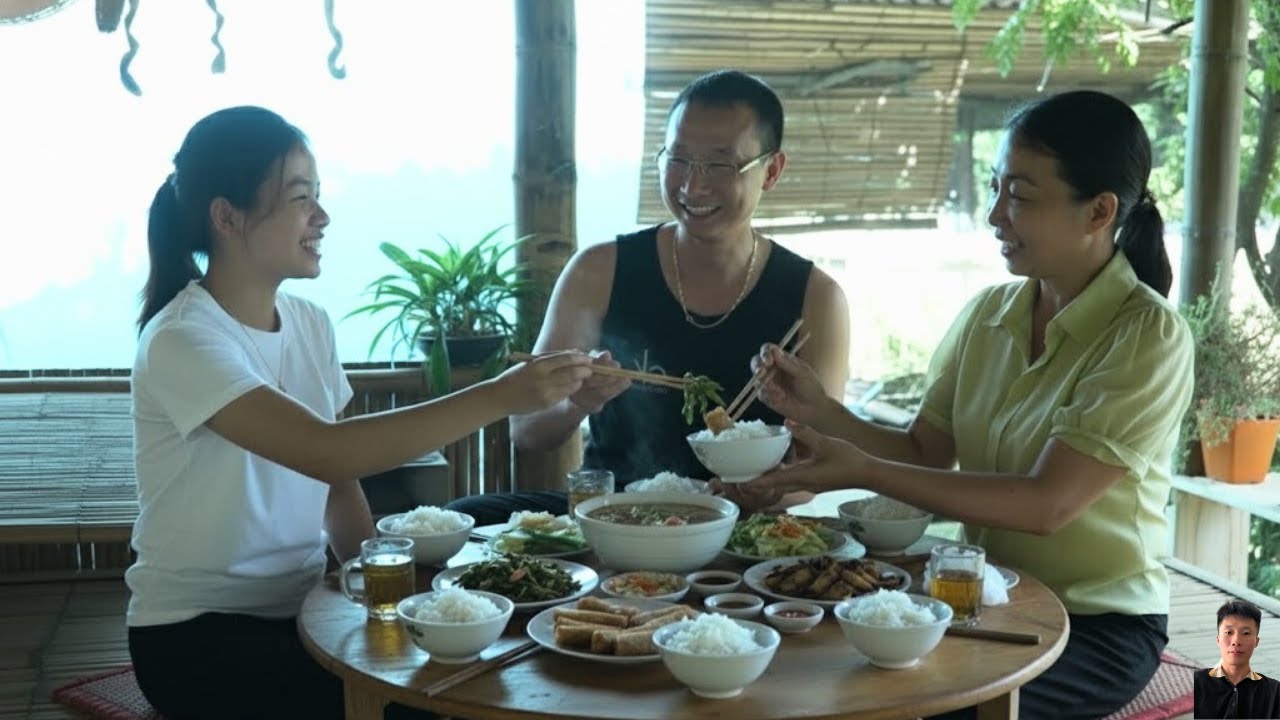
Three Bowls, One Heart — When Uri, Tu Tieu and Mrs Lan Shared Dinner Together #lytutieu #uri
Hello everyone, I’m Lý Tử Tiêu Recaps, a 30-year-old single mother. I want to share with you my story and my life in a remote corner of the countryside, surrounded by beautiful natural landscapes, as well as the culture and warmth of my people.
In my marriage, I never had children… and due to my infertility, my husband came to despise and mistreat me. Recently, by chance, I found an abandoned child in the forest. I felt in my heart that I had to take care of him, but my husband refused to accept him, and for that reason, he threw me out of the house.
© All content belongs to Lý Tử Tiêu
#lytutieu #ceo #singlemom #singlemother #lifesingle
#lýtửtiêu
#lytutieu
#love
#lýTửTiêu
#goodheartedman
#kindman
#uri
#Uri
#egan
#ceo
#singlemom
#singlemother
#alan
#lytutieurecaps #lytutieureview #lytutieurecap
#lytutieudrama #lytutieulife
Tutieu sends warm greetings to all viewers from the bottom of his heart. He wishes everyone a new day filled with energy, joy, and the best blessings. Let’s do a quick recap before we begin. Some time ago, a corner of Uri and Tutu’s warehouse caught fire. Instead of panicking, they opened the doors, told only the truth, cooperated with the inspectors, and repaired what was their responsibility until the case was cleared and their home felt solid again. Today, we enter a gentler, calmer stage. A mother’s voice at the door, a warm table, stewed fish, tea at dawn, a maintenance notebook, and small repairs that mean much more than they seem. Pay attention, don’t look away from the screen because the upcoming events are sure to surprise you. Don’t forget to subscribe to the channel and activate the notification bell because what’s coming will be even more exciting. The most tender moment arrives without needing to be shown. A wicker basket covered by a cloth. The mother’s voice sounds from the doorway. “May I come in?” Mrs. Lan asks in a low, serene voice. And the whole house seems to hold its breath, as if that question could rearrange the rhythm of every room. The wooden gate opens with a soft creak. She enters, neatly arranged, her hair pinned back, her hands scented with sesame, toast, and soap. In her basket are tender mango shoots, a handful of Vietnamese cilantro, a small packet of salt with toasted sesame, and some red chilies so vibrant they seem to argue with the afternoon. Her gaze sweeps across the courtyard, lingers for a moment on the trail of smoke near the corner of the storage shed, and then moves on. She chooses not to address the pain with words. It’s not the time yet. “Good morning, Auntie,” Yuri says respectfully and carefully. His accent is a mix of English and Vietnamese, but in that blend, his voice sounds softer, more human. He gently steps aside to let her pass. His hands still carry a faint scent of orange and lemon from washing. When everything is in order, Tutu takes the basket, pulls out a bamboo chair, and helps herself to a hot drink. Mrs. Lan sits down and taps her knuckles three times on the table, a small, habitual gesture, as if silently checking if the table is stable, if the surface is clean, if her heart has calmed. “Have you been able to sleep a little since that night?” she asks calmly . “I’m better now, Mom,” Tutu replies. “We changed the light bulbs in the hallway and checked the outlets,” Yuri adds. “I’ll replace the switch in the backyard tomorrow.” Mrs. Lan says, “I neither praise nor blame you.” Her gaze falls to her daughter’s hands, now stronger, though the joints still bear traces of soot. She takes out a carefully folded handkerchief. “Clean them.” The smoke still clings. They let the silence do some of the work. The wind passes through the grapefruit leaves. In that pause, a small, invisible door opens. “Mom, will you stay for dinner with us?” Tutu asks, a hope evident in every word. The rice is almost ready. I’m simmering the fish, and I’ll make a light, sour soup just the way you like it. Stay and tell me if this kitchen smells a little like home yet. Something softens in Mrs. Lan’s eyes. “I’ll stay,” she replies, as if flipping an invisible switch. Dinner begins with the sound of water running over the clear rice, washing away the weight of the day. Yuri cleans the catfish, pats it dry, and seasons it with salt, pepper, chopped shallots, and a spoonful of fish sauce. Tutu cuts the tender mango shoots, slices the banana blossom, and cuts the tomatoes into red half-moons. Mrs. Lan watches from behind without interfering, only dipping the tips of her chopsticks in the sauce and saying gently, “Don’t let the heat get too high.” When a gentle simmer sets the rhythm in the pot, it’s just right. The shallot hitting the oil sounds like a brief, luminous rain. Yuri lifts the lid of the clay pot and pours in coconut milk. Steam rises, the fish sauce, pepper, and the sweetness of the coconut mingle, responding to the house with a promise. This kitchen knows how to keep the fire alive. Tutú seasons the sour soup with a touch of tamarind. She adds the dill at the end to preserve its fresh aroma. Mrs. Lan grinds sesame seeds and salt in the palm of her hand. The sesame immediately awakens a warm, fragrant oil, like a small light flickering on within the walls. The kitchen slowly finds its own rhythm. One hand holds the pot, another places the lid, a third wipes the edge of the stove. The spoon taps against the side of the pot. The water boils vigorously. The wind sighs beneath the eaves. No one mentions the fire. They simply do what a household must do when the fear has subsided, more slowly, more carefully, just enough. “Set the table,” Mrs. Lan says. “Yes, Mama,” Tutu replies. A clean cloth, three white porcelain bowls, three pairs of wooden chopsticks. Yuri adds a small bowl of sauce and squeezes half a calamondin. The citrus aroma rises softly, like a whisper in a silent church. Mrs. Lan pulls up the chair. The legs brush against the ceramic floor, leaving a warm sound at the end of a long sentence. She tastes the first bite slowly. The fish is cooked perfectly. She speaks in a low, everyday voice, but her words fall like rain after a month-long drought. By the hearth, Tutu smiles a genuine, unreserved smile. Yuri leans forward slightly, lowering his head. “I learned it from you, Auntie.” “Good,” she replies. When someone wants to learn, they say it more for their daughter than for themselves. The conversation circles around the pain without touching it. They talk about how the grapefruit blossomed late this year, about the rumor that the village road will be covered with new gravel next week, about how Mrs. Nom at the market is rearranging her stall after the rain. The murmurs behind the fence don’t dare cross this table. They stop at the door, breathe in the smell of the stewed fish, and lose their courage. Halfway through the meal, Mrs. Lan puts her chopsticks down on her bowl. When she finally speaks, her voice releases something small, like a stone falling from her chest. “What’s past, let go.” But small things still matter. She locks the back door securely at night. She replaces the light bulbs in the hallway with cooler ones. Replace the plug in the corner. I’ll come by tomorrow to check. It wasn’t an apology, it wasn’t forgiveness, it was affection—a kind of measured, helpful kind of affection that knows how to mend. Yuri nods, a knot in her chest loosening slightly. She reaches for the shelf and takes down a thin wooden frame. I have something I want to show you, Auntie. Inside is a photograph taken the morning after the fire. The door is wide open. Sunlight streams in, forming a clean band across the floor. Dust floats in the air like chalk suspended in a brightly lit classroom. Mrs. Lan runs her fingertip over the frame and stops at the point where the light lengthens. Where did this wood come from? From an old board, Yuri replies. It’s still usable, so I sanded it again, Yuri says. Mrs. Lan nods more deeply this time. Save everything that can still be used. Well done. They clean together. No ceremony, just a shared rhythm. Tutu washes. Yuri rinses. Mrs. Lan dries and places the bowls on the shelf. The white foam gathers like tiny clouds that then dissolve, leaving a soft tinkling of porcelain. “When you were a child,” she says calmly, ” you used to burn the fish pot over and over again. Your grandfather taught you, ‘Don’t throw it away, clean it patiently , cook it again. As long as you keep the fire going, the food will still be good.'” Night arrives with the scent of damp earth. They bring the bamboo chairs out onto the porch. A new moon, thin as a chalk line, hangs above the ceiling. The new photograph leans against a post, bathed in a thread of pale light. Mrs. Lan asks Yuri about the camera, about how to soften wrinkles without erasing the texture of the skin, because the morning light always seems kinder than the afternoon light. He answers with his hands, drawing an oval in the air as if searching for the exact opening for his reply. Between them, something gently blossoms—a small flower after the silent, sincere, nameless rain. You notice it, feel that instant fall and gently touch your heart. Inside, the table is already clean. The clay pot retains a slight warmth, and the sweetness of the coconut still lingers like a promise left unspoken. From the doorway, Mrs. Lan watches. The room is surveyed as if she were measuring a frame with her eyes. The edge of the stove is clean right up to the corner, the cord neatly coiled. The hallway light shines steadily without flickering. Keep the house. That’s what it says: four light words, but they sound like the last nail driven perfectly into the wood. They sit down again on the porch. Three chairs facing the alley. On the other side, a motorbike starts with a sputtering sound. In the distance, children’s laughter can be heard. A street vendor sings his last song of the day. Inside the gate, the air is simple and clear. The wood creaks as it expands; the bowls dry and gleam on the shelf. The smoke stain on the wall has already faded. The house no longer trembles because of it. Tomorrow, Mrs. Lan says in a firm, unsentimental voice, I’ll come early to check the switch, and then we’ll go to the market to buy a new light bulb. Yes, Mama, Tutu answers in a voice that sounds like fingertips plucking a low string. “I’ll make the tea,” Yuri adds. The corners of Mrs. Lan’s lips tilt slightly. It’s not quite a smile, but her eyes shine brighter than when they arrived. She rests her palm on the photo frame and holds it there for a moment, as if gauging the house’s temperature. “Good,” she says, “The table is still warm.” As they walk her to the door, she glances at the lock on the hall lightbulb, at the neatly coiled cord, and nods slightly. “Keep it up,” she repeats. Not just neat, but breathless. As her figure slowly disappears into the greenish-gray alley, Uri and Tutu stand still, listening to the house. It makes the firm sounds of a place that wants to keep existing. The lightbulb hums softly on the vine. A jar of dried food in the kitchen sighs in the breeze. Its lid clicks gently. Yuri touches the white notebook on the table. Domingo murmurs. Domingo repeats “Tutu.” He pushes the back lock and hears the crisp click, like an affirmative answer. The moon is thin. The porch lamp casts an even light. The morning glow in the photograph seems to shine on its own, like a path already laid out, and somewhere in the silence, a promise of a new day begins to brew. Tea at dawn, tools on the table, and the gaze of the already awakening market. Dawn arrives like a gentle apology. The soft light cleanses the alley. The kettle rings just before the birds begin their first squabble of the day. Yuri crosses the kitchen barefoot, careful of each cabinet door, as if afraid that a noise might crack the freshly applied layer of paint after the long night they’ve just left behind. He heats the kettle. His breath forms a small cloud in the soft morning mist. On the table are the white maintenance notebook, a pen, and a small square cloth for wiping the fingerprints off the shiny new switches. He writes the first line, ” Sunday Sweep Back, Tools,” and draws a firm line underneath. “The tea’s ready,” he says without raising his voice. Mrs. Lan appears in the doorway with a cloth bag and a small toolbox, just as she had promised. Her hair is pulled back as always, but the posture of her shoulders has changed—less caution, more readiness to work. Tutu ties her hair with a ribbon that still smells faintly of lemon soap. “Breakfast will be simple,” she says, opening the steamer lid. “Reheated rice, a little fish, sliced mango.” “Simple, that’s fine,” replies Mrs. Lan, her gaze already fixed on the electrical panel in the back. Three spoons touch the same plate, standing by the counter. A silent choreography of a family learning to synchronize. The toolbox is placed on the counter. The main switch is turned off. The kitchen exhales a sigh of stillness. “Auntie,” Yuri says, handing her the headlamp . “I already checked the screws, but I didn’t touch the old wires.” “Good,” she replies. She touches with her mind, not in haste. She lifts the panel cover and points the screwdriver tip at the charred insulation. “This needs replacing, and this switch too, as loose as a broken promise.” Yuri smiles, though she tries to hide it. “Yes, Auntie.” They find a calm rhythm. Yuri peels Wires, connect, tighten. Mrs. Lan pulls on each connection until it feels it confesses its firmness. Tutu labels it with small, neat letters. Then he tears off a clean piece of electrical tape with his fingernail. Write the date, Mrs. Lan says. A house is best understood when its notes are clear. When the panel closes, the flashlight goes out. For a moment, everything is silent. Then Yuri flips the main switch. The light returns steady and warm like a faithful animal returning to heal. Mrs. Lan tests the back door lock twice. The wood responds with a satisfied click. The switch is good, she says. Now let’s go. They close the back door, sling their cloth bags over their shoulders, and step out into the radiant morning, so bright it seems capable of washing their faces. The alley is still half asleep, motorbikes yawn, roosters adjust their crowing. Grapefruit leaves pink with dew, glistening as if they were smiling. Yuri walks a half-step behind the two women, carrying the invisible weight of the chili and tomato, though they haven’t yet taken them. He feels a quiet satisfaction at being the rear point of a triangle. The market has already rearranged itself. During the night, aluminum basins catch the sun. Bamboo baskets overflow with vegetables. Knives tap against boards as if conversing. Familiar faces turn toward them as the three enter. Some smile, others watch cautiously, some pretend to look at the mangoes while actually listening. “Good morning,” Mrs. Lan greets Mrs. Nam at the onion stall. “You look good today.” “Onions make everyone cry,” she replies. “A little salt on your breath and it passes,” says Mrs. Lan. As she skillfully selects the bulbs, she pays the right price and continues walking. No one has anything else to add. At the herb stall, the vendor asks. “Dill, as always, for the sour soup?” the vendor asks. “Tut doesn’t answer. Today it’s for the stewed fish.” The vendor, half-jokingly, half-seriously, adds, “Again, when something is good, repeating it isn’t a sin,” Mrs. Lan replies. They continue walking to the pile of banana blossoms. Two gossipy women lean their heads toward each other like reeds meeting in the wind. One starts it, they say, the fire. Mrs. Lan places her hand on a banana blossom as firm as a seal. She cuts a round slice, revealing the clean, white heart inside. “If you taste the bitterness,” she explains in a soft but clear voice. “If the center is white and clean, the salad will be crisp. If the heart is brown, it ruins the whole dish.” She turns it over, not coldly, but not gently either. “Let the inspectors say what they want. The essential thing is that the core is clean. Whoever keeps chewing the burnt parts only tastes ash.” The two women suddenly lower their gaze, very interested in their own baskets. Mrs. Namosece discreetly tries to sound friendly. “Lan, do you have any of your salsa left?” “For my daughter.” “I’ll prepare a jar for you,” she replies. Sesame never lends itself to gossip. Yuri exhales a sigh he didn’t know he was holding. He leans slightly toward Mrs. Lan. “Thank you, Auntie. Carry the tomatoes carefully.” She replies without looking at him. Some fruits soften simply by being left undisturbed . They surround the temple. The courtyard is freshly swept. Hibiscus flowers bow beside the red gates like the final period of the morning. Mama says, “Tutu, we light two incense sticks.” “Three,” Mrs. Lan gently corrects, “one for the house, one for work, and one for the road.” Inside the cool, dimly lit sanctuary, they stand shoulder to shoulder. Yuri imitates their movements respectfully, understanding beyond words. He joins his hands, bows his head. The smoke rises straight, then curves like a gentle promise learning to breathe. “We’re not negotiating,” Mrs. Lan says, almost speaking to the altar. “We’re just informing.” Returning home, midday falls obliquely on the eaves, but the room still retains the coolness of the morning. Yuri places the new light bulbs on the table and opens his notebook to a blank page. “Aunt ,” he says, “show me how you make your sesame salt. Mine smells too much like effort.” She laughs softly. A laugh as round as the lid that fits perfectly on the jar. “Toast it over low heat,” she says. Listen, when it starts to smell like noon, take it off the heat. Add the salt afterward. Grind it until it’s just right. If you leave it too fine, it turns to powder. If it’s too coarse, it makes noise. The three of them work together, a familiar trio like a remembered melody. Tutu cuts green mango into thin half-moons. He washes the banana blossoms in salt water until they crackle. Yuri toasts sesame in a dry pan, looking more at Mrs. Lan’s face than at the seeds themselves. “Now,” she says, lifting the pan. The aroma rises, rich, warm, not at all aggressive. Yuri smiles. “I can hear it.” “When you can hear the right moment,” she replies, ” it’s because you’ve decided to stay.” Beneath those words, something ignites like a small porch lamp turned on in broad daylight. Lunch vibrates with quiet joy. Chopsticks clatter against bowls. The bustle of the market fades outside the door, like an old song they don’t need to hear again just yet. As they wash the last dish, a motorbike sputters to a halt in front of the gate. The young inspector’s assistant, Cortés, awkwardly nervous, hands Mrs. Lan a folded sheet of paper. “Ma’am, they asked me to bring you this.” She reads it right there. “Preliminary results. External signs of fire, no violations of internal regulations. There will be another inspection.” She folds the paper once, then again, and places it under the photo frame on the porch. “That’s good news too,” Yuri says cautiously. “It helps,” she replies, “but only if we keep this house in order. The papers may be clean, but a neglected kitchen is still disorder.” She taps her fingers on the notebook. “Sunday.” “Check gutters.” “Clean the fan.” “Test the deadbolt.” Yuri writes each word in small, firm letters. The afternoon slowly wanes. They go out into the yard where a patch of smoke still faintly marks the corner of the old warehouse. A stubborn, gray memory. Mama says, “Tut, we cleaned it.” Mrs. Lan still doesn’t answer, pointing to the pergola. She plants bougainvillea there. There are marks that must be covered with life, not soap. They begin to take root. The earth awakens, and the scent of iron and rain rises from the depths. Yuri holds the young bougainvillea upright. Tutu gently spreads the roots, as if untangling a child’s hair. Mrs. Lan firmly covers the soil between her palms and ties a string around it, leaving a loose loop. Don’t tie it too tightly, she warns. The growth needs space. They water it once. The plant sparkles. A petal clings to Mrs. Lan’s wrist. She doesn’t brush it off. Evening falls. The new light bulbs cast an even light, making the tiles look freshly scrubbed. On the porch table, the maintenance book is open to the first page with an orderly list of Sunday’s chores. In the frame of the photograph, the warehouse door is bathed in morning light, where the sun weaves like a ribbon across the wooden floor. “Aunt,” Yuri says, raising the camera, “I’m going to photograph the little bug every week. It will be a silent record.” “Good,” she replies. “Take a picture of the light switch too. Evidence may be boring, but it’s still evidence.” More tea is served. There’s no rule against it. Steam rises like the flag of a country without borders. “Mother,” Tutu whispers, resting her head on her mother’s arm, “ Thank you for staying, for saying what we couldn’t.” Mrs. Lan gently strokes her daughter’s hand. “You are the brave ones. You were the ones who opened the door.” Across the alley, a boy chases a rubber ball. He runs farther than he should. His laughter echoes everywhere until he finds his way back home. Inside the gate, the air is simple and clean. The house makes its own sounds. The light bulb hums softly. The ivy settles in its new spot. A glass jar clicks shut. Only when the sky shifts from blue to the first hint of violet does Mrs. Lan rise. She pauses in the doorway. Her eyes scan the scene. The bolt locks securely, the hallway light steady. The coiled cables Neatly arranged, the frame firmly against the column. “Keep it like that,” she says, “not just clean, but alive.” “I’ll walk you to the alley entrance,” Yuri offers, taking the small toolbox . “Up to the door is fine,” she corrects, but doesn’t refuse his arm. The three walk together until the alley decides for itself where to part ways. At the entrance, Mrs. Lan looks back at the house, the bougainvillea, the list on the table. Tomorrow they will begin to show the first signs of having fulfilled their purpose. “Good night,” she says. And there, those words sound like a blessing. Yuri and Tutu linger on the threshold after she leaves without a word, just listening to the sweetness of the everyday. “Sunday,” Yuri repeats, tapping the notebook cover. “Sunday,” Tutu replies, pushing the bolt on the back door until it clicks firmly. They turn off the last light in the hallway, leaving only the porch light , which casts a soft circle around the photo frame. The tools, the plant—everything is in order. Within that circle of light, the warmth settles like a blanket. It will remain there in the next morning’s cup of tea, in the small tasks, in the early market chats, and in the silent proof that a table can be more than wood and legs; it can also be a way back. And in this house, it is everything. cảm thấy người không nên xuất hiện strong lúc này nên anh đã nặng lẽ giữ lại câu hỏi đó cũng bình thường không có gì đặc biệt anh đáp tới chuyện chủ đề còn anh là những tiếng vui khô thì tôi cười gương mặt cô sáng lên đôi mắt đã thắng chí đánh ngoài cô không nhì trong đâu chỉ cần hơi bật một chút thôi không xung quanh họ chốt trở nên máy trong lòng một cảm giác bùn trùng vẫn không thể nào xí dù nhưng anh cảm thấy điều đó đang xấu xếng và tiêu đang chia sống một mật nao đó liên quan đến không cần tuần câu chuyện của họ trôi qua nhẹ nhàng nhưng trong câu hỏi ấy vẫn chưa được trả lời anh không thể tị liệu sự vô tộ strong mọi chuyện này hay có điều gì đó đang phất đằng sau nụ cười của cô cảm giác căng thẳng không nói thành lời như muốn tấm màn phủ lên cuộc trọn trẻ vui vẻ ái những căn giả không thể
7 Comments
Encore
Je demande à To les abonné de arrêter de regarder sa enterese de regarder
Я считаю это обман притом не красивый не смотрю уже
Эти ролики
Слов нет для возмущения
Dragi moji prijatelji veoma mi je drago što je mama prihvatila Urija I ne pravi nikakve probleme što su Uri I Tu Tieau zajedno i što se vole i što su sretni primite iskrene pozdrave Sarajevo Bosna
I don't like these episodes,waiting for the original, not happy with these
Okay this next video does not offer any clarity to the whole warehouse thing… when did they get a warehouse what’s it for where is itrr. This story seems to jump to an entire new and different progression. So still confused and if Lin caused the fire why is her mother not acknowledging her dirty deed and is Lin in jail? I thought she was in jail after the corporate meeting so how is it Lin could cause further harm
ขอแปลเป็นไทยให้เร็วๆๆด้วยค่ะขอบคุณค่ะ❤❤❤❤❤❤❤❤❤❤❤❤❤❤❤