
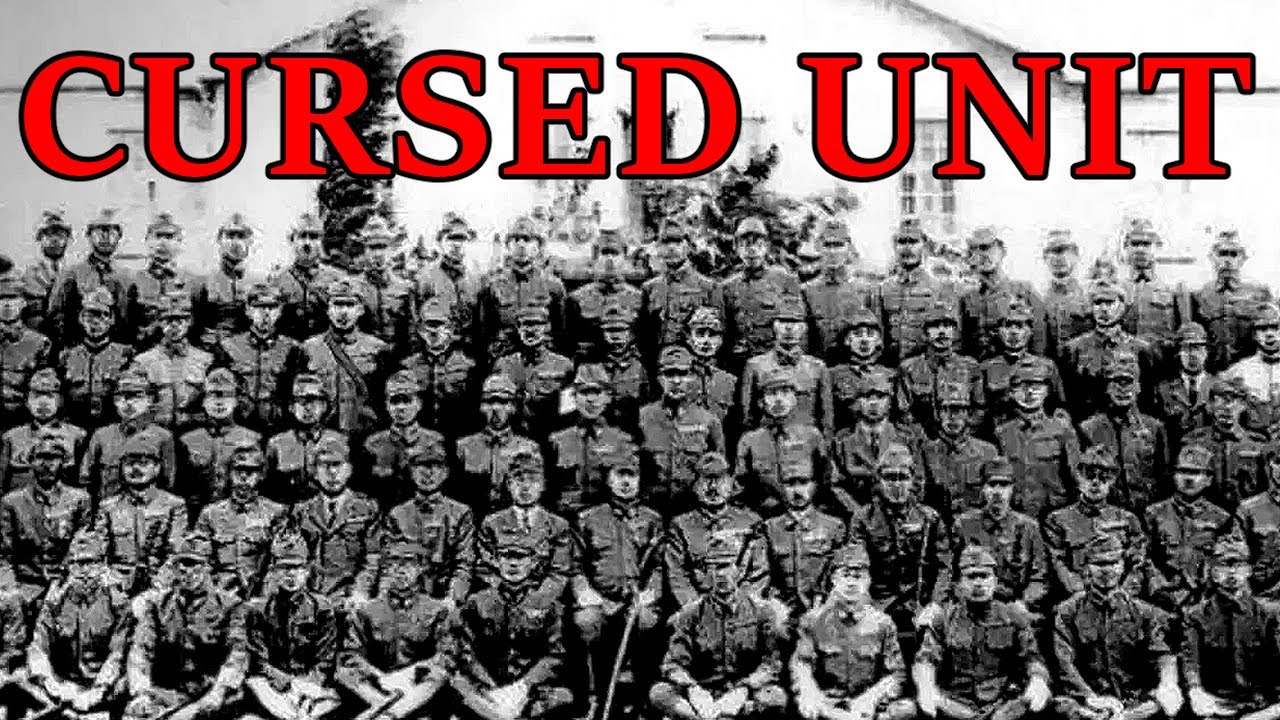
Drift off as we quietly explore the hidden history of Unit 731—the Imperial Japanese Army’s secret wartime program in Manchuria—and the long silence that followed. This calm, non-graphic narration traces its origins, key figures, postwar secrecy, and the lessons we must remember. Perfect for listeners who want thoughtful WW2 history at a gentle, sleep-friendly pace.
Subscribe for more WW2 bedtime histories.
Hey folks, welcome back to Wartime History Stories. I’m a 60-year-old Vietnam vet and a historian, and tonight we’re cracking open one of World War II’s darkest secrets, Unit 731, where doctors became weapons and the sky rained fleas. If you want the stories they tried to burn, hit like, subscribe, and ring that bell. Let’s begin. 1936, Manchukuo. The winter ground around Harbin held the kind of cold that cracks rail ties and puts a bitter taste in the lungs, and yet the trains kept arriving at night with their lamps shuttered, easing onto a spur that had not existed the season before. By dawn, the countryside woke to the sight of scaffolds and cranes walking across the farmland like iron birds. A wall rose first, higher than a farmhouse roofline, and faced with an honest gray that made liars of everything behind it. A gate appeared with a guardhouse like a clenched fist. The posted signs told a simple story that villagers could repeat without worry to anyone who asked. A lumber mill, a water treatment project, a practical miracle for a hard land. Smokestacks pushed neat plumes into the sky, and the roads filled with army trucks that smelled of canvas and dust. The soldiers waved as if to assure the farmers that war was far away, and the men in white coats carried clipboards like priests carry Bibles. If a place looks useful enough, a lie will wear it comfortably. Within those walls, the lumber mill that cut no trees and purified no water took on its true purpose, and a new language of secrecy settled over ping-fong like frost. The war made secrecy a habit long before it became a necessity. In a country remade by the Empire’s engineers, with lines on the map redrawn by the point of a bayonet, questions themselves could look treasonous. People learned to speak around things. The most important facts resided in the space between sentences, in the slight pause before a name, in the long glance toward the rail line that brought in strangers and took no one back out. The gates at ping-fong swallowed columns of prisoners whose faces the villagers did not see, only the shapes beneath tarps, the shuffle of steps, the thud of a rifle butt on a frozen road. Smoke rose again that night, colder, hungrier, as if the fuel were not coal but memory. Inside the compound, a new word traveled from lab bench to barracks to mess hall. Maruta. Logs. The word came with a crooked grin, a cruel magic trick that turned a human being into a thing that could be stacked, counted, and burned. It moved the boundary between medicine and murder with the ease of a pencil line. When a euphemism takes root, it does not simply soften reality. It replaces it. At the center of the complex walked a man who understood how to make power from language and prestige from fear. Surgeon General Shiro Ishii stepped through corridors like the owner of a future only he could see. He was a military physician, an empire loyalist with a microbiologist’s patience and a salesman’s appetite. He told his superiors that a weapon existed which did not need a gun barrel or a bomb rack, a weapon that could ride the wind into a city and make the body itself, its battlefield. Bacteria do not argue. Bacteria obey physics and hunger. He promised a force that could cross borders without asking permission, a force that could not be seen until it was too late to quarantine, a force that would make a division of infantry seem quaint. He wanted not just to cure epidemics, but to manufacture them. In meetings with men who measured victory in maps and tonnage, Ishii offered a new arithmetic, one droplet, one flea, one vial, multiplied until a nation counted its dead in silence. There was a law written already, in careful diplomatic ink, far from the cold of Manchuria. The Geneva Protocol of 1925 spoke in that calm international voice that tries to regulate the unthinkable. It forbade biological weapons. Ishii turned the ban into a mirror, held it up to his patrons and let them see what they wanted. If the civilized world forbids a thing, he said without saying, then surely it is terrible, surely it is decisive. Why would an enemy disallow a weapon that did not frighten him? A prohibition became a proof of concept. The paper meant to contain an evil was recast as a blueprint for exploiting it. In this way, law was not ignored, but inverted, and a doctrine took hold behind the wall that a forbidden instrument used by the righteous would shorten suffering by ending wars quickly. Each violation of conscience wrapped itself in the fabric of necessity until conscience itself went threadbare. Pingfang was not just a lab. It was a closed ecosystem designed to turn a human body into a data point and then into smoke. The assembly line began with capture. Military police and their cousins in the Special Services Agency swept up civilians and prisoners of war, men and women, and sometimes those not yet hardened into adulthood, selected not for guilt. But for health. Quarantine came next in rooms that smelled of carbolic and cold meat. Charts were filled with pulse rates and temperatures as if kindness had suddenly become fashionable, as if the patient’s comfort mattered. Then the needles, the infected flea, the dish of broth clouded with invisible lives. When the data were collected, when the stopwatch had measured fever and organ failure with scientific indifference, the process ended cleanly and without ceremony. Incineration erased names, faces, and mistakes in the same heat. No leaks, no witnesses, no paperwork that was not burned. The only record that mattered was the curve of a graph and the quiet pride of a technician who believed he had controlled life itself to the third decimal place, even as the ash settled like winter dust on the barrels of the guards’ rifles. The compound spread outward in orderly lanes and right angles until it felt like a small city. Animal houses, thrummed with the skitter of rats and the angry rustle of fleas, living instruments trained to carry plague the way a soldier is trained to carry a rifle. Germ factories sat in squat buildings where glass flasks breathed through rubber stoppers and steam lines. Cold rooms held air so sharp it bit a gloved hand, the perfect theater for frost and tissue to argue with one another. Pressure chambers squatted like iron fruits, their gauges blinking at the ceiling while men inside learned what happened when a body met thin air. There were greenhouses for vectors and dark rooms for photographs of lesions, all of it arranged so that the journey from inoculation to measurement to disposal took fewer steps each month as if this were any other industrial efficiency problem. A prison block was built not for the sick but for the healthy, iron beds and clean sheets reserved for those whose vital signs ran true and whose lungs’ ears sounded clear, the living gold standard against which the unit could test its inventions. Recruitment fed this city the way a river feeds a mill. Military police units learned which neighborhoods could be entered without complaints reaching a sympathetic ear. The Special Services Agency wrote memos that never used a human word when a bureaucratic one would do. Lists were made, quotas tallied, and trains adjusted their schedules around the need for healthy bodies at the right time. Doctors supervised the intake with the same precision they would have used in a peacetime hospital, keeping weight steady, correcting anemia, stamping charts with a kind of grim optimism. The goal was not mercy, it was consistency. A subject who died too soon cheated the experiment, and a subject who resisted infection spoiled a data set. The physician’s oath, redrafted and spoken only in the privacy of their own heads, became simple. Maintain life until the day it is needed and never longer. The story told to the staff was framed as defense and hygiene, a language of purity and walls. They were told they were guarding the empire against invisible invasion, keeping soldiers and citizens safe from pathogens that respect no uniform. On the blackboards, the chalk drew tidy outlines of disease control, arrows pointing from source to barrier to clean water. In the lab notebooks, the lines went the other way. Plague was bred as if it were a crop. Cholera was cultured with the same fondness a machinist has for a well-tuned engine. Typhoid became a list of temperatures, a perfect slope on log paper, proof that a living thing could be tamed by routine. Death was measured in the weight of slurry, in the output of incubators, in the time it took a fever to spike and break a heart. The staff learned to talk about phenomena instead of people, endpoints instead of faces. When the numbers were good, somebody smiled. Beyond the wall, the real village continued with the business of survival, which is another name for endurance. Farmers in padded coats watched the trucks roll past with their tarps tied down tight. The rumor mill crossed fields faster than wind, threading through doorways and drifting into teahouses at dusk. Someone’s cousin saw a line of men with shaved heads. Someone else heard a woman scream once and then not again. Old men remembered earlier wars and said that this one was no different except for the smell, because the smoke from the stacks did not taste like coal. There was talk of carbolic that stung the tongue, of ash that fell on cabbage leaves like gray sugar, of guards who walked the perimeter with that bored, dangerous posture men wear when they have nothing to fear. Night trains became a kind of weather. You could not stop them, so you learned to predict them and to plan your sleep around their approach. In time, the village perfected a new skill, the most necessary skill of occupied life. It learned to look away. Looking away kept people alive, but it also kept them silent, and silence makes room for anything. Inside, the rhythm of the place grew smooth, which is to say it grew more frightening. A bell rang for shifts, and the corridors filled with the whisper of canvas shoes. The glassware gleamed under electric light, and the boilers sighed. Clerks copied numbers with a neat hand. Quartermasters tallied supplies with ordinary complaints about delays and shortages, never naming the peculiar cargo that moved alongside the alcohol and gauze. A laboratory complex likes to think of itself as a temple to clarity, but Ping Fong functioned more like a factory with a theology, the theology being that nature could be compelled into any shape if the graph was persuasive enough. The culture of secrecy did not feel sinister to those inside it. It felt professional. A misplaced memo was an offense not because of what it hid, but because it broke the elegance of the system. Scientists accustomed to peer review and argument became artisans of silence, polishing results that no one outside the wall would see. Every system shows you its soul in the way it ends things. The end here was efficient and practiced. Bodies went to the furnace without ceremony, because ceremony would have suggested that something had been lost. It is hard to lose what you have already renamed. The ash was raked and disposed of as if it were a housekeeping duty. Another checkbox on a form printed with a bureaucratic heading that made murder look tidy. The gate logs registered entries and exits with no passenger names, only unit numbers and quantities, and the guards learned that counting was safer than remembering. The furnaces never complained, and when a machine never complains, men will tell themselves that it is the machine, not they, who does the work. Yet even within the system, a few things pricked at the mind like a sliver of ice under a fingernail. A doctor catching his face in a window after a long night might start at the stranger he saw there. A technician might find his hands trembling a little as he held the tray, blaming the cold, blaming fatigue, never blaming the thought that had risen uninvited. In the canteen the talk turned sometimes to family, to the home island, to the old medical school where the questions on exams had answers that did not bleed. Then the bell would ring, or a supervisor would clear his throat, and the talk would slide back into the safe groove of procedure. The walls did not have ears in a literal sense, but they did not need them. Everyone knew the price of asking the wrong question. What began here in winter matured by spring into doctrine and by summer into routine. The wall made the place simple for those outside it. They passed by and wished it would stay put. For those inside it, the wall made everything complicated, and then, with time, too simple again. To build a city for unmentionable work is to build a mirror that only reflects what you bring to it. The ambitious saw opportunity. The afraid saw safety. The cruel saw permission. The obedient saw orders and a paycheck. Ishii saw his name written across a future where enemies fell ill by the tens of thousands while his own flags advanced without firing a shot. The empire saw a tool that could tilt a continent. The rail line saw only more freight. Years later, when people would speak of what happened here, their voices would find the same rhythm the trains had, hesitant and inevitable, and they would reach for the same words. They would say the name of the unit as if it were a curse and a confession both. They would remember the way the smoke hung low on windless evenings and how the dogs in the village sometimes barked for no reason at all. They would remember the soldiers who waved and the doctors who stared and the way the farm road felt longer in the dark. They would say that the place had seemed ordinary and that this had been the most terrifying thing about it. They would say that the lie had been easy to believe because it had come wrapped in order and expertise and progress. They would say that no one spoke of it and they would be telling only a partial truth because the place spoke constantly in the language of routine and the sky above it repeated the message in smoke. This was the beginning, the quiet preface written in frost and steam, a wall, a gate, a sign that told the wrong story, a man with a plan and a country that wanted to believe him. Laboratories arranged like tidy arguments and furnaces that accepted every conclusion. Prisoners renamed into things. Villagers practicing the art of not seeing. The arithmetic of death rendered as production quotas and incubator capacity. The strange comfort of clipboards and clean floors. A city within a secret, a secret within a city. And the name that would be whispered long after the wall fell and the rail line rusted, a name that tastes like metal and ash when spoken aloud. Unit 731. He arrived with a doctor’s gaze and a quartermaster’s appetite. A man who could parse a blood smear and a budget line with equal fluency. Shiro Ishii had learned his craft in Kyoto’s lecture halls where glassware gleamed like liturgical instruments and microscopes revealed worlds that did not care about flags. He carried himself as both curator and evangelist of those hidden worlds. An empire loyalist with a talent for making powerful men believe they were watching the future unwrap itself in his hands. He spoke softly in rooms where boots were loud. He cultivated patrons the way a gardener tends rare trees, pruning and feeding until they grew into a canopy that shaded him from doubt. He had the smile of a man certain the century would belong to the laboratory, and he had a talent more valuable than any petri dish trick. He knew how to make necessity wear the mask of inevitability. He learned early that the language of microbes and the language of generals have one word in common, leverage. Ishii offered a vision of war that did not creak with artillery carriages or stink of cordite. He called it clean, and that adjective did wonders. In his telling there would be fewer ruined factories, fewer bridges dropped into rivers, fewer letters home with black borders. Victory would be negotiated at the cellular level. He would not send shells over a front line. He would send invisible couriers into lungs and wells. He would not annihilate cities with flame. He would make a city feverish and motionless, compel it to bow by making it too weak to stand. In this dream the enemy’s will dissolved quietly like sugar in tea, and in the steam rising from that cup, Ishii sketched a new doctrine. He promised that germs could do the brutal arithmetic of war faster and cheaper than steel could, and he had the charts to prove it. In a military that worshiped efficiency, he sold salvation by spreadsheet. Money follows confidence, and Ishii dispensed that in sterile, carefully measured doses. The Epidemic Prevention and Water Purification Department became both banner and bankroll, an antiseptic title that promised hygiene while underwriting transgression. Budgets in their polite penmanship authorized construction more enduring than any speech. Laboratories multiplied as if by budding in a warm broth. Annexes sprouted from main halls. Cold rooms bred behind thicker doors. A vivarium’s scratching chorus became the metronome of the workday. The staff grew first by handfuls and then by waves, physicians and chemists, orderlies and drivers, clerks who could inventory a conscience without writing the word. In time the headcount reached into the several thousands, and yet the place always felt understaffed, as if the work itself were breeding faster than the workers could catch it. Every new building suggested a new possibility, and every possibility required another building. The complex did not expand, it metastasized. Inside those walls, vocabulary became a technology. Ishii did not invent the disguises that words can wear, but he dressed them expertly. Patients became clinical material. Prisoners became logs. Killing became disinfection. A living body or a glass bottle either could be labeled a unit of study and handled accordingly. The first verb shifted hands from healer to technician. The second shaved a face down to a handle. The third hung the entire enterprise on the hook of public health. Language is an anesthetic when properly administered, and here it flowed through every corridor, numbing wrists and eyes and whatever that part of the chest is that protests at the wrong moment. A clerk writing a requisition for more clinical material was performing a routine office task, not facilitating the next vivisection. Euphemism lifted away the smell and the noise and left a clean table behind. Clean tables invited clean protocols, and it was in protocols that Ishii demonstrated the peculiar genius of the bureaucrat who has ceased to believe in limits. He approved procedures that the medical schools of his youth would have denounced as barbarity, and that his new doctrine praised as clarity. Direct infection, because guessing at transmission is unscientific when one can confirm it with a needle. Vivisection, because organs speak truer when the body is still trying to live. Frostbite trials, because the winter front will not forgive the ignorant. Explosive tests and pressure chambers, because war loves shrapnel and thin air, and science must keep romance with war if it wishes to remain on the payroll. There was no anesthesia, because pain confounds certain measures. There were no recorded survivors, because unfinished experiments carry the risk of testimony. His subordinates understood that the best way to please a visionary is to be more ruthless than his vision requires. In the accounting books, production targets appeared as if disease were not a living thing but a commodity to be moved in bulk. Hundreds of kilograms became the unit of ambition. Plague by the bucket and anthrax by the drum, typhoid and cholera, scaled up until the mind, which prefers the intimacy of a single face, refused to picture the sum. Flea incubators lined walls in orderly ranks, a chittering army bred to travel by bomb and bite. The rooms were warm for the fleas and cold for the ledgers. There were weeks when the colony counts thrilled technicians in the same way a good harvest thrills a farmer, the same way a successful munitions test thrills an engineer. It is a small step from the thrill of mastery to the worship of output, and once that step is taken, the thing mastered becomes valuable for its quantity alone. Delivery systems became a romance of their own, porcelain casings that would shatter just so at the right altitude, releasing insects like dark confetti into a city street. Wheat and rice adulterated with quiet lethal gifts because a hungry person always reaches for food. Aerosolization studies that taught the difference between a harmless fog and a fatal one, wind roses pinned to boards like butterflies to remind pilots how to sow weatherborne ruin. Field efficacy displaced laboratory elegance as the measure that mattered. It was not enough to grow the bacterium like a jewel on a plate. It had to survive the violence of flight and fall and spread, had to persist long enough to finish the arithmetic on the ground. If a bomb failed to burst, if a colony died en route, the red pencil found a culprit and a solution, and another requisition slid across a desk. When the planes flew over Ningbo in the dark hinge of the war, Ishii’s camera rolled. He wanted proof of concept that could fit into a kit bag and ride with him to any meeting. The film recorded the descent of fleas the way any newsreel might record the descent of paratroopers, little black moats sewn into a city like seed. The lens did not capture the fever, the cramps, the stupor, the burials under lime. Film is a poor instrument for suffering unless it is indulgent. But the footage captured the important points for the intended audience, release, drift, landing. Later, in a screening room that smelled of tobacco and polish, he could click the projector on and let the machine translate ambition into moving images. He could freeze a frame with his fingertip and say, here, see, this is the moment the war changes. A private triumph reel is a dangerous possession. It convinces a man that the invisible world is fully under his command. In the margins of Ishii’s reports, where the numbers ended and the handwriting slackened a little, his true calculus appeared. Keep the prisoners well-fed until infection day, because a robust host shows cleaner curves. Hydrate them. Steady their weight. Maintain the illusion of care so that the data are not tarnished by the noise of malnutrition. Observe. Time. Record. When the end points are reached, when the organs have said everything they can say to a man with a notebook, end the life cleanly. Do not complicate disposal. Do not leave the operation of the furnace to an amateur. The conscience, if it wakes and complains, can be dosed with another euphemism and put back to sleep. The handwriting in the margins is always where a man’s voice betrays him. His margins revealed a manager pleased by processes that required no heroism, only discipline. The unit’s internal motto could have been carved above the gate in a language no passerby would understand. Not courage. Not duty. Results. The empire, for all its drums and parades, paid for graphs and not for graves. A grave is a cost center. A graph is an argument. In a meeting room, a grave is a story that someone must tell, and stories have inconvenient edges. A graph draws a clean line that points in a direction a general can sell to a superior who must sell it to a cabinet that must sell it to a nation. Ishii learned to speak in those lines, upward and to the right, always with the promise that tomorrow’s line would be steeper if only today’s requests were approved in full. He learned to compress atrocity into a single figure at the bottom of a page that balanced profit against loss and found a surplus of possibility. It would be comforting to pretend that a single monster brought this all into being to make Ishii a museum exhibit of abnormality under glass. It would also be dishonest. His genius was not wickedness alone, but the ability to arrange ordinary human qualities—ambition, obedience, thrift, pride—into a system that produced wickedness as predictably as steam produces motion. The fundraiser cannot raise without a donor. The planner cannot plan without a ministry. The visionary cannot test without a staff eager to be promoted. The lieutenant sterilizes his conscience with the same bleach he pours on a benchtop—not because he was born cruel, but because the rules rewarded him for staying clean, and the definition of clean had been reversed. Ishii made it easy for good clerks to become efficient villains, and he built them a workplace where their timesheets would always look excellent. There were moments, of course, when the mask slipped, when even the practiced anesthetic of language failed to deaden the thing twisting behind the ribs. A junior researcher watched a subject count breaths to stay calm and found himself counting along. An orderly noticed the way the frost bloomed on skin and could not forget the pattern, though he tried to force it back into the drawer labeled Phenomenon. A driver, warming his hands on an engine block, looked at the snow settling on the compound and imagined it was ash and then suffered an hour of nausea for his imagination’s impertinence. These were private rebellions that never grew into action because rebellion requires a vocabulary, and in ping-pong every useful word had been confiscated and replaced with one that made obedience feel like hygiene. In the end, Ishii built a bureaucracy of plague with the same patient attention a watchmaker gives a movement. Each gear knew only its neighbor. Each spring felt only its own tension. The watch did not know the hour it told. It only knew how to keep excellent time. The marvel to those who studied it later was not that it performed horrors, but that it performed them so consistently as if atrocity were a craft that could be perfected with practice. And perhaps that is the truest indictment. He created not just a program, but a profession, a place where young men and women learn that precision absolves purpose, that tidy graphs redeem dirty hands, that a clean floor can cancel a polluted soul. In this way the architect of Unit 731 built not only walls and laboratories, but a moral climate in which frost itself learned to burn. When he walked the corridors, men straightened without being told. They waved with their chins and dropped their eyes to the figures on their clipboards. Ishii did not need to remind them of the doctrine. It was written in the protocols and the payroll, in the storage rooms stacked with porcelain casings, in the cages that ticked with flea hunger, in the film canisters labeled with the names of Chinese cities, and the date a neighborhood became an experiment. It was written in the order that arrived every morning at the gate, stamped in ink as calm as winter sky. Proceed. And so they did, every day a little more efficiently than the one before, every day a little farther from the medicine they had sworn to practice, and a little deeper into the faith they had chosen to serve. Intake began before dawn, when the frost still made the gravel crackle under boots, and the guard’s breath rose in white threads that tangled with the steam from the kitchens. Trucks arrived from police depots with tarps tied tight, and the kind of silence that means the passengers understand that questions do not travel with them. The guards opened the gates, and the drivers backed into courtyards that smelled of carbolic and smoke. The police delivered their human cargo as if they were crates of glassware, paperwork neat, signatures aligned, the stamp marks as calm as winter sky. The instruction was clear and constant, healthy captives, not the malnourished or the coughing. Chinese civilians and prisoners of war, and alongside them Koreans and Russians and anyone else, the net could draw from the rivers of occupied life. The first room they entered called itself reception. The first hands that touched them wore rubber gloves. Baselines were taken in the language of a hospital that had forgotten its purpose, heart rate, breath sounds, reflexes, eyes and teeth and tongue. This man is sound, that woman strong, this youth perfect. They were screened like lab animals, a comparison that was not an insult inside these walls, but a compliment, because a well -maintained animal can produce reliable data, and reliability is a kind of worship in a place that believes in numbers more than names. The experiment book ran like a railway timetable, with columns that promised an arrival for every departure. It set out what would follow, with a composure that made the procedures feel inevitable. Deliberate infection made a simple line on the page, a needle and a note. A body that had never met plague met it that morning. Syphilis was introduced with the same clinical hand a nurse might use to deliver a vitamin. Cholera came on a spoon, cloudy and innocent -looking as rice water. Typhoid was measured in milliliters that the book never named, only checked. Then began the long watch, the mapping of fever’s geography across organ and nerve, the notebook filling with notations that pretended to be indifferent. When the fever had written enough truth into the tissues, when the pupils told their last honest story, and the pulse either stumbled or ran wild, the book turned its page. Vivisection followed not as an outrage, but as a protocol. There were no speeches before a chest was opened. There was only the soft talk of instruments, the gloved hand steady with a discipline that had forgotten what discipline is for. Organs were weighed and measured, and their textures described the way a botanist might describe leaves in a careful study. In some rooms, amputations were conducted to study what happens when blood tries to cope with sudden absence. Shock was not a moral word, but a measurable phase, and the men and women on the tables were not cast as victims, but as stages of a process. In the cold rooms, the air had an edge you could taste. The frostbite trials began with water, because water is a patient teacher. Limbs were soaked until the skin turned that mottled, sullen color that announces frost’s claim. Then the limbs were held to the open air that bit like iron. Frozen flesh sings a dull, private song when struck, and the technicians learn to listen for it. Sticks tapped and then struck harder, as if sound could be used to calibrate pain into data. The treatment experiments took on a strange courtesy. Warm water baths were timed to the second. Salt rubbed in with a kind of briskness that looks like care until you understand its purpose. The notes recorded the rewarming curve with a devotion that would have been beautiful in any other setting. When tissue blackened beyond recall, the lesson was written down, and the subject entered in the ledger as complete. Those who administered these trials learned to speak of capillary dynamics and of the threshold where flesh becomes ice. They called it learning. History would call it something else. Other rooms simulated the sky. Pressure chambers squatted on concrete pads like iron fruits, and the gauges watched faces press and pale through thick glass. Hypobaric environments stripped air away as a prelude to the high altitudes that war demanded, and as pressure fell, biology confessed its secrets. A human ear reveals a lot about the frailty of compartments, and lungs complain in a language of tightness and tear. The chamber operators kept their eyes on dials because dials tell a story with no tremor in the voice. When the valves were spun the wrong way or the right way too fast, the body answered in ways that could be written down and filed. Explosive tests took place in a cordoned yard where sandbags made a little theater. Shrapnel was persuaded to cut, and then the cuts were studied. Infection layered upon injury, so that the surgeons of tomorrow could be told what they would see in the field. Men and women became lessons in ballistics. In the jargon of the day, this was integration, physics introduced to anatomy, until the two could not be told apart in the autopsy notes. There were protocols for diseases that travel by touch and desire. In the sexually transmitted disease rooms, the light was never kind, and the instructions were never voluntary. Syphilis and gonorrhea were forced into the lives of the chosen so that their journeys could be observed from first lesion to last collapse. Transmission became a map traced on the bodies of the unwilling organ failure, a series of ticks in the key margins that mark the calendar of decay. There were pages devoted to the mother and the child, to what happens when a disease crosses that most intimate frontier, and the pages read like letters from a place where mercy does not speak the language. To the technicians, these were curves and intervals. To the future, they would be exhibits and indictments. If the heart of the place was the experiment book, its arms were the production halls where disease was grown like a cash crop. Defoliation bacilli, the phrase wore its own disguise, sat in racks that rattled when a train passed. The flea rooms throbbed with a living impatience, cages layered like shelves in a library of hunger. Porcelain casings were designed with an artisan’s pride, each calibrated to shatter at the proper height, and stitched the air with insects that fell like dust but bit like knives. The process wrote itself into a mantra that technicians could chant without moving their lips. Design, fill, drop, observe. Rubber suits whispered when the teams walked through mist that could kill, and the clipboards made that papery sigh as they turned a page to note time of onset, time of first fever, time of death. The words were simple because the work was complex enough. Even the air felt counted in those rooms. Output metrics turned the monstrous into the measurable. The monthly goals hung on walls and were recited in the same steady voice one uses to read a weather forecast. Three hundred kilograms of plague, five hundred to seven hundred kilograms of anthrax, eight hundred to nine hundred kilograms of typhoid, one thousand kilograms of cholera. The syllables drifted through the building like the smell of disinfectant. A line on a graph does not flinch. When a target was missed, a meeting was called. A valve was redesigned. A supplier was scolded. When a target was met, a different meeting was called and someone with a pen neatly thickened next month’s line. The technicians did not see themselves as executioners. They saw themselves as reliable producers in a factory whose product happened to be measured in pathogens rather than in wheels or rifles. The pride of a good month did not look different on their faces than it would have in a plant that built farm tools. The uniforms and the feelings fit both places too well. Disposal had a procedure like everything else. The chemicals sat in cabinets with polished handles, potassium cyanide and chloroform. The names that had once lived in textbooks, now doing their work without apology. A vial could promise a quiet exit and a cloth could deliver it. The bodies moved next to the furnaces with the same efficient hush they had met in intake, a closing of the circle that left little trace. The crematoria were fed and tended like loyal machines, and the ashes were raked into bins that the groundsmen carried to the compound’s less-visited corners. There they were buried under soil that grew nothing. The phrase people used to justify the absence of witnesses hardened into a creed, no documented survivors. The only testimony permitted here rose and vanished as smoke. Every system that assumes itself perfect occasionally meets the truth that chaos is a better planner. One night a rumor moved through a barracks faster than sleep. A bolt was found loose, a gate unlatched, or perhaps courage simply overran fear’s defenses. The captives ran for a wall because walls are promises that must be tested. The alarms screamed the way a machine screams when it has been forced to feel. Floodlights carved the courtyard into blinding rectangles, and then a different valve was turned and a different instruction carried out, with the same mechanical certainty that characterized the rest of the workday. Gas crawled into the open space with an invisibility that mocked breath. Men and women stumbled and fell with their hands at their throats, and the guards learned the limits of the rifles they had leaned on too easily. When the air cleared, someone hosed down the stones, the bodies were tallied into anonymity, and the logbooks noted an incident without adjectives. The next morning the schedule ran again on its rails. To call what happened here science is to claim that a graph erases the subject it describes. The staff did call it science. They spoke of controls and variables and the cleanliness of their technique. They boasted carefully and only to one another about their sterile fields and tidy incisions, about the beauty of a data set with few outliers. They knew the Latin names and could say them without tripping. They imagined future conferences that would never happen, lectures delivered to audiences that would never admit to having paid the ticket price for this knowledge. They were craftspeople, proud of a craft grown black and slick. The boilers in the basement knocked their quiet rhythm. The ash outside sifted itself into the small ravines that rain makes. If a visitor had walked those corridors without understanding the language on the doorplates, he might have admired the order and the gleam. But history speaks a different dialect and uses a harsher grammar. It looks back and does not see elegant procedures. It does not hear the purr of well -tuned pumps as a hymn to progress. It listens for the footfalls in the intake hallway and for the silence that swallowed them. It reads the experiment book as one reads a ledger of theft. It watches the frost creep across a forearm under timed supervision and calls it by the only name that fits. It inventories the chemicals in the furnaces and declares the place a crime scene with a boiler room, a murder carried out with the fastidiousness of a laboratory. The rooms remain, or their outlines do, and the air still remembers how to be cold there, and the soil still guards what was given to it, though it will not say how many. The staff once told themselves they were helping to win a war with less blood. What they built instead was a tutorial in how to bury the truth under clean floors and dependable routines. The lesson survives them. Stamped into the margins of history, the way a clerk’s stamp once pressed dates into paper that the fire later tried to teach not to exist. They had practiced the art of infection under glass until the benches gleamed and the graphs looked like corridors pointing forward. But a laboratory is not a battlefield, and a Petri dish does not have a mayor, a market, or a river. The day came when the crates were stenciled not for storage but for flight, when porcelain casings were handled with a gloved reverence usually reserved for holy things, and sacks of grain were lifted with more care than a wounded soldier. The methods that had matured in Ping Fong’s quiet rooms were packed like any other munitions and driven out past the last fence. The world beyond the wall would be the new incubator. Bacteria rode in porcelain wombs designed to shatter at a particular height. Fleas, tutored in hunger, waited under lids that would soon become fragments in a city street. The innocuous joined the lethal. Food was salted with disease, clothing seeded with invisible ruin, candy sweetened with a lesson no child should be made to learn. The engineers made delivery devices that behaved like weather. A sift of dust, a sprinkle of sweets, a drift of powder meant to settle into the seams of ordinary life and transform it. In the Kaimeng Jie district of Lingbo, on a morning that smelled of water and commerce, the sky learned a new trick. October the 27th, 1940. The aircraft came low enough to cast definite shadows and high enough to deny certainty. People looked up, as people always do when engines speak overhead, and then looked down because the air itself seemed to be snowing. But what fell did not melt. The flecks struck roofs and courtyards with the tiny sounds of seed against tile. The porcelain casings broke where they were told to break, and a cloud of fleas carried their cargo into the spine of the city. At first there was only puzzlement. The odd child’s laughter at catching a black speck between finger and thumb, the absent -minded brush of a shopkeeper’s sleeve. By dusk there were the first fevers, the first swellings in the groin and the armpit, the first mothers who could not cool a child no matter how faithfully they dipped the cloth. Panic moves faster than any organism and the authorities answered with fire because flame is the oldest medicine. An entire district was burned to cauterize the unseen wound. Lime dusted the alleys like pale snow that arrived too late. Later, when the numbers were raked together by men determined to count and to remember, the dead would be given a figure that sits heavy in the mouth, 1554. But in the days when the smoke still rose, people did not say numbers. They said names, and then they said nothing. The doctrine demanded another trial and then another, because a scientist who does not repeat his work is a storyteller and Ping Fong claimed to despise stories. Changde learned the doctrine in the year that followed. 1941 was already starving for mercy by the time the program arrived with its new arithmetic. Cholera and plague stepped out of their containers and into wells and kitchens with a confidence that looked like inevitability. Rivers carried error as faithfully as truth, and the city drank and sickened in the same week. The thing that came back to the airfield in the pilots’ voices was not just triumph but surprise because blowback does not ask for a passport. Even the uniforms that had ordered the test began to die of it. A doctrine that had seemed clean on the blackboard acquired the human stain of an unintended funeral. The casualty lists swelled into the thousands, a plural that carries a cold pride for planners and a permanent ache for everyone else. The lesson written into the margins of the report was simple enough to be obvious. Germs are not arrows, they are tides. The sorties multiplied. Schedules were drawn with a confidence that the weather would keep its promises, that wind would obey a map, that roads would carry teams where data waited like ripe fruit. The years between 1940 and 1943 became a ledger of cities. At least 11 Chinese cities received this new kind of visit, and more than a dozen large field trials taught the technicians which delivery method deserved to be called reliable. Aerial spraying declared itself superior to bombs, because a gasping throat was a quieter victory than a crater, and because mist could drift unremarked past any checkpoint. Porcelain shells retained their place where alleys were narrow and roofs close, but the sprayers wrote their elegance across whole neighborhoods in a single pass. An aircraft could lay a veil of biology over a town as casually as frost, and then turn home to coffee and a debriefing while the veil went to work. On the ground, the field teams moved like a secular priesthood. They came with clipboards and thermometers, with vials and clocks, with rubber boots that squeaked on wet stone. They recorded incubation times with a devotion that would have seemed pious if the god they served were not logistics. They graphed fatality curves as if they were tracing the arc of a shell. The clean parabolic promise of physics applied to flesh. They tallied rainfall and sunlight and wind direction with the greedy care of men who suspect that the sky itself is trying to teach them how to do their work better. The phrase that crept into the briefings carried with it the chilly pride of a new discipline. Operational biology, they called it, as if war had written admission papers for bacteria and the organisms had shown up ready to drill and salute. A doctrine grew like mold, and in the fluorescence of the war room maps, the speckles of infection looked like a general’s pins. The numbers that would be argued over later were already indistinct as they were written. War corrupts the senses. Records burn easily, and grief does not demand exactness to be sincere. Post-war inquiries would disagree because all honest reconstructions disagree about the middle distance, but even the most conservative counts, the ones that refused rumor and distrusted memory, were forced to speak plainly. Hundreds of thousands dead under the combined press of plague and cholera and typhoid. It is a scale that makes the mouth clumsy. One might as well try to describe an ocean with the cup in one’s hand. What the numbers could not hold, the towns remembered. The haste with which wells were covered, the way a street looks when the healthy have locked themselves inside, the rummage of soldiers in a marketplace throwing sacks of grain into fire while women cried because hunger is not theoretical. Power answered as power does. In Nanjing and Chongqing and the provisional offices where the war wore a civilian face, investigators were sent out with notebooks and armbands to walk the scorched districts and ask the questions no one was ready to answer. Chiang Kai-shek dispatched men in November of that year to gather testimony and assign blame with the solemn speed of officials who know the world is watching. They came back with anecdotes that smelled of truth and reports that sounded like the minutes of a flood. Across the water, in capitals where a different language organized the news each morning, it took until the middle years of the war for warnings to be sounded in public. By the time Allied leaders spoke clearly in 1943 about the danger that drifted on the wind, there were villages in Zhejiang and Hunan and farther afield where the smoke had already cooled and the ground already refused to say how many it had swallowed. Public words travel slower than private sickness. Ambition, once fed, rarely consents to a smaller bowl. The planners tested the limits of distance as cheerfully as they had tested the limits of method. The program’s gaze lifted from river towns and brick alleys and looked across water toward cities that had only ever known disease as accident. The plan acquired a name that sounded like poetry written in sleep, Cherry Blossoms at Night. In reality, it asked submarines to carry aircraft across an ocean and release them close enough to home that no harbor patrol would raise a fuss before the mission had been done. Fleas do not care about flags and porcelain shatters under any sky. San Diego, Los Angeles, San Francisco became lines on a speculative map pinned to a wall where the coffee always smelled strong. The end of the war kept the plan in its file and the file in a drawer and the drawer in a cabinet that would outlive some of the men who dreamed it. But the fact of the plan is enough to describe the appetite that produced it. Continents could be infected. The limiting factor was never technique. It was will, and will is most dangerous when it thinks of itself as prudent. Back at Pingfong, the new data arrived with the same pride that once attended a successful harvest. Crate lids were pried up and film canisters passed hand to hand into the rooms where a projector could turn arithmetic into motion. There was a ritual to it now. Screens unrolled. Chairs were dragged into tidy rows. The room darkened to a familiar gloom, and the machine cast its rattle onto the walls. Here is the release. Here is the drift. Here is the landing. Here, in this clip, a woman pauses at a well before lifting the bucket, and those who had never seen the city felt for an instant that they stood beside her. Then the frame changed, and the lesson resumed, and the feeling evaporated, because a doctrine does not make room for interruptions. Field logs were copied onto graphs, and graphs were pinned to boards, and boards were carried into meetings where the conclusion had already begun sharpening its teeth. A bomb that did not burst properly was redesigned. A sprayer that clogged learned new manners under a technician’s scowl. The next flight was scheduled with better wind and a more obedient forecast. There were, as always, small mutinies that never left a face. A pilot stared at the sea for a minute too long after landing, and thought of the way the fog had hugged the coastline while he worked. A medical sergeant in a field team stared at his hands and found them trembling, blaming the cold, then the coffee, then nothing at all. A scientist frowned at a curve that refused to sit exactly where expected and found, to his disgust that he did not want to repeat the test because he already knew what he would learn. But the machine does not ask its parts for opinions. It asks only for motion, and motion there was. The pallets rolled in and out. The orders went down the line and came back up as compliance. The schedules were met. The rewards were tallied and disbursed. The ash was raked. The fences held. When the program looked at its work, it saw not cities but data points, not wells but vector pathways, not mothers but hosts. The map in the briefing room bore little flags that meant nothing to the people who lived under them and everything to the men who moved them. The names of Ningbo and Changde sounded smaller when spoken over coffee and cigarettes than they did when shouted in a market where the cry was for water. The vocabulary that had numbed Ping Fong’s corridors to their own echo spread outward and softened the edges of towns that had been solid for centuries, clinical material, defoliation bacilli, reliability, words that made courage unnecessary and pity irrelevant. In every test, a lesson returned home glowing with the heat of fresh discovery. Mist behaves better than shards. Wind can be taught to be an ally if you speak to it in the language of altitude and humidity. Porcelain is beautiful even when it has no right to be. The body will always be the last to know what has been done to it. The staff wrote these lessons down with a care that would have been admirable if the topic had been wheat yields or shipping timetables. Their carefulness made the moral failure worse, not better, because it proved that the mind can be precise even when the soul has chosen to be lazy. So the flights continued until the calendar itself intervened, until the engines that had once growled over Chinese roofs ran out of time and fuel and luck. In the space left by silence, grief learned again how to say its own name. Men with shovels and women with jars of lime wrote the history that would not fit into the field notebooks. The war would end and trials would be convened and files opened and denied, but none of that belonged to the years when the sky rained fleas and children learned to look at clouds with suspicion. What belongs to those years is the simple rhythm of cause and effect, stamped as surely as a wheel track in dust. From lab to landscape, from design to delivery, from hand to air to breath, from promise to fever to fire, and then the familiar journey back across the fields to the gates at Pingfong, where a truck slid into its bay and a drawer accepted new charts and a pencil sharpened to take the next set of notes. The wall at Pingfong pretended to be a horizon, as if all of this began and ended with the gates under its watch. But roads do not respect pretenses. They carry doctrine like freight, and that doctrine found mirrors far from Harbin where new roofs wore the same dust and the same secrecy. There was Unit 100, a cousin with a veterinarian smile, barns converted into laboratories where hooves and hides excused the breeding of vectors and the rehearsal of contagion. In Nanjing the name A.1644 folded itself neatly into a facade of civic hygiene. A building that smelled of hospital soap became a school for misfortune. Farther south in Guangzhou 8604 surfaced later, like the ribs of a ship when the tide drops, proof that this was not a singularity, but a constellation. Pingfong was only the brightest star. They were held beneath the same bureaucratic umbrella, the same antiseptic ministry that promised epidemic prevention and water purification while authorizing a kind of arithmetic that dirtied both words beyond repair. From above these complexes looked like any other government campus, their angles honest, their roofs sober. The truth lived indoors where light bulbs buzzed and notebooks learned to lie by omission. The network allowed itself the luxury of denial even as it multiplied. For years those who tried to map its spread were told they had mistaken shadows for structures, rumor for architecture. Then cabinets gave up their paper and the old lacquer of secrecy cracked under new fingers. In the mid-years of the third decade of the new century, when archivists learned to pry without apology, boxes opened that had been labeled with harmless titles. What tumbled out widened the map until the pins on the wall began to look like a rash, a pattern emerged that no longer depended on testimony alone. Purchase orders spoke in the language of logistics, not conscience. Memo lines recorded movements of equipment that had no peacetime purpose. Photographs taken by men who had thought they were only documenting work turned into affidavits of a culture. By the time the dust settled on the reading room tables, the story that had been minimized as a rumor of one cursed unit had become a documented network, each node connected by shared vocabulary and identical habits of concealment. Inside Ping Fong itself, the headcount crept from dozens to hundreds and then climbed again until a small town could have been populated with a staff alone. Roughly three thousand passed through its payroll and its mess halls, a thoroughfare of uniforms and white coats that blurred the line between soldier and scientist. The prison at the center kept capacity in the steady, brutal hundreds, a number that smoothed the jagged edge of dread into a statistic. Turnover there followed a rule simple enough to fit on a single piece of paper and sinister enough to color every piece of paper that followed. No documented survivors. The phrase set the tempo for procurement and experiment alike. Clerks updated rosters as if they were rotating stock, and the doctors learned to think of health not as a reprieve but as a ticket to the next protocol. The yard between intake and the furnace became a short geography where mercy had no place to stand. Factories have pride in their output. Ping Fong learned that pride and taught it to its satellites. In long humming halls, flea incubators stretched in neat ranks toward Vanishing Point, four thousand and more in a living chorus of hunger, a chittering industry wrapped in wire and gauze, glassware sweated on steam tables, and the word mass began to appear casually in laboratory chatter where once only delicacy had ruled. Plague bacilli were grown not as curiosities but as crops. Vats fed and watched as if they were anxious livestock. The porcelain bodies of bio-bombs were packed with a care that would have pleased any munitions inspector, weighed and stacked and stenciled, their fragility an asset since shattering was their last and perfect obedience. A production chart pinned to a wall carried targets that might have been mistaken for the quotas of a textile mill if one had ignored the nouns. None of this happens without a river of things. The supply chain ran wide and sure, its surface smooth, its depths opaque. Animals arrived in crates with air holes punched like a cruel kind of polka dot, destined to be fodder for fleas or surrogates for human reactions until the human body could take its place. Culture media came in drums, syrupy clarity that promised reliable colonies by the thousands, a sweet food for a bitter industry. Protective gear stacked up in storerooms, rubber suits whispering as they slid from hooks, goggles waiting to narrow a gaze until the details looked like control instead of complicity. Fuel for the crematoria was tallied with the unremarkable efficiency of any plant that must turn waste into disappearance. What began as hospitals, with all the tender associations that word should require, converted themselves into factories because war will teach any building new manners if the budget is persuasive enough. The men who signed requisitions did not have to change their signatures, only their definitions. Care became throughput. Healing became hygiene. Hygiene became a euphemism for erasure. Daylight adored the paperwork. The documentation culture was a triumph of neatness. Lab notes were written in hands that would have pleased a schoolmaster, the lines straight, the letters clean, the margins disciplined. Protocols were cross-referenced and paginated. Sample logs marched in columns that would have made an accountant smile. The more immaculate the record, the easier it became to insist that this was science. Then dusk fell and another practice began that was as regular as any scheduled test. Steel drums rolled on their rims to the lee of a wall. Somebody with a stiff brush and a stick stirred a fire until its appetite was keen. Bundles of paper that had existed only to sanctify the day’s labor were fed to the orange mouth until the evidence turned into a heat that could not testify. The men who burned the documents were often the same who had written them. They did not feel divided. Both acts serve the same outcome, and allegiance to outcome is the purest definition of method in a place where ethics has been renovated into efficiency. Recruits arrived green, their collars too stiff, their conversations still full of the old words and the institution set about softening and reshaping them. Training was a grammar lesson in unlearning. The vocabulary was a catechism. Repeat after me. Clinical material. Disinfection. Logs. Once the words took, the world blurred in the right places. The human being on the table receded into a unit of study. The results advanced to the front of the mind with a confidence that made protest feel like an error in calculation. Evaluations rewarded those who turned procedures into choreography. The numbers measured time saved, waste reduced, contamination avoided. No one charted compassion. In a year, the apprentice could complete a protocol blindfolded, and often it looked as though that had become the preferred posture. If you can dehumanize with nouns, you can also blind with numbers, and the brightest students learned to see only the figures that guaranteed advancement. The logic that ruled the lab was too pleased with itself to stay indoors. It spilled into tactics that treated every village like an annex of a bench. Food contamination trials wore the disguise of charity. Sacks handed out at markets, a smiling hand placing a scoop of rice in a bowl and making a note of an address. Reservoir seeding turned lakes and wells into vast petri dishes, their surfaces quiet, their depths busy. Agricultural infection experiments walked the fields at night, fingers brushing the heads of grain a touch light as dust that would teach whole counties to fear breakfast, to starve, and to sicken. Became twin doors to the same room where a population knelt of its own accord. The men in rubber boots called it operational testing. They compared notes like weathermen, pleased by the accuracy of their predictions. The methods learned under glass took to roads like veterans who had memorized the distance between a barracks and a battlefield. On the walls of planning rooms, civilian landscapes became diagrams beautiful enough to be mistaken for art by a stranger who did not read their legend. Wind roses opened like flowers in careful circles, petals labeled with directions and the frequency of breath. Rainfall tables taught the seasonality of death with numbers that fell softly across gridded pages. Rat migration patterns were traced in fine pencil. Alleys and canals and rooftops turned into highways for teeth and flea, an atlas of appetite. In the margins, someone would note the grandmother who washed rice at the door with a bucket that caught rain, the child who liked to share sweets with his sister on the steps. Not because these were tender scenes, but because tenderness itself had become a vector. Every act of ordinary living was translated into a pathway. The home that last redoubt against war was redrawn as a cluster of potentialities and handed to a pilot like a target map. From offices in Tokyo where budgets were argued in tea and ink, down through depots where men in peaked caps signed manifests without reading the nouns too closely, along rails where gray cars clicked and sighed, onto roads where canvas flapped and dust rose, the pipeline ran. It delivered not bandages and broth, but inevitabilities. An allocation approved on a winter morning became by springtime a change in the taste of water in a village in Zhejiang. Somewhere between the ash of a cigarette and the raised hand that ended a meeting, a decision accustomed to the polite distance of policy learned how to enter a human mouth. The men along the pipeline became experts in conversion. They could translate a shipment weight into a probable outbreak. They could predict funerals from a weather report. They could feel the exact angle at which a wind would become an accomplice. The only thing they could not convert, because no one asked them to try, was money back into mercy. The machine behind the horror did not look monstrous at rest. It looked like order. It looked like competence. It wore clipboards and safety goggles and the relief of a shift ending on time. It fed itself with requisitions and excreted ash. It trained its people well enough that they did not have to think, and that was the point. The sin was not only in the single decision, though there were many, but in the arrangement that made cruelty indistinguishable from maintenance. Ping-fong stood as a symbol because symbols are convenient. They give the mind a place to stare, but once your eyes adjust, you see the other places, the cousins, the satellites, the borrowed barns and municipal buildings, the inoffensive roofs under which the same vocabulary took shape day after day. You see a country that learned how to make sickness travel like mail, addressed not to a person but to a population. When the numbers were good, men smiled the way men always smile when a plan works. When the numbers were bad, a meeting was called and a valve redesigned, a subroutine improved, a new safeguard imagined not against suffering but against failure. In the evening, the fires in the drums warmed hands that had spent the day writing, and the papers turned to heat that could not be subpoenaed. In the morning, the gates opened and a truck arrived, and someone ticked a box with a pencil that had been sharpened for the occasion. If you were standing on the hill outside the wall and watching, it might have seemed like any other government day. That is how a machine earns its perfection, by making itself look ordinary. From the budgets sealed with polite bows in the capital, to the bucket lowered into a quiet well in a province that had already learned to expect bad luck, the pipeline did its work. It delivered calculated epidemics packaged as logistics, and for a while the world mistook their silence for mercy. August in Manchuria carried a brittle light that year, a brightness that made every edge look newly sharpened. The Soviet offensive came like a weather front that does not ask the mountains for permission. Tanks moved with the sloped patience of avalanche, and railheads that had once fed Pingfang’s routines suddenly inverted their purpose and began to carry fear toward the gates rather than away from them. Inside the wall, the old choreography faltered. Clipboards lost their poise. Aides with steady hands discovered a tremor they had never met before. Orders came down wrapped in the kind of authority that leaves no room for interpretation. Destroy what can speak. Burn what can be read. Erase what can remember. The logic that had built the place into a closed ecosystem now instructed it to become its own predator. Men carried cans of fuel like liturgies and sprinkled their contents along corridors where the paint remembered too much. Laboratories that had glowed with electric confidence burst into orange confession. Glassware gave its delicate scream as it failed, an aria of fracture that sounded almost relieved. Records went into flames with the same precision that had once organized them by date and author and result, pages lifting like startled birds and then collapsing into embers that would testify only to heat. In the cells, silence ended. The remaining prisoners understood faster than the guards what the new procedures meant, and their recognition entered the air as a sound the compound had never allowed itself to hear. Some were shot where they stood because bullets answer questions quickly. Others were introduced to chemicals that had been ordered for different purposes. The furnace doors accepted their last, most terrible assignment without complaint. The gates that had learned to open and close to a schedule shook as demolition charges found their rhythm, buildings folding in on themselves like exhausted animals. By the time the column of soot began to wander up into the august sky, ping -pong had succeeded at one final experiment. It had attempted to eliminate its own memory. The war ended in a hurry and then lingered, as wars do, in places not patrolled by treaties. In the first winter, after victory banners were folded away, a different kind of courtroom cleared its throat in a far northeastern city, and the Khabarovsk proceedings began. 1949 is a date that sounds tidy from a distance, but inside the chamber the testimony moved with the same uncomfortable gait as truth pulled from a locked room. Defendants, in carefully pressed uniforms, faces composed into the neutrality bureaucrats wear, when the meeting agenda has turned against them, spoke of fleas by the crate and porcelain casings that shattered into epidemics. They described human subjects as if they were cousins to lab mice, clinical material with the of a pulse. Airdrops became lectures in method. Infection curves were recited as if the mathematics could argue for lenience. The sentences that followed were measured in years that fit into two hands, punishments that ranged from two to twenty-five, a span that felt to some like insult, and to others like the only justice that could be proven on paper. In capitals farther west, the response arrived wrapped in the correct vocabulary of skepticism. The trials were denounced as theater, their details dismissed as a politics of accusation dressed up in the clothes of law. The Cold War had already begun to reassign loyalties and invent necessities, and a courtroom convened by yesterday’s ally became today’s suspect stage. Reporters filed sober paragraphs about propaganda, and editors chose their adjectives with the kind of care that knows it is choosing geography as well. It would take decades for historians to cut through the sediment of habit and concede that the testimony, however inconvenient its origin, carried the weight of the real. The delay did not make the facts less true, it made the silence thicker. Elsewhere, a grand tribunal unfurled in Tokyo, a pageant of jurisprudence whose architecture promised to tally up the war like columns of figures on a ledger until the balance sheet of guilt and accountability closed neatly at the bottom. If you scan those proceedings for the subject that burned in ping-fang, you will find only passing gestures, references thin as smoke. When the talk threatened to harden into detail, when a witness seemed prepared to say more than the room wanted to hold, the notes retreated into that cool phrase beloved by men who wish a question would go away. Insufficient evidence. A theater of law is a strange place to learn about absence. Sometimes what is missing tells you more than what is present. Behind doors that did not squeak, new bargains were drafted in a language that called itself pragmatic and wore that name like a medal. Occupation officials from the United States listened to whispers and then to arguments about the value of knowledge, even when the knowledge had been extracted with knives and cold and a contempt for vows. A currency of immunity was minted in exchange for exclusive access to data and specimens, and the distilled experience of a place that had pretended to be a lumber mill, the architects of the program would be spared the theater of a courtroom. Files that should have learned how to walk into daylight were instead taught how to sleep in drawers stamped with classification markings that allowed only the correct eyes to read them. The leaders of Unit 731 avoided prosecution not because the facts were unclear, but because the facts were useful. Utility, when it is dressed in uniform, learns to call itself wisdom. Shiro Ishii, who had walked his corridors with the satisfied stride of a man whose hypotheses keep obliging him, receded into the ordinary world with all the subtlety of ink drying on a page. He faded the way men do when the state decides that memory is inconvenient. Civilian life is an excellent camouflage if you know how to wear it, and he did. He died in the late 1950s without ever hearing a judge pronounce his name in a tone that carried both answer and sentence. The victims’ names, which had been reduced to a vocabulary of euphemisms while they were alive, remained smoke in the Manchurian wind after their deaths, barely syllables and only rarely letters on stone. The empire that had promised to purify water left behind a stain that could not be washed out because no one in charge admitted that the fabric itself had been ruined. For years afterward, silence performed its old magic. Survivors learned the economy of breath, saying just enough to keep a memory warm and no more, because the world seemed unconvinced that their suffering belonged in its stories. Staff who had carried clipboards learned how to carry groceries and children and lived with the suspicion that a sentence might one day be spoken, which would make them a name in a book they did not want to appear in. Bystanders who had watched the smoke recognize itself learned to nod along when conversations turned to other subjects. The culture of looking away that had protected people during occupation lingered as a habit even when the need had passed. It takes time for mouths to relearn a word as simple as plague when saying it may summon a ghost. Time, rude and patient, did its work on the human furniture of memory. In late life, the calculus changes. Perpetrators who had never imagined giving testimony discovered that the dusk hour brings with it a new tone to the mind’s monologue. A few spoke in interviews that were sometimes anonymous and sometimes filmed. Voices cracked not always by conscience but at least by age. Local archives that had survived war by hiding in damp cupboards and under floorboards began to surface. A ledger here, a requisition there, a photograph whose edges had curled into petals, revealing a room that could be matched to a map if you knew which wall had faced north. Citizen historians did the kind of slow work that professional institutions had avoided because slowness is not glamorous and because glamour prefers parades to ledgers. Stories that had once been dismissed as rumor learned to stand upright with the help of paper. Within Japan, the debates found familiar trenches. Textbooks, those modest bricks in the wall of a nation’s self-portrait, became small battlefields. A paragraph trimmed here, a passive voice inserted there, a picture caption softened until it no longer made the stomach tighten. Lawsuits were filed by people who understood that law can be a megaphone even when it is not a cure. Citizen groups convened exhibitions where the photographs of buildings that no longer existed were pinned alongside the testimony of men and women who had decided at last to edit their own memories into shareable shape. Apology became a word that swelled and collapsed with news cycles, a balloon that thrilled some and terrified others because it seemed to suggest a debt that could never be retired. In committee rooms where budgets are carved out of arguments, officials weighed the cost of candor against the price of pretending. It is a peculiar arithmetic because either sum will be heavy. Declassification moved like a thaw that arrives unevenly. Papers were unsealed in one country and remained stubbornly closed in another. Yet by the middle years of the third decade of this century enough had surfaced that the picture sharpened beyond the silhouette of a single unit. The culpability map widened and the pattern of subunits once dismissed as rumor learned to print itself clearly on the page. The archives did not bring comfort. They brought clarity, which is a harder gift. It became impossible for the honest to pretend that the crimes had been the peculiar fever of one laboratory alone. The disease had been systemic, distributed through a bureaucracy that had made room for moral failure as if it were another line item in a sensible budget. In all of this runs a simple tincture that discolors every glass you pour it into. The Cold War chose utility over justice. It is both the explanation and the indictment, the excuse and the confession. Policy makers did not wake in the morning and decide to be villains. They woke and decided to be useful, and then they taught themselves to call that usefulness a virtue that excused the bargain they made with men who had turned hospitals into factories and science into a method for neat erasure. The bill for that bargain does not arrive stamped with urgency. It takes its time. It arrives in classrooms where the paragraph is still missing. It arrives in the face of a daughter who asks her grandmother why the well-tasted strange that year. It arrives in a museum where a glass case holds a porcelain casing that will never shatter again. It arrives in the knowledge that the graph that once convinced a general now accuses an error. The collapse of the program was not accompanied by the collapse of its consequences. Those go on, the way echoes do in a valley that seems empty, until you say the right word. The cover-up wrote its own curriculum in the minds of those who practiced it and those who accepted it. The bargains made by men in well-pressed uniforms folded into the fabric of the alliances that followed. History keeps such accounts open until someone has the courage to write, paid in full beneath a line that can never be balanced. In the meantime, the wind in Manchuria is still sharp in August, and somewhere south of the old wall a farmer lowers a bucket into a well that has long since learned how to be innocent again. The rope creaks the way it always has, the water comes up cold, and the names that should have been carved to stone drift like breath on a winter morning, visible for a moment and then gone, unless we are rude enough to keep saying them. The museum rises from flattened ground like a careful correction, a building that refuses grandeur, because grandeur would lie about what happened here. On the ruins at Pingfong, where walls once swallowed sound and smoke rehearsed its own weather, glass now stands where bricks stood, and captions try to do what captions rarely can, tell the truth without turning it into a spectacle. Some rooms are narrow, forcing the shoulders in and the breath up, a belated humility built into the walk. In one case, a row of cages sits in a light that forgives nothing, each bar still the same dull gray that ignores the eyes looking at it. Instruments lie on white felt like fossils, scalpels and forceps, gauges and timers, implements that could be innocent anywhere else, made guilty here by context alone. Maps of bomb drops spread across a wall in a grid of pins and strings, rivers and rooftops drawn in the patient ink of cartographers who could not have imagined what their art would be used to argue. Everything is arranged to reveal the architecture of a crime without asking the visitor to perform horror as entertainment. The curators have learned the right distance at last, not so close that the gaze turns into stare, not so far that the past can pretend to be someone else’s problem. Memorial plaques lean against brick that remembers more than it wants to say. They speak softly where the laboratories once shouted. The carving is precise, each stroke of the chisel a slow admission that names must be offered even when some will remain missing forever. In spots the stone is crowded with nothing more than the word unknown, repeated until the word itself seems to grieve its inadequacy. A scatter of ash rests beneath the ground like a rumor that refuses to fade. The soil holds the unmarked not as a secret but as an indictment. Visitors pause in the courtyards where steam once rose from the pipes that fed the furnaces, and they listen for a sound that will never be recorded. The strange music of a place learning to be quiet after years of practiced noise. The silence is not empty. It is full of what could not be saved. In classrooms far from Manchuria, Bioethics opens its casebook and teaches the double standard with an even voice that does not accuse because accusation is not its method. Students learn to say Nuremberg with the appropriate gravity, to diagram a chain of command, to map the way law tried to heal a world by naming what had been done inside camps and clinics that wore their cruelty openly. Then the lesson pivots as a hinge admits light into a dark room, and the topic becomes laboratory work in Asia, where strategic value corrupted justice so neatly that the crime dressed itself as a contribution to knowledge and was invited inside. The questions the professor asks are simple and therefore hard. What does it mean that one set of perpetrators faced a courtroom while another signed agreements in offices where the coffee was good? What does it mean that data accepted into files can be described as priceless without acknowledging the cost at which it was purchased? Young faces practice the art of keeping their features still while their minds rearrange the furniture. At the end of the hour, the lesson remains on the desk like a weight that refuses to be lifted. International law tightens its belt after catastrophe, the way a household tightens after a winter of too many hungry nights. Post-war treaties and conventions gather around the table and speak in the measured language of rules that are not promises but fences. The new documents point back to what happened here without saying the name, the way a finger points at a scar and the mouth says only, not again. The regulations draw lines across the sky and water. They declare that germs will not travel in porcelain born for shattering, that no soldier will be trained to sprinkle rice with a different kind of salt. The ink dries in retroactive shame. In the margins, scholars write that law usually catches up after the fact and then tries to run ahead. The running matters but the shame remains. For years, the only sound that reached outside these walls was the hiss of air over a quiet field. But silence is a muscle and it tires. Oral histories begin to drip from stubborn mouths like thaw from a roof in late winter. Former unit members, some of them aged into a soft-tongued gentleness that makes their stories more unsettling, describe what they still call training. They talk about sterilizing benches and timing reactions, about the right way to hold a thermometer and the wrong way to clean a cage. The words they avoid are as loud as the ones they speak. Cadets confess the parts of their nights where sleep left and ghosts arrived, not always as repentance but as a kind of practical admission that memory keeps books even when you burn the pages. The interviews sometimes hide faces, sometimes blur them, but the voices cannot be blurred and their timbre turns testimony into geography again. The past rearranges itself in the listener’s ear and becomes a room you can walk through. In Chinese cities that were told to forget, remembering has become a civic practice. Ningbo observes a day that tastes of lime and wood smoke. Changde lays out exhibits made of civic patience, police logs that recorded panic in careful characters, the residue of emergency public health orders written by men who were not poets but sounded like poets when they tried to make fear interpret itself. Archives that survived war by being hidden under beds or smuggled in rice sacks grow into rooms with hours and docents. Burned districts turn into lessons. Students walk through neighborhoods whose names are steady in the mouth and their teachers trace a finger along alleys and roofs and wells. The schools do not perform tragedy. They bear it the way a shoulder bears a load that is not yet finished moving. Historians step onto this ground with their own tools and begin to map the death math on paper that crinkles under the wrist. They learn the grammar of production capacity and drop patterns, moisture curves and wind roses, a lexicon of weather tables and incubation intervals that turns the monstrous into a set of numbers legible and therefore indictable. In their hands, bureaucracy reveals itself not as a neutral mechanism but as a personality, impatient, tidy, enamored with graphs, credulous of its own efficiency. They remind us in prose that we’ll not be hurried, that murder became routine because routine is easier to disguise than rage. They revive the sentences that planners used to describe what they thought of as elegant solutions. They refuse to let those sentences stand alone. Each is paired with a place and a person until the reader cannot pretend not to see the line that runs between a desk in a ministry and a bucket lowered into a village well. Death math is not an exercise. It is a calendar of extinguished days. Journalists and scholars travel in from Japan, from China, from the West, and the lines of their separate maps begin to overlap the way rivers do when they meet at a confluence and learn to behave like one body of water. The consensus that arrives is not glamorous, which is another way of saying it might be true. The crimes were systemic, not rogue. The architecture of wrongdoing was not the inspiration of one fevered mind but the quiet construction of policies that respected schedules more than lives. Reporters write pieces that smell of archives and train stations and long interviews in rooms where tea grew cold. Historians publish books where footnotes walk patiently beside the sentences like guides who know the dangerous shortcuts and refuse them. Together they build a story no single country owns and no single country can dismiss. The museum at Pingfeng ends in a room that does not offer cleverness, only questions. The final panel asks what every documentary must learn to ask without flinching. What do we owe the uncounted? The data were traded, the lives were not. It is a sentence whose balance will never add up, a ledger line that will not close however carefully the numbers are arranged. Some visitors answer with the vow that they will remember the vocabulary as a warning. Others answer with the vow that they will teach their children what a euphemism can do to a human face. A few leave with the uneasy knowledge that remembrance alone will not satisfy the bill, that something more like vigilance is required and vigilance is by definition unending and therefore heavy. Outside the wind crosses the plain as it always has, cheerful in summer, knife-edged in winter, indifferent in the good way nature is allowed to be. Over Harbin the cold remembers even when people try not to. In the village that once practiced the art of looking away, people no longer look away, not as a habit. They look at the museum and then at each other and then at the river which continues to carry whatever it is given. The last line belongs to the air here, to the kind of sky that is honest about how much it can hold. No one spoke of it, people used to say, a sentence that justified survival and excused neglect. Now the cold answers, thin and steady, that it has kept the story in its pockets all along and that whenever a human voice is willing to be rude enough to ask, the wind will give the story back, each time with the same frost at the edges and the same plea in the center. Do not let the next place that calls itself a laboratory teach us this lesson again.
Comments are closed.