
What should you actually be doing in your garden in July?
This video covers 5 scientifically proven July gardening tasks that will transform your yields — including how to stop blossom end rot (BER), why spooning your onions makes them grow bigger, and how fruit thinning boosts quality. We’ll also look at why staking and trellising in July is essential, and how extreme heat affects your pollinators and pollination rates.
Whether you’re growing tomatoes, squash, onions, or peppers — these mid-season tips are grounded in peer-reviewed horticultural research and real-life field-tested advice.
📚 Includes references from:
• Frontiers in Plant Science
• Scientia Horticulturae
• Ecology Letters
• Horticultural Science & Technology
Don’t guess — garden with confidence. Subscribe for science-based gardening that actually works.
Helped Design A Plant Sensor! Grab one of these here is the link: https://earthone.io/?ref=GARDENINGINCANADA
For a Discount code: GARDENINGCANADA
👩🔬 G R A B A P L A N N E R
Paperback 2024 Garden Planner:
https://geni.us/1Q7xaE
📝 S T A Y I N T O U C H
Website/Blog & FREE printables: https://gardeningincanada.net
Instagram: www.instagram.com/gardeningincanada
➡️ A F F I L I A T E S
Westcoast Seeds Affiliate Link: https://bit.ly/33mGGaI
Seeds Now: https://www.seedsnow.com/?rfsn=6354409.1f000b
🎉 S O C I A L S
👩🔬PATREON: https://www.patreon.com/gardeningincanada
INSTAGRAM https://www.instagram.com/gardeningincanada
FACEBOOK: https://www.facebook.com/GardenInCanada/
👩🏻🦰 A B O U T M E:
Ashley has had a passion for plants since she was a small child. In the long summers as a child, she would garden alongside her grandmother and it was then that she realized her love for greenery. With years of great studying, Ashley had begun her post-secondary education at the University of Saskatchewan.
At first, her second love, animals, was the career path she chose but while doing her undergrad she realized that her education would take her elsewhere. And with that, four years later she graduated from the University of Saskatchewan with a bachelor’s degree in science and a major in Soil Science.
Some of Ashley’s interests are YouTube, in which she posts informative videos about plants and gardening. The focus of Ashley’s YouTube channel is to bring science to gardening in a way that is informative but also helpful to others learning to garden. She also talks about the importance of having your own garden and the joys of gardening indoors. Ashley continues to study plants in her free time and hopes to expand her YouTube channel as well as her reach to up-and-coming gardeners.
Disclaimer
This description or comments section may contain links to affiliate websites. I receive a commission for any purchases made by you on the affiliate website using such a link. This includes the gardening in Canada website. You should assume all links both on the gardening in Canada YouTube, Blog, and all other social media are affiliates and I will receive compensation.
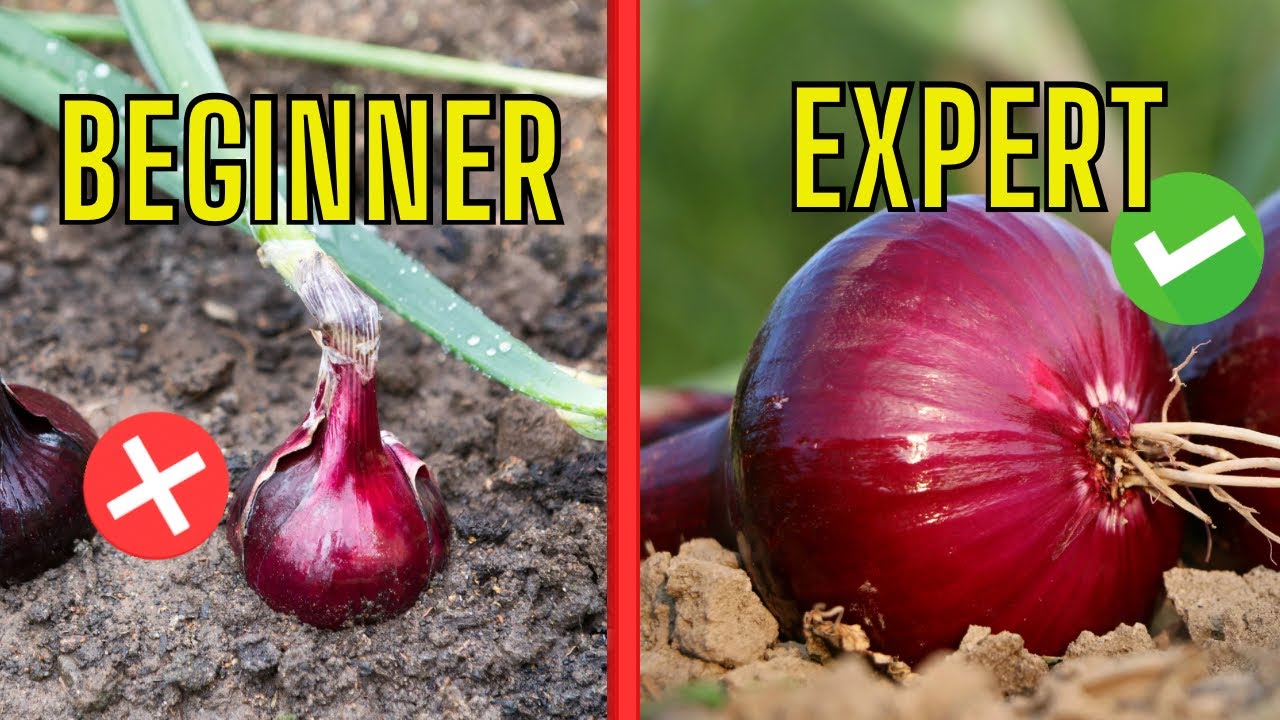
July is peak summer vibes. However, it also is the time when things can go completely sideways. So, today’s video, I’m going to give you five expert tips that are completely sciencebacked by peerreview papers on how to avoid issues way before they strike. And these are issues that are heavily detrimental. We’re talking blossom and rot, itsybitsy garlic or onion, disease, you name it. So, let’s get into it. If you don’t know who I am, my name is Ashley and I have 15 years experience in the world of agriculture and a bachelor’s of science in soil science. And with that being said, I like to take said science and apply it to the garden in a fun way because it’s just gardening. I don’t take it that seriously, but I’m a nerd, so there’s that. So, if you do enjoy more science-based gardening content, plant science, soil science world, then be sure to hit that subscribe button. I always forget to ask you guys to do this, but it helps enormously if you click that subscribe button. And to say thank you for hitting that subscribe button, here is a very cute video of my dog Kane being cute as always. Okay, number one is actually spooning your onions. That’s right, folks. Get into your garden and play big spoon, not little spoon, because they’re the little spoon. They’re the one that needs to be cared for in this case. Joking aside, spooning is exactly what it sounds like. It is literally going into the onion’s habitat, removing any weeds around said onion, and then actually digging down until you hit the bulb. We are looking for a bulb that is a little smaller than a looney 25 centish size. And if that bulb is at that size, what you want to do is you want to clear away the soil around said bulb. Now, this doesn’t have to be particularly sophisticated. It can be with your finger. It can obviously be with a spoon itself. I personally enjoy fingering them. Um, and so all you want to do is remove some of that soil away, which is going to remove some of the pressure. There’s a study done in 2022 that not only relieving the pressure on the bulb, but exposing the bulb to air and the sunlight resulted in 18 to 20% larger bulbs. The key with that study was simply to remove the pressure and the soil away from the bulb, but not to dig down to the roots. So, you only want to go about halfway down the bulb. And that is it. We don’t want to hit those roots, cuz that would be bad if we did that. This next one is more of a reminder than anything, and that is to trellis or stake depending on what you desire or what you enjoy. Now the reason for this is because in 2020 there was a study done by agriculture and natural resources that showed the actual process of giving plants such as peppers, tomatoes, cucumbers, squash physical structure andor support resulted in 15 to 20% higher yields. The reason for this actually came down to a few factors, but first off, it obviously is not going to snap if it’s properly supported. Secondly, you can then prune accordingly and make sure that there’s enough air flow, which reduces disease, as well as it gives you a better opportunity to visually see if there is any pest or disease on the plants. That one sounds basic, and that’s because it is. It is mostly a reminder to do it because it’s been pouring rain here non-stop and lots of tornadoes shockingly enough. And uh so these bad boys were not trellised for a very long time. And you can it shows. It shows. That’s all I have to say. It shows. Next one is actually having a continual source of water. So for my tomato bed specifically, I have a dripper system. But this continual source of water doesn’t apply to just tomatoes. It applies to peppers, cucumbers, your flowers, you name it. If the plant does not have regular consistent watering or access to a continual water supply, you will end up with flower drop. Your flowers will just simply pop off as though they were never there and or you’ll end up with burr, aka blossom and rot. The reason for this is because in 2019 a meta analysis was done and it showed that a plant that did not have access to continual water sources actually had a failure in transport of calcium. And this failure in transport of calcium is what resulted in the blossom nrot. Now I’ve done a whole video on blossom nrot to determine if it’s a calcium issue or if it’s something else. So go check that out if you are unsure. But I would say 99.99% of the time it is going to be lack of water. And so having something like this, which is super easy to do, I have a video on it. Trust me, if I can do it, you can do it. And I mean that wholeheartedly because I am not good at this sort of stuff at all. And just to kind of really drive home the importance of this, that 2019 meta analysis published in Frontiers actually showed that even 3 days of drought conditions. 3 days meaning just 3 days with slightly restricted water resulted in a failure in the calcium transport mechanisms. Meaning it does not take much for these guys to suffer blossom and rot with the absence of water. And it’s raining again. I haven’t been able to film in like literal freaking weeks. I’m not even like I’m not over exaggerating. Um because I have a full-time job. So when it’s not raining during the day, I’m working. Uh so I am so low on content it’s not even funny. Okay, this next one is definitely an expert tip and one I struggle with enormously and that is selective removal of fruits and flowers. Now here’s the thing. Eggplants, tomatoes, cucumbers can and will overproduce their flowers. This overproduction is because they expect to lose flowers. Now, in a controlled environment like the garden where we’re trellising and watering nicely and fertilizing, the loss of flowers isn’t really a thing. And so, this by all means great adaptation for the wild is not the greatest when they’re domesticated. and therefore it can result in smaller, less tasty fruit. Now, this means that you need to be picky on which tomatoes or plants make it through. And I know this is this is hard. This is so hard to do, but here’s the thing. 2015, a meta analysis was done specific to tomatoes, and it did show a 20 to 35% increase in the tomato volume that was produced. And it also drastically dropped the potential for burr which is blossom and rot again. So it’s a tough one. I struggle with it. I personally cannot do it to save my life. But it’s something to consider. And the time when I am able to do it and it doesn’t stress me out is actually when we’re at the end of the season towards the end of August, I will top and then remove any flowers that don’t seem to be doing much. And that does help. It does help and it helps get what is on the plant through and producing properly. And it’s really starting to rain. Okay, so this next one is another odd one that I’ve never really heard mentioned on the internet, and that is heat stress causing a decrease in pollinators. Now, this decrease in pollinators, particularly in the warm months of July, is not a good thing. It’s actually a very bad thing because that is when a majority of stuff is flowering. So whether it’s an enclosed flower like a tomato that requires mechanical manipulation of a bumblebee buzzing around it or if it’s a squash where we actually need the the physical pollinator to move from flower to flower to flower to plant to plant to plant. If the temperature gets above that 30° C mark, pollinators slow down drastically. And this was actually shown in a paper in 2019 published in ecology letters. Now, to further amplify the stress on these poor buggers is that when the temperature gets above that mark, once again, tomatoes and squash actually fail to germinate or produce pollen. So, that is another big problem. So, the way to counteract the reduction in pollen formation and the reduction in pollinators hanging out, there are a couple things you can do. Number one is going to be shade cloth. This is relatively easy to stall install in theory, but if you don’t have like any sort of structure, it can be a little bit difficult. So, you may need to just consider a piece of cardboard or a way to kind of just shade it this way rather than over top. And that will help enormously. The other thing is actually shallow dishes of water. And there’s very specific feeders, I guess you could say, for bumblebees. And this will help encourage them because there’s a water source nearby and so that can be helpful. This is important. It’ll produce cacti. Cacti is it? That is all. So, like I said, take these expert tips to your garden and watch how these little small adjustments can make a major impact on your yields. Geek Crew, what are your absolute must dos in July? I would love to hear what they are. And I will talk to you guys next time. Bye.
43 Comments
GICs what is your pro tip that you believe has made a big difference in your garden setup?
Barely had any bees here in winnipeg. Yes i have shade cloth
I personally like to moan endlessly about the constant rain, the heat and the humidity. I find that makes my zucchinis grow extra large and prolifically.
The 2015 study on removing tomato flowers. I heard you say it showed an increase in fruit size right? but what about overall fruit produced by mass?
Do your onions cry when you spoon or finger them? My grapes whine when I give them a squeeze.
Two questions from this gardening newbie:
1. Does an olla provide appropriate watering to avoid blossom end rot? I lost some San Marzano style tomatoes to end rot, and I am looking for a more reliable approach. I switched to one of those water bottle drip spike things for my SM tomatoes, and they seem to be doing better. I also added some calcium and potassium, so I can't rule out the impact of those variables.
2. Does spooning help root crops other than onions? I only hear about it with onions, but what about leeks, garlic, beets, carrots, potatoes, …? I would guess that it doesn't help with most root crops, but maybe for other allium crops?
i am also in saskatchewan, considering its summer you would think that my problems would be keeping the plants watered…. but its been raining so much that the actual problem i am having is my plants are getting to much water, especially in the garden where the soil really holds that water. The raised beds and the containers love it though, even if it makes it hard to apply fertilizer
If you have a fruit tree it is really important to thin both blossoms and fruits, this gives you better quality fruit but it also prevents your trees from having boom bust cycles. if you just let them grow every fruit it can stress the tree so that the following year the tree produces significantly fewer fruits and fruits of a lower quality resulting in a bust cycle.
So hard, so hard to do! That sounds just like me
What I do in July? Harvest, harvest and harvest
QUESTION When planting onion sets (small bulbs) How deep should they be planted. I'm not sure I planted mine at the right depth. I planted them about 2 – 3 times the size/length of said bulbs deep, similar to my garlic. I have some onions that are really thick, strong and haven't started to flop yet. While others are quite thin and flopping over. I am REALLY babying 2 of my red onion plants that are very thick, tall, sturdy and healthy. Both I have let keep their flower stalks? So that I hopefully can get viable seed from them to germinate and plant, in stead of planting sets next year. Should I go ahead and spoon those 2 onions as well??? I'm more interested in good seed than the onions themself. They haven't started to split into flowers yet but have big flower bulbs that you can see through the "paper thin" membrane that they have a lot of flower buds in them…
Getting from what I can see, a fairly good harvest of garlic. Some I have harvested already, due to them showing that they have/had more than 5 yellowing leaves. No spots or other signs of stress, just looking like they want to come out of the ground and are actually larger and have a good garlic flavor compared to store bought garlic… I removed all the scapes nearly a month ago, which made my son very happy since I gave him all of them. Around 100 garlic scapes. He has frozen nearly all of them in portion bags for stir fry etc… I love scapes too but, am currently going through issues with my teeth, or lack thereof and can't chew… yeah, to much information… 😂😂
The 3 tomato plants I have… I've just let grow. Staked them, pruned the lower branches and some up the plant stems to create air flow but, haven't removed any "shoots", can't remember the name for the little greens that grow between the actual stem/branch/whatever… They are all determinant plants, I keep them watered, since I do have them in large fabric grow bags. Other than that, I'm leaving them alone. They have a good amount of flowers and also some small green tomatoes. Reason I'm not doing anything more with them, is that I've gone all in previous years trying to grow tomatoes and never got anything other than lots of green hard balls… So, I decided to just leave these alone and see if they'll do better if I don't mess with them…
Thank you.
I really appreciate you.
2:22 I learned something new
since 2020 I dont trust the "experts" anymore
As I'm watching the video I'm super tired, but fingering the onions made me laugh.
Well.. I guess I'm doing well. I've heard of, and implement all those in some degree in my garden. … Not so much this year. It has been a tough year, and I've not even planted as much as I normally do.
Would the spooning also help with garlic?
Thank you! I’m gonna go spoon some onions 😂
Spooning also for garlic?
I will try your onion tip. But i have a question. Most of my onions cannot support themselves upright. They kind of just lie over the soil, even though they are still making bulbs. What would cause this? Any ideas?
Very Helpful Tips! Thanks again 🥄
I just want to say to everyone. Thank you for all your support for Ashley, and then again we share ideas.
So here's my idea. If you grow turnips, please understand that when you peel and dice them to your preferable size. After you boil them, remember this is just before they are ready. 1 level teaspoon of baking soda. The water will bubble up large. This is the final trick to make them non bitter. Throw them in to a calendar and rinse off with hot water not cold, hot water, that way you don't lose the heat. Smothering with butter and there you go. Hillbilly delights, I got them in my yard. And garden.
WNC. AMEN.
What am I doing in July… same as since March… watering. Unofficially in drought, but it’s looking likely they will announce it officially soon in the U.K.
Somethin eating my beets soon as tops grow up munch munch
Hey girlfriend!! What's up with Masterblend Kickstarter? Looks 'blue' like that orher stuff… but it has 'the name'. 🙉
what does it mean "supply a continuous source of water"? Making sure the tomatoes are watered daily, somehow? Or making sure that a drop of water is supplied to tomatoe roots every second or minute or whatever? Please, be so kind and explain better this expression "continuous source of water". Thank you.
I really like your vids.
Onions—I never had to ‘spoon’ onions, but Just yesterday I had a new red variety and I couldn’t see it bulbing and thought, what the heck? Are they bolting? I then dug down and was pleasantly surprised that Indeed there was a bulb! Hurray!
Biggest difference is irrigation and shade cloth. Going forward it will be spacing plants farther apart because of this increased humidity/dew point. The weather is increasingly getting worse. Magnetic north has been quite active, but there are other factors also.
And take notes of what varieties are holding up well.
Love the tips! Im having a helluva time figuring everything out in Cape Breton. I moved here from half way between S'toon and Clavet and the seasons are so different here. Onions are the one thing I've never had success with.
I know I subscribed to your channel, however it appears I got unsubscribed along the way. How does that happen?
Regarding onions, I don't think I'll need to spoon them. They're already a good size, with about the top quarter or third of each onion growing above ground. I didn't plant them very deep to begin with, and kept them fairly moist using a soaker hose.
Ever since I started using a deep tray that I keep full of water for my container tomatoes once they are moderately established has been such a game changer. Daft punk growth, 0 blossom end rot, no splitting. Just big strong tomatoes.
How do you manage onion neck bend dormancy? I have started using 2 layers of horizontal netting on my onion beds so they cannot be blown over, this has been a massive game changer, I also top dressed the onions with over an inch of 18 day chicken compost which is also doing some outstanding things. The remaining straw bits are providing mulch and the overall very light/loose texture of it is kind of dealing with the spooning for me. The roots are below the compost layer but the bulbs are largely in or above that layer and because its so buttery soft I'm seeing VERY promising bulbing already. I am also curious if the high phosporous content of the chicken compost is assisting in this as well. Have ww seen any comparison studies done on onion size and N vs P vs K vs S application?
Totally off topic but I hate the motion activated light. It is so bright in your videos when it turns on.
8:00 pollinators. You need bee hotels and shade cloth.
All this water has pushed my Alliums to bolt.
Where are the links to the articles you referenced. Thanks
I wondered about my onions being too deep being a detriment. I will do that tomorrow. I try to source my info so I LOVE that you do!!
Subscribe or you might miss a video! I have learned so many tips.
Calcium not being mobile makes ABSOLUTE sense when irrigation events are not regimented. THANK YOU!!!
Funny whenver i see blossom end rot I add dolamite and it goes away just not a water issue.
When you finger onions, do they make you cry?
I followed your onion info in early spring . Have my biggest onions ever. My husband built a weeping bed for my tomato plants. Best constantly moist garden I had.
I wonder if spooning would increase garlic bulb size too