
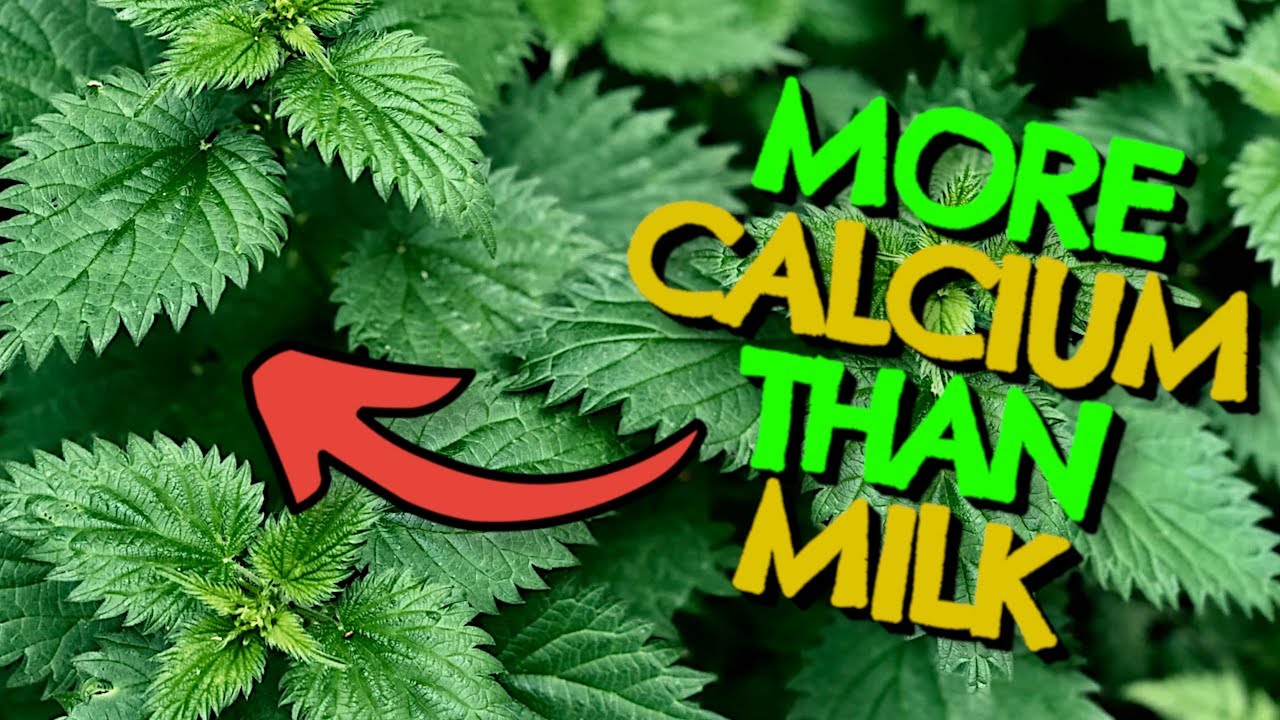
Stop believing the dairy industry’s marketing! The mineral that truly builds strong bones isn’t in a plastic jug—it’s growing free right outside your door. 🌱
In this video, we uncover the truth behind the “Got Milk?” campaign, a marketing tactic disguised as public health advice, and introduce 7 wild edible weeds richer in calcium than dairy milk. These nutrient-packed wild greens are perfect for vegans, vegetarians, and plant-based eaters who want to get their calcium, magnesium, and vitamins straight from nature.
You’ll learn how to identify, forage, and cook stinging nettle, mallow, lambsquarters, dandelion, amaranth, plantain, and shepherd’s purse, all abundant, free, and thriving in yards, parks, and wild corners of your town. These plants provide everything from bone-strengthening minerals and plant-based protein to liver-supporting compounds and gut-friendly mucilage—all without planting a thing.
🌿 In this video, you’ll discover:
🌱 Why the “Four Food Groups” were shaped more by lobbying and marketing than science
🌱 Which common wild weeds surpass spinach, kale, and other greens in nutrition
🌱 How to harvest stinging nettle safely without getting stung
🌱 How to use these wild greens as 1:1 substitutes in your favorite recipes
🌱 The difference between Vitamin D2 and D3, and how to get enough if you don’t drink dairy
🌱 How wild plants like mallow, lambsquarters, dandelion, amaranth, plantain, and shepherd’s purse can supercharge meals with minerals, protein, and flavor
Whether you’re foraging for wild greens, exploring your backyard, or learning about edible weeds, this video is your guide to supercharging your diet with free, nutrient-rich plants.
My Socials:
🌿 Substack: edibleamerica.substack.com
🌿 Ko-fi: ko-fi.com/edibleamerica
🌿 Bluesky: bsky.app/profile/edibleamerica.bsky.social
🌿 TikTok: tiktok.com/@edibleamerica
Don’t forget to subscribe and hit the bell so you never miss a wild edible adventure.
Got weeds? And as always… eat the weeds. 🌿
#WildEdibles #ForagingTips #VeganCalcium #PlantBasedNutrition #StingingNettle #DandelionGreens #EdibleWeeds #WildPlantsForHealth #Superfoods #GotMilkMyth #Lambsquarters #MallowGreens #Amaranth #Plantain #ShepherdsPurse #CalciumRichGreens #WildFoodForaging #HealthyEating #PlantBasedDiet #BoneHealth
⚠️ Disclaimer: The content provided on Edible America is for informational and educational purposes only. Always positively identify any wild plant before consuming it, as some edible plants have toxic lookalikes. When in doubt, consult a local expert or reliable field guide.
The host(s) of this channel are not responsible for any adverse effects or consequences resulting from the use or misuse of the information presented. Foraging laws and regulations vary by location—please forage responsibly, ethically, and legally.
You’ve probably heard it your entire life —
“Milk builds strong bones.” Or, “Milk — it does the body good.” Those messages have been pushed for generations, but they really took off in the ‘90s… right
alongside that smug little slogan: “Got Milk?” But, calcium, that mineral that builds
strong bones, doesn’t come from cows. It comes from dirt.
It comes from plants. Cows just kinda… repackage it for us. And the richest sources of it aren’t hiding in supermarket aisles —
they’re growing wild, right beneath your feet. The same weeds we pull from our gardens, mow over, or curse are packed with the minerals that keep
our bones strong and our hearts beating steady. Today, we’re meeting seven wild plants
that are richer in calcium than dairy. No plastic jug required. And if you like your food
a little on the wild side, I hope you’ll consider subscribing to the channel. You might feel this one before you see it. Hopefully not — because the sting
of fresh nettles is unforgettable. But behind that sting is one of the most
nutrient-dense plants on the planet. Nettles are loaded with calcium — nearly
four times as much as milk — plus magnesium, iron, potassium, and even a good
amount of plant-based protein, roughly twice as much as spinach.
Sadly for Popeye, it never came in cans. And, once you blanch, steam, sauté, or dry
them, that sting disappears, leaving behind a flavor that’s rich and earthy — kind of
like a cross between spinach and green tea. I like them wilted into soups.But, you
can use them anywhere you’d use greens, including smoothies (just make
sure to blanch them first). Let’s talk about that “Got
Milk?” slogan real quick. It wasn’t a public health announcement
— it was a marketing campaign, pushed by the dairy industry to sell more milk. The campaign was created in 1993 by the
ad agency Goodby Silverstein & Partners for the California Milk Processor Board,
and later adopted nationally by the Milk Processor “Education” Program — funded
by, you guessed it, the dairy industry. Of course, it was dressed up to look
like a public health initiative. But the goal was simple: get
people to buy more dairy. And because it mostly targeted kids
and teens, it worked — brilliantly. It helped create a generation
of adults who thought milk wouldn’t just build strong bones… it
might even make you cool. Or sexy. And while milk does have calcium, it’s
not the only — or even the best — source. As we’ll see, some of the richest calcium
sources are growing wild, right under our feet. I’ve got mallow growing right off my back steps,
and it’s one of my favorite easy greens to cook with — no sting involved. In fact, the
leaves are soft and tender to the touch. It’s packed with calcium — about twice as
much as milk — plus magnesium, potassium, and vitamin A. That’s not just good for bones; it’s good for everything from bones
to muscles, nerves, and vision. Mallow leaves are soft and mild, which makes them
perfect for scrambling into eggs or folding into an omelet. They add a creamy texture and a subtle,
earthy flavor that’s surprisingly versatile. You can also sauté or steam
them just like spinach. They make an excellent thickener for soups and
stews, thanks to their gut-friendly mucilage. If you want to learn more about that, check out the video in the card
or in the comment section below. You’ll find lambsquarters just about
anywhere soil gets disturbed — gardens, fence lines… mine grows right off my back
deck. And it’s one of my favorite wild greens. People call it “wild spinach” for a good reason. It’s in the same family, tastes almost identical, and in many ways — in almost all
ways — it’s even better for you. Lambsquarters is rich in calcium — around two and a half times more than “moo juice” — as
well as iron, magnesium, and potassium. And, it also packs more vitamin
A and protein than spinach. It’s a remarkably complete green, with a
soft texture that cooks down beautifully . It tastes great raw when the
leaves are young and tender, but it really shines lightly steamed
or sautéed with a bit of oil and salt. Literally any recipe that calls
for spinach will be supercharged by substituting lambsquarters.
It’s a true 1:1 replacement. Lambsquarters is literally a superfood.
It just never got a marketing team. Shepherd’s purse is a small, unassuming
plant that pops up almost everywhere. Don’t let its size fool you — it’s packed
with calcium, about twice the amount as milk, plus iron, potassium, and vitamin C, making it
an excellent addition to a nutrient-rich diet. The young leaves have a mild, slightly peppery flavor, and the tiny seed
pods are edible too, with a mustardy kick. That’s because it’s part of the mustard family —
which also means once it pops up, it’s prolific. You can toss the leaves into salads, sauté them with other greens, or stir
them into soups for a mineral boost. Shepherd’s purse is easy to harvest, grows in almost any soil, and
keeps coming back year after year. Amaranth might not sound impressive
at first — most people just call it pigweed. That name doesn’t do it justice. It
hides how truly wonderful these plants are. There are actually several species all lumped
together as “pigweed,” and they’re all edible, nutrient-dense, and thriving wherever soil gets a
little disturbed. Spinach is in the same family, as is lambsquarters, so you
know you’re in good company. Amaranth isn’t a modern supergreen. The Aztecs
and Mayans relied on it as a staple crop. They used both the leaves and seeds for food,
medicine, and even for ceremonial purposes. It was a foundational plant in their
diets, packed with protein and minerals, and helped sustain entire civilizations
long before supermarket greens existed. It was their primary source of calcium —
there were no cows in pre-Columbian America, and no one was milking animals. Which, when you
think about it, is kind of a weird thing to do. Amaranth leaves are packed with calcium —
almost twice as much as dairy milk — along with magnesium, iron, and a good amount of protein.
They’re tender when young, hold up well in cooking, and have a mild, earthy flavor that works
in almost any recipe calling for a leafy green. Like lambsquarters, if you don’t know how
to cook it, just substitute it for spinach. So, remember the “Four Food
Groups” you were taught in school? They might not have been as
wholesome as you remember. The inclusion of dairy and meat as core groups
in federal dietary guidelines — which influenced school lunches and health classes — was
heavily supported by industry lobbying. For example, the National Dairy
Council — essentially a marketing team — lobbied to promote milk
as essential for strong bones. The resulting guidelines were presented as
“scientific,” and taught in schools until 1991, but they served more to encourage long-term consumption of certain products
than to reflect real nutrition. Dandelions aren’t just a those yellow flowers
that turn up in your lawn no matter how often you mow — they’re a powerhouse
of nutrients, especially calcium. Fresh dandelion greens have over one and
a half times as much calcium as milk. They also bring magnesium, iron, potassium, and vitamins A and K to the table, making
them an all-around bone-boosting green. The leaves are tender when young and
slightly more bitter as they mature. That bitterness is part of
their charm — it makes them excellent for digestion and liver
support, a function milk can’t do. You can eat them raw in salads
if you like a little bite, or sauté them lightly with garlic
and oil to mellow the flavor. They also add a nutrient-rich punch
to soups, stews, or grain bowls. And don’t forget the roots. Dandelion roots
are rich in minerals, prebiotic fiber, and compounds that support liver and gut health.
You can roast them for a coffee-like drink, simmer them in teas, or add small pieces to stews. Dandelions are abundant, easy to
harvest, and incredibly forgiving. They grow almost anywhere, and unlike some
greens, they keep coming back year after year. Plantain is one of those wild greens
that often sneaks under your radar, but it’s a real nutrient powerhouse. There are three common species
in North America — broadleaf, narrowleaf, and buckhorn —
and all of them are edible. Plantain leaves are packed with
calcium — not quite as much as milk, but close — plus magnesium,
potassium, and vitamins A, C, and K. They’re excellent for supporting
bones, circulation, and overall health. The young leaves are tender and mild, perfect
for salads or lightly sautéed like spinach. Older leaves are tougher but still
useful — chop them into soups or stews, or even dry and powder them
as a mineral-rich seasoning. Plantain is also known for its soothing compounds. Crushed leaves can be applied
to minor cuts, bites, or stings, and internally, they support gut health
and digestion. Let’s see milk do that. It grows almost anywhere —
lawns, roadsides, gardens, even in this crack in my driveway — and
it’s virtually impossible to eradicate. Like most of the wild greens we’re talking about,
it’s abundant, free, and ready whenever you are. There are several reasons someone might want
to find calcium in things other than milk. Maybe you’re vegan or vegetarian.
Maybe you don’t digest dairy well. Or maybe you just want your
nutrients straight from the plants that actually make them —
instead of the cow that ate them. Not to mention cows are an inefficient
way to extract nutrients from dirt. The good news is, the world is full of
calcium-rich wild greens — abundant, free, and thriving right under your feet. From stinging nettles and lambsquarters
to mallow, amaranth, dandelion, plantain, and shepherd’s purse, these plants bring
minerals, protein, and flavor to your meals. They’re easy to cook, easy to forage,
and often more nutrient-dense than the foods we’ve been told are essential.
And the best part? You don’t have to plant a thing — they’re already there, waiting for you
to notice. And once you do, they’re everywhere. A quick note about vitamin D: it
helps your body absorb calcium, which is why milk is often fortified
with it. There are two main forms — D2, from plants and fortified foods, and
D3, which your skin makes from sunlight. D3 tends to be more effective, and vegan
D3 from lichen is now easy to find. If you don’t drink dairy, your best
sources are sunlight, of course, UV-exposed mushrooms, including
those grown outdoors, fatty fish, like salmon and sardines, and fortified
plant-based milks like almond milk. So get out there, explore your yard, your
neighborhood, or the wild corners of your town, and let these plants show you
what real nutrition looks like. If you love discovering the wild, nutrient-packed plants hiding around
you, consider subscribing to the channel. And remember, every like and share
helps someone eat just a little better. Hit the bell so you never
miss a wild edible adventure, and if you want to support the work, check out
my Substack or Ko-fi links in the description. So, Got weeds? And as always, eat the weeds.
35 Comments
YUM mallow in my green drinks, soups, stews and beans.
What is Common Mallow? Plant Identification, Benefits & Recipes for This Wild Edible Weed – https://youtu.be/wuaopFxpZ_k?si=ifUJkeqpd6Ar-t19
Lambsquarters: The Wild Green Better Than Kale and Spinach You Should Be Foraging – https://youtu.be/yKzK8AxYr60?si=HqAzNr2Cw_us-v0E
I love food independence.
Wow really
Thank you for your video. This is all good to know because one day, America's economy is going to fail. Food will be rare and scarce. We, the po folks are going to forage for wild food while the rich the powerful and oligarchs & billionaires will have all the food they want. We, the peasants will have it very hard. That's why these videos are so very helpful.
I eat raw weeds regularly. I have a blender chew them for me and slam them down quickly as they are really bitter. You can't buy anything in the store like them. Energy and mental clarity! Thank you Jesus! Genesis 1:29.
Most amaranth gets bitter in the summer, it usually makes more seeds.
Lambsquarter is better greens longer, less seeds.
BELOVED THANK YOU FOR SHARING
The Creator created everything His Creation needs. Such love!
Now does the dried nettle you get for tea have calcium in it?
You don't know what you don't know until you do. Reminds me of a bible verse . .in part…seek and ye shall find…😊 Matthew 7:7-8
הירק שמכיל הכי הרבה קלציום וויטמין C ,, זה פלפל צ'ילי הקטן האדום והחריף ביותר !
Thanks
love Ur content ..but 😿 inaudible on my iPhone ..Plzzz boost volume bc Apple is low sound sabotaging to force sales of New israeli AI embedded ones🙏♥️🕊💚🤲 reading captions distracts fm Ur great visuals
Thank you.
I now live off grid in the high desert of Arizona. None of these are here. I have brought some seed or plants from the city, lol
Thanks for the info
Please remember to tap the like button. This is important information given in a fun way. We need to share this that's why we hit the like button because we know it's good and we want others to see it.
Thanks. May it be accessible and known worldwide…
My bonus:
https://youtu.be/8PzpzliCfEY?si=8xw8V69IaIh_Rnyz
Sunday Sermon: Who needs Jesus or the Pope, when you have Jarga preaching without a pulpit? OK, that was a provoking teaser. Either way, what do you think Jesus or any of the prophet will preach in our crazy world? The irony includes I never hear mass prayers for the return of Jesus Christ or anyone? How will he return, as baby or from the sky as an alien, who was doing what on which planet? Your mighty Quhr-aahn+ told you what, but no how or when? So, many of you are patiently or recklessly waiting while your corrupt leaders claim the right to lie and be cruel, then hide it as state secret or classified information? What a world! And the journalists are not asking enough questions, right questions, or sometimes even misleading the already misled public? Peace and blessings to the prophets+ only if they are ready to do good and ask the Lord to end the respite of the liars and cruel ones. Wouldn't you want to live in a world free of lying and cruelty? Well, some people do not even want a world full of cameras in public places. Cameras are mighty great blessings, but it was written: 'which ones of the blessings of your Lord will you deny'. Apparently, humankind will reject or fear certain blessings, but some should be imposed, no more delaying.
All journalists or just u.s journalists are in big trouble! We see or hear the same information, but somehow deduce very differently. A leaked email of Ms. Maxwell is received very differently. The u.s+ journalists are focused or upset that some improvement exists for Ms. Maxwell. However, Ms. Maxwell seems to be revealing what journalists under-reveal or totally ignore. She mentioned her new prison is better, that 'people are not allowed to steal or beat up others…'. When the state is guilty, it makes the public guilty, at least secondarily. 'Stealing and beating up people' should not be allowed anywhere, including in prison. It should be much easier to stop such crimes in prison, including the option of more cameras, but that may mean they cannot 'kill' Epstein or xyz? Anyone who daringly commits certain crimes in prison should face about double penalty for that, but they may wrongly argue only rape for such as matriarchal societies over-value sex and by extension disdain sexual crimes the most, second only to cannabis…
We should not accept excuses, but punishment obsessed Americans+ sadly do not know prisoners have rights and innocent people do enter prisons. Among the nicest verses is in ch.76, where it suggests, great people are eager to 'feed' up to the captives (prisoners). Other verses protect female captives not just from rape, but almost with 'hard' conditions for men who want to marry such. Of course the theory of the Quhr-aahn can be very different from the evil practices of Arabs+, or who does not see or hear how they rape even fellow Muslims in Sudan, while the Arab+ world largely remain silent and indifferent to even famine. Similarly, the best parts of the theory of the Bible is not practiced by Christians. For example, the beloved Jesus Christ (pbuh) was not obsessed with punishment or extreme punishment, as he saved a prostitute with 'let the non sinners throw a stone…'? I bet you Trump, Obama, and millions of Americans will throw stones if Jesus returned with that question. The evidence can continue on prostitution: They have tens or hundreds of thousands of mainly men punished over soliciting prostitutes or false prostitutes (female cops). Desire is a crime to uneducated or needy person? Being with a prostitute is already a hell, except worse hell exists, so a 'prostitute' may be improved 'hell' like ms. Maxwell is still in a 'nicer' prison.
Why do I have to write even while I am sick or in home 'prison'? I am not opposed to the return of Jesus or anyone, but I think the ever living and ever able Lord uplifting us squarely is more vital. They call on the name of Jesus, but they are different from him and lack reasonable conscience. I think realising the top four universal targets will greatly help. 1. Help all children and teenagers with access to education. 2. Legalize cannabis worldwide. 3. Have a strong worldwide culture of cameras. 4. Make homeownership possible for all working adults within 2 to 5 years of working even as a laborer.
Again, the cowards to the dummies may think it is impossible or bad, but imagine a country where every home has enough 360 degree cameras, and everyone walks with body cameras, every car has cameras, etc. I am not pro sinners, but I do not think obsession with punishment is the solution. My position for cameras and even the releasing of the Epstein files are mainly for learning purposes, not punishment, unless where need be. I hope the spirits of every prophet joins me in appealing to the Lord of learning and achievements: forgive us, guide us, and bless us to satisfaction.
https://www.modernghana.com/news/1445768/simple-efforts-and-action-plans-president-barrow.html
Plantain was called white Man's footprint because it grew in disturbed soil and inhospitable places.
PIGWEED? What kinda southern obscenity is that? Amaranth is a Native American staple. It's the same basic plant as Quinoa.
Amaranth is widely eaten in the Caribbean as a leaf vegetable. In Jamaica it's called callaloo and in Trinidad and Tobago it's called spinach or bhaji. The stems and leaves are used.
👌👍🏻👍🏻👍🏻👍🏻💪💪💪💪🫶❤❤❤🙏
They're two plantains : one produces banana like fruit and one is a shrub [ok, that's right]
Stinging nettles have more calcium than milk?
I'm not surprised, I didn't think the had any milk in them at all.
I wonder if it would be good to put a couple plants in your pots that you’re growing vegetables in so that they get planning of calcium?
MAKES YOU WONDER.
MOST ANIMALES ARE HEALTHER
THEN PEOPLE. THEY ONLY EAT
GREENS.WE ARE NOT DESIGNED
TO EAT MEAT ! LOOK AT ARE TEETH.
Mallow(malva neglecta) wild! Soft & mild
Lambs quarters, wild spinach, calcium, magnesium, potassium 🌎🛡️🏠🌐
Shepherd's Purse! (Capsella bursas-pastoris) Calcium, iron, potassium, Vitamin C, mustard family!
Perennial
Ok…you eat 100g of mallow while i drink a 200g cup of whole milk.
You just got yourself a new subscriber, @Edible America.
Thank you very much very interesting !
Wow, for some reason I never considered that calcium does not 'naturally' come from dairy – that the reason it's abundant in dairy is due to what plants the cows are eating. Thanks for the perspective and the great info here! Had to sub, appreciation all the way.
All plant sources of calcium are not nearly as bioavailable as milk because plants have phytotoxins that bind to the calcium and prevent its utilization by the body. You HAVE to already know this is basic knowledge so you must be another dishonest vegan get real bruh 🙄
I harvest snd use these plants from my own property AND i LOVE my goats milk most.😊