
Enjoy a no-obligation, completely free trial of the Garden Planner here:
https://www.GrowVeg.com/grow-planner-free
And for your completely free abridged version of Ben’s book, click here:
https://www.growveg.com/grow-book-download
To check out the Broad’n Mind project see: https://www.broadnmind.com/
Feeling the winter blues already? With the days darkening earlier and with the growing season slowing down, it’s easy to feel a bit down at this time of year. But fear not, because this week we have a suggestion to beat those winter blues by growing some greens!
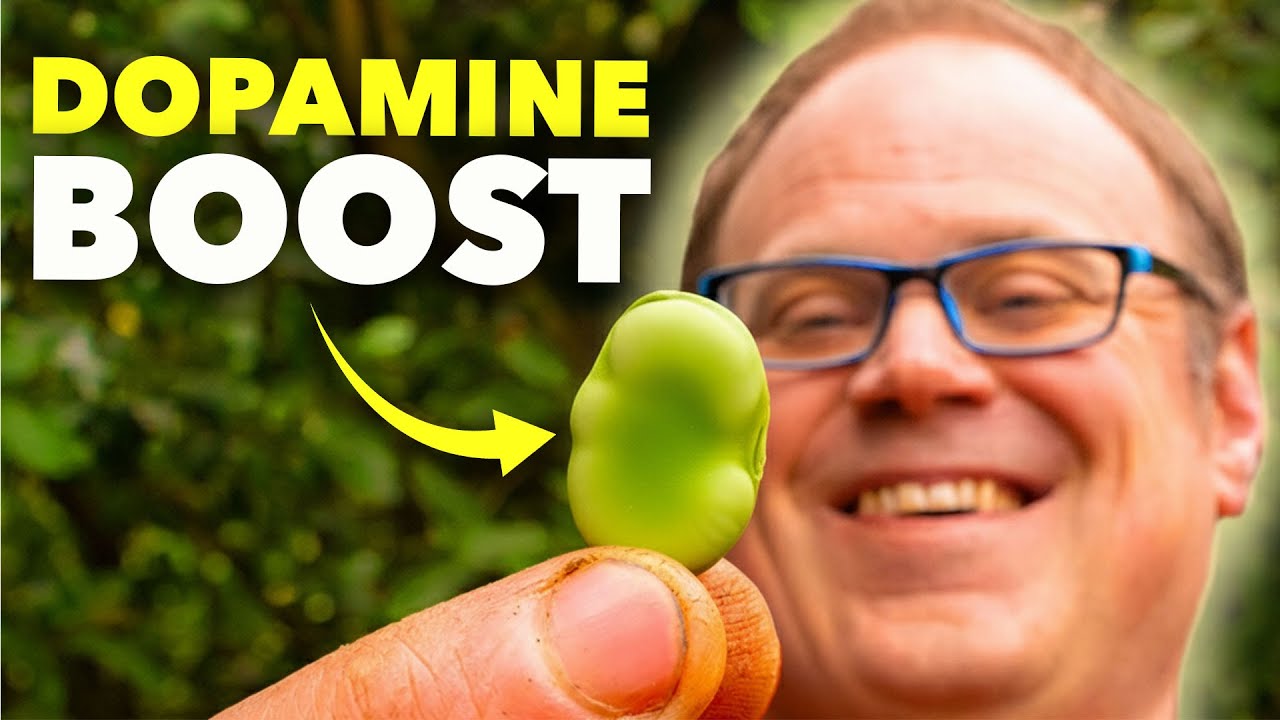
There is proven scientific evidence that shows that these ‘magic’ beans can help to increase dopamine (a happy hormone) in our brains and what’s more is you can sow them even now. Win-win.
In this week’s episode Ben takes a trip to Cambridge University to meet Dr Nadia Radzman, Research Associate, King’s College Cambridge, to find out more as well as demonstrating how to grow your self a crop of these mood-boosting beans.
What if you could grow a vital
anti-depressant right in your garden? These are broad beans or fava beans if you’re
in the US and they’re really rather remarkable. And boy oh boy have I got a treat for you
because we’re off to Cambridge University to meet a scientist who’s at
the cutting edge of research and believes that these hold
the key to better mental health. By the end of this video, you’ll see
why scientists are starting to see this unassuming bean in a whole new light, how it boosts dopamine,
how easy it is to grow them and we’ll even look at some tempting ways
to introduce more of them into our diet. Broad or fava beans are one of
the hardiest beans out there, so even in a cooler climate, this
is a great bean to sow right now to give one of the earliest crops for
harvesting from late spring onwards. Now, there are a couple of ways
to get this beany bounty started, direct sowing into the ground or sowing into
plug trays and I’m going to show you both. If you’ve got well-drained soil and
winters don’t get too harsh where you are, and by that I mean about 15 Fahrenheit
or minus 10 Celsius as a minimum, then it’s well worth growing them
and sowing them directly outside. Now, I like to plant them on a block formation, and a cane can help you get
those nice straight lines, and we’re looking for a spacing of about
8in or 20cm between seeds in each direction and I’m going to plant them about 2in or 5cm deep. These are really beautifully chunky seeds,
they’re just so satisfying to plant, it’s like tucking little marbles into the soil,
tucking them away and all that promise to come. Now, I’ve improved the soil here with
just a barrow load of well-rotted compost with a bit of leaf mold mixed in as
well, just any sort of organic matter. That’ll help to gently improve
the soil for your beans, but the magic thing about beans is that
they team up with bacteria in their roots to actually fix nitrogen from the air
and create some of their own fertility, that’s pretty amazing. Sowing beans like these can’t help
but put a big old smile on your face, and I really can’t wait for you to meet
this expert at Cambridge University who’s going to show us some
other scientifically proven ways that these beans are really
good for our mental health. I mean, honestly, who’d have thought
that this could be so good for this? Once these beans come up, I actually
want them to grow quite slowly, the ideal size for fava or broad
beans to sit out the winter, is as short, stubby little seedlings, those
are much more tolerant of cold weather. What happens with taller, soft and
sappy growth that you sometimes get when you get a mild winter is
that when you do get a cold snap, it’s suddenly very susceptible to that
cold and can easily get killed off. So, there’s a bit of an art to
picking your time for sowing really, but if these do come up and then
we do get them quite long and sappy and we get that cold spell, well I’ll be on
hand to cover them with a cloche or row cover to protect them from the worst of that cold. But what if you’ve got a heavy clay soil or
your winters are especially cold and wet? Well, it may be safer to start your beans off
in large plug trays or small pots like this. I like to use deep plug trays
or root trainers like this, now fava beans send out quite deep roots,
so having this extra space for them to really get those roots down will help
them to withstand the cold of winter. Now, if you don’t fancy forking out on extra
kit, you could just use toilet roll tubes, they work just as well,
just pack them into a tray, fill with your potting mix
as usual and sow into those. Now, I’m just using an ordinary all purpose
potting mix to fill my root trainers here and it’s a bit claggy and wet, but that’s
fine, and this will drain off nicely. And I’m getting it so I’m filling them so
the seeds will be be about 2in or 5cm deep. And then just pop in the seeds, one per plug
like that and then we will cover them over and give them a light water
to set them on their way. Trays of sown broad beans will
need to be kept in a cold frame, an unheated greenhouse or even just
a nicely sheltered position outside. They’ll grow away and then they can be
transplanted in spring at the same spacings as those direct sown beans, so that’s
8in or 20cm apart in both directions. Now, if you’re sowing in a really cold
climate where the ground freezes solid for weeks on end, then I would
just ditch autumn sowing altogether and keep your chilly feet warm by the
fire, ready to sow in early spring. Those spring sowings will soon
catch up with these autumn sowings and you’ll only be a few weeks behind. Me? Well, being on the cusp of
somewhere between mild and cold, I make a sowing both outside
and in the greenhouse, that way, if the outside beans get
clobbered by a really cold snap, I’ve always got my indoor
sown beans to fall back on, and if those fail, and that has happened before, no bother at all, I’ll just
make a sowing in early spring. But what’s that I hear – fava beans
aren’t a patch on climbing summer types? Poof, not on your nelly! Let’s head on over now to the student allotments of King’s College, Cambridge
University, to meet Dr Nadia Radzman, who’s been devoting her life to researching
and promoting these truly awesome beans. Dr Nadia, thank you so much
for having us here today, now, the million-dollar question, what
is so special about fava or broad beans? So broad beans historically has been
grown here in the UK for a very long time, and one thing that is very special about it is
that it can fix a lot of nitrogen for the soil and uniquely it has this compound called L-DOPA which is a precursor to dopamine,
the happy molecule of the brain, so if we consume it, it can
improve our mental health. Literally is a happy bean.
It is a happy bean yes. Yes. So you say they go all the way back to
the Iron Age in Britain at least. Yup. I know they’re native to North
Africa and West Asia and so on, so have they been grown all
over Europe and and these areas? Historically we know that it is first domesticated
within the Fertile Crescent in the Middle East. Okay. And then it eventually came to Britain
and we know that from archaeological findings that we have seen charred remnants
of broad beans in Roman camps. So this is where we know that it has
been grown here since the Iron Ages. These really giant beans. It’s so plump,
isn’t it? This is the beauty here. Yes. This is a very accessible protein
source and as I mentioned too, it has the L-DOPA that could prevent depression. Has there been any scientific work
done on this with empirical evidence? Yes, what we know of recently is that
there are six types of depression and one of the six types it is due to the
inflammation of the frontal lobe of the brain. And just by consuming L-DOPA as a
drug, it can actually eliminate it. From there we can also allude to the fact
that if we consume food that is high in L-DOPA then we can also help with
mental health issues too. It’s such a beautifully simple idea that we can
eat our way out of this or as a preventative. Yes. Exactly. So there are a couple of
dishes that I would like to show you. Oh fantastic, yes, please. What we have here is roasted fava beans,
so broad beans just roasted in the oven. Wow, they look so good, they’ve got
that lovely kind of crunchy look. Yeah. With a little bit of spice and
and cumin. Cumin, mmm, so good. These are like potato chips or crisps.
Right? Is it olive oil on it? Mhm. So, it’s kind of there’s nothing
really bad in there, is there? And also, it’s high in protein, it’s a high
protein snack that you can just make at home. So, that will keep you fuller for longer,
I’m guessing, rather than like crisps, that’s going to like be much more satisfying. It’s way better than the crisp, I would say, yes. And I’m guessing this is
some sort of broad bean dip? Yes, it’s pretty much broad beans that have
been blanched in boiling water for a few minutes and then just blitz it with
olive oil, garlic, cilantro too. Do you know what? I’m loving the
garlic in this, it’s like really good. Oh, it’s so, I could, just leave me
alone with this all day, this is great! So one thing that is really nice too
is actually it can be an alternative to avocado spread on your toast in the morning. Never mind smashed avocados,
this is where it’s at. This is and we’re trend
setting right now. Exactly. Well, I’m blown away by the versatility
and the real compelling case for growing broad beans or
fava beans and incidentally, the Broad’n Mind project that Dr Radzman mentioned, I’ll include a link to it in
the description down below. Now, it’s been great being here and
it’s the student allotments, isn’t it? Student allotments of King’s College, Cambridge. Cambridge, what a prestigious place to be. Well, thank you for having us today Dr Radzman,
I really appreciate it. Thank you. Thank you. Goodness me. If you weren’t sure
about growing broad beans before, I suspect you probably are
now, these are truly beautiful, bombastic, brainy beans of the first degree. So, let’s fast forward a bit, your beans are up and you’re positively drooling at the prospect
of those beautiful pod protected beans. Well, once they are up, there really
isn’t much that needs doing to them, just keep them weed-free and if
you’ve sown into plug trays or pots, then plant them outside as soon as the
soil warms up a little in early spring. Fava beans grow quite quickly into
tall bushy plants once they get going, but it does mean that we’ll need
to offer them some sort of support. Now, I just thrust canes into
the corners and sides of the bed and then run a couple of rows of string parallel
to each other just to hem those beans in and stop them flopping over in windy weather. There are also dwarf varieties available
which are perfect for more exposed gardens or indeed for growing in containers. Beans of all types are loved by black
bean aphids, but one trick with fava beans is just to pinch out the very top of the
plants once the very first pods have set. Now, aphids love that soft,
supple growth, so by removing it, you’re denying them somewhere
to settle and as a bonus, it will also direct more
of the plant’s energy into swelling those beautiful pods that we’re after. Don’t waste those pinched out tops,
though, they are edible and are fantastic lightly steamed or indeed tossed into a salad. By late spring or early summer, those pods will start to swell and
that’s your cue to get harvesting. Now, you can pick them quite young with the
beans inside still quite small but nice and sweet or let them mature into chunkier beans
with that lovely deep earthy flavor. As Dr Radzman showed us earlier, they’re fantastic
turned into all sorts of recipes and snacks. Great for the body, most definitely the
mind, and almost certainly the soul. And if you’ve got lots of beans,
well, they freeze really well too, either raw or lightly blanched
and then popped into the freezer. Let me know in the comments below whether
you’ll be growing these bountiful beans and what plans you have for them in the kitchen. In the meantime, if you haven’t done so already,
be sure to give our Garden Planner a try and set yourself up for your
best growing season yet. You can try it for free using our 7-day trial, and there’s no need to put in any
payment details or anything like that. I’ll catch you next time.
43 Comments
Thanks for the video. I just read this yesterday so thought I would show it here:
(from AI) "Anemia from eating fava beans, known as favism, is caused by a hereditary condition called glucose-6-phosphate dehydrogenase (G6PD) deficiency. People with this deficiency lack the G6PD enzyme needed to protect their red blood cells from oxidative damage; fava beans contain compounds that generate these damaging molecules, leading to a severe and rapid breakdown of red blood cells (hemolytic anemia). "
So, I love these beans too and welcome your planting instructions but I guess we shouldn't eat a whole lot of them without finding out if you have that G^PD deficiency.
I love your content, I would prefer it to be less "produced."
Beware that fava beans can cause your red blood cells to self destruct (haemolytic anemia) if you have an inherited G6PD enzyme deficiency (aka Favism). It’s very common but not many people are aware of it. It would be good to flag this up in the video. Someone else has mentioned it in the thread, but it’s worth mentioning again. The symptoms can be fatigue/weakness, jaundice, dark urine and shortness of breath, 2-3 days after ingesting. It can be life threatening, but can be mitigated with proper medical attention.
Bob?!
Great tip on roasted broad beans, yum!
Why does every soil expert and garden expert ALWAYS repeat that Nitrogen fixing fact of beans and legumes. WHEN the plant itself sequesters the nitrogen. The only time its released is when you harvest the plants young. If you lets them mature all the nitrogen is pushed into the beans. When its dying back, the nitrogen is gone too, how, compost science, non green is not nitrogen.
For anybody living in warmer climates like me, don't fear!, there is the velvet bean (Mucuna pruriens) perfect for warm places and that contains ~10 times more L-dopa.
When I lived in Iran I loved to munch on the roasted, salted fava beans they have there.
Not having to eat broad beans makes me happy. I am not at all surprised that the Romans tried to burn them!
Be careful with the "information" in this video. Actively trying to boost dopamine while being depressed can backfire quickly and cause long term lows in your depression.
Determine the source of your depression first.
If the cause is an understimulating, monotonous lifestyle then it's advised to aim for dopamine.
But if your depression is caused by any other roots you should rather try a dopamine detox. It takes about two months to re-sensitise your dopamine receptors in the brain and after that you'll effortlessly be able to find joy in the smallest peaks of dopamine again.
In fact, most depressions are caused by getting used too much to dopamine and thus craving more to feel joy.
Could we have the recipes, or a link to the recipes, in the description, please?
Those beans can be toxic to individuals with favism, a common enzyme deficiency that causes anemia. They may lead to a hemolytic crisis. I recently watched a YouTube video about someone who ate faba bean chips to boost his health and nearly died as a result.
I love growing fava beans. Here in the San Francisco Bay area of California I planted some in late September because we can grow many things here almost a year around. — Also, I love to harvest them when they’re very young and boil them just like I would green beans, eating seeds and pod and all.
Very cool, thank you for such an informative video.
just ordered seeds based on this to give a go in my garden
What are the 6 types of depression Dr Radzman mentions?
B-road bean humus…yummy😀
I get tons of dopamine by watching these videos. I’m sad today because it snowed in Ohio today 😂
It's an ancient seed. Here where I live, in Apulia county, we use fava's beans in a tipical dish "fave e cicorie" that including wild salted cicory, fava's purea, olive oil and toasted/fried slices bread. Everything in one plate.😊
This would kill anyone with g6pd issues..
Yummmm 😋 I hope they grow well in big pots 🤔
Loaded with protein. Healthy snack between meals…late night…😀
Good job. Viva bean aficionado here.
We have a fine crop right now in November (Spring) in Melbourne Australia. Our biggest problem here is not cold but wind. Using a tape instead of string avoids cutting into the plant. Love the optimism of the video..
How wonderful……Thanks
broad beans are deadly to many people tho 🙁
For some reason I thought this was going to be about poppies, not fava beans to have with some friends liver and a nice chianti…. i mean… some liver and fava beans with friends…
a scientist who wears a hijab is NOT a scientist
islam and sciene are opposites of each other, a muslim literally can't be a scientists, science = reason, evidene, falsification etc. Religion is the opposite of that
I find that broad beans don't give as large a crop as climbing french beans, and take up a lot of space and time occupying the ground. But , if you have the space, I say " go for it".
Ordered the seeds last month. Ready to try growing in my just built greenhouse. I did not know about the anti depressant properties. Can't wait to try these for the first time.
Love your stuff buddy , welcome to the epic family
Love broad beans cooked with a bit of diced onion and garlic and served warm as a side. We also add to stews and in salads. I think I’ll try that dip too, looks great!
Fava beans aside, this guy and Alton Brown (Good Eats) are possibly doppelgangers. 😁
i thought it was coffee
As an Egyptian, this is a stable breakfast in our deit (fol and falafel). Certainly, it maintained enough supply of protein, not sure about antidepressant effect, though 😅. I cultivated them this season on my parents farm.
Gardening is itself an anti depressant.
Fava beans were a important dietary staple in ancient Egypt. And, in fact, the ORIGINAL falafels were (and, in Egypt, still are) made of fava beans.
If you don't like falafel, you haven't tried Egyptian falafel.
Chickpeas leave a dry,. chalky taste in your mouth – the opposite is true of fava beans.
It's especially delicious as Tamaya – a falafel sandwich. Which makes up a typical Egyptian breakfast today. along with Fuul sandwiches – fava beans slow cooked with oil, lemon and garlic and served in Aish Balady (moist, Egpytian pita).
Similarly, use fava beans in place of chickpeas to make a less fattening hummus – because they require less oil to bind.
There's a better bean for that. 🤗
Thank you for using both imperial and metric here in the US. We still use the imperial. I understand the metric, but I can visualize because of all the years using imperial the kind of distances you’re talking and it is much easier. For me, so thank you again❤
Ding d9ng should have gloves on
Never tried them before but ordered 4lbs before the video ended 😊
I've grown broad beans very successfully in poor clay soil so I'm not convinced they need good soil or that it even makes much of a difference. That's probably due to the fact that, as mentioned ,they fix nitrogen from the air. I'll be trying the roasted broad beans and the dip. Great video ,I enjoyed it.